
When We Lessen Our Christianity
 I am more than a little heart-sick at the lessening of faith and Christianity in our time and society, America in the 21st Century. We are so privileged in the West that it seems we often don’t know how to be Christians without manufacturing a war on something we enjoy or pretending to be persecuted. It lessens our witness, it lessens our joy and it lessens our faith.
Did you grow up singing the great old ditty I Have Decided to Follow Jesus? I did… and there’s that other verse, though none go with me, still I will follow. But somewhere along the way that refrain has become though none go with me, geez will I tantrum! We tantrum because we don’t get to tell others how to greet people in the holidays, we can’t always force people to listen to our praying in public, and in fact, some of our neighbors aren’t Christians at all! And we haven’t the maturity to deal with it.
When we cry our crocodile tears over Starbucks cups, we lessen our faith. When we deny others their civil liberties, like marriage, we lessen our faith. When we slander our Muslim neighbors for their religion, we lessen our faith. When we manufacture a war on our faith to bolster slipping or apathetic morale and make a political gain, we have lessened our faith and opted for a something completely other than faith.
Christians have begun the slow death of the meaning of Christmas by making it a season of self-centeredness and creating controversy where there should be joy and peace. We welcome the Prince of Peace by being contentious, angry and divisive. How have we so completely lost the message of humility in the birth narrative of our King? How have we so lost the grace with which he responded as he was both welcomed and rejected in his own life? How have we forgotten that Jesus didn’t forge a kingdom or legacy on any blood or suffering but his own?
“Therefore, rid yourselves of all malice and all deceit, hypocrisy, envy, and slander of every kind. Like newborn babies, crave pure spiritual milk, so that by it you may grow up in your salvation, now that you have tasted that the Lord is good.”
Preach it, Peter. I’d like to advocate a season of love this year, when we rid ourselves of all the envy over other people’s headlines, when we rid ourselves of malice toward people who don’t think or live just like us, when we grow up a bit and bring some meaning back to the faith we profess to follow so that our behavior is admirable and points toward the grace of God.
Imagine it with me… we’re taking about a whole season of:
~ Christians simply drinking their coffee and enjoying it,
~ Christians not posting slanderous meme’s and sharing
hateful stuff on social media that slanders and demeans
their neighbors,
~ Christians not manufacturing a war on a holiday that
is about to drive our national consumerism into the usual
frenzy of overindulgence and debt, and
~ Christians growing out of their spiritual baby years and
into at least a form of spiritual adolescence in which they
learn to serve the world and their neighbors with the love
and selflessness shown by their Christ.
We can do this! In fact, the very meaning of our Christianity depends on it. Our witness depends on it. Our growth depends on it. And yes… I believe our faith depends on it.
AMDG, Todd
Transgender Awareness November 2015
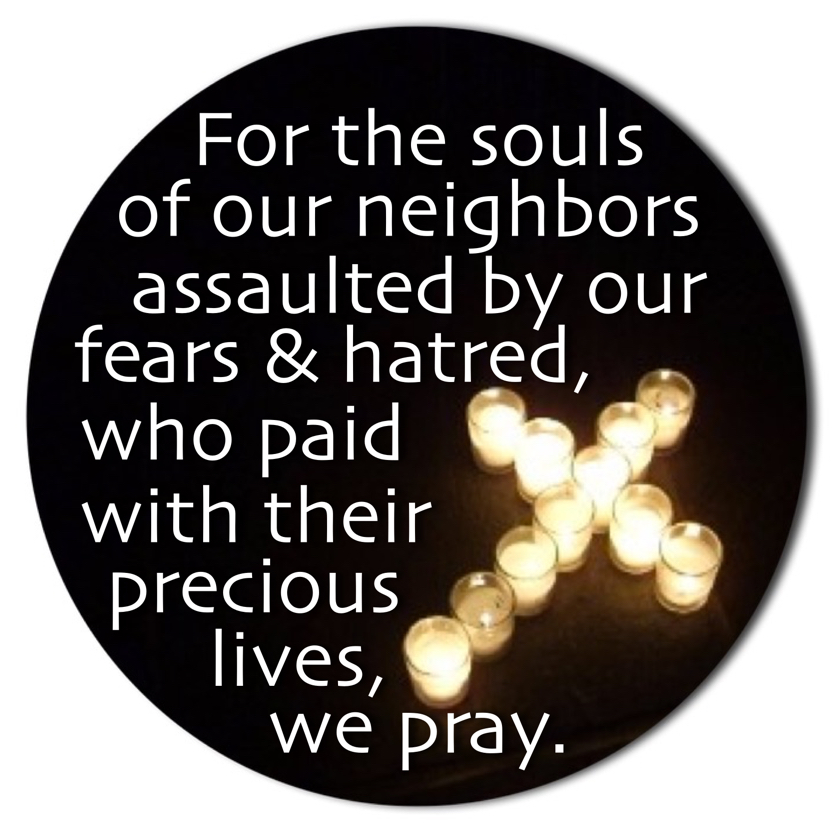 I believe we are blessed to live in a time when we are more openly and gracefully speaking of our sisters and brothers who are transgendered, but I also realize that many of our precious neighbors and family members still face stresses, threats and dangers that the majority of us do not recognize or understand.
It’s November, and November 20th is an awareness day to remember our fellow transgendered human beings who have died: Transgender Day of Remembrance.
If you wonder why we have a special day like this, please take a moment to peruse articles that educate us on the threats and stresses facing our trans friends and family: murder, suicide, teen homelessness and violent crime.
The conversation about transgendered men and women has gone mainstream and we all know the names of celebrities and public figures who have made their transition in various levels of public scrutiny: Laverne Cox, Chaz Bono, and Caitlyn Jenner. Last year for Transgendered Remembrance Day I shared a couple of videos in a blog post, one from Laverne Cox and one from an amazing pastor and preacher, Allysson Robinson.
I have a few simple requests to everyone as we approach the 20th this year:
- Stop posting mean-spirited and discouraging memes and messages on social media about transgendered men and women. You may not think of Caitlyn Jenner’s transition as courageous, but when she receives an award from someone who thinks she shows courage, and you compare her to examples of firefighters or soldiers, you’re not being smart or clever, you’re just being mean and misrepresenting. There is a kind of courage that enables someone to survive media scrutiny and our disdain in the public arena, and it in no way diminishes other types of courage in other areas of life. Drawing unfair comparisons because you don’t like Caitlyn is a distraction and it is mean-spirited.
- Educate yourself on gender dysphoria so that you can stop spreading the demonization and criminalization of transgendered women and men. Learn about Gender Dysphoria in the DSM-5 and a good Huffington Post article. No, trans neighbors are not faking their gender identity to sneak into your bathroom. No, trans neighbors are not immature sexual attention-getters. No, trans neighbors are not out to make you trans, prey on you or your children, or even more likely to be sexual offenders. Please take some time to study the facts on sexual assault and sexual crimes, and you will learn the difference between many myths and many facts, supported by the numbers, like the fact: “sex offenders are disproportionately likely to be heterosexual men.” Some quick links and sources for your perusal: RAINN, University of Michigan (info for new students and the source of the above mentioned quote), CASA, and this long but important read from UC Davis. These links do often speak to the question of sexual orientation more than gender presentation or transition, but they are still good reads for us as we tend to fear and demonize what we do not understand. We are far more influenced by political spin and the culture war proponents (i.e. gullible) when we are less educated on issues.
- Be graceful and compassionate, practicing empathy and mercy for others. Take a long hard look at the numbers of homeless trans teens who have been kicked out by their families, a long look at the numbers of trans suicide attempts and successes, and a long look at the rates of violent crime against our trans neighbors, and then ask yourself: “Do I want to say or share anything that continues to stigmatize or hurt a group of people who are already under such assault and victims of such hatred and violence?” It’s time we all spent a lot more time owning our words and their impact. It’s time we owned the responsibility to be people promoting and increasing grace in the world. Even if you read every post I linked in this blog and still don’t quite understand gender dysphoria or understand someone’s authentic struggle with their gender identity, you can still be merciful, empathetic and kind. In fact, you must.
As with our discussions around sexual orientation, there’s so much to learn from knowing a person who is transgendered. Knowing people is the best way to break down the stereotypes and prejudices. You may not know someone who identifies as a the gender opposite of their birth gender or sexual organs, but you can listen to the stories and struggles of real people like: Chase Marie, stories from The New York Times, and lots more at TransPeopleSpeak.org.
Life can be real struggle, as we all know. Our paths may be divergent in many ways, but at the intersections we have magical moments when love and grace ignite the wonder of God. Pray this month for the souls of those who die at the hands of our fear and ignorance. Pray for the peace and joy of all God’s children.
AMDG, Todd
Shaping the Day
 Let’s chat about intention for a few minutes. Yes, there are days that drive us, and days that we need to leave open and easy for some sabbath rest… but I’m a believer that we need to be shaping our days with reflection and intention.
There’s nothing new in that opening statement. And there’s probably nothing terribly new in the following words, as we all know that “there’s nothing new under the sun.” Still, as I start today with some reflection and intention I find myself with the blogging itch, so I’d like to share with you one of the ways I begin many of my days.
A couple of years ago I preached a message series at Church in Bethesda on seven practices that help facilitate transformation in our lives. The idea sounds terribly deep, but it’s actually a simple idea that there are things upon which we can focus thought and action that will affect the kind of positive change in life we desire. If you’re completely content and never want a single thing to change, then I don’t recommend this exercise.
 The seven practices are repentance, prayer, stillness, study, sharing, service and ritual. Within the seven practices I tried to imagine the corresponding values or virtues they cultivate in life, things like integrity, vision, strength, wisdom, maturity, love and action.
In any given morning I take some time to pray and then think about the last few days and the coming day. How’s it been going? What have I not liked about my days? What has not gone as right as I would have liked? What can be better? What has been good? What do I want to keep going? I will often use my list of practices as well as the list of values to see if I am led to choose one or two of them to make some micro goals for the day.
As an example, I might be feeling a distinct lack of vision one day or come to realize that I am not really sharing with others as I ought. Maybe I’ve been frustrated and allowed myself to ignore some important needs in my life or my family, or I’m acting defensively over a hurt or a perceived hurt. Maybe I’ve slipped into being overly critical of others and not as supportive as I should be? Once I have a couple things I have identified for my focus, then I pray a little more and think of concrete action to take that day to address the needs in life I have identified.
So, below is the way that I list the practices, their corresponding values and under each a brief list of things I associate with each of them. Any given day I will reflect and choose one or two of the practices or the values, and make a goal or two for the day…
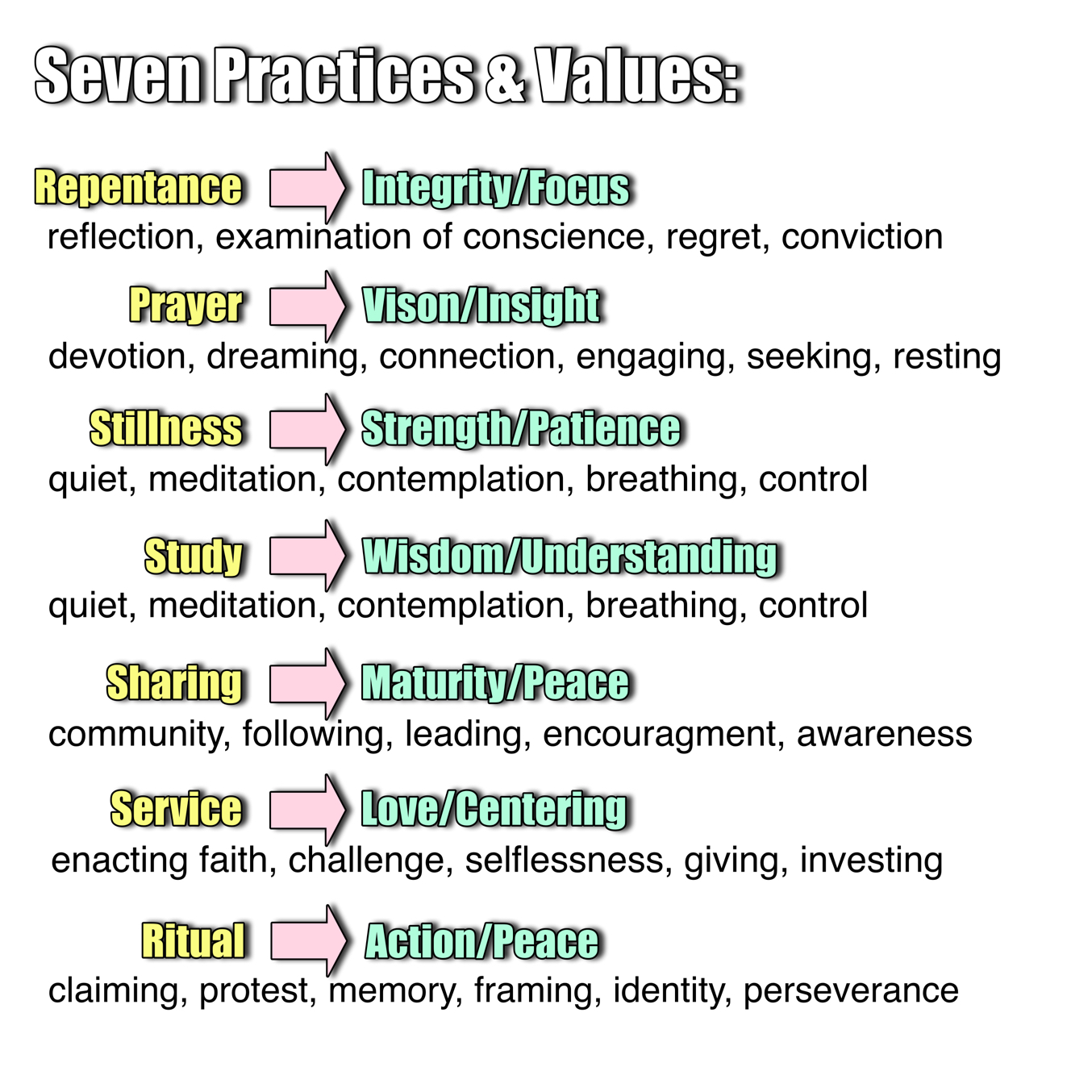
What do my micro goals look like? Let’s say I choose to zero in on ritual and wisdom. Upon reflection I have identified that I’m feeling but disconnected from daily prayer exercises; prayer has become a bit hit or miss for me. And I have thought that I’m needing to brush up on some deeper study on an issue that is giving me trouble. I’ll need to set some goals for the day so I don’t let another bunch of daylight hours slip away. I’ll make the following goals: 1) I want to be involved in the ritual of prayer more, so I’m going to set reminders on my phone to stop me at noon, 5pm and at 10pm to pray with Psalm 116, and 2) I’m going to cruise Amazon for a good book on the passage or theme I’m struggling with and borrow it with my Prime membership, before dinner. Your goals might be simpler or more involved, but should reflect your way of doing life.
One concrete goal I have made several times as I prepped for work at my Apple Store is to focus on sharing by really emphasizing a clear and sincere welcome/greeting for every person I meet that day, whether at work or out of work, whether another employee or a customer at the store. Good greetings involve things like a smile, eye contact and sincerely expressing “I’m glad you’re here.” One important thing to convey, though in presence and spirit and less in exact words would be “you’re safe with me.” =) You know when you’re nailing that one because you’re interactions suddenly get deeper and more transformational.
Now, I’m no guru, professor or Saint. This list is simply a way I organize some thoughts on my daily life and the change I want to experience and become in this world. I invite you to improve the list. Make it your own. Pray and play with it, and leave it better for having been sifted though the matrix of your own life and faith. Make some goals today and be the change, be changed!
AMDG, Todd
The Dream of Christ: Our Love for One Another
 One more blog for today, and then I’m off to get other things done…
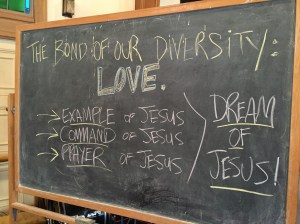
We wrapped up a month’s discussion on diversity this past Sunday at Church in Bethesda by talking about the dream of Jesus, a dream of unity and love. It is so much easier in times of our diversity to express anger, distrust and judgement… but that is exactly when Jesus comes in and starts talking about love.
You know it’s real when we’re busting out the chalkboard on a Sunday morning, huh? Yes, I could have projected something on a screen, but the sound of snapping chalk sticks on a board is so much more gratifying!
A Sunday Bulletin excerpt from this past weekend:
What does it look like when Jesus dreams? Did he have a dream for us and for humanity that we can see in his life and ministry? It’s not only seen in John’s gospel, but John’s account of Jesus shows us the dream many times… love. He dreamed, and even commanded, that we would love one another, in our humanity, our diversity, our greatness and our brokenness, and in that love we would be one.
This morning, we gather around a table that is meant to be a reminder of and an exercise of unifying love. This is a table where we put others first, where we discern one another as Christ’s body, where we gather for what our faith tribe has often called a “Love Feast.” If only our love would be always tangible enough to sit with and see on a table and taste with our lips and experience as we experience a filling and satisfying meal. Unifying love is the dream of our Christ. Love is the dream and the prayer of our Lord for us.
Love was the example of Jesus, for all kinds of people from many walks of life. Think of the times in the Gospel of John like when Jesus is found talking to someone of the wrong religion, gender, nationality and ethnicity… John 4. How about the time when Jesus masterfully and nonviolently prevents a stoning and says, “Neither do condemn you”… John 8. And when he washed the feet of his disciples, serving and loving them, that included the man to soon betray him… John 13. One of my favorite verses has long been John 13:1, “It was just before the Passover Festival. Jesus knew that the hour had come for him to leave this world and go to the Father. Having loved his own who were in the world, he loved them to the end.” Good stuff. Good love.
Love was the command of Jesus, for all kinds of people from many walks of life. Jesus famously instructs us to love our enemies… Matthew 5. Jesus commands his disciples to love as he loved, in service and sincerity… John 13. And who can forget the awesome way Jesus summed up Law and religion: Love God and Love People… Matthew 22. In John 13 he not only commands love but says that it is by our loving one another that we will be recognized as his followers.
Love was the prayer of Jesus, for all kinds of people from many walks of life. Jesus not only prayed for a love-bound unity for the disciples in his day, but for all followers who would come later and walk his path… John 17.
Love was the example of Jesus, the command of Jesus and the prayer of Jesus, so we can confidently say: love was the dream of Jesus. When Jesus dreamed, it was of the love we would create among us. That love brings us together, unites us and alerts everyone around that some Jesus-stuff is happening. Let’s embrace the dream and run with it!
Diversity of thought, experience and background are grounds for more love, not less. Diversity among us is grounds for loving deeper, listening better and building bridges… not loving elsewhere, closing ears and burning bridges. Love. Dream on.
AMDG, Todd
Three Reasons I LOVE This Video
You’ve maybe seen this gem floating around Facebook…
I love this video. Really. I LOVE it, and I have three reasons why I think it’s great.
REASON NUMBER ONE…
I love this video because it truthfully expresses that a woman should not bear the burden of any man’s unwanted attention or sexual aggression. Period. A man at no time or in any place has the right to force his unwanted sexual attention upon a woman. Coercive and aggressive behavior that causes fear or anxiety is wrong and should be stopped. We need to be saying this loudly and often and in every way possible, and the video is a wonderful example of saying it loud and clear.
REASON NUMBER TWO…
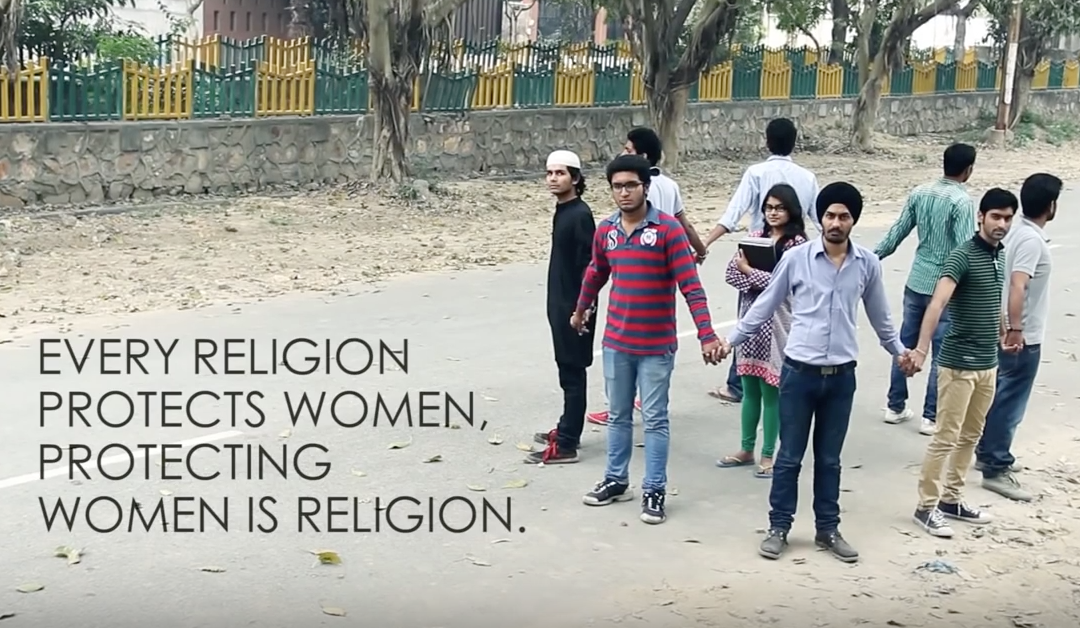 I love this video because it correctly references and relates to all religions and their concern for women. All religions are found steeped in and in conflict with their host cultures. I love that the video appropriately makes room for all of us to engage this important topic. Too often we use important issues like this to score points for our own group and condemn another group. This issue of responding to sexual aggression belongs to all. And before anyone from my group gets too tweaked over the video’s tagline that “Every religion protects women, protecting women is religion” allow me me remind you that such sentiments come straight from our scriptures. James 1:27 in the NLT, Pure and genuine religion in the sight of God the Father means caring for orphans and widows in their distress and refusing to let the world corrupt you. And Jesus in Matthew 22:37-40 Jesus replied: “‘Love the Lord your God with all your heart and with all your soul and with all your mind.’ This is the first and greatest commandment. And the second is like it: ‘Love your neighbor as yourself.’ All the Law and the Prophets hang on these two commandments.” Caring for one another and loving our neighbor means protecting women from sexual violence, fear and aggression. Such truly is religion.
REASON NUMBER THREE…
 I love this video because it doesn’t advocate violence. We are so addicted to violent responses. We all want to be Batman, kicking butts and taking names. It’s sad that so many of us grew up only seeing violent responses modeled in media and life. I love loVE LOVE that image of the nonviolent circle of protection created around the woman in this video. Powerful stuff! We don’t need to fight one another. We need to stand together.
AMDG, Todd
Come And Mourn With Me Awhile
 It’s an old hymn, a melancholy hymn that begins with the line “O come and mourn with me awhile; And tarry here the cross beside; O come, together let us mourn; Jesus, our Lord, is crucified.” (Faber) Jars of Clay dropped it on an album a while back and now I’m caught humming the melody as I read the news and mourn again. Standing at the scene of out-of-control violence, let us tarry and mourn.
For all our wars we’ve fought, our deep national pride and our vaunted founding documents that speak of life, liberty and the pursuit of happiness… we come here again. A place of violence. Images of jackboot policing that do not come from some history book about regimes we fought in liberty’s name, but from a school in our own country. A school. Mourn with me.
Mourn with me for what we do in our schools. Mourn with me that we create systems of violence and conflict instead of learning and participation. Mourn with me that adults can escalate situations with children to such violent ends, and then we have long discussions on what the child did to precipitate the problem. Mourn with me that we then divide and fight one another over why such violence is needed and who carries the most blame… we are all to blame. We are addicted to violence.
We don’t know how to give one another dignity and respect any more, so we are left fighting for the torn scraps of dominance. We don’t know how to be a community any longer so we violently police schoolrooms and throw children from chairs. We don’t know how to teach any longer, so students are arrested instead. Mourn with me.
Watch again as the student is thrown to the ground. Watch as she is thrown across the floor into a wall. Watch as the officer then pins her to the ground with his knee. Now, this is your daughter. This is your granddaughter. This is your sister. This is your friend. This is your neighbor. This is you. What did you just learn about police officers at the age of seventeen? You learned that they are violent, brutal and just waiting to unleash on you. You just learned to fear.
Watch again as that officer grabs a seventeen year old girl and flips her desk, hitting another student’s desk in the process. Watch the officer take a good hold, plant his feet and with almost a running start fling her bodily from the desk across the floor into a wall. Watch him again leap onto her back and pin her to the floor wrenching her arms behind her back. Mourn with me for this man. Mourn with me for his anger and rage that lashes out at a student. Mourn with me that such misdirection and rage is given a badge and a license to attack. Mourn with me for every single voice that will defend his brutality and blame his victim.
Don’t say, “She should have…” She did absolutely nothing to escalate the situation to that point. She was not physically capable of a fraction of that officer’s violence. The punch with her closed fist that people are taking about is the flailing response of a child grabbed by an adult and physically wrenched around by her neck. Don’t say what she should have done, for nothing she did or didn’t do was deserving of that response from the officer. When you blame the victim for the actions of the brutalizer, you rip away the last shred of dignity and respect from the victim. When you blame the victim you empower the brutalizer and set the stage for the next victim. This man is a monster of our making.
Mourn with me that this is America. Mourn with me that this is policing. Mourn with me that we’ll see the same thing today and probably again tomorrow. Mourn with me until we learn and grow and detox from the adrenaline rush of violence and dominance. Mourn with me until we see a day again when we can teach, live in mutual respect and dignity for one another, and create a community that is not fearfully policed and brutalized.
Mourn with me at the violent spectacle we make of ourselves.
AMDG, Todd
Dealing With Theological Diversity
 One of the hardest things that people of faith have to contend with at times can be our diversity of theology and doctrine. The truth is that we will all have various levels of experience, educational, investment and opinion when it comes to forming doctrinal conclusions and forming our basic theologies.
As human beings we will always relate to God in participation with language, personal history and experience, and the many diverse communal influences and histories. We are often working with concepts and expressions that demand we think and express ourselves in forms and terminology that range from the literal to the metaphorical. Our scriptures employ every conceivable literary and expressive genre to help us do this… we have histories, birth records, personal correspondences, romantic poetry, moral parables, axiomatic wisdom literature and songs to name a few. How could we all, in our diversity, find a home with our scriptures if they weren’t so welcoming of us in so many ways?
And yet we have spent a lot of time trying to make everyone think alike. We pick and choose a few words here and a few there to justify the idea that we all need to have exactly the same theology and doctrine. And please don’t misunderstand me… I do think there is some bad theology in the world. I have seen scriptures twisted and deep truths ignored. I have also seen deep truths revealed in the wonderful diversity of thought and expression revealed in a community of people who authentically bring themselves to God and listen to one another.
What does exclusionary theology do to us? What does it look like and sound like in community? Maybe you know someone with a single magical question by which they determine if another person is a Christian or not? Even as a pastor I have faced this many times with guests and members here at Church in Bethesda, and I’ve been told that I probably wasn’t a legitimate pastor or a Christian when I failed their litmus test on a particular theological point of interest. I once years ago heard a biblical teacher say, and I quote, “I can tell you in three minutes if someone is a Christian or not.” This is what theological exclusion sounds like, and it’s not a spiritual gift or an action supported by our scriptures.
I’d like to offer three suggestions for how we deal with our diversity of theological experiences, expressions and conclusions as I reach as I read Paul’s advice and instructions to the church in Corinth. That was a church divided in many ways; they argued over leaders, theological matters dealing with food, and much more. They neglected their less economically viable members and even made lawsuits against one another. Paul’s task as an apostle was to help them grow in unity and closeness, even while remaining diverse in thought and opinion; he never implies they will all suddenly, or should suddenly, think alike on everything. We see the divisions being described in 1 Corinthians chapter 1 and pick up some of the advice and instruction, themed around the preeminence of love, especially in later chapters like 8 and 10.
Here’s where I believe we should start… 1 Corinthians 8:1, Now about food sacrificed to idols: We know that “We all possess knowledge.” But knowledge puffs up while love builds up. And then we continue with the same kind of thematic love and mutual concern in 1 Corinthians 10:23-24 & 31-33 “I have the right to do anything,” you say–but not everything is beneficial. “I have the right to do anything”–but not everything is constructive. No one should seek their own good, but the good of others… So whether you eat or drink or whatever you do, do it all for the glory of God. Do not cause anyone to stumble, whether Jews, Greeks or the church of God– even as I try to please everyone in every way. For I am not seeking my own good but the good of many, so that they may be saved.
Listen to these heartbreaking questions about legal actions against one another… 1 Corinthians 6:1-8, If any of you has a dispute with another, do you dare to take it before the ungodly for judgment instead of before the Lord’s people? Or do you not know that the Lord’s people will judge the world? And if you are to judge the world, are you not competent to judge trivial cases? Do you not know that we will judge angels? How much more the things of this life! Therefore, if you have disputes about such matters, do you ask for a ruling from those whose way of life is scorned in the church? I say this to shame you. Is it possible that there is nobody among you wise enough to judge a dispute between believers? But instead, one brother goes to law against another–and this in front of unbelievers! The very fact that you have lawsuits among you means you have been completely defeated already. Why not rather be wronged? Why not rather be cheated? Instead, you yourselves cheat and do wrong, and you do this to your brothers and sisters.
Paul says that the very idea that they have lawsuits between them means that they are already defeated… wow. Their lack of concern for each other overshadows their disagreement. They’ve lost the relational aspect of being a people. There’s a lot in the passage about us judging the world that I’m not sure exactly what to do with, but I can plainly hear Paul’s pain that the people are pursuing their own interests and concerns to one another’s detriment. He asks pointedly if it wouldn’t be better to be wronged than to fight for your own rights? Yes, someone might cheat us, but isn’t it better to be a cheated person than to be a person who attacks and slanders a sister or neighbor in response? Ouch. We can really hear how divisions among us can become cycles of violence and vengeance.
Paul calls for a model of behavior built not through enforced conformity, and not through wild independence, but through a balanced approach of maintaining our personal freedom in relation to caring for those around us. Of course, it would be easiest to simply demand my own way or be coercive toward others, but Paul speaks instead of mutuality of love and concern. Even though we may have different cultural concerns and divisions today, we can still learn a few things from our ancient teacher, Paul. The following three points I’d like to make are drawn from Paul’s wisdom, but not just a repeat of the words written to the church in Corinth. We may rarely have to deal with internal lawsuits and never with food offered to idols, but we do have disputes about leadership and many other daily theological concerns that vex us as a community.
1) We must remember that though God and faith communities have always employed and appreciated clergy, theology does not belong exclusively to anyone based on education or experience. In fact, theology should never belong to any individual. While education is very important in growing a deep historical engagement with many theological concepts and questions, we all do theology. You are a theologian. Maybe you aren’t a theologian in the academic or vocational sense, but you do theology when you think of God and process faithful decisions in your daily life. Too often we rely on or search for a teacher who has an exclusive hold on truth and is willing to share it. And we like to be in that teacher’s position, if we’re being honest. We also like arguing our opinions and being smart. *sigh* Can our egos handle a loss of power and prestige if others are not looking to us for exclusive truth and expression? As Paul says we all have knowledge and we can also say that we are all doing theology, and safely conclude that we need to: Keep community in theology. Theology is a team sport and we all have a variety gifts and abilities to bring to the playing field. Humility helps us be better listeners and learners, and listening and learning helps us form better theologies.
2) We must always be guided by right love and action toward one another. We have too often believed that someone’s dissimilar theology or belief was our license to love them less, treat them less well, and end our responsibility of fellowship and community with them. You know what I mean? We act like someone being in disagreement with us over theological concerns is grounds for hating them, slandering them and dividing from them. Sometimes we have done this over the least significant of reasons and topics. When we decide to maintain right action toward one another we are speaking of orthopraxy as distinct from orthodoxy; that is right action versus right thinking. This is not to say that right thinking and right action need to be opposed, but to point out that they are often distinct interests even when working together in concert. Sound counter-intuitive to what church has taught you in the past? I was raised to believe that I would be saved by my doctrinal correctness. But how do we reconcile that idea with the judgment scene described by Jesus in Matthew 25:31-46 where the good and bad, the saved and unsaved, are divided from one another by how they treated other people? That’s a rock solid example of orthopraxy in Matthew 25. In fact, it’s a great example of orthopraxy and orthodoxy working together as Jesus explains to the people that their treatment of others is tied directly to how they think of others, seeing Jesus himself in them or not. Paul, following the lead of Jesus, taught the early Christians a form of orthopraxy to use in times of diversity and disagreement. Humility and mutual concern frame a love for one another that guides us in times of disagreement and diverse thought and theology. And we can conclude that we should: Keep love for one another in it’s place of preeminence. Getting our thoughts and actions in concert around love will set the stage for safe disagreement.
3) We can watch for bad theology, most often recognized by it’s fruit in the lives of people, while maintaining orthopraxy. Sometimes we’ll encounter a theological idea or conclusion about God that seems to move counter to scriptural witness, and we have to engage that idea to see if it can be reconciled with our greater community, textual and historical understandings. But even as we watch for bad theology and challenge it, we do so in the practice of orthopraxy. So bad theology doesn’t necessarily identify a bad person. I need to say that again: Bad theology doesn’t necessarily identify a bad person. Remember that our diversity may at times signify that one or another person is weaker or stronger in conscience and faith, but that is not grounds to judge them. Paul teaches a seeking of the other’s good that demands us to be graceful, lenient and careful with the people around us. He considers it an emulation of Jesus, and thinking back on the way Jesus dealt with countless people in his own ministry, I agree. Whenever we start leaning toward a purist orthodoxy that relegates people to second-class citizenship or excludes them altogether, let’s remember that Jesus taught the principle that “the Sabbath was made to serve humanity, not humanity made to serve the Sabbath.” (Mark 2) Doctrine, theology and religiosity are mechanisms to serve us, not vice versa. Even in our efforts to craft and live the best theology, we do not have license to hate or disregard others for their own efforts that end up dissimilar to our own. Maybe we can say it like this: Keep grace in a place above doctrine. Another way to summarize such an idea might be the words of James when he said that “mercy triumphs over judgment.” (James 2)
I say we all memorize those words from Paul… 1 Corinthians 8:1 from the New Living Translation…
“But while knowledge makes us feel important,
it is love that strengthens the church.”
October 2015 and Diversity
“Diversity is not a weakness for faith, but a strength.
Our diversity is not discouraged by scripture, but validated.
Diversity is not disunity, but should help us be a unified whole.”
 It’s October and I’ll be starting a couple of things this month: 1) I’ll start working on my winter beard… and I know it’s never much of a beard, maybe more of a beardlette, but I’ll see what difference another year on the march to manliness means for me, and 2) I’ll be investing the month in writing out my thoughts on diversity as a core element of Christian faith that is too often given short shrift or completely ignored.
Diversity of Faith Expression/Identify
I’m not choosing diversity because it’s a buzz word. I’d like to focus on what our scriptures, especially in the New Testament and the words of Jesus, have to teach us about being different. Too often I’ve heard much more about being the same. In my own lifetime I’ve heard sermon after sermon about conforming to a single ideal, a single belief and a singular expression of faith and church. The church of my youth was devoted to a single refined expression of doctrine and ecclesiology to the exclusion and utter rejection of all deviance from that expression. We fantasized about our ability to come to conclusions and decisions about theological and doctrinal matters outside of personal experience and enculturation, and therein find the single answer to all questions for all people in all times in all places. Today, I’d call that misguided and un-hopeful.
Our scriptures present a different picture of life and faith. The ministry of Jesus showed a diversity of disciples and gifts surrounding Jesus, and times of Jesus himself affirming the existence and authenticity of others. In fact, Jesus often did this over the protests of his disciples who desired exclusivity and personal greatness, uniqueness.
Diversity of Gifts
We have often spoken of diversity in the realm of giftedness and abilities. It’s appropriate when we speak of individual calling and giftedness to recognize our diversity, and we’ll chat about that in October. We just won’t leave our diversity solely to the realm of gifts and abilities.
Diversity of Calling & Being
More than ever we are being challenged to be open and welcoming to differences. We are being asked to be comfortable with our differences. So where and how do we plant our feet solidly in our understanding of faith and scripture and tradition to do that? We’ll be exploring that question through the coming month. My central hope in this month is to show that we are able to be both faithful to God and respectful of one another’s dignity by becoming more open and tuned into the value and strength of our differences.
I’m excited to push back against many misconceptions about people, scripture and faith. I’m hopeful that we can live and worship with a greater love and sincere appreciation for one another, even in our differences. I have come to hold diversity as one of our greatest strengths, one thetas validated by scripture and necessary for us to realize lasting wholeness as a community.
AMDG, Todd
Praying With Christopher
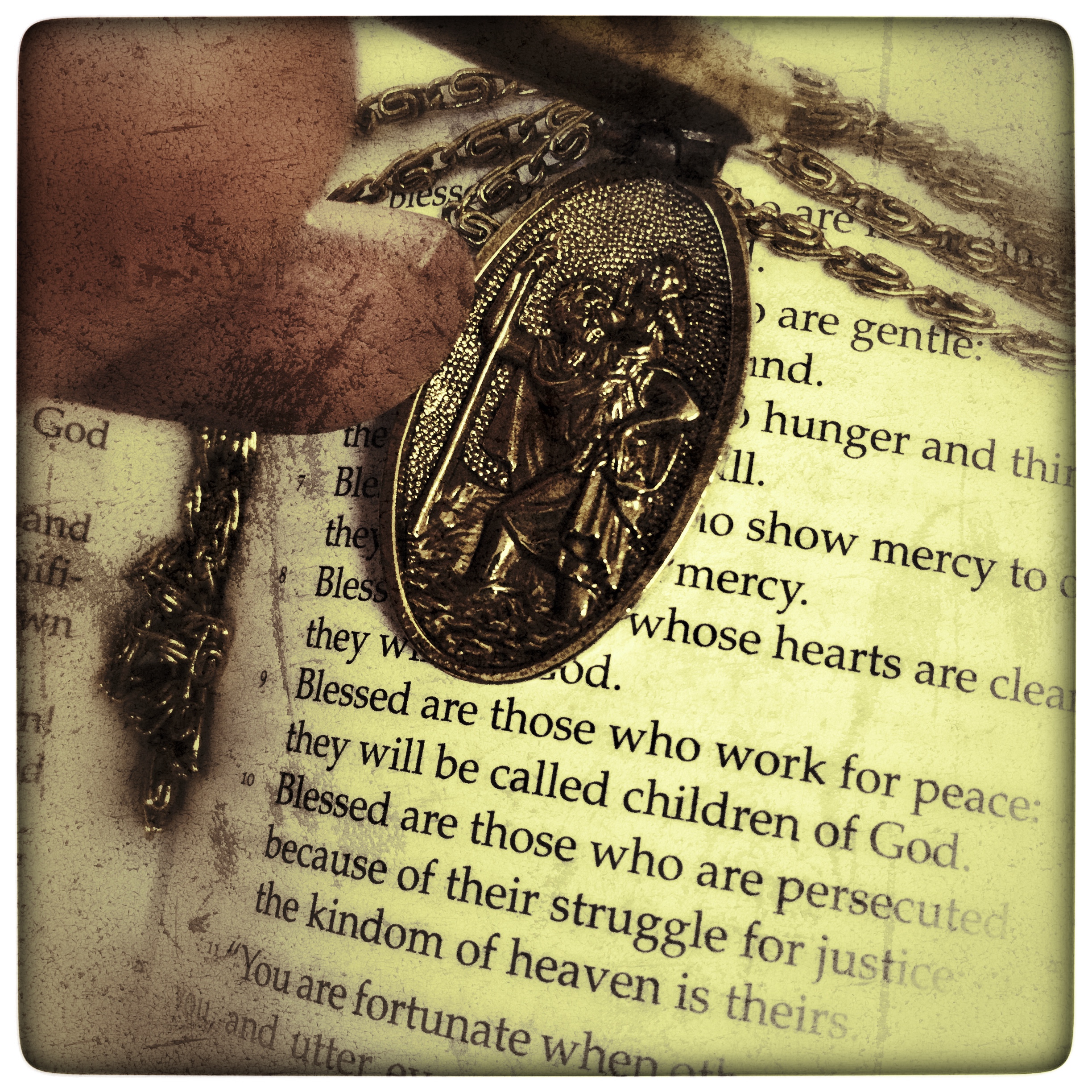 This morning I am tired, and in my fatigue I turn to prayer with one of my favorite saints: Christopher. His name means Christ-Bearer. As the stories of saints go, his is an ancient and beautiful story of finding the will, the strength and the opportunity to serve.
Christopher sought the greatest King to whom he might pledge his strength and battle valor… he found instead a gentle King who called him to serve the weak and the needful. I begin my prayers today with the hope that I could be deeply reminded that my strength, when spent, belongs to the needful around me. I pray that my will is brought together with opportunity to be a servant like Christopher.
Christopher was a convert to Christianity in the 3rd century; he was a violent warrior who wanted to serve the mightiest leader he could find. When he discovered that others pointed to Christ as such a leader he went in search of more knowledge about Jesus. A gentle hermit taught him of Christ and set him on a path of dangerous service to local villagers, not a service of killing or violence, but a service of strength and protection. He would carry them across a river that was to strong for them to cross on their own. He did this service faithfully, and one day is said to have carried Christ himself across the river.
It would be a terrible loss to get too caught up in only trying to find the historical Christopher. You will have to sort thru various names, traditions and stories. He has interesting iconography, almost always holding a staff, most often carrying a child, and even sometimes having the head of a dog. (Say what? That would be just my luck if I have have an icon, lol.) Who martyred him? Where did it happen? Why did it happen? These are probably not going to be discovered to an historian’s satisfaction. You’ll also discover that he’s been dropped from many calendars of saints, mostly because of the lack of concrete evidence for his story. But an ancient story of faith leading to service instead of fighting? An ancient story of faith leading to the strength to serve instead of seeking to dominate and to make demands? It’s a needed story for our times.
St. Christopher is often considered the patron of travelers, and the prayers around him reflect that affinity to travel. I’ll end with a prayer that invokes Christopher’s strength and dedicated service, a prayer for the day…
Grant me, O my God, a watchful eye and willing heart.
I would be a willing servant to all and an enemy to none.
You give all people the gift of life, and I pray my actions and words honor that gift.
May all who share this day with me receive only blessings for our time together.
Teach me to use my strength, my will, and every opportunity, to serve others;
help me to slow down and to turn from myself to see their beauty and value.
Give me the strength, the will and a calling to serve, such as you gave to St. Christopher,
and therein help me to follow this epic example of a living and a serving faith
which uses each day to protect and enrich this world for others by sharing your peace.
I beg these things through the graces of Christ, our Gentle King. Amen.
Peace y’all.
AMDG, Todd
Links about St. Christopher:
Be A Good Winner (Kentucky Clerk Mess)
Many of as Christians have been horrified at the idea that the Kentucky Clerk scandal has anything to do with our faith. It doesn’t. It has to do with the rule of law. And if, like me, you are glad for our LGBTQ neighbors having full legal liberty, freedoms and acceptance, then when Kim Davis was sent to jail we won. We won! She is not a victim and not a martyr; she is an officer of the court who took illegal action to defy the court. And she’s rightfully in jail now.
But, none of this gives any person of faith the license or moral right to try to humiliate, denigrate or hatefully attack her with name calling and insults. Just as her actions and bigotry against her gay neighbors is not what Jesus taught, neither is the hateful responses we see online, sometimes from people of faith. Be a good winner… dig deep and find some grace and mercy for someone so befuddled and confused in their faith journey. And celebrate with our gay neighbors, friends and family in Kentucky who no longer face such an illegal obstacle to their pursuit of happiness and wedded bliss!
 toddthomas.net