
Civility
A Civil Repudiation of a Judgmental Viewpoint
 Things like this pop up in the news every now and again, and I took a hit for the team today and actually listened to Pastor Steven Anderson’s full sermon entitled: “AIDS: The Judgement of God.” It came as no surprise that he generalizes people, uses stereotypes and exaggerates, and does some pretty horrible handling of scripture.
This preacher is not mainstream Christianity. He’s not even mainstream for Baptists, even non-affirming Baptists. He’s not doing good exegesis of scripture. He abuses his concordance by picking and choosing uses of English words across the breadth and width of scripture. And I have to take a moment to repudiate his message and proclamation. I won’t join him in name calling and I won’t join him in screaming. But I won’t sit by and let this be done in the name of Christ, with the accompanying laughter of his congregation, without a strident denial of the message of vilification, violence and anger.
I had hoped to just mention a few things he did wrong, but it’s a long sermon. I ended up with at least 14 things he did that were disrespectful of people and/or disrespectful of our scriptures.
1. Jokes about HIV/AIDS and people’s health and suffering. Really, he laughs about AIDS rates and people having AIDS. He repeatedly jokes about their suffering and about efforts to help them. HIV is a laughing matter to him.
2. Backward reading of Romans 1 and dismissal of Romans 2. He ignores Paul’s point to the verses in chapter 1 which is made in chapter 2: Don’t judge. Since he ignores Paul’s point of not judging, he is then free to read the verses in chapter 1 any way he wants. I outline in depth this kind of problematic reading of Romans 1 in another post here at the blog.
3. Associating HIV/AIDS with Romans 1:27. I didn’t think people still did this, but he actually makes it the sermon title that he believes HIV/AIDS is the penalty mentioned in Romans 1:27. Do we have to go into the problem of reading a disease in our current time backward into scripture from 2,000 years ago? This is so disrespectful of scripture that it defies explanation when coming from someone so stridently claiming “biblical authority” for his message.
4. Use of the word “sodomite.” If we are honest about the destruction of Sodom as biblical writers spoke of it, then we have to know that using the word (which was created long after the scriptures were written) to reference a specific sexual activity is a warning sign that we’re listening to a severe lack of education on biblical topics and a lack of respectful interpretation. Again, I wrote on this in a previous post. Using sodomite as an adjective would more correctly denote gluttony, pride or a neglect of poor people as scriptural writers spoke of Sodom’s destruction.
5. Defining words with a concordance. He jumps around an English translation of the Bible to define biblical terms in one instance by the use of that term in another instance, as if it were all originally written in English, yesterday.
6. Setting up straw arguments which he of course wins. He says, “They said *blah blah” to which I say “blah blah*” and wins the argument… of course. He makes everyone who disagrees with him sound stupid both in their intention, content and inflection.
7. Advocating the execution of homosexuals. He claims that we can have an AIDS free world in short order by killing all LGBTQ people, as we were told to do in Leviticus. His words normalize and justify violence against sexual minorities.
8. Name calling. Psycho. Homo. Satanist. Freak. Hypocrites. Bastard (speaking of President Obama). Twinkie.
9. Vilification and criminalization of homosexuals in every possible sense. He says, “Homos are gross.” “Homos go both ways.” “No queers allowed in this church.” “All homos are pedophiles.” He actually asserts that all gay men are pedophiles. He asserts that all gay men are trying to spread AIDS to straight men and women. He says that gay men are to blame for any straight person who has AIDS, which of course he can assert by believing that God gave gay men AIDS in Romans 1:27. He claims that gay people only want to be married to be insulting to straight people. *Sigh*
10. Believing the gospel means that a person cannot become gay. He asserts that becoming a Christian means that a person cannot be then tempted to explore gay sex and negates any previous leaning toward gay sexuality. Since when does faith work that way with anything we might consider a sin? And of course, since I don’t believe that being gay is a sin, then I’m left further befuddled.
11. Misuse of a verse from Jude to link homosexuals with the destruction of Sodom. He misuses a phrase “strange flesh” from Jude’s short letter, almost as an afterthought, to link homosexuality with Sodom. The phrase is sarkos heteros in the Greek… very hard to link homo-sexuality with hetro-flesh, but it doesn’t stop our preacher in this instance. I hope we all know that hetro- means different not male. Therefore heterosexuality is attraction to the opposite sex.
12. He doesn’t know any gay Christians. Not just to repeat points 9 & 10, but it’s so sad that he doesn’t know any gay Christians, whose faith has at times put my own to shame. His narrowed and incorrect view of sexuality limits him from a fellowship which would do him such good.
13. “I’m not going to stone them with stones… this is not a violent sermon about harming anyone.” After asserting that we would have an AIDS free world if we’d only execute homosexuals, he then claims that he won’t himself use stones to kill anyone and isn’t meaning to advocate violence. Too late.
14. He engenders fear, “Don’t just put your kid on a school bus.” …because gay people are waiting everywhere to devour your children, with government support. He speaks with the language of fear and abuse. He himself is fairly stereotypical in his language when not only vilifying gay people but also the public educational system and politicians.
Now I have to pray and find a way to detox from this sermon. His anger, his venom and his excited joy in condemning and ridiculing people is injuring to the soul. Please, my LGBTQ sisters and brothers, don’t listen to this man. No one should be swayed by his screaming tirade and twist of scriptural passages and words. Don’t believe that he in any way speaks for our Christ, our God or our Church.
I can’t muster the spirit at this point to listen a second time, but I’m fairly sure he never once quotes Christ in this sermon. I can’t even recall that he mentions Christ. I do know he at one point makes fun of Christians who emphasize love. Hmmmmm. Let that sink in and be a warning flag for the future. If he did mention Jesus, then it was so passing as to not even register in my memory. Know that you cannot preach as this man preaches if you are tuned into the heart of Christ, a heart that breaks with every ridiculing joke and sneering dismissal of a human being from this man’s mouth.
AMDG, Todd
Hearing that Jesus had silenced the Sadducees, the Pharisees got together. One of them, an expert in the law, tested him with this question: “Teacher, which is the greatest commandment in the Law?” Jesus replied: ” ‘Love the Lord your God with all your heart and with all your soul and with all your mind.’ This is the first and greatest commandment. And the second is like it: ‘Love your neighbor as yourself.’ All the Law and the Prophets hang on these two commandments.” Matthew 22:34-40
Sexuality and Violence
 I took a bit of time off from blogging to get thru Thanksgiving, and it was a great time! I hope your holiday was blessed, happy and safe. I have the same prayer for your Advent Season and celebration of Hanukkah: safety, joy and good times with friends & family!
Sexuality and Violence
I was captivated by the story this morning of two sisters in India who courageously fought back against some young men harassing them on a public bus. But, it stands in stark contrast to the tragic story of Tugce Albayrak who was murdered in Germany for standing up for two other women who were being harassed. Sexuality and it’s tragic link to violence is a conversation that we must all engage, in our homes, within our local communities, across our nation and around our world.
Women’s Sexuality and Violence
Women are whole sexual beings of value and beauty, not sexual commodities to be handled, traded, devalued or owned. I’m glad that in an increasingly post-patriarchal world we can see women’s value on the rise, but we still have a journey ahead of us. I encourage you to support campaigns like It’s On Us and Hollaback! I just started looking through the website of Stop Street Harassment, a group working to equip male allies in the struggle to end this type of sexual violence. Honestly, I’ve been a bit discouraged by the number of men I see on Facebook justifying or laughing about the problem of street harassment. We can do better.
Something that I believe men often miss is the physical and emotional stress caused by verbal violence and actions (proximity and following) which engender fear for women in public places. We’ve probably all seen the recent video highlight the problem of street harassment in NYC, but many men are missing the point. Take for instance this interview with a man who clearly has no clue what kind of violence lurks behind street harassment and defends it as something women secretly desire. Then there’s a video of a muscular man walking in NYC and receiving some similar catcalls and harassment. The creators of that video believe there’s a dynamic equivalent between the experience of the woman and the man in a similar situation. The sad truth is that women are sometimes beaten and killed for rejecting those street harassments whereas the muscular guy has a bit less of a chance of the verbal assault becoming physically violent. Let’s get real.
Here’s a quick look at the global problem of violence against women, courtesy of the World Health Organization.
LGBTQ Sexuality and Violence
One of the saddest parts of engaging the current conversations about our valuable LGBTQ sisters, brothers and neighbors is the prevalence of violence linked with their sexual identity. LGBTQ youth have a high rate of homelessness which leads to vulnerability to crime, exploitation and drug abuse. They are often rejected at home and either driven out by the stresses of nonacceptance or simply told to leave. This is sexual violence. One of the saddest parts of this picture is that religion is often cited as a basis for both the nonacceptance and for kicking these teens out of their homes.
Sadly, we’re all familiar with stories like this one from Philadelphia just a couple months ago when two gay men were harassed and beaten. These stories are all too familiar and they highlight the problem of sexuality and violence. I recently shared the video of Laverne Cox speaking on street harassment and the ugly verbal violence she has faced and the physical violence which sometimes faces transgendered women on the street.
And who can forget the preachers who have used their pulpits to incite violence, both verbal and physical, against our neighbors based on their sexuality? Some of us may want to forget them, but we should face the truth that this is our issue in the church and we still have work to do to address it and move forward.
Here’s a downloadable report on hate crimes and violence against our LGBTQ friends, neighbors and family, courtesy of the Human Rights Campaign.
Speaking Up on Sexuality and Violence
What I ask is that we learn to speak up on behalf of anyone and everyone who faces verbal and/or physical violence because of their sexuality. We’re talking about gender and sexual orientation. We need to develop reflexes as a culture and a species which react to this violence with justice and mercy. We need to be heard from our homes, phones, Facebook streams, blogs and pulpits clearly saying that this kind of violence predicated on issues of sexuality is unacceptable, not funny and unwelcome on our big blue spinning globe.
I’m mediating this week with the beginning of Advent on John’s introduction to who Jesus is as he arrives in the world, from John 1:1-4…
1 In the beginning was the Word, and the Word was with God, and the Word was God. 2 He was with God in the beginning. 3 Through him all things were made; without him nothing was made that has been made. 4 In him was life, and that life was the light of all people. 5 The light shines in the darkness, and the darkness has not overcome it.
Word. Powerful Word. Creative Word. We know this truth: that our words have meaning and power. As the Word was a shaping and creative force in God’s founding of creation, we have similar words to shape and make this a world of justice, peace and hope. We know the words of Jesus, who is himself the light and life, claiming that we similarly are “the light of the world.”
Are we ready to speak up? Are we ready to stand up and use our words to shape the world with God’s peace and grace? The world, every woman and man, every LGBTQ neighbor, awaits our decision. Let the light shine.
Let the light shine.
AMDG, Todd
Transgendered Day of Remembrance and Awareness
Two Videos for Transgender Day of Remembrance 2014
It’s November 2oth and I just learned this year that Nov. 20th is the Transgender Day of Remembrance. It’s a day to remember those murdered for their gender expression. This is also a day to face the violence and hate that is perpetrated against transgendered people, and to oppose it. I’m going to dedicate today’s blog post to our trans neighbors who have faced violence and hatred, those youth who have been rejected by families and made homeless, those who have been bullied and those who have been murdered for trying to live as they most authentically understood themselves.
On this day of remembrance I ask that we all make a communal effort to replace any anger, any fear, any confusion, any hurt or lack of empathy, with love and a renewed desire to oppose all violence, verbal and physical, against our transgendered neighbors.
I was blessed recently to stumble on a short snip of Laverne Cox’s speech on the violence and bullying that the trans community often face in daily life. I shared it on Facebook and I offer it again as a place to begin listening and empathizing. Whoa, I just learned how to insert a YouTube video instead of just linking! Sweet!
I’m also happy to share another video, the Thursday Night Keynote from Rev. Allyson Robinson at The Reformation Project conference in DC a couple weekends back. She’s transgendered and a great preacher! Her message was deep and inspiriting.
I do realize that many (LGBTQ and straight) may not share the optimism she expresses on where we are at with LGBTQ acceptance and inclusion, either in churches or civil society. However, this lady can preach! I was blessed to be present hearing her message that evening, and blessed by her humility and gifting.
Talk to ya soon, beloved!
AMDG, Todd
Stop the Spiritual Competition
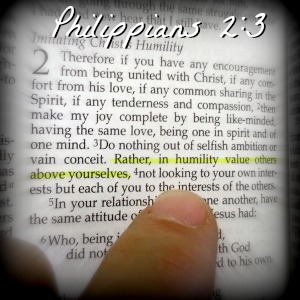 Let’s agree to put an end to competition in spiritual matters, shall we? I’m talking about the need that we too often feel to assign motives and deficits of sincerity and spiritual wholeness to people who don’t agree with us. I’m also specifically talking about the gross misappropriation of scriptural passages to frame disagreement in a “I’m right because I love God” and “You’re wrong because you don’t love God as much as me” contest. In essence, it’s a form of spiritual extortion. If I disagree with someone, it is not kind, gentle or loving to create a dichotomy of motives in which I am seeking to please God and they are obviously just pandering to cultural and secular voices.
It’s Disrespecting of the Scriptural Witness.
We can and will disagree on religious and spiritual matters, regardless of the subject or text in question. To have a civil, Christ-like disagreement, we must give the benefit of the doubt to one another. When someone speaks of their faith, their sincerity, their love of God, their motives, their beliefs, their respect of scripture, or really anything, they should be taken at their word.
Yes, the scriptural writers said some things about motives:
~ Paul in Galatians 1:10, TNIV… “Am I now trying to win human approval, or God’s approval? Or am I trying to please people? If I were still trying to please people, I would not be a servant of Christ.”
~ Peter and John and then others in Acts 4:19 & 5:29, NKJV… “But Peter and John answered and said to them, ‘Whether it is right in the sight of God to listen to you more than to God, you judge.'” and “We ought to obey God rather than men.”
~ Paul again in 1 Thessalonians 2:4, NLT… “Our purpose is to please God, not people. He is the one who examines the motives of our hearts.”
~ And Paul’s important and beautiful sentiment in Romans 12:1&2, CEB… “So, brothers and sisters, because of God’s mercies, I encourage you to present your bodies as a living sacrifice that is holy and pleasing to God. This is your appropriate priestly service. Don’t be conformed to the patterns of this world, but be transformed by the renewing of your minds so that you can figure out what God’s will is—what is good and pleasing and mature.”
What we do not find in these scriptures or in other passages is a license to blanket our brothers and sisters who disagree with us with the intention or motive of pleasing people more than God. In fact, please notice that Paul affirmed it is God who judges hearts.
I’m willing to accept that those speakers in the New Testament had sufficient knowledge to express their own motives, and I accept them at face value. I am not however willing to listen to Christians quote and paraphrase the same words in ways that paint those who disagree with them as not wanting to please God or to follow God’s lead. That kind of thing is a gross misappropriation of scripture and needs to stop. It doesn’t help us move forward or create meaningful dialogue. Instead, it violates in word and spirit the command of Christ, “Stop judging others, and you will not be judged” in Matthew 7:1, and verses 1-6 for a greater context and exposition.
It’s Disrespecting of People.
Why am I writing about this stuff? I’m sick and I’m truly tired of the accusation, explicit and implicit, that I am affirming of my LGBTQ neighbors because I seek to please people more than God, or because I choose to follow the voice of culture above the voice of God. I am sick of others having to deal with that accusation and maligning of their motives.
I regularly give my non-LGBTQ-affirming friends and neighbors the benefit of the doubt that they are sincere and trying their best to both follow God and love people, as I do with them on other points of theological and exegetical disagreement. It’s only fair to take people at their word when they say they don’t hate someone. It’s fair to take people at their word when they say they want to please God and when they believe they are pleasing God. If their choice of words and actions do turn hateful, I won’t hesitate to point that out, and have on occasion such as here and here.
Honestly, it’s this kind of disrespect that keeps us from having meaningful dialogue and sharing on so many points of disagreement. We must be careful of what I have started calling “Self-Marginalization.” Self-marginalization happens when we speak and act in such a way that others are repelled and prohibited from engaging us. As Marshall McLuhan warned us that “the medium is the message” we would do well as Christians to make sure that our medium is not the language or action of spiritual competition, disrespect or un-Christlike judgement.
I’ll end with these words from the Apostle Paul, some of my most favorite’est Pauline verses in Philippians 4:4-8, CEB. These words reject competition and domination. These words orient us to gratitude and service. These words ring with grace and wisdom…
Be glad in the Lord always! Again I say, be glad! Let your gentleness show in your treatment of all people. The Lord is near. Don’t be anxious about anything; rather, bring up all of your requests to God in your prayers and petitions, along with giving thanks. Then the peace of God that exceeds all understanding will keep your hearts and minds safe in Christ Jesus. From now on, brothers and sisters, if anything is excellent and if anything is admirable, focus your thoughts on these things: all that is true, all that is holy, all that is just, all that is pure, all that is lovely, and all that is worthy of praise.
AMDG, Todd
Yesterday I Prayed
 Most of us rolled out of bed yesterday morning and reached for the nearest device that would link us to Tuesday’s election results. We saw the list of winners and losers. We felt like winners and losers.
And I prayed. I was both a winner and loser yesterday, my vote at times landed on a candidate who prevailed and at other times upon a candidate who will not lead us in the coming years. I would imagine that we all faced some wins and some losses as the ballots were tallied. We each will have issues and interests at stake in who leads us forward. We’ll all have hopes and we’ll all have fears.
Today, I’m still praying. Tomorrow, I’ll pray some more. Prayer is not a consolation prize or an escape from the realities of life. Prayer is the ever-present expression of what is timeless, what is transcendent, what is hopeful. Beyond the arguments, the political parties and caucuses, and all the maneuvering of the powers that be, there must exist a truth and a reality undiminished by our collective failure to express God’s love, justice, grace and charity to one another. It must.
When I pray I beg for wisdom and for graciousness to inhabit the winners and losers of Tuesday’s contests. I beg for wisdom to overwhelm them all. I pray for the Spirit of the Divine to overlay them, even if they do not recognize the source of their growing empathy, mercy, grace and courage.
We keep moving, praying and hoping. I know what issues and values I have at stake in these many new leaders, and in the old leaders who will continue in their positions of power and influence. I know what many of you, a diverse group of people I dearly love, have at stake in these leaders. But we cannot let our fear ever extinguish our hope. We cannot allow our disappointments or even our victories to erode our commitment to justice, mercy and equity for all people.
I hope we’re surprised and not surprised. I hope that in the coming months and years we realize more justice, more equality, more joy, more freedom, and more of the rich life that we have to share. I hope that we see less poverty, less disease, less violence and less hatred, beginning in the halls, offices and rooms of our own Capitol. I pray that the good stuff God brings us is surprisingly beyond what we can today articulate or hope. And I hope we’re faithful enough in our anticipation to not be too surprised.
Ad Majorem Dei Gloriam. To the greater glory of God. This is my daily prayer, inscribed upon my flesh with ink, that God’s glory grows and abounds in this world. This is my prayer because I am convinced that God’s glory is found in our love, grace, mercy and service to one another. Now and always, world without end. Amen.
AMDG, Todd
Why Campaigns Matter
 I have to admit that I have not always been a big campaigner.
I guess I’m missing the activist gene, because it just doesn’t come naturally to me. My genetic code seems heavier with apathy and procrastination. But, you know what? When I stop and pay attention I have to say, campaigns do matter.
We talk a lot about civility here at this blog, and I’m not at all apathetic about our need for civil discourse. As a person of faith I am convinced that our kindness, our gentleness and our support of all people’s value and dignity are at the core of being who God has made us to be, in both our words and our actions. Campaigns often help bring important things into focus and remind us of how we are to do life, how we are to do life well.
Someone just today on my Facebook feed shared something from the campaign to get us to stop using the word “retarded” as a humiliating insult or degradation of someone or something. I agree and I shared it along. I hate the word. It sounds and feels like a hit from a baseball bat. We need to do the same with the word “gay,” just like we need to stop using “hit like a girl” and various male and female genitalia as descriptions of negative and inadequate human attributes or behaviors.
Why does it matter? Isn’t this just all “political correctness” gone too far? I’m really done with the idea that we can use speech to offend, hurt and degrade, and then cry “political correctness” when we are held accountable for the destructive qualities of our verbal choices. I’ll tell you why the words we use matter:
1) Words have meaning, history and power. We cannot simply use a hurtful word and claim innocence by the fact that we have decided what it means for ourselves regardless of the word’s meaning and influence in the lives of other people. Retarded is a great example. The word has been used to degrade, hurt and humiliate people for years. It has, as many words do, both denotation and connotation. We do not have the right to ignore it’s negative impact on people around us.
2) We cannot use a word as an insult without insulting that to which the word refers. “That’s so gay” is an insult to gay people. “Hit like a girl” is an insult to girls, not a scientific measurement or expression of applied force. Using phrases like “He’s a real douche” or “Don’t be a dick” attaches negative meaning to things which are not in themselves negative. Feminine hygiene and male genitalia are not bad things. Our thoughtless words and actions can lead us to unintended consequences of meaning and perpetuation of hurtful meanings.
3) We have an obligation to listen and care. When our neighbors are injured by our words and/or actions, we have an obligation to care. There is no healthy philosophical, religious or spiritual system which separates one person’s well being from the well being of the world and people around her/him. We are connected. We should care.
Also…
- Joining a campaign doesn’t fix the problem. We don’t signal our participation with an anti-bullying campaign believing that to be the solution to bullying. What we hope is that within the sphere our friends and family we might increase the conversation and awareness of a problem, and thus we would hope to participate in concrete steps toward a solution.
- Joining a campaign does mean you’re thinking about something. Thinking is a good thing.
- Joining a campaign does mean you’re listening. Listening is polite.
- Joining a campaign does encourage campaign creators. That’s just neighborly.
Here are a few campaigns I’ve valued over the years and in recent months. I was excited to have had a chance to run in a local ONE Campaign 5k earlier this year and I just got my “It’s On Us” t-shirt a few weeks back. I believe that these kinds of campaigns are hopeful and reflect a lot of positive thinking and action in our world. I just might be becoming an activist…
Spread the Word to End the Word (retarded)
It’s On Us (combatting sexual violence)
He For She (solidarity for gender equality)
Hollaback! (you know, stopping street harassment)
I Choose (anti-bullying)
Human Rights Campaign (civil rights and equality)
The ONE Campaign (ending poverty)
Let’s keep it real. Endorse and support the campaigns you believe in, and let’s make the world a better, shinier, happier place for having supported us through the years of our lives.
AMDG, Todd
I’M NOT ANGRY! AND I’M NOT BOYCOTTING ANYTHING! (LOL)
 It’s time for followers of Christ around the world to stand up and courageously declare that we aren’t angry and aren’t all dopey rubes who believe the internet memes and alarmist headlines that try to turn us against our neighbors! It’s time we said, “NO!” to more silly calls for boycotting companies that support the dignity and civil rights which we and our diverse neighbors all cherish! It’s time to be heard! It’s time we took a stand for the things in our personal lives and choices that matter before we lose them: love, joy, peace, patience, kindness, goodness, faithfulness and self-control. And what about civility and honesty? We’ve been taught to be kind and to use our words to build others up! It’s time we got serious!
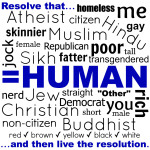 I’m not only not angry, I’m really quite happy. I enjoy my faith and my faith community. I enjoy exercising my right to choose a faith and pursue it, or not. And I’m happy that others have the same right. I’ve searched my scripture for a lot of years and just can’t find that elusive reference to the United States, or any Christian nation for that matter, but I keep stumbling across lots of things on my own life and choices and my responsibility to serve other people with sincere love and gentleness. It seems like there was a verse at one time telling me which political party I had to belong to in order to remain a Christian, but I can’t find it anymore. So, I’m just gonna be happy and let everyone know it! Hey people, love you!
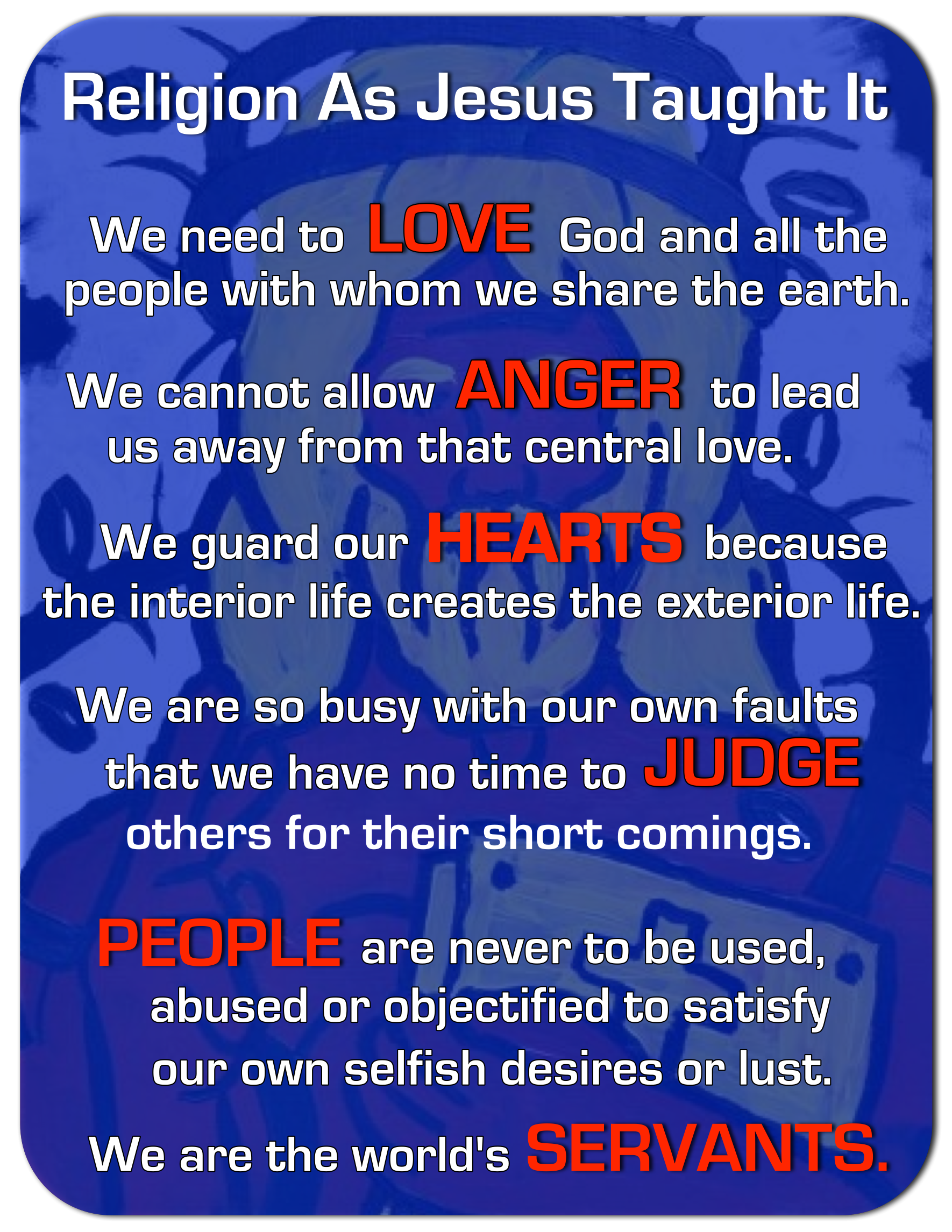
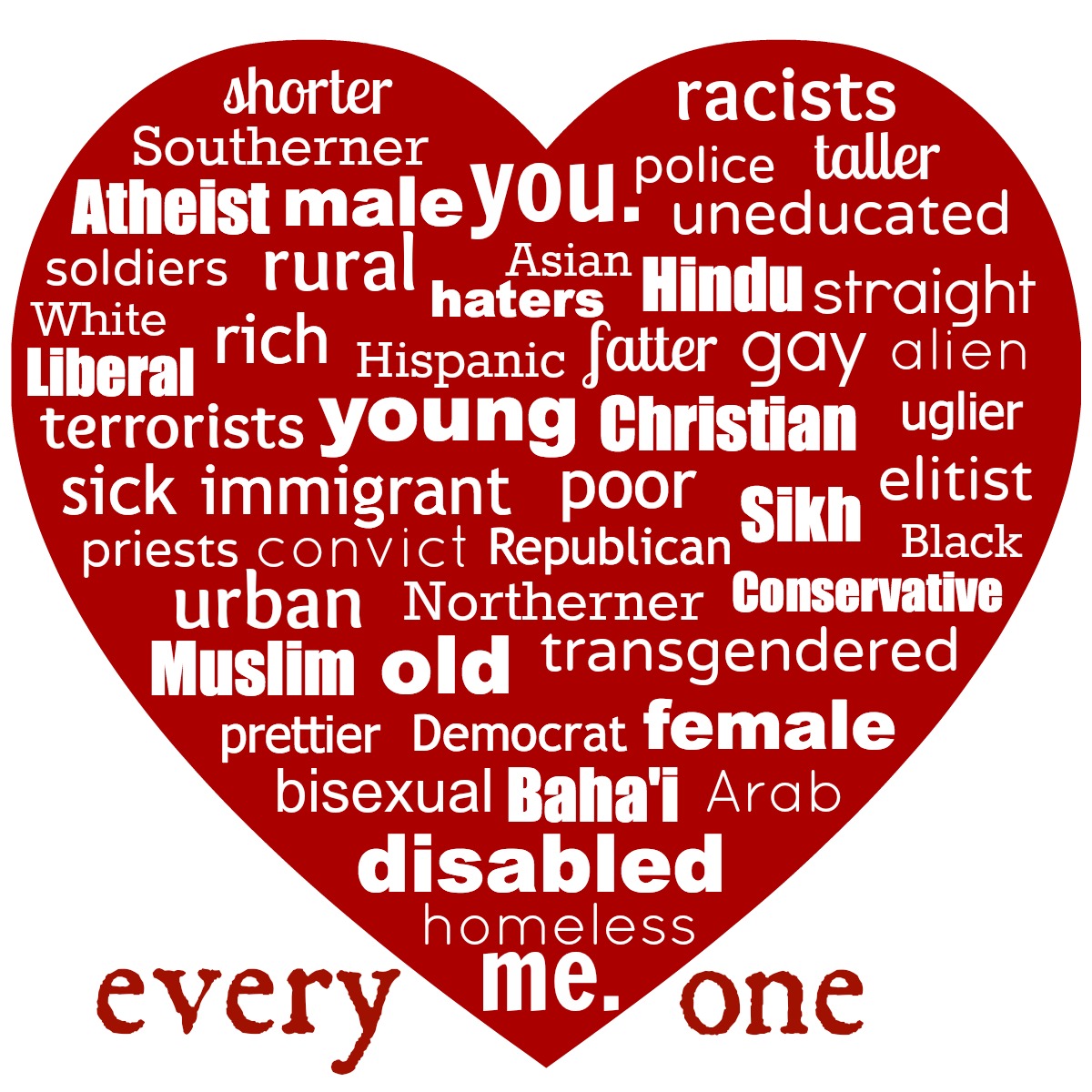 And I’ll tell you something else while we’re at it… I love my neighbors! I love my Christian neighbors! I love my Muslim neighbors! I love my Jewish neighbors and all the other religious neighbors I have whether they are Sikh, Baha’i, Buddhist, Hindu or Wiccan, or two or those, or one I forgot to mention! I love my atheist neighbors, too! I love my gay neighbors and I love my straight neighbors! I love my old neighbors and the young ones! I love my male neighbors and female neighbors and trans neighbors. OMG, I love them all and I’m not going to let anyone try to represent me and say I don’t. I love them because they are amazing people, and I love them because my faith tells me to love them. I’m stuck with love! I may feel like loving less some days or caring less, but I’m screwed if I want to be hateful. Welcome to Christianity as Jesus taught it, huh? Judgement is out the door, meanness and carelessness are gone, and my right to get angry and tell someone off is finished. Distilling all the negativity and hurt down to love is rough stuff, but it’s the commitment I made at baptism.
 And you know what else? I cannot believe that anyone is dumb enough to threaten their neighbors just because they believe differently from them! This is AMERICA! In America we are guaranteed the right to be
 Christian the religious persuasion of our choice. If you’re silly enough to threaten and deny your neighbor their right to free choice, free thought and free speech, then please don’t be surprised when someone tries to take the same from you. And for goodness sakes, don’t use my religion to justify your ridiculous actions and words!
If you see or hear someone doing something incredibly stupid, mean, threatening or uncivil in the name of Christianity, please don’t think of me. And don’t think of Christ, either. For anyone interested in it, I made a cheat sheet on what Jesus taught about religion. If we are getting this simple set of ideas right, then we wouldn’t have all the arguments, boycotts and fights going on with our neighbors.
This is my response and repudiation of religious intolerance and meanness. This is my declaration of confusion at people using Christ to dominate, hate or condemn others. This is my way of trying to use a little light-heartedness and honesty to sincerely stake a claim on the love that Jesus taught and instituted with his life, ministry, death and resurrection.
Because of my faith: 1) I do not need to judge my neighbor, 2) I must craft my words to support and serve, 3) I am not interested in dominating (so if there really is a culture war then I’m screwed), 4) I love people because God loves people, 5) I love people because God made them to be amazing and lovable, 6) you and I are not stuck in a transactional relationship like people play at in our society, seeking personal gain… I simply owe you love and will try to pay off that debt, 7) this is how I will try to live as a pastor, a husband, a father, a brother, a son, a cousin, an uncle, a neighbor, a friend and a human being, and 8) I recognize that I’ll surely need some grace when I fail to live up to the standards my Christ taught and modeled.
Now, enough with the declarations. It’s bedtime. Thursday is done. Peace out.
AMDG, Todd
Ferguson: The Need to Listen
Before Ferguson becomes old news in the wake of a more recent death or similar narrative to the sad loss of Michael Brown’s life, I want to ask just one thing of my beloved friends and neighbors who are not African American: Please, start listening and validating your African American neighbors’ stories, fears and feelings.
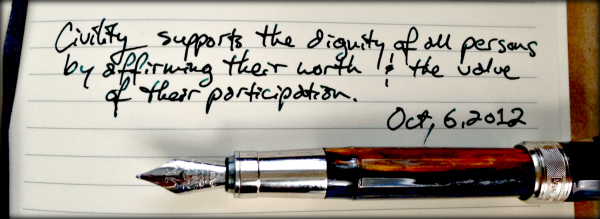
It’s time for us to fully hear and validate the narratives from our African American sisters and brothers across this country. We have to listen, to hear the fear and to hear the pain, and we must accept it. It can be such a blessing to be heard, and such a hurt to be ignored.
When something like the death of Michael Brown occurs, the fatal police shooting of an unarmed young African American male, we begin to hear the multitude of voices saying that this is status quo for their neighborhood. They say that this just part of being black in America, that it’s their fear for their own children, and that it’s just another white man killing a black man. We need to listen to these voices.
I resist listening because to do so is painful. Another armed white man has killed an another unarmed black man, and won’t face any charges, because that’s just the way it is in America. As a white man I cringe and want to look away, to “listen away” if only I could. I want it to not be true. I want it to be wrong. I want to deny the voices. But to deny the words, to ignore the words or to argue against the reality of my neighbor’s fear, pain and frustration, is to add insult to their injury. In fact, it’s worse than insult. It’s further injury.
It’s painful to validate the pain of my neighbor because I must then help carry it. I will sometimes do this for people I know and love, say the people in my family or my closest friends… but to carry the pain of a stranger? To carry the pain of a stranger, a pain that is also an indictment of me and the so near and present history that has been a huge part of me being who I am, and where I am, and what I have? That’s hard for me, a white man.
And yet, listening is exactly what I need to do. I have to listen and believe in the person speaking. I have to validate their story. I must value and give dignity to the experience of my hurting neighbor. If I cannot hear and value my neighbor, then I cannot speak to and journey with my neighbor. I will have already taken from them the value of their presence.
We all need to be heard and validated. When our African American neighbors speak, they must be heard. When their stories are told, we must welcome them to share. And when we are shamed by their words and begin to feel the hurt they are sharing, we must carry it with them. This is the only road to the future.
When our African American neighbors speak of their fear of raising children and the specter of death from police shooting, we must listen. When they speak of fearing the police, we must listen. When they speak of being misunderstood and harassed by white law enforcement, we must listen. When their story is painful to us, we must pay the price of listening.
There’s no way forward other than giving the dignity of thoughtful listening, and the validating worth of being heard. We cannot simply choose a side and hunker down with our arguments in our better neighborhoods and hope for compelling distractions to ease our disquiet… at least until the next shooting.
There are many narratives, and they must be equally heard. The Ferguson narrative is not the only African American narrative of contemporary America, but it is an authentic and valuable narrative that needs to stand alongside the other stories of being an American today.
There are also streams of experience that cut across the many narratives. We won’t begin to find a way forward between communities and their police forces as long as we ignore the real fear, the real pain and the real distrust engendered by histories of abuse, injustice and neglect.
A new narrative comes from our collective pain over the past and present, our redressing of wrongs and our belief in one another. When white Americans quote “black-on-black” crime statistics and point to the background looting that so often accompanies the peaceful voices begging to be heard, we do a deep injustice to the future, theirs and our own.
We cannot just say that we want to move forward. We have to be fully present now. We must trustworthy listeners. Although there is a goodness in attempting to be “color blind,” I’m afraid the weakness of that idea exists in it’s refusal to validate the divergent stories and experiences of different colors.
 So, I’m trying harder than ever to listen, and I ask you to as well. Seek out the stories. Let the voices have their say and be heard. I ask you to want to better understand. Toward that goal, I’m reading Black Like Me at the moment. What the heck, I grew up in Texas and didn’t read this in school!? I grew up a few miles from the author’s home town and never heard of John Howard Griffin!!! Come on, Texas! I only know of him now because my dear friend David Gerard, who is African American, mentioned him in a poem I’m going to share in this post. David is also a musician, a poet and a gracious soul.
 Years ago I was affected by reading Nathan McCall‘s Makes Me Wanna Holler, a book of pain that forced me to hear someone’s story that was so very different from my own. It was hard to read and I wanted to argue at times, but his story needs to be heard and understood.
Maybe you have heard of “the talk,” the talk given to young black men by their parents who fear for them? This is a real part of growing up in America for many families, and we should all own that shame and want a better future.
I ask you, to hear my friend David’s poem, and to love him as I do. I’m going to reproduce the poem here and try to get his arrangement as visually true to his pdf he sent me as possible…
THE RACE CARD
when I try to tell my friends
what it’s like to be a black man in America
they evoke a patronizing empathywhen I try to tell my friends
that there is one standard for me
and a double standard between us
they seek refuge in their denialwhen I try to tell my friends
how every black man ever stopped by the Police
wonders if he’ll be shot to death
they say I’m just being melodramaticwhen I tell them that i’m nothing
in the eyes of authority
and that my life is easily expendable
they try to change the subjectwhen I tell my friends
that every black teen from Trayvon Martin to Michael Brown
is six feet under due to prejudice and brutality
they ask me to look at “the other side” of thingswhen I tell my friends
to go undercover, as John Howard Griffin did
and notice the difference in how they are treated
they accuse me of “playing the race card”when I was twenty-two,
I was talking with a friend
in the lobby of a moviehouse
when a bunch of cops came inin search of a suspect
they pinned me to the wall and frisked me
because they were looking for a black man
when the victim saw me
and said to them, “That’s not him”
they took their hands off me and left
without apologywhen I try to tell my friends
the humiliation and shame I felt
and their casual disregard
they say, “they were just doing their job”when I try to tell my friends
they will never know what it is
to walk a mile in a black man’s shoes
they just don’t get itmy friends accuse me of playing “the race card”
but that hand was already dealt to me
the day I was born.18 August, 2014
I thank David for telling his story. I pray that we listen better, and that together we all can make a way forward, a way that tells and values our stories, and writes a better one for tomorrow.
AMDG, Todd
No Wonder God Loves You!

My family went to enjoy a baseball game last night, the Washington Nationals and the Baltimore Orioles! It was a fun evening, marred only by the street preachers.
It’s another one of those times that I feel bound as a pastor to apologize to the rest of the world, Christian and otherwise, for our fellow believers who just don’t get it. To everyone who, like my family, had to run the gauntlet of 5 or so screaming preachers from the Metro to the park: I’m sorry.
I’m kinda over making excuses for these street preachers, you know? I used to always point to their good intentions and hope that they were yelling the kind of message that at least person might need to hear, but I’m over it. Next time I’m going to sincerely ask them to stop, even though they won’t, in the most loving and polite tones I can manage.
There are some real issues here that I believe are just WRONG… first, they have not a clue to whom they speak, so why would they open their mouths? Second, they operate on the worst and most negative assumptions about their neighbors, some of whom are really awesome people. And third, they aren’t “biblical” in the sense of preaching as Paul (whom they mentioned repeatedly as we passed by) or Jesus (on whose behalf they claim to be speaking).
Is it a problem to not know to whom you are speaking? Absolutely. The ways that Jesus spoke to people varied greatly, always having to do with the intimate reality of their lives and needs. Jesus didn’t have blanket zingers and one-liners to throw at people with angry shouts and glaring. These street preachers can multiply hurt in people’s lives by piling on accusations and condemnation on some who do not need anything else heaped on them. So much of the time, because their message assumes that the people walking by aren’t people of faith, they are just yelling inappropriate conversion one-liners at people well on down the road of spiritual growth.
Ah, and there was that word: assume. Their assumptions are that everyone passing by them is gross, sinful, rebellious toward God, mean, defiant, stubborn, willfully ignorant, etc. Why do we have to assume the worst of our neighbors, even when they seem different from us? Paul didn’t do that… just look at the way he spoke so respectfully with the crowds in Athens in Acts 17.
And this style of intrusive preach/yelling is not really a the biblical style. These street preachers are not following a biblical example. The closest we could find might be the idea of an Old Testament prophet like Jonah walking three days across the length of Nineveh. But then, Jonah had some serious people issues, too. He was angry when people turned to God… he wanted them to burn. In the New Testament we find no such example of preaching. Even John the Baptizer, probably the most fire and doom preaching you’ll find in the New Testament, was preaching by the river to those who came to listen. He knew his audience and they had asked for a message.
I’m not just out to criticize and blast these street preachers, because despite their not having any way to know their audience, despite their working from such negative assumptions of people, and despite their not continuing any constructive biblical tradition, they just might have some good intentions down deep. So how about we work through some alternatives?
“No wonder God loves you! You rock!”
Want to start a fun conversation that is truly reminiscent of a biblical style of proclamation and message? Start with that that one… “No wonder God loves you! You rock!” I saw a wondrous variety in people at the game last night, all shapes, sizes, colors, religions, economies and more. When some folks on our row left early they offered an almost whole bag of roasted peanuts to Ike. There was a lot of beauty going on in the people at the stadium. It was a rough game for Nats fans, and the park was half filled with Orioles fans… but everyone was gracious and well behaved as far as I could see.
And why not give an affirming, gracious message to people? You know, it’s the whole “For God so loved” thing. Why do we seem so motivated by anger and disgust when our message is a kingdom of grace?
“Free Water!”
How about giving away free bottles of water on a hot night outside the park? That’s nothing new… lots of ministries have done this in many contexts. And if someone asks, “Why are you giving away free water?” you can answer, “Because I love you!” You do, right? That’s why you’re there, right? Love?
The only down side I can imagine to giving away free water would be some angst from the people trying to sell water outside the park. Maybe go the week before and warn them so they can plan to be selling salty snacks to compliment your gift? And don’t say that you don’t have money for water… all those electric megaphones and battery packs weren’t cheap!
“Can I pray about anything for you?”
How about offering to pray with people? Why not ask if anyone wants to write a concern or a joy over which you promise to pour your heart and prayers? Start with the poorest of the folks who are there to beg for money, the homeless veterans and musicians playing bucket drums. Shake their hands and give them a hug and a few bucks, then ask what you can pray about for their lives and needs. By the way, this is also a great way to get to know the people with whom you’re talking. Wow, imagine having a message of grace shaped by your hearer’s life instead of a pre-printed placard that won’t make much sense to them! Boom, baby!
See, it’s not hard to think of things to do when you drop the ugly assumptions and let some love tenderize your soul. You begin to see people differently, not different from you, but as people you love and are moved to bless, instead of them being scary people who need to be cursed and condemned.
By the way… anyone want to do some of these things? I’m kinda excited to try them myself. Let’s go love some people!
AMDG, Todd
Social Media Requires a Social Conscience
 Let’s do something new.
It’s totally real and authentic, we all get indignant and fired up by things that cross our paths on social media platforms on any given day… and we go to sharing and posting away. Whatever our political, social, religious, philosophical or fiscal inclinations might be, there’s a whole world of memes and news stories out there to support our view and also to ridicule our view.
Are so many of those memes and stories just a bit biased, unfair, exaggerated or intended to cast one side in the worst light possible while giving the most generous presentation to the other side? Well, of course. Are those memes and stories intended to inflame and create controversy? Surely. Do they change anyone’s mind or alter anyone’s position on anything? I don’t think so.
Too many of us keep on breaking the internet’s #1 rule: Don’t feed the trolls. And we think we won something. We keep sharing and re-posting the jabs and skewers upon which we gleefully imagine “the other side” flailing in their death throes. But it’s not happening. No one is dying… only the discourse. The casualty is the space between us… it grows more and more dense and dark, deadly and confining.
Let’s try to make a change of the better, shall we? Let’s stop posting and sharing all the things that inflame and make us indignant. Let’s “lean in” as people are saying now, or “bear down” as we’ve said in the past, on making our shares and posts really count for good. You and I, each of us, in all our diversity and uniqueness, share this burden and this responsibility.
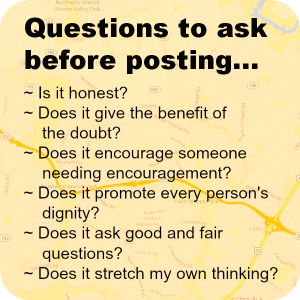
I quickly came up with six questions to ask myself before posting or sharing something. If I can answer yes to each, then I will share or post. If I cannot answer yes to each, then I need to stop, drop and rethink. Why am I posting? Is it what I really want to post? Why am I struggling with a yes on one of the questions?
Questions to ask before posting…
- Is it honest?
- Does it give the benefit of the doubt?
- Does it encourage someone needing encouragement?
- Does it promote every person’s dignity?
- Does it ask good and fair questions?
- Does it stretch my own thinking?
How would you adopt and adapt those questions and make them your own, for the good of more thoughtful and meaningful posts? Did I miss anything? I’ve written a little about Facebook Etiquette in the past, but this hopefully goes a little further. Let’s do something new.
Let me share a few thing additional thoughts real fast…
HUMOR: There’s a bunch of humorous things that can be posted without worrying about the heaviest questions of goodness and dignity. But don’t think that because we can post a cute kitten video without asking deep questions that we can then post any humor without asking good questions. Be wise. Think deep.
PERSONAL STUFF: Same thing goes here I think. If I post a proud pic of the salad I made for lunch, that’s cool. Many times we post and share things that are rather benign and don’t beg to be vetted by a thoughtful social conscience. But having some benign posts does not negate my responsibility to weigh my more meaningful posts and shares against these questions.
CONVICTIONS: I’m not asking us to stop having convictions and deeply held beliefs. I’m asking that we learn to share them in ways that are not combative or mean-spirited. Speak your mind and share your heart, but not just to score a point or one-up somebody in your feed.
Perhaps we need to have an inverse set of questions for when something seems benign or we aren’t sure how to apply the first set of questions.
The Inverse Questions to ask might look like this…
- Do I see a dishonesty or a stretching of the truth in the post/share? (Or better, have I looked into the background and sources to know if it’s honest, true or accurate?)
- Does it assign someone a set of motives they have not clearly themselves articulated? (Often this involves name calling and accusations of being a “communist” a “conservative” a “liberal” a “racist,” etc.)
- Does it openly ridicule and make fun of someone’s physical person, race, ethnicity, nationality, culture, language, religion, sexual orientation, gender or other personal expression or reality of their being?
- Does it devalue a person or a group of people or invite negative thoughts about a person or group of people?
- Does it only set out to win an argument without leaving room for dialogue and searching?
- Does it simply affirm what I already think without causing me to question deeper or more clearly, or to learn something new?
If you’re a follower of Christ, there’s a strong biblical case for this kind of discernment in our daily communication. If you’re a person of another faith, Jewish, Muslim, Sikh, Hindu, Buddhist or one of the world’s other great faith systems, I know that this is in your scriptures and creeds. I’ve seen it in many of your writings and heard it preached in each. If you are a person of no faith, I know you are completely capable of seeing the goodness in this idea.
As always, the question is what will we do? We can look back… looking. Or we can look forward, and do. Forward lies the the question, the answer and the hope.
AMDG, Todd
Here’s the question in some Christian scriptural terms…
Is the post/share:
- True (or false/deceiving)
- Noble (or unworthy of you)
- Right (or simply wrong)
- Pure (or makes you feel dirty)
- Lovely (or an image/word of hate)
- Admirable (or just winning at any and all costs)
- Excellent (or stooping too low)
- Praiseworthy (or just a quick laugh at someone’s expense)
Philippians 4:8
“Finally, brothers and sisters, whatever is true, whatever is noble,
whatever is right, whatever is pure, whatever is lovely,
whatever is admirable–if anything is excellent or praiseworthy–
think about such things.”
 toddthomas.net