
Ignatius of Loyola, My Spiritual Friend
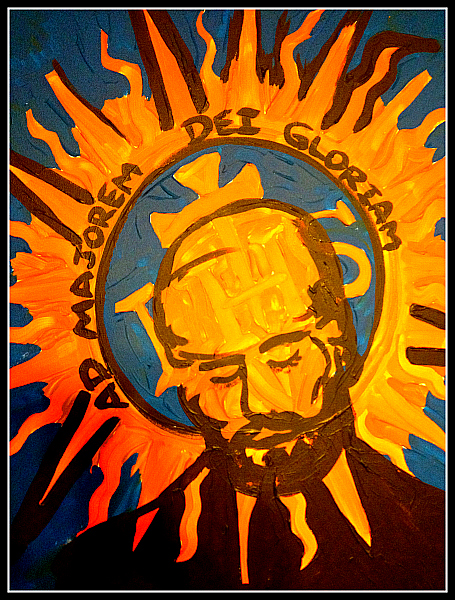 Sometimes God brings us the friends we need at just the right moment, and other times we meet someone and just hold on for dear life because we know we found a treasure. I believe St. Ignatius of Loyola entered my life in a combination of both those movements… I am so thankful that God brought me in touch with Ignatius’ lasting influence, and I’m determined not to let go of my connection to him.
I have a painting on my bedroom wall of Ignatius with his community’s catch phrase, “AD MAJOREM DEI GLORIAM,” to the greater glory of God. I meant this to be simply a study, a first expression of a painting I was carrying in my heart. As often happens, my attention span gave out and the study is all I ever painted.
Today is his feast day, July 31st! It’s one of the few feast days I will think about in any given year and I always look forward to it. Ignatius is my friend, a spiritual friend and mentor. I’m blessed to have become an heir of his contributions to the world.
Ignatius, as I have come to understand him, was a mystic who enjoyed laughing. He was not terribly well educated in theology, but had a passion and a zeal, sometimes tempered by wisdom and sometimes not so much. He was devoted at once to community and individually hearing God. He was an opposable mind.
I like Saints who shine in their humanity as much as their connection to the divine, who make us stand in wonder at the way the two are so often one in the same, as God intended the two to intertwine in us. I like the way that Ignatius was a person of vision and visions, though he sometimes didn’t know what a particular vision meant. Such an occurrence didn’t cause fear or anxiety for Ignatius, because “perfect love casts out fear.”
He was a soldier turned saint. He was a Don Quixote. He was a renaissance dreamer who took a canon ball to the leg and was forced to slow down long enough to see what would matter most to him in life.
He taught me to pray with the saints. I had grown up with many “s” saints, the wonderful people of faith all around me, but I hadn’t grown up with the “S” Saints. Ignatius’ life work, his Spiritual Exercises, welcomed me into the joyful practice of praying with, and even just sitting with, a community of comfort, love and support I had not previously known. Suddenly, I joined the generations who call Mary “blessed” and I prayed with Jesus instead of only to Jesus.
I will always be thankful for my spiritual friend Fr Leo Murray SJ in Georgetown who patiently led me in the Exercises for four years. Community and friendships come to us in many ways, and the lasting influence of Ignatius’ joy and devotion is a gift I will always carry.
A New Word for Prayer
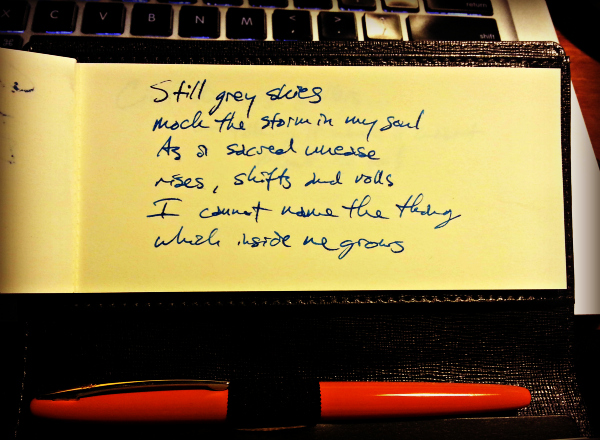 “Prayer” is just a word, and the word is not the reality of actually praying. I’m kinda tired of the word to be honest. In my own life it’s just accumulated too much baggage and confusing background noise. I want to pray, but I’m tired of trying to pray. I find myself wanting prayer, but what I need is to pray.
Back in the day, the New Testament most often used a handy compound Greek word for prayer that signified both intimacy and longing. In Hebrew we have the history of an even more amazing word that conveys attachment and self-evaluation. I’m not going to painstakingly link my readings in for you. I usually do, yes, but this time I’ll let you do some Googling and digging if you’re interested.
In English we have a nice latinized word we are all used to, “Pray.” Our good friends Merriam and Webster tell us that the word has two general meanings: 1) to ask for or entreat (the linguistic roots of the word), and 2) to address God (the general historic use of the word for the last bunch of centuries).
But I’m more interested these days in praying than in prayer. I picked up a quote some years ago from my reading of Thomas à Kempis in The Imitation of Christ, “I would rather feel compunction than know how to define it.” Let me to just say “Right freaking on!” to that sentiment. That statement can be made of many things, not just our bigger more complicated terms like compunction. It’s how I feel about prayer. I need to experience something bigger than the word.
So, thinking about the Hebrew roots and the Greek roots and thinking of the way Jesus taught and practiced praying, what is a word for what I’m looking to find and do? What word captures what prayer would be in my life if prayer becomes freed from some of the baggage it’s been carrying?
I think often of a lost word for most of us in the West: meditation. Years ago, as in like over 20 years ago, I heard of “soaking.” Soaking was the practice of laying in bed or sitting in a chair with the lights down and headphones on, letting music guide you into a meditative state for connecting with God. It’s good stuff. Worthy of a try or two.
In Mother Teresa’s “Simple Path” prayer is sandwiched between silence and faith. Hmmmmm. Mahatma Gandhi said, “Prayer is not asking. It is a longing of the soul. It is daily admission of one’s weakness. It is better in prayer to have a heart without words than words without a heart.”
Rumi has an amazing quote about passion, what I will call “passionate swimming“: “With passion pray.
With passion make love. With passion eat and drink and dance and play. Why look like a dead fish in this ocean of God?” But I’m not sure that replacing prayer with passionate swimming will be useful for me in a daily way. He does though capture in a beautiful style the desire to revel in the fully present and enlivening God.
A quick look around shows an affinity we have with linking dance and prayer, and not just among those who follow Christ. Like swimming, I think dancing embraces an immanence that I want to experience in prayer. But I’m not even a bad dancer. I just don’t dance.
I want to have a word like imagining. I want to have a word like creating. I want a prayer experience that is foundational to a constant becoming. I want a word that can include riding my scooter, painting, crying to God in anguish, singing a hymn and journaling. I want a word for the capture and crafting of a soul.
I need a word for at one moment losing and finding myself in God. I need a word for at moment experiencing and re-creating the reality in which I live. I already know that hugging one of my sons is praying. I know that every kiss I give my wife is a prayer.
I’m still looking, and still trying to find it, even if I can’t define it. I am hopeful and expectant, that even a simple blog post becomes prayer, an imagining and a rooting of myself in something unseen and yet present. And for a while, in a moment of time and place, my soul is remade a little closer to the image of God’s heart.
Jesus Didn’t Weep Over Liberty
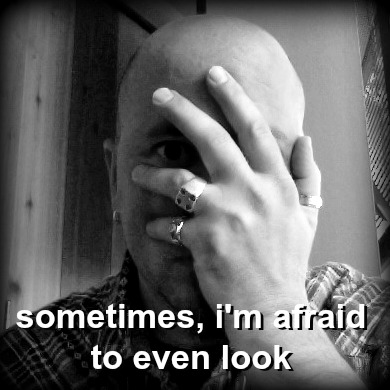
With the historic ruling this week by our Supreme Court on same-sex marriage we have been inundated with media coverage of responses from both sides of the issue. I understand that emotions run high on issues like this one, but I also know we still need to speak and react in responsible ways, especially if we step out to offer what we suppose would be God’s commentary on events, or more specifically, commentary from Jesus.
I was honestly, totally, down-right majorly peaved off when I saw this Tweet start making some headlines, from Gov. Mike Huckabee (@GovMikeHuckabee), My thoughts on the SCOTUS ruling that determined that same sex marriage is okay: “Jesus wept.” He also Tweeted this gem, 5 people in robes said they are bigger than the voters of CA and Congress combined. And bigger than God. May He forgive us all.
Now, first I want to give the one nod to the Gov. that he’ll get from me, the fact that he began the “Jesus wept” Tweet with the words “My thoughts on…” But that’s all the praise he’ll get from this Pastor after moving on to a complete misuse of the tears of Jesus to essentially make Jesus appear as the enemy of our gay neighbors. Wrong, sir. For the love of all that is Holy, stop it! Here’s a bit of the text the Gov. quotes from, John 11:32-37:
32 When Mary reached the place where Jesus was and saw him, she fell at his feet and said, “Lord, if you had been here, my brother would not have died.” 33 When Jesus saw her weeping, and the Jews who had come along with her also weeping, he was deeply moved in spirit and troubled. 34“Where have you laid him?” he asked. “Come and see, Lord,” they replied. 35 Jesus wept. 36 Then the Jews said, “See how he loved him!” 37 But some of them said, “Could not he who opened the eyes of the blind man have kept this man from dying?”
Let’s just break a few things down, shall we? Why did Jesus weep in that famously short verse the Gov. quoted? He wept over the death of a good friend whom he loved. He wept with hurting people, hurting friends. The weeping of Jesus is not a rejection of anyone, but a connection to all hurting people. Jesus wept in love, sorrow, loss and the experience of both his own pain and empathetically the pain of those around him.
To take the empathetic, beautiful weeping of our Lord and turn it into a hateful rejection of our neighbors’ search for civil justice is despicable and unGodly in the extreme. As a Pastor, I renounce this distortion of my Lord, I renounce the Gov.’s words and intentions. The Gov. rightly speaks for himself, himself alone. If he cannot do better textual work than that, he needs to shut his mouth and spend some more time in study and prayer.
Why take the time to blog on this? Because every voice that counters that kind of textual abuse is needed. Our gay neighbors who have so long been civilly disenfranchised from basic spousal rights and privileges have a lot of reason to celebrate this week. And to posit the idea that Jesus would weep at their joy, weep at their liberty, weep at this corrected injustice, is horribly wrong. In fact, I find it counter to the Jesus who wept at that scene in John 11. I find it counter to the Jesus who wept in love, not in rejection of people’s joy and liberty.
I respect the Gov.’s right to speak his own mind, hold his own opinions, and even maintain his own beliefs of what his faith may or may not say about same-sex marriage and attractions. To deny the Gov. his liberty would only lessen the hard won liberty bestowed on his gay neighbors this week by the Supreme Court. But I will not respect, condone or be silent at the abusive misuse of Jesus for the Gov.’s political, social or ratings gain.
Just as a reminder, back when so many children were viciously gunned down at Sandy Hook Elementary, when it would have been SO INCREDIBLY CORRECT to say that “Jesus wept,” the Gov. chose instead to rail on his political stump against gun control. He says something about slipping over to the “pastor side” and then speaking in blame about a mythical removal of God from schools. Why not let Jesus weep then with those hurting people? Why not let God be seen in the amazing person of Jesus, present with us and hurting with us and ready to make any journey with us, on good days and horribly bad days? Because the Gov. did not ever slip to the “pastor side” of things, but instead remained intrenched in his political/social agenda.
There is a lot more injustice to be righted in our country. There are still many disenfranchised neighbors waiting for us to move in their favor and right the wrongs that have often shaped their lives to their loss. God is not ignorant of their tears, even if pastors sometimes are. Jesus weeps with them, never against them, regardless of any pastor’s personal agenda.
Clerical Healing +5 for every book carried but not opened!
I’ve had a couple of fun clergy moments this week, one somewhat in the line of what people think (or dont think) about clergy, and then one of those classic “you know you’re a clergy when” kind of things…
 My character is a Cleric! I get a lot of solicitations at the church office, by phone and mail, every week. I’ve heard it called “preying on the pray’ers,” but for the most part it’s the usual benign inter-company marketing. But this week I got a letter from a company of lawyers who like to represent people disabled at work or in accidents and who need compensation. Their letterhead tagline? For reals, it was “Got disability?” Ugh. Sometimes people think I sit and work at Starbucks because I’m a hip dude, but I’m actually hiding from the marketing.
The funnest part of their letter was that they addressed me as a “Cleric” instead of clergy, hehehehe… and all my gamer friends giggle along. It may not mean much to you, but for a nerd like me to have some rationale for officially claiming myself a cleric is pretty exciting.
And I’m freaking addicted to books! I’ve also been thinking of all the extra books I’m lugging around every day. Is it a clergy thing? “My backpack overflows…” I know I won’t have time to read them all, most will go unopened… but I can’t not have them! Honestly, I’m a clergy, not a cleric… my books are the usual prayer books, missals and theological works, not tomes of spells or priestly runes… but they’re still magical! I love them!
So, I’m just sitting here having my third cup of coffee, waiting for my manna bar to regenerate. I don’t intend to cast many healing spells this morning but I’m reeling from the disappointment of not being able to find a book I wanted to carry. Worry not, I found three others to take it’s place.
Walking Across Bethesda
We’ve all seen the scenes: Humanity has destroyed themselves and now nature has reclaimed our cities and streets! From Logan’s Run to I Am Legend and every 12 Monkeys in between, we’ve been schooled in the thought that nature is just waiting for our demise so that the animals and grasses can again rule the plains.
I don’t think that’s exactly right. I love walking across Bethesda in the mornings. It’s not the exhaust or naughty honking that captivates me, but the bunnies and the chipmunks, the grass and the trees. It was just last year when Asplundh came through and devastated our trees with wanton limb trimming, and we wailed and gnashed our teeth. But a couple of seasonal turns later and they look like they’ll be ok, as if to make a rude gestures back at the trimmers and taunt, “Try it again, buddy!”
And the bunnies move like the tide across the heart of downtown Bethesda, ebbing and flowing into our flower gardens and munching our wild growing clover. They are gorgeous. They belong among us. Nature isn’t waiting for our demise, just for more of us to leave a seat at the table, to make a little more room for green things and furry things.
So this morning as I walked to my big glass and stone Starbucks to sit inside and sip my coffee in air conditioned humanness, I was so blessed to watch a young rabbit having it’s breakfast in the fresh, green dew-covered grass. I always cringe when it rains and I imagine what our dogs will do to our floors after going outside, but I am so happy for the bright new buds that the bunnies reap after those showers.
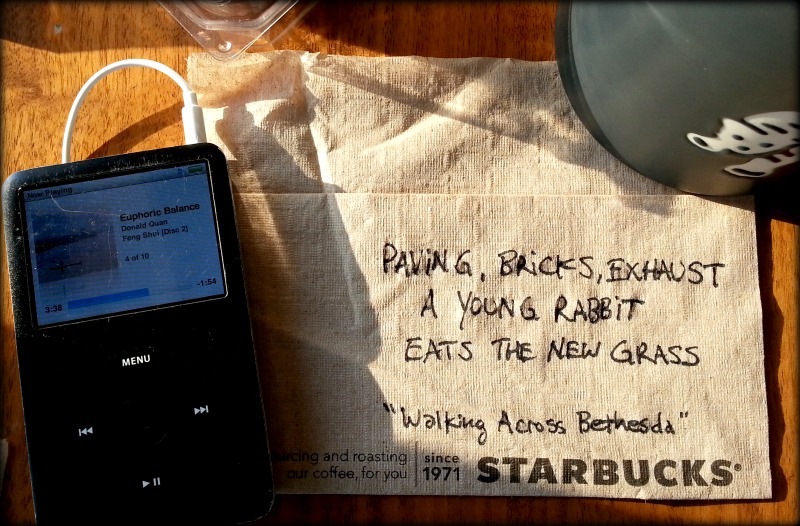
I wrote a haiku after watching the bunny…
paving, bricks, exhaust
a young rabbit / eats the new grass
Some Afternoon Body Prayer

“I lift my hands to your commands, which I love,
and meditate on your decrees.” Psalm 119:48
I’m practicing some body prayer at my desk this afternoon as I read my Midday Psalms. You’re invited to do this with me. My prayer is: “Your kingdom come, your will be done, on earth as it is in heaven.”
Sitting at my desk I straighten my back (though it can be done standing) and cross my arms on my chest, hands open and flat against each shoulder. Throwing my head slowly back I look up and raise my hands into the air, gradually bringing them apart in a circular sweep outward until both rest at my sides. I do this several times praying, “Your kingdom come, your will be done, on earth as it is in heaven.”
And I am awakened.
So much better than drinking another cup of caffeine, my afternoon changes as my joints pop and I feel my back loosen a bit. My prayer is no longer just whispered or thought, but now it seeps into my body in newly opened places.
Predation is Not Cool
 I feel the need to say it out loud: Predation is not cool. Adults turning to children for their emotional and sexual satisfaction is not cool. Sound obvious to you? Ok, but there seems to be a missing component for some folks in our culture about what it means to grow up and enter the adult world of responsibility and mature action. It turns my stomach more than a little that it’s so necessary to be talking about sex with minors, even in opposition to it.
Here’s the short version: Leave the children alone. Date someone your own age or at least in the same legal and developmental demographic as you, as in adults need to date adults, not minors. I don’t care if you’re 45 and your life’s love is 25. You’re both adults. Adults: If you know me, then you know I don’t personally care if you’re straight, gay, bisexual, transgendered or still a work in progress, if you date another adult. We just have to leave the children alone when meeting our needs.
I know that High School is a tough time of transition for our young people, moving from minor to adult status. They need our clear and unambiguous help to navigate that transition. They deserve our help when navigating that transition. Too much is at stake. We must be clear on this as a society. Young adults need to know what this time of transition means for them.
There are two higher profile legal cases in the media right now dealing with this problem. One case is of an 18 year old Florida girl (a legal adult) having sex with a 14 year old girl (a minor not able to give consent by law for sexual activities). And another case is of a 20 year old Maine man abducting a 15 year old girl after a stint of Facebook predation, but she dies with duct tape over her face in the back of his pickup. He claims that the abduction was a ruse to later “rescue” her and be her hero/love interest. Again, a legal adult preying on a child, a minor.
Florida
Where were the older girl’s friends? When I was 17 or 18, if I had decided I was crushing on a 14 year old girl and did anything to pursue her, my friends would have mercilessly put me in my place for my stupidity. We did that for one another. The age range is not only HUGE when it comes to personal maturity and responsibility, but there’s a giant legal issue involved.
I might feel some empathy for both young ladies being “in love.” I might understand that both are capable of intense physical attraction and authentic feeling of love for one another. That might even be the most mature 14 year old girl you will ever meet. But it is not the time of her life for a sexual relationship with a legal adult. The gap is too large in their ages. The weight of responsibility weighs too heavily on the 18 year old. Welcome to adulthood.
Again, I don’t care that the two girls are gay. In fact, I don’t think there would be the public campaign on behalf of the older girl if they weren’t gay. The younger girl’s parents have said they don’t care that it’s gay sex instead of straight sex. Florida has said that their law makes no distinction and that they prosecute many of the same kinds of cases every year dealing with straight couples. It’s about protecting our children.
The older girl clearly broke the law. In fact, according to the younger girl’s parents, the older girl removed their daughter from their home without their consent. What parents would not be up in arms about that? They are legally responsible for their daughter, their daughter’s girlfriend is not.
Under the law in Florida, a 14 year old cannot give legal consent for sexual relations. We have these laws for a reason. Our children need the space and protection to grow, even if the person preying on them is a very pretty and vivacious 18 year old girl instead of a scary looking, hairy guy. If an 18 year old guy was charged with statutory rape of this 14 year old girl, there would be very little outcry for him, no massive internet campaigns, whether both were “in love” or not.
Of course, even as a country of law, we have considerations. In Florida I am given to understand that if their ages were closer, the law has some considerations that come into play. If they were only a year apart or if the younger girl were closer to the age of legal consent. But 14 is simply too young. These two girls are not a fairy tale love story… that happens between consenting adults who are responsible for their own lives.
He’ll Kill Them, But No Sex
 If you’ve never seen Bobcat Goldthwait’s movie, God Bless America, then you probably shouldn’t. I was drawn in by the hope a far lighter and comic plot line than I got from the movie. It’s a nihilistic parade of two spree killers sucking all meaning from life and the human endeavor. It’s guaranteed to make you depressed. BUT! Here’s the deal: In the middle of this movie is a little story line about an adult male who rebuffs the sexual advances of a teenage girl. He’ll gladly kill an annoying teenager, but he won’t turn to one for his sexual needs. He says, “You’re a child.” Here are a few lines from the movie:
Roxy: You’re seriously not interested in me at all as a girlfriend?
Frank: What the hell are you talking about? I’m not a pedophile.
Roxy: So we’re Platonic spree killers?
Frank: Yeah. And that’s all.
I’m pretty sure I don’t want anyone using that movie as an an overall framework for ethics or morality, but at the same time, I’m also sure that there’s a serious discussion to have about that story line in the movie. Children do not exist for the sexual gratification of adults, even if they say they want to. It may be easier for us to look at a person in their 40’s or 50’s and say “He’s an adult, sex with her is wrong.” But the law sees adults and minors, period. And the minor’s need for protection is the same, regardless of the age of the adult.
Maine
Ok, the 20 year old guy from Maine? That story is tragically stupid in too many ways. If you’re 20 years old and you decide that the love of your life is a 15 year old, that’s a cue to enroll in counseling, plain and simple. You don’t abduct her. When you’ve crossed the line into adulthood, you carry a mantle of legal and moral responsibility for your actions.
I’m not sure it matters to me much whether he intended to fake rescue this girl after he kidnapped her or not. Maybe it can play to his defense in the sense of removing premeditation in the murder charge, but he definitely premeditated many crimes here, while knowing right from wrong, and kidnapped a young woman, and while knowing there would be some bodily harm to her and wrecking of her life, for his own gratification. And that happened after he preyed on her through Facebook, using lies and social media to entrap her. He should face the lawful consequences of his actions.
Again, it seems too obvious to have to say it. Life doesn’t work like that! You don’t abduct anyone, much less a minor. You don’t prey on minors with fake Facebook accounts! You don’t enter their life and achieve their love by means of criminal activity. Minors need our protection for good reason, and when you enter the adult world, you must begin to shoulder your part of that burden.
Sad Realities
These are both very sad stories. I feel relatively sure that the 18 year old young woman in Florida did not set out to prey on a underage minor and break the law by committing statutory rape. I think she fell in love with a bright and beautiful young lady, a fellow student, and then lacked the moral or ethical compass to further navigate the aspects of their relationship that come into play because of their age gap. I am sad for her at the thought of her carrying a conviction and the stigma of “sex offender.” But do we really want to set a legal precedent as a society that it’s ok to for an adult to have sex with a minor who is only 14 years old, for any reason?
I’m not simply equating the two cases. They are totally different in many respects of the relationships involved and the crimes committed and the outcome of each. What brings the two cases together is the basic wrong of predation on a child, a legal minor. An adult cannot turn to a child for his or her sexual, emotional and relational needs.
Our culture is in need of some new voices and new ways to be saying this out loud: Children must have the space to grow and develop their lives without the intervention of a sexually needy adult! Let’s get both these accused people some help. Get some counseling and help for both the 18 year old woman and the 20 year old man, yes. But for our children’s sake, let’s not ignore the realities of their crimes.
Predation is not cool. Our world is filled with bright and beautiful 14 and 15 year olds who deserve better. Our world is also filled with the moms and dads of bright and beautiful 14 and 15 year olds who need our help and support.
Predation is not cool. Not then. Not now. Not ever. Do you see it happening in the life of someone around you? Does it seem that someone you know is being preyed upon or preying upon another? Be wise. Ask some questions. Speak up. Intervene. Do you have a young adult in your life who is making this transition from minor to adult status? Is someone you love making their entrance into legal adulthood? Help them out. Talk to them about the changes in their life and their evolving responsibilities. We have a moral and social obligation to say this stuff out loud. Predation is not cool.
Un-Branded Truths
 I wrote the bulk of this blog a couple of weeks ago and promptly forgot to finish and post it. I wrote it just after the Mother’s Day parade gunfire in New Orleans, as we reeled as a nation from the Boston Marathon attack and the women rescued in Cleveland after a decade of imprisonment. But honestly, I started forming this post in my heart a little earlier than that after reading of the young woman in Canada, Rhetaeh Parsons, who ended her life after being raped and bullied by her classmates. You’ll have to excuse me if it offends anyone that I don’t refer to it as an “alleged” rape. It offends me that when a young woman is oppressed to the point of ending her life that someone might still doubt the veracity of the crime done to her.
I am inured at heart by the violence we do against one another as human beings, the violence that our children have been taught to do against one another. I’m also at a place where I’m exploring what the truths of my faith are at their root, separated from the “branding” of Christianity, so that I can find even more ways to engage the problem of violence in our society without having to first deal with the “faith divide” presented by a pluralistic society such as ours.
I was reminded of this blog and encouraged to finish and post it today when I read about the homily given by Pope Francis in his morning mass. He vocalizes such a beautiful expression of meeting our neighbors, in our diversity, at the intersection of our common need of and duty to do “good.” I encourage you explore his statements, and I’ll only give this one amazing quote from the link embedded here: “We must meet one another doing good. ‘But I don’t believe, Father, I am an atheist!’ But do good: we will meet one another there.”
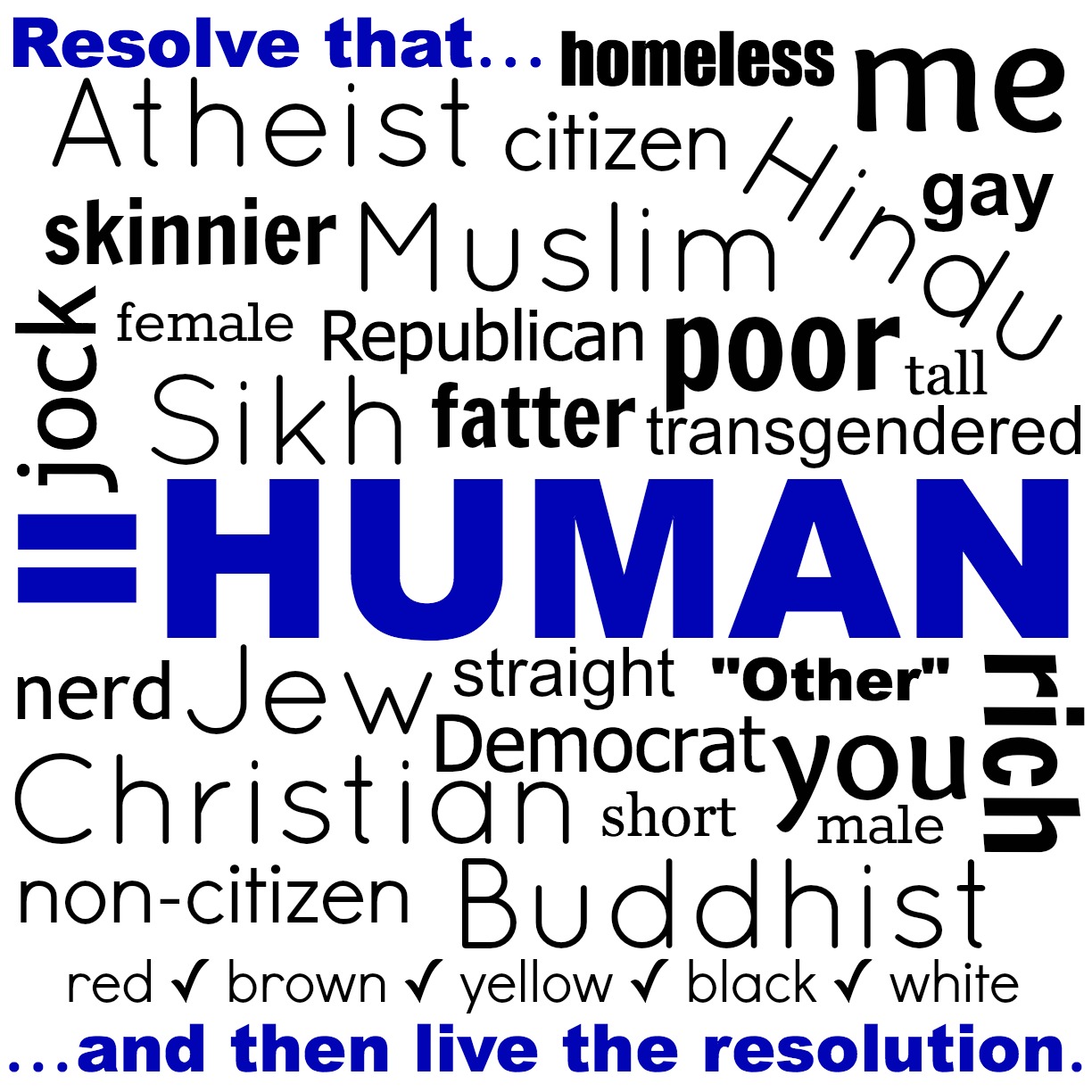
“We will meet one another there.” Wow. It’s time for Christians to un-brand some of our truths from being “Christian Truths” so we can share them fully with all our neighbors, many of whom already own and exemplify them better than we often manage to do ourselves.
Here Are Some Questions I’m Laying Out There
What is the “gospel” or the “good news” that people of faith have for a country that seems to be in a cultural tailspin of violence and the love of violence? What is my message? If I’m honest, then I believe I need to be real about having a message that is more than, “Hey, be like me!” In other words, converting my neighbors to Christianity is not the only answer I have to participating right now with my neighbors to make a more peaceful nation and world. Maybe sounds obvious, but it’s not the way many of us were raised to operate.
I need to make sense. I need to speak in ways that all people can understand and that communicate the core realities that exist within my faith, in actionable ways for all people. I’m switching now from single to plural pronouns because this is a shared need we have to make sense in our time and place. One of the biggest realities of our daily experience should be that we aren’t all going to suddenly adhere to the same religion: We won’t wake up tomorrow to find that we have all miraculously become Christians.
Our nation will wake up tomorrow with the amazing diversity in which we live today: Christian, Atheist, Muslim, Sikh, Hindu, Wiccan, Buddhist, Bahai, and all the faiths and philosophies I don’t have room to name or even know. Of course, that is all happening right alongside our incredible diversity of political ideologies, regional concerns, linguistic roots, ethnic richness, gender identities, sexual orientations, educational backgrounds and economic struggles. To name a few. We are a beautifully mixed bag of amazing variety.
This isn’t a repudiation of Christian on my part. I’m a disciple of Christ and have no intention to ever walk another path, but I am doing so in a diverse world, a diverse nation with a pluralistic society. This diversity isn’t bad, but it does make it much more difficult for people of our faith, or any faith, or lack of faith, to speak into the broader nation, culture and community in which we live. We won’t all have the same vocabulary. The shame is that often we won’t have the “tools” in language or common experience that are necessary to recognize shared values and hopes.
If everyone to whom we speak is not willing to become like us, to become a Christian (or a Jew, or a Muslim, or an Atheist), or more to point, our chosen brand of Christian (or brand of whichever tradition we have chosen), how then do we speak, share and participate in discourse? What do we do in a pluralistic time and space when we need to communicate with our neighbors in the absence of simply making them like us? The episodes of violence breaking into our daily national conscious demand that something be said! Something must be done!
But we people of faith, and not just Christians, have a huge disconnect when it comes to speaking to one another in a pluralist, diverse culture. This issue is most evident in my life when I hear my fellow Christians naming the problems we face as a nation and a culture being that we have “turned our back on God/Christ,” or “Satan’s power is the root of our troubles.” The same goes for when the answer to the most disturbing trends in our nation’s violence are simply stated as a need “to return to being a Christian nation” or that all would be well “if we would all simply embrace Christ.”
Having grown up in a place and time of the country where and when almost everyone was a Christian, I find it too laughable that a Christian would say the answer for our nation’s violent crimes is as simple as converting everyone to our faith. I’ve watched too many times as Christians turned on one another in the absence of any other common enemy. Maybe it would be more plausible if the statement were more along the lines of, “If only we could all follow the teaching of Christ” as in the parts about treating others as we wish to be treated ourselves and loving everyone even to the ridiculous extent of loving our enemy.
And I’m not repudiating a worldview that includes Satan. I believe that there is evil in the world. My own framework as a Christian names a particular force of evil in this world as Satan, though I prefer a more ancient tag “The Accuser.” The Accuser is an agent of evil and a personification of evil’s work in humanity and creation. But here’s my question about evil: Does my neighbor have to conform their frameworks and beliefs about evil to match my own before I can begin to speak and move together with my neighbor to stand against evil? I can only hope not.
One of our deepest yearnings as Christians may very well be that everyone on this good earth would proclaim and own our Christ as Lord, knowing and experiencing the goodness of knowing God in Christ. But there never seems to be any expectation in the teachings of Christ, or even the later apostolic witness, that we will find ourselves suddenly on such a planet.
Paul relates for us the vision that seems to be from an early Christian hymn of the moment when every knee bows and tongue confesses, and it is a vision of worship and unity that warms my soul. Really. But it’s hardly a reasonable expectation that such unity of faith is the foundation for how I will participate with my many diverse neighbors on these important societal issues in our shared life as a nation, right now. I can’t simply remain quiet or continue speaking in ways that don’t make sense to my neighbors “in the meanwhile” as I wait for all the bowing and confessing to start.
Here’s the Short Version of My Question
In the wake of our country’s past episodes of home grown violence and the more recent national tragedies at Sandy Hook, the Boston Marathon bombing, this past Mother’s Day parade shooting in New Orleans, the women and children held hostage in a Cleveland home for a decade, and the bullying and suicides happening across our continent every day: Do Christians have anything to say other than quoting John 3:16?
John 3:16 is good stuff, but in fact we do a lot to say to our home culture, and our neighbors! We have a lot of things to say that flow directly from our faith, but aren’t predicated on all our friends and neighbors accepting our faith before being blessed by our message or welcomed to participate with us in living and realizing this “Good News!”
In other words, I believe we have amazing truths through which we can participate in with our neighbors to bring about more of what our Lord taught us to pray for: Your kingdom come, your will be done, on earth as it is in heaven.
Here are three messages that I believe are core to our faith as followers of Christ that can be transformative in our nation when we live, proclaim and defend them, even when un-branded and allowed to simply be truths, instead of “Christian Truths”:
1. Love is preeminent.
2. We are intrinsically interdependent.
3. Tomorrow is ours to lose.
Three Heavy Truths
These three messages are truth. I believe they flow from the heart of God, have been illustrated in the life of Jesus Christ, and are commissioned to the followers of Christ by Jesus himself and the apostolic witness of the church. That last sentence sounded pretty heavy, yeah? I think these are heavy truths.
1. Love is preeminent. That word preeminent might look a little tricky at first, but it’s not as theological a word as you might think. It’s a good word. Mirriam Webster’s online dictionary defines preeminent as “having paramount rank, dignity, or importance.” That is how we need to be speaking about and living our love for all people. Preeminent love is pure gospel! Jesus famously summed up all the law and commands of his own Jewish religion in the two-fold flow of love 1) love God, and 2) love neighbor. He also taught stories to illustrate a love of neighbor that crosses lines of ethnic, geographic, national and religious diversity. When Jesus was asked “Who is my neighbor?” his answer broke down barriers that prevent us from loving people, even the people least like us or likable to us.
What is preeminent love in the context of our society? It is the answer to the hatred that is kindled and fanned to life by the things we have wrongly raised above love. We are talking about being real, so let’s be real. Our culture has lots of things happening emotionally and spiritually, economically and politically, besides love. Namely we have hate and anger, and they flow from a myriad of very real streams of lives: jealously, competing ideologies, inflation rates, diseases, immigration arguments, fear, pain, nationalism, racism, prejudices, bad drivers, dishonesty, workplace tensions, loneliness, food scarcity, environmental concerns and arguments, and much more. And if I’m really real, I can name and easily find preachers who have used all those streams to incite and divide us in recent years, all in the name of “truth.”
But as a people, Christians have a spiritual mandate to speak love above those things. How else is mercy possible? How else does forgiveness happen? We have a spiritual mandate to live out of love above and beyond the hatred, anger and fear. Fears are often well founded, and sometimes anger is justifiable, but neither should be placed above love in our words and actions. Love is neither restrained to only romantic arenas or to theological discussions. Love should be a daily reality. You don’t have to be a Christian to embrace this truth, and many in the world who strive to live this truth aren’t Christians. But every Christian should have learned along the way that if we are going to accept a scriptural definition of God being “God is love” and the basic drive of the heart of God being a robust and active love for this world (yes, John 3:16!), then we have the same basis, foundation and core for our heart and drive.
2. We are intrinsically interdependent. We need preeminent love for the simple reason that you and I are indelibly connected and interdependent. We exist together. Our freedoms and our rights are shared freedoms and rights. Our lives are connected and intertwined. As Christians we have this truth illustrated in matters of love, life and spirituality in many ways: 1) we cannot love God but refuse to love each other, 2) we cannot see the suffering of fellow humans around us and not act, and 3) we have been taught not to ever say to those not like us, “I don’t need you!” on the basis of our differences. Just to name a few.
We need one another. Our value and dignity are shared. Too often we end up bunkering into our various cells of culture, by religion or race or gender or any of the many ways we self segregate, and in doing so we disconnect from others, lessening their presence and contribution to us and ours to them. Once we have broken that connection we have broken our ability to love and hold love as preeminent. Once we break that vital connection we become more easily swayed by the rhetoric of division that places us in “us vs. them” systems and ultimately de-humanizes the other.
If this were not true, then why aren’t more Christians speaking out against hate crimes and prejudices against Muslims? Why aren’t more Muslims fighting to end discrimination against their gay neighbors on the basis of their sexual orientation? Why aren’t more Republicans fighting for the voting rights of Democrats? Because when we bunker down into our own self interests we have broken the vital connection which allows us to love and raise love above the fears, jealousies and frustrations that inhabit a pluralistic society. By the way, one of my favorite newest friends is a Jewish man who has devoted his life to stopping anti-Muslim prejudice. Ira is an amazing human and he encourages me with his grasp of these truths!
Our vital connection to one another is gospel and it’s not predicated on everyone being of the same faith. We can live and speak and engage with our neighbors within this vital connection to increase understanding, cooperation and peace in our nation and upon our beautiful little globe. In fact, we must. I must not allow anything to devalue my fellow human being in my heart or mind. Such a devaluing of another person is a disease and a cancer in my own soul and self. For me to break our human connection and lessen you is to suffer the same for myself.
3. Tomorrow is ours to lose. All my life I have loved the 131st Psalm, a song of humility and peaceful contentment against the restful greatness of God. Humility is core to the Christian faith and is central to living in the connectedness that we have been speaking about, but it is not an excuse to be idle or stupid about our power to make change in the world. It is not a denial of our humility to recognize that we are powerful and responsible in this world. We are gifted with everything we need to live and breathe and create greater peace, love and joy in this world. We have been crafted as agents of good, and we cannot live in denial of this amazing purpose in our daily lives.
One scriptural writer famously says that we are not given a spirit “of timidity, but of power, love and self-discipline.” (2 Timothy 1:6-10) And as I love the song of humility in the presence of God’s great sovereignty from Psalm 131, I also recognize the reality of the psalmist’s statement that God “has made [us] just a little lower than God.” (Some will translate this “yourself” or “angels.”) Whoa, we need humility because we are so powerful. We only have tomorrow to lose. God has already given it to us. God has equipped us, as little less than the gods, to be movers and makers of change on this earth! There is no adequate rationale for a person to faith to sit still and wait for God to do for us what we have been made to live and be ourselves.
It’s easy to forget, but neither of those psalms were originally written by, about or to Christians, regardless of how or by what reasoning I might lay claim to them today for my life. The ideas and truthes they carry cannot be branded as “Christian.” And even as we believe that Christ gives great and precious gifts to those in his church, we cannot deny the amazing gifts and abilities that God has wired into all our of species. We see those gifts every day. We cannot wait for all our neighbors to share our faith before we move humbly among and with them to not lose tomorrow’s promise and goodness.
Un-Branded Truths
I think these truths are for all people in all times and all places. The hard part for us swallow is that the three simple statements are unbranded truth. We have been taught to brand everything or own nothing. So we speak of Christian Love, Godly Justice, Christian Truth and God’s Mercy. And we have been taught to devalue all truths not so labeled. Have you ever noticed how rarely scripture addresses things that way? Paul simply says that God’s Spirit makes in us love, joy, peace, patience, gentleness, kindness and self-control. It’s the work of the Spirit in us, but the fruits are simply fruits. And so we lose the ability to see and value the many truths of God’s work and Spirit in the various people all around us every single day.
I grew up hearing preachers often say, “It’s not enough to be a good person, you have to be a Christian.” I suppose I know what they were saying about identifying with Christ and the church in a theological sense, but I always came away thinking more about what sounded like an inherent contrast they were making between good and Christian. Those two didn’t seem to be the same, but different. And even if I am able to step past inferring a contrast like that, the statement still devalued the good in a person if they weren’t enough like me. I’ve not had a very long life, but I have definitely learned that finding a good person can seem a rare enough event not to ever devalue or dismiss.
I am asking us, asking myself, to do better at engaging the world with these unbranded truths so that we move the truths forward without having to have the argument about what is dissimilar between us. I could easily stick to branding and say something like: 1) God wants Christians to live in preeminent love, 2) Christian altruism and Godly benevolence is a duty, and 3) with humble prayer we can defeat Satan and can claim tomorrow as the Lord’s Day returning our nation to global moral dominance and greatness! But I won’t.
But I believe it is no less true and vastly more engaging for many of my neighbors if I proclaim and live: 1) love is preeminent, 2) we are intrinsically interdependent, and 3) tomorrow is ours to lose. Though I do understand a little bit about the power and importance of branding in the commercial sense of moving products and services, I think that God’s truths should be handled a bit more on the open source model, freely shared and abundantly distributed.
Breakfast Is Not Infinite
 It’s such a shame that breakfast is a finite quantity and experience. One moment I was enjoying an absolutely amazing breakfast sandwich here at La Madeleine this morning, and then it was gone. Why wasn’t I taught that breakfast was finite? Why wasn’t I prepared for the consequences of eating?
Yeah, I’m so not really writing about the finite’ness of breakfast. I’m actually writing about the finite nature of creativity. I’m discovering in myself and my own life that creativity is in fact not in infinite supply. It seems I was raised with the expectation that creativity was a bottomless well, a super power without limits, something to be tapped, mined and spent with abandon. I believe I’ve experienced just the opposite.
I’m not saying that you may not have a creative super power that goes on and on (although I don’t believe you do, hehehe), but my well can run dry. And I’m not just talking about those times of life that are creatively a bit dryer than other times. I have noticed that when I choose to invest my creativity too heavily in one direction and pursuit, I simply don’t have the juices to move in another direction. It’s really disappointing.
I swam a few laps this morning with Google to see what other bloggers and writers might be saying about the finite nature of creativity and discovered a couple of things that border on the profundity of “life lessons,” and they go like this:
1) creativity is in fact not boundless, but something we need to invest and use wisely, and
2) anyone who says your creativity is infinite is selling you something, a product or a service.
What all this means for me is that I must do some reflection and self-analysis periodically in life to make sure I’m not wasting my creativity. I need my creativity in my work and career. I need my creativity in several career related pursuits in my life. I want to be a creative husband and father. If I’m investing my creativity in pursuits and activities that do not channel into these important areas of my life, then I’m going to come up short when I need it the most.
One of the biggest culprits in my life is video gaming. Video games in their various forms can be amazing creative outlets, at least the ones I’ve chosen to play. From Minecraft to World of Warcraft to Second Life, I am invited to create characters, build worlds and fashion whole realities from pure imagination and creativity. All the games I mentioned offer various kinds of rewards for spending my creativity there, and none of them are bad, evil or inherently wrong.
I know, I know… who wants to read a 43 year old man-child blog about spending too much time playing video games? It’s not just video games. I can do this with movies, Netflix and going on a TV binge. I can do this with hobbies and other pursuits in life that do not help me channel my energies and pursuits in the direction I need to be moving or simply a direction that is producing usable returns for my life. This whole finite creativity thing may also have an impact on my tendency to be a “starter” but not always a “finisher” as I change my spending habits midcourse with projects. Maybe it’s the natural outgrowth of an addictive personality.
Today, I’m making some lists. I’m making some lists of unfinished work projects, current hobby activities, upcoming creative needs and unmet life desires, and I’m going to toss those lists into a mixed salad of opportunities for spending my creative reserve, and prayerfully try to make some wise choices. Honestly, I’ve been doing this for a few days now, and am committed to continuing the exercise.
Thankfully, as finite as my reserve of creativity may be, it’s also a replenishing resource. My mistakes aren’t my future and the well that ran dry will run again.
A Place to Be Heard
 One of the most humbling and interesting things to come from my training and experience as a life coach was the realization that I was a really bad listener. You’d think that a pastor, especially one trained to be a cross-cultural learner, would be fairly naturally endowed with listening skills. I’m sure I wasn’t the worst listener, but being “ok” relative to the worst is not all that great.
I was blessed yesterday to visit my first AA meeting, an open meeting with Alcoholics Anonymous. So let me give a quick shout to all my AA friends out there, you rock! And I’m grateful to my good brother who brought me along to the meeting. It’s sometimes a scary proposition to take your pastor out in public, ya know? He stepped out and took a risk, and I was blessed for it!
I’m interested in systems, and so I’ve always been a little interested in AA and the almost mythic power of the Twelve Steps. I was impressed at the meeting, and I almost immediately loved every person I saw. Attending a larger group I was able to see a real diversity, young and old, black and white, male and female, rich and poor, and all the in betweens.
If you’ve never been to a meeting, I suggest you find a larger club to visit. The meeting I attended was close to fifty people, but I didn’t get lost in the crowd. Instead I felt very at home and welcome. It was obvious right away that most of the people there knew each other… this was a community.
And the real lesson of the day for me was that this was a community of listening. It’s such a precious gift to be heard. I was frankly amazed at the way the room sat and listened attentively to the different individuals sharing what was on their hearts or minds. Some were eloquent and others down right hilarious. Some rambled a bit and repeated themselves. None were interrupted. None were corrected. All were heard.
All were heard. This is a powerful reminder for me as a pastor. There are some big differences in the way an AA meeting and a typical Sunday morning worship service are conducted, but the need to be heard is common in both these communities. The gift of being heard is a precious gift, a life-changing moment, in each community. I spend a lot of time selecting songs, studying passages, adapting prayers and building prayer stations… honestly, I spend a lot of time talking. My neighbors at AA yesterday reminded me of my need to invest in time spent listening.
Churches and other faith communities spend a lot of time and energy talking and teaching, but how do we listen? Where do we listen? When do we listen? I’m looking into this in a deeper way this week, and I’m grateful for the good folks I met yesterday who reminded me of such an important truth.
There’s an old saying, “God gave us only one mouth but two ears, so listen!” James (of biblical fame) quips in one of my favorite verses that we should, “…be quick to listen, slow to speak and slow to become angry.” Who will I hear, today? Who will you gift with a big basket of listening?
 toddthomas.net