
Devotional Thoughts

Recommitting to All People’s Dignity
Just a quick note!
 As I’m doing my whirlwind of usual Sunday morning stuff to get ready for our worship gathering and fellowship time, I’m struck by the intersection of two news stories coming across my desk… the first is of Pope Francis throwing in on peace in the Middle East, and the second is of a conference of atheists in “Bible Belt.”
Of course, the Middle East won’t have peace just because the Pope encourages them to have peace. And the article about atheists in the South probably has a lot of hyperbole and exaggeration.
But it’s undeniably powerful when a Pope speaks of everyone’s dignity, especially the value and dignity of Jewish and Muslim neighbors. And a little hyperbole doesn’t change the fact that many people in communities across America fear the reactions of their Christian neighbors and coworkers to their chosen lack of faith.
Today, let’s recommit ourselves
to upholding the dignity
of all our neighbors.
Let’s be people who sow peace instead of fear. Let’s be people who live grace instead of just singing about it. Let’s be people who transform the world by simple kindness and sincere friendship. This is again our day to shine. This is again our day to commit to salting the earth with joy and with love.
AMDG, Todd
Let The Love Speak
 One of the most difficult parts of being a Pastor is not always knowing what to say, it’s that having said something you carry an extra special burden to live it. There’s a haunting scriptural reference you might be familiar with from James 3:1&2…
Not many of you should presume to be teachers,
my brothers and sisters, because you know
that we who teach will be judged more strictly.
We all stumble in many ways.
Thanks for that, James. I like you more when you’re making other people feel uncomfortable.
I was very recently asked to speak with a friend’s child about some naughty behavior at home. The child was acting out when disciplined and escalating the bad choices already made instead of learning from the discipline and doing better. I agreed to speak with the child and had I think we had a good conversation. We’ll see if the behavior changes, but here’s the gist of what I said…
First, you’re awesome, and that’s a fact, and it’s why such bad behavior is surprising.
I love this child I was speaking with, and I’ve been blessed to be part of the child’s extended family. Any time we have to stop and evaluate our behavior, it’s not a time lose faith in either God or ourselves. We act for the better out of an understanding and appreciation of how valuable we are to God and others. I think this is the difference between contrition and depression, between feeling bad and feeling worthless, and between healthy sorrow and unhealthy self-loathing. There’s no room for “you are bad” even when we’re talking about “your behavior was bad.”
Too often I extend graces to others that I deny myself. You ever do that? I can keep a growing list of how good others are, while my personal tally is mostly on the negative side. I can let my own failings drag behind me clamoring like tin cans on strings and reminding me with every step that I have failed. I need to learn to cut those strings, look carefully that those failings, and dream my way forward without them. This isn’t going to make the failings magically not matter any more, but I need to deal with my faults instead of letting them deal with me. I started the conversation with how loved and how good my little friend has been, is, and will be. But, what about the choices we make?
Second, it’s ok to be mad, but not to listen to the mad.
Here’s another reminder from scripture, this time from Paul in Ephesians 4:26&27…
“In your anger do not sin”
Do not let the sun go down while you are still angry,
and do not give the devil a foothold.
Anger is a inner voice, and it’s not often a very wise voice of counsel. Somewhere along the way we have to learn to stop listening to the mad, and the sooner the better. Yes, it’s not as easily said as done. That’s why self-control is such a difficult thing to master… not because of the control part, but the self part. Things happen, things are said, and mad happens. There’s not always a lot of choice there, but what we do next is a choice. Instead of listening to the mad, we can stop and listen to another voice… I recommend the love.
Love will tell me to do something totally different than the mad. It doesn’t matter if the mad is directed at me myself or someone else, love for myself or another will always give me better counsel. Even a child, including the one I was having a conversation with, knows the difference between acting on how mad I am versus acting on how much I love. When I am mad, I have to stop making choices until I can let the love speak. It takes time, effort, practice, and above all choice. James says it famously in his first chapter, James 1:19&20…
My dear brothers and sisters, take note of this:
Everyone should be quick to listen, slow to speak and slow to become angry,
because our anger does not produce the righteousness that God desires.
Oh, James. The mad is so much more fun! The mad can give me a sense of power! The mad can make me feel less like I need to change anything and put all the burden of change and recompense on the other person! I kinda like that, to be honest. It’s way more effort to stop, to slow down, and to move past the mad.
You know, I made a statement just a moment ago that I want to add something to before I finish and move on with other things. I said, “Things happen, things are said, and mad happens. There’s not always a lot of choice there, but what we do next is a choice.” I do believe that mad happens, and there’s often not a lot of choice about being mad, and yet… I also believe that along the path of choices we make in life, we can unlearn and lose a lot of the mad along the way. We don’t have to be slaves to the mad. I think that the more I slow down, the more I listen, the more I love, the less I will get mad. Like any muscle, if I exercise the mad all the time it will get bigger and stronger. It might be a long road from my first choice to let love speak instead of my anger until I start to realize that there’s a lot less anger in my life to silence, but it’s a worthwhile journey.
Since I spoke, I now have a greater burden to do. I should be judged more strictly. I agree. We’re all human and we do stumble in many ways, and we all need the grace of stumbling into one another’s shoulder, feeling that arm of support wrap around our backs, and get that helping lift back onto our feet. Please, forgive me my mad. Forgive me when I haven’t kept my mouth shut long enough to hand the reigns over to the love. Forgive me when I’ve sat and cultivated the mad, reveled in the mad, and then followed where it led.
Paul again, captures some of the struggle so well, feeling the chagrin of failure and yet the hopefulness of what can be and what will be… Romans 7:21-25:
So I find this law at work: Although I want to do good, evil is right there with me. For in my inner being I delight in God’s law; but I see another law at work in me, waging war against the law of my mind and making me a prisoner of the law of sin at work within me. What a wretched man I am! Who will rescue me from this body of death? Thanks be to God, who delivers me through Jesus Christ our Lord!
I will do better. I will learn. I will grow. I will let the love speak. That’s what I hope for my little friend and for myself… to grow into a joyful expression of love. To grow, choice by choice, into a life less governed by the mad and in which the love speaks.
AMDG, Todd
Prayer Intention: Finding Rhythm
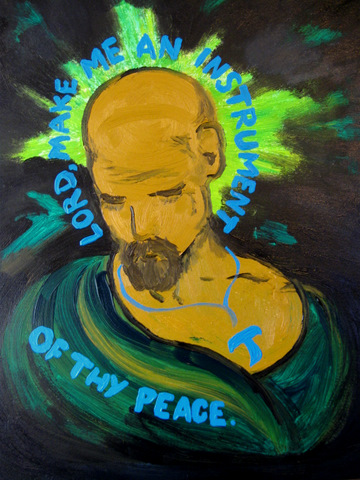 This morning at Church in Bethesda we’ll be talking about prayer that cultivates vision in our lives. A component of that kind of prayer is what we’ll call “rhythm.” Rhythm is all about intentionality that becomes part of the daily flow and life of a person. It’s not just a habit, but part of one’s identity… it’s an extension of hope and joy. It’s an expression of relationship with God.
Rhythm begins with intention. I want to see and to move. I want to grow and to be. I want my feet to move a certain direction and my soul to dance along in step. I want to bring sacred space and time into my daily life and envision God’s kingdom in my words and actions. We aren’t wind-up robot toys that God sends chattering across the table top of the world until we fall off and spend our last struggles kicking against the tile floor. We’re invited to enter into God’s movement of grace, light, forgiveness and peacemaking. We are gifted with an amazing invitation to move in a grace-filled rhythm through the years of our life.
So, what are our dreams of the kingdom and how will we play that song in our lives? This is not about want we want to get, but what we are called to be. There are many ways to start tapping out a rhythm and growing this music in our daily walk. Here are just a few ways to begin building intention and rhythm into our prayer life that I’ve found helpful:
- The Weekly Prayer Intention page here at this site is intended to help make a prayerful rhythm through each week.
- Loyola Press offers a daily 3-minute devotional.
- The classic My Utmost for His Highest is online.
- Did you know that you can follow along with Pope Francis’ monthly prayer intentions?
- Sacred Space is an amazing online and daily resource.
- You can find many published prayer books and guides for making a rhythm of daily prayer and devotion.
- Really, just ask the internet what people are doing for daily, weekly or monthly rhythms in prayer, and see if any of it fits into your faith and life!
Make your own! Perhaps it’s time that you spent some effort this week on creating your own daily intention or special rhythm of prayer. What is that spark of desire when you think of your place in God’s kingdom and the Spirit’s movement in the world? What are key words or values for you? What are special images or metaphors for the way you feel God moving in you and leading you into the lives of your neighbors?
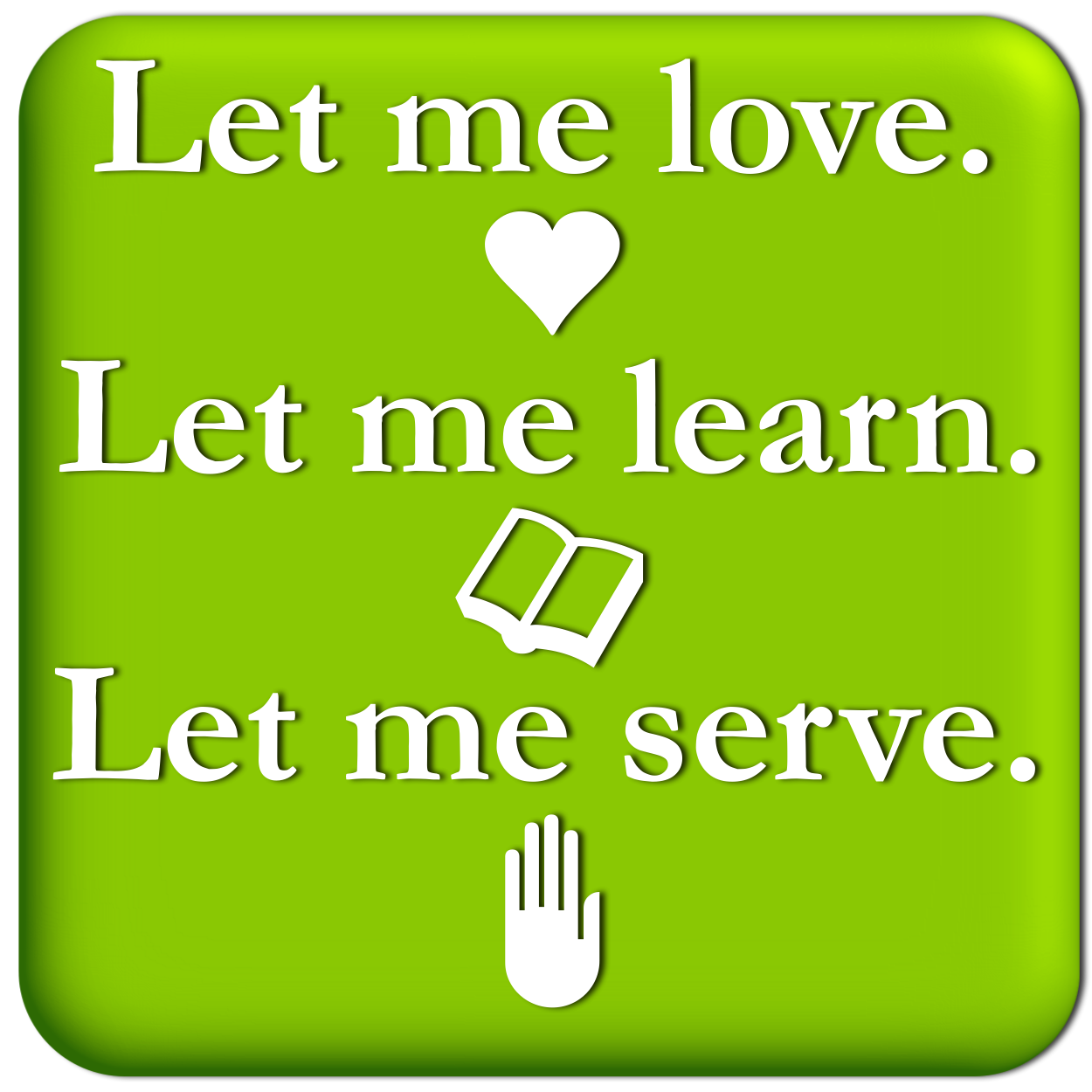 Last summer I wrote a daily prayer that flowed from my own rhythms of life but also was an expression of how I wanted to shape the rhythms, and it has continued to be a daily prayer for me… “Let me love. Let me learn. Let me serve.” There’s nothing new in that prayer. I didn’t invent any of the words.
Still… I feel that God calls me to do these three things, to become a person of loving, learning and serving in greater and deeper measures. I hold those intentions close. I let them tap out a rhythm for my words and actions. I try my best to let them lead, in my daily dance.
What is your calling? What do you hear? How does God’s love and grace challenge you in making a daily rhythm?
AMDG, Todd
2013 Daily Advent, Week Two
 Here’s the second week of the Daily Advent Devotionals. Blessed be your Season!
AMDG, Todd
2013 Daily Advent, Week One
Happy First Sunday of Advent!
Advent Week One 2013 For Web (pdf)
It’s my favorite time of year… I mean I do love me some Lent and Easter, but I LOVE Advent and Christmas! To celebrate the season and help make Advent a little more meaningful I am creating a daily devotional guide that can be used with prayers, or for any kind of creative exercise from poetry to photography, from sketches to prose. Each Sunday of Advent I’ll post the new week’s seven day guide. You’re invited to use it as you’d like; each day has a reading (some person or piece of the Incarnation narrative), a creative focus (a word or short phrase) and a few words for the day (one or two thoughts or questions). That’s the link to the pdf at the top of the blog. =)
You can resonate right off the text of the day, or just use the Creative Focus of each day as a spring board for some kind of an artist endeavor. You can use the guide to keep a personal Advent journal, fill a 25 page sketch book, or inspire us all with cool Facebook posts. It’s yours to enjoy and put to use however you choose. The devotions will cover every day of December right through Christmas Day!
My prayer is that your Advent and Christmas celebrations are rich with all the best blessings of Life: God’s presence, fun times with family, deep prayer, lots of rest and delicious food! May your body and soul be filled by the best!
AMDG, Todd
Nov. 30, 2013 Civility in Xian Scripture
 November 30: We are reconcilers.
Matthew 5:21-24, “You have heard that it was said to the people long ago, ‘You shall not murder, and anyone who murders will be subject to judgment.’ But I tell you that anyone who is angry with a brother or sister will be subject to judgment. Again, anyone who says to a brother or sister, ‘Raca, ‘ is answerable to the Sanhedrin. And anyone who says, ‘You fool!’ will be in danger of the fire of hell. “Therefore, if you are offering your gift at the altar and there remember that your brother or sister has something against you, leave your gift there in front of the altar. First go and be reconciled to that person; then come and offer your gift.”
Jesus knew all about religious professionals. It was the professionals who were usually questioning him and his disciples about one regulation or the other on ritual purity or his own authority. He knew the game, following certain rules and using the right language could make you very religious, but though he valued those same traditions and valued religiosity, he never let it become elevated over the value of people. So he touched the untouchable. He associated with the social pariah. He told parables like “The Good Samaritan” which seemed to break down ethnic and religious barriers. He repeatedly healed on the sabbath.
Our final passage is a message to the religious professional in each of us. When we begin to value our religion above people, we begin to go through the motions even while our relationships are crumbling all around us. We can go to the altar to leave a gift and bless God, all the while ignoring the lack of blessing happening between us and our sisters and brothers. Jesus says, “Stop! Don’t go to play church when you know you have some rebuilding to do with your brother or your sister. Church just doesn’t work when valued above and outside your relationships.” (That was my paraphrase.)
What is civility to a Christian? Is it the recognition that we speak and act as reconcilers, seeking to break down the barriers and reconnect to one another. Civility is never just an “elective class” we can catch one semester or simply ignore and still graduate without it. It’s not an extracurricular activity. We speak and act to reconcile and remain reconciled. We are not called to be barrier builders. We are not called to giving insults, to humiliating or to tearing others down. We are called to restoration, restoring our broken selves one to another.
This is the way a person of faith goes about civility, recognizing that we’re maintaining some of the most important stuff that Jesus has called us to be and do. Civility is not our religion, but our religion leads us to be civil. God has never called us separate from one another, but together. Let us then see to it that our religion is pure and true to the value of one another. Let us show how people of faith live and breathe a civility that reconciles us to one another, mutually encourages one another, and gives everlasting glory to our great God. We’ll close the month of exploring our Christian scriptures with three final selections from Micah, Jesus and Peter.
AMDG, Todd
From Micah, Micah 6:6-8
“With what shall I come before the LORD and bow down before the exalted God? Shall I come before him with burnt offerings, with calves a year old? Will the LORD be pleased with thousands of rams, with ten thousand rivers of olive oil? Shall I offer my firstborn for my transgression, the fruit of my body for the sin of my soul? He has shown all you people what is good. And what does the LORD require of you? To act justly and to love mercy and to walk humbly with your God.”From Jesus, John 13:34&35
“A new command I give you: Love one another. As I have loved you, so you must love one another. By this everyone will know that you are my disciples, if you love one another.”From Peter, 1 Peter 3:8-11
“Finally, all of you, be like-minded, be sympathetic, love one another, be compassionate and humble. Do not repay evil with evil or insult with insult. On the contrary, repay evil with blessing, because to this you were called so that you may inherit a blessing. For, ‘Whoever among you would love life and see good days must keep your tongue from evil and your lips from deceitful speech. Turn from evil and do good; seek peace and pursue it.'”
Nov. 29, 2013 Civility in Xian Scripture
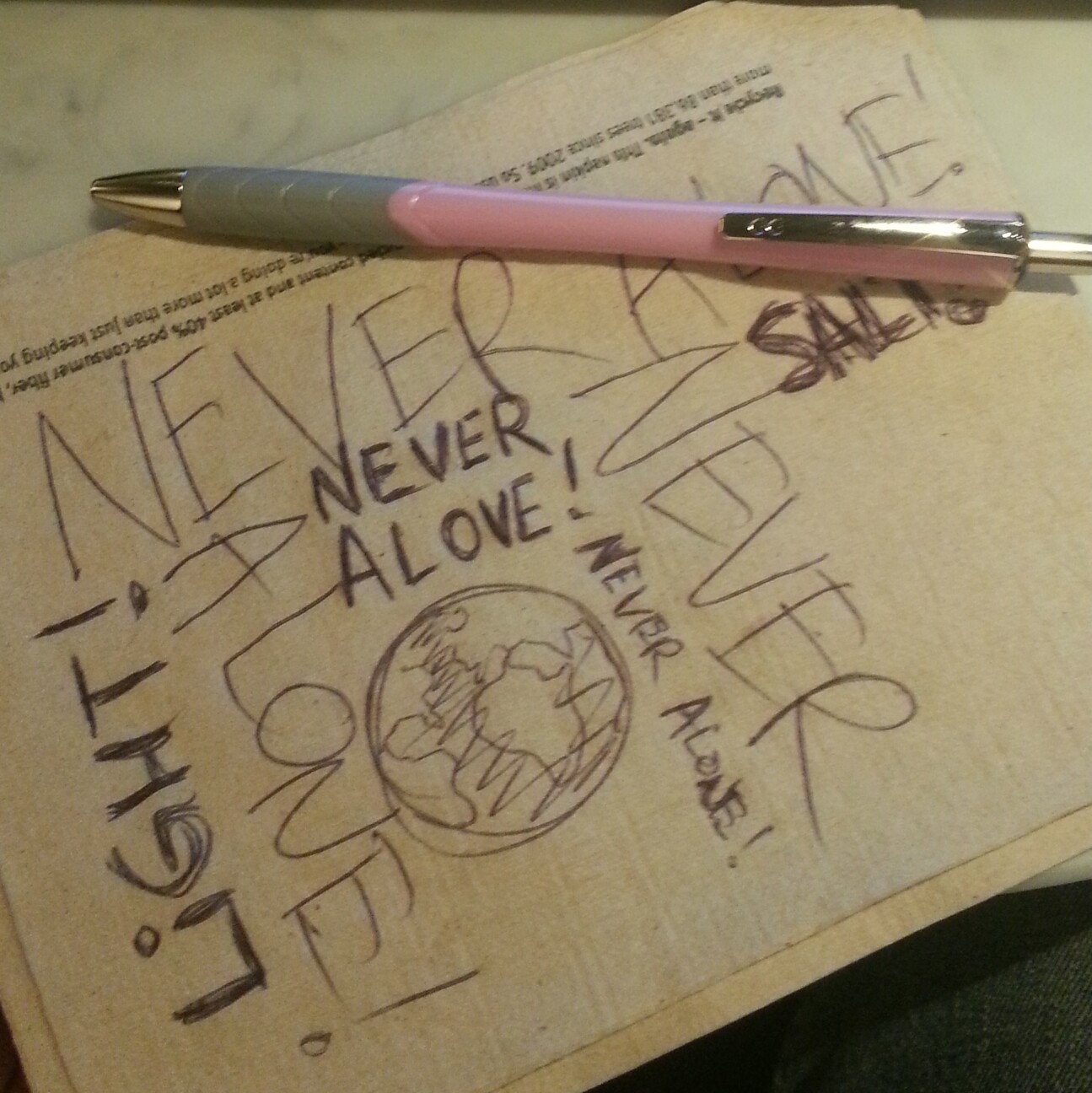 November 29: Never alone.
Matthew 5:13-16, “You are the salt of the earth. But if the salt loses its saltiness, how can it be made salty again? It is no longer good for anything, except to be thrown out and trampled underfoot. You are the light of the world. A city on a hill cannot be hidden. Neither do people light a lamp and put it under a bowl. Instead they put it on its stand, and it gives light to everyone in the house. In the same way, let your light shine before others, that they may see your good deeds and glorify your Father in heaven.”
We began this month of exploring Christian scripture to understand civility with Jesus, and we’ll end with Jesus. This is a very familiar passage to most anyone who grew up in church. Jesus loved to teach in symbols, and this is some of his best… it’s simple, we can relate to the content, and it inspires. We are called to be salt, seasoning the world for the better. We are to be light, a source of illumination and joy for those struggling to see. Amen and amen.
Jesus lays it all on the line for us in these simple words: we are salt, and we are light. No matter what you’re cooking, the salt becomes part of the dish, lost for any other purpose other than favoring and then never being seen again. Oh, it’s flavor is there, we know where the salt has gone… but that’s just it, the salt is gone. The dish remains. The dish is so much better for having been salted.
No matter the light source you choose, it burns up, it gives all it has and it’s gone. A lamp burns away it’s oil. A candle melts. A bulb eventually burns away it’s filament or it’s gases, batteries go dead… all lights on this earth end in their using. This is our calling. We are used up in service to this world. We are sent to make the world better for everyone else, and Jesus evens asks what we’re good for if we reject that calling! If we will not salt and we will not light, then what use do we have?
The word civil at the base of the word civility is a very fun study if you ever feel like digging in and chewing on it a while. It denotes both the meaning of responsible/polite behavior, but it also denotes this aspect of being a common member of society, a citizen. The two concepts are united in the word, both being a citizen and acting a citizen. Jesus does this with salt and light, both being and doing. Salt is our identity and our action. Light is both what we are and what we do. Our place in the world hinges on this calling… we exist in this capacity of purpose.
So what does all that mean? It means that I don’t salt the earth one day a week, or two days a week, or only when I choose to be salty. I must reflect on the needs around me and strive to be salt all the time. I must own the call to saltiness and pursue it with all my heart, mind and soul. It’s not just a thing I do on weekends or when there’s a Bible study. It’s in my walk, my talk, my laughter, my weeping, my falling, my failing, my dancing and my singing.
My light doesn’t have a on/off switch for my convenience. I am not choosing to be light for only those I have deemed worthy of the time or the effort. I am shining, shining on my worst day, my best day, in the rain, in the snow, in the pain and in the green of springtime joys. I am being what I am called to be, to the best of my ability and with all the joy of the call I can muster on any given day. And if we have come together to make a community like the one Jesus has described in the verses preceding this passage, in those amazing words we call “The Beatitudes,” then when my savor lessens and my light dims, it will be renewed in my kingdom fellowship with you. Together, we are called to be salt and light, never alone. Never alone.
I am salt with you. I am not salting the earth alone! I am light with you. I am not lighting anything by myself! Civil is not something I am or do alone. Civil exists within the community of the citizens! If we are to find a singular truth of civility in the teaching of scriptures then let it be the truth of our need for one another! I need you! I need you to myself be salt. I need you to myself be light. I need you, and that is why I am striving to be civil, to keep us in the bonds of love, mutual encouragement, sharing and growth.
Never alone. Thank you, God, I am not alone.
AMDG, Todd
Nov. 28, 2013 Civility in Xian Scripture
 November 28: Civility can grow from deep gratitude.
Colossians 3:15, “And be thankful.”
And be thankful. I’ve always liked the way that St. Paul would throw that in here and there, and he does it often. He does in his letter the Colossians in chapter 2 as well, speaking of being rooted and grown up in Christ he adds an “and be thankful” for good measure in verse 7.
When our passage ended with those words yesterday I knew I’d have to come back and use them again. I don’t think St. Paul scatters them around without intention and meaning… I think he sows his letters with the seeds of gratefulness hoping for a nice harvest in the lives of his readers!
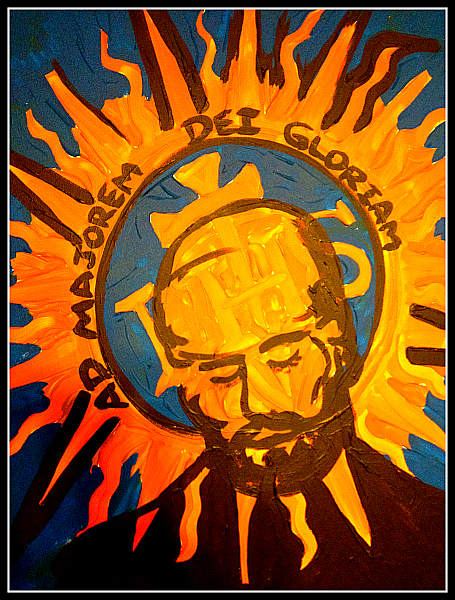
I believe that thankfulness, or gratefulness, or gratitude, whichever word we choose, is a seriously underrated theme in scripture and a solid foundation for civility. Ingratitude and being unthankful leads to a lot of harshness in our words and missed opportunities to build one another up. St. Ignatius said, “I think that that ingratitude is at the root of all sinfulness.” Amen. I’m declaring him the patron saint of our Thanksgiving this year and including a painting of him I made a couple of years ago. =)
Be grateful! Be joyous! Love with gusto!
AMDG, Todd
 toddthomas.net