
Month: February 2015
Show Me The Love!
 Love
Love

A Funny Thing We Do:
We take a passage like First Corinthians 13 and we romanticize it; we reserve it for weddings and greeting cards instead of struggling with it in everyday life.
Let’s start with that famous of texts: (in three versions)
1 Corinthians 13:4-8, TNIV
Love is patient, love is kind. It does not envy, it does not boast, it is not proud. It does not dishonor others, it is not self-seeking, it is not easily angered, it keeps no record of wrongs. Love does not delight in evil but rejoices with the truth. It always protects, always trusts, always hopes, always perseveres. Love never fails.
1 Corinthians 13:4-8, NLT
Love is patient and kind. Love is not jealous or boastful or proud or rude. Love does not demand its own way. Love is not irritable, and it keeps no record of when it has been wronged. It is never glad about injustice but rejoices whenever the truth wins out. Love never gives up, never loses faith, is always hopeful, and endures through every circumstance. Love will last forever…
1 Corinthians 13:4-8, KJV
(the Greek in verse 5 is in the feminine form, heautēs)Charity suffereth long, and is kind; charity envieth not; charity vaunteth not itself, is not puffed up, Doth not behave itself unseemly, seeketh not her own, is not easily provoked, thinketh no evil; Rejoiceth not in iniquity, but rejoiceth in the truth; Beareth all things, believeth all things, hopeth all things, endureth all things. Charity never faileth…
What has been happening in Corinth? What has Paul been speaking about up to this point? There are many corrective themes which he will touch on, expressive of the daily love he ultimately prescribes in Chapter 13… here’s a quick look:
Chapters 1-4, correcting division and pride
Chapter 5, beware of sexual impurity and its influence
Chapter 6, lawsuits against each other and prostitution
Chapter 7, mutual care in marriage and care of self and others in all instances of life
Chapter 8, having concern for other people’s weakness
Chapter 10, again having a concern for other people’s religious journey
Chapter 11, neglecting one another and showing favoritism in worship and at table
Chapter 12, personal gifting is for mutual benefit and service…
So what is the corrective for a life guided primarily by dividing self-interests and pride, a life that is willing to abuse and use people for gain, through litigation or sex, without a care for their well being or even their basic needs of food and healthy supportive relationships? The corrective is LOVE.
Love is changing the way we listen and speak, how we see one another, how we value one another and forgive; we fundamentally change the way we regard people. We know this word, right?
regard… v. consider or think of (someone or something)
in a specified way.
Let’s be real and be daily, and bring these corrective verses on love into our lives with all people, not just our romances. Let’s regard other people the way we should, the way God desires us to see them.
Love is patient, love is kind.
Love calls me to wait for you, when you’re slow and don’t think as fast or as well as I think you should, or as well as I think I do. Impatience will give way to kindness, a cultivated response that is tailored to your needs and not expressive of any frustration or judgment of my own.
It does not envy, it does not boast, it is not proud.
Love calls me to stop talking about myself all the time, defending myself and fighting my fights to make sure everyone knows how right and good I am. Love demands that I admit that I’m no better or more valuable then you. Instead I am called to listen to you, to value you and to speak about your worth and goodness.
It does not dishonor others, it is not self-seeking, it is not easily angered, it keeps no record of wrongs.
Love demands that I control my speech, bending my efforts and intentions to purifying my words, purging my thoughts and speech of anger, ridicule and demeaning slurs. I have to give up my grudges and give you a fresh start when I see you stumble, and not just once, but again and again.
Love does not delight in evil but rejoices with the truth.
Love asks me to be happy when you are blessed, when you are right, when you win, when you succeed. And I am to be hurt when you’re hurt, concerned when you’re concerned. I’m not seeking for you to suffer or experience evil, but working actively for your good.
It always protects, always trusts, always hopes, always perseveres. Love never fails.
This is maybe the most inspiring part of love! I may in fact see anger, violence and hatred as powerful weapons wielded in life, but love defeats them all. Love is what protects. Love is the foundation in which I can truly trust. Love is what will keep me going, not getting more stuff or better stuff, or bringing you down. Love is what will outlast all things and be the legacy of this world to which I did or did not join myself.
I know we can do this. I know God wants us to do this. Let’s not stand in the way of love for one more day for one more person. This is my Valentine’s prayer for 2015!
AMDG, Todd
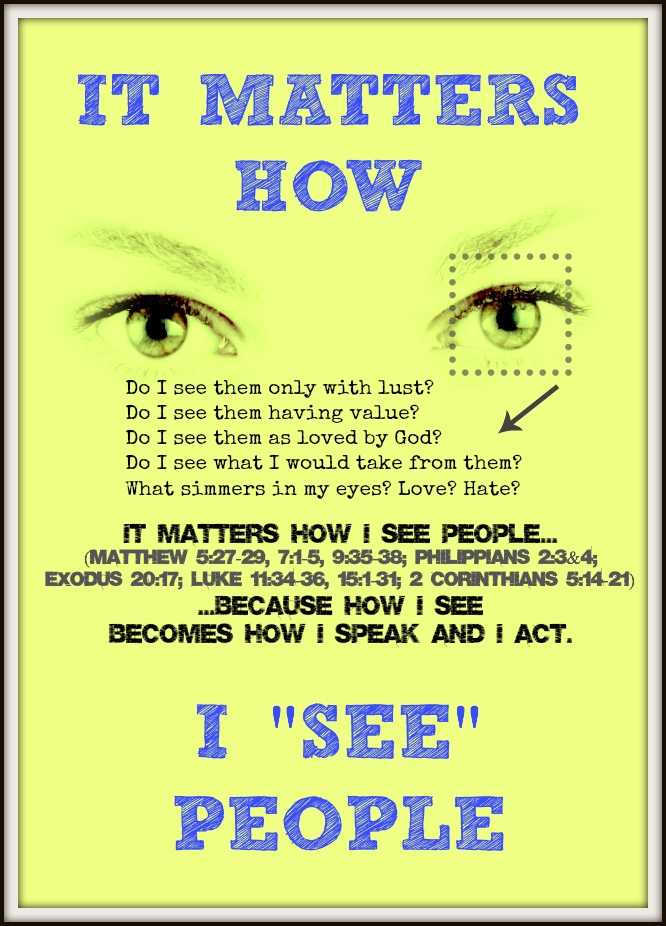
I found this old graphic I made for a sermon series a while back, just a couple of years or so… it seemed to fit.
Lenten Resources!
 Ash Wednesday is next week, February 18th! If you know me, then you’ve probably heard me mention growing up without a Lenten tradition. I was raised in an interesting little brand of Protestant Christianity which emphasized that days like Christmas Day and Easter were not to be religious holidays for us. We could celebrate them, but not religiously. We didn’t wear “Happy Birthday, Jesus!” buttons and we were told that “Every Sunday is Easter!” So yeah, Lent didn’t exactly fit the model we used for faith.
I discovered that Lent holds hidden treasures and depths of spirituality that I desperately need. Growing older and going deeper in studying Orthodox Theology and exploring my own affinities for high church experience with beloved Episcopal and Roman Catholic friends and guides, I have come to appreciate the practice and I insist on the cleansing cycle of Lent for my life. It is always a good time, time well spent and effort rewarded by drawing closer to God in tangible ways.
Here are some of the things I’ve found across the web that can help us get into a Lenten journey this year. These are recommendations on things from photo-a-day projects to creating your own sacred space for prayer and meditation…
Seven Tips for Creating Sacred Space for Lent
RethinkChurch.org’s photo-a-day for Lent 2015
General Background Info on Lent
Eastern Orthodox Fasting in Lent
Various Fasting Ideas for Lent
How about a “Lenten Carbon Fast?”
I would also like to share a few things I have worked on over the years for Lent… the first is a Lent With the Psalms 2015. I made this last year for 2014 and have updated it for the days of Lent in 2015. Also, two years ago I made a daily life retreat that I have updated and readied for this year: 2015 Lenten Daily Retreat. Finally, new for this year… I will be tweeting/blogging/Facebooking daily during Lent on the Theme of Compassion! Hope you’ll jump in and participate!
Here are some other related posts on prayer from my blog…
Prayer Intention: Finding Rhythm
A Morning Prayer, adapted from Psalm 51
Have a blessed Lenten Season!
AMDG, Todd
Be Counter-Cultural Jesus Style
No. No. No.
TACOMA, Wash. — A woman was choked and stabbed and had homophobic slurs written on her body with a marker in an attack early Sunday in Tacoma…
The 45-year-old woman was attacked while looking for her dog that had slipped out of her house about 3 a.m. She was followed into an alley by the man who made homophobic slurs during the assault…
The News Tribune of Tacoma reported that the man kept saying to her, “Are you a dyke? God hates fags.”
 What God actually hates: the injustice and abuse of the attacker’s actions and hate. There is no room in our world for this kind of thing. And there is no excuse for hate engendering language which fuels this kind of an attack. Before spouting off more on the alleged culture war in our country and the problem of those people, please know that it’s not just a battle of words and many LGBTQ people suffer daily from the rhetoric.
Want to be on God’s side? Love more, love all, love stupidly until people think you’re a raving lunatic for your inexplicable tirades on justice, liberty, dignity and the value of ALL people. Be counter-cultural as Jesus taught us: Love those who may not love you or be like you at all, and serve them, and sacrifice for them, and do not fight with any weapon but love, turning “the other cheek” and giving more than you’re asked to give, and not only rejecting murder and violence but also rejecting hatred and disdain. That’s basic, fundamental Sermon-on-the-Mount Christianity 101 stuff!
Stop the rhetoric which fuels this mess. Stop the us vs. them talk. Stop the “God hates {people you don’t like}” talk. Stop the “that just makes me sick” talk. Stop labeling people with agendas, bad intentions and criminalizing assumptions. Stop making anyone the butt of your jokes. Speak up for people’s dignity, freedom and value. Serve those least like you. See people through the lens of God’s raging love and the servant heart of Christ.
Be a peacemaker. Be prayerful. Be holy.
AMDG, Todd
Shamelessly Seeking Prayer
 If I might be so bold, “Would you pray for me, today?” Life seems extra busy right now, with some stress and excitement, some challenge and some trial… and I covet the prayers of my friends and family.
I’m feeling extra aware of the many roles I have and the responsibilities I carry from day to day… neighbor, husband, father, son, brother, employee, pastor, coach, friend. I’m no different than anyone else and certainly not unique in the roles I have; I’m just noticing some increased fatigue and stress and not wanting it to become the thing I’m spending my time and energy managing.
I know that many of you have similar things happening in life, and some bigger things even, and I’m so happy to pray for you. We can totally make a trade… your prayers for mine. Let’s do a little covenantal life, shall we?
AMDG, Todd
Reframing Our Expectations for One Another
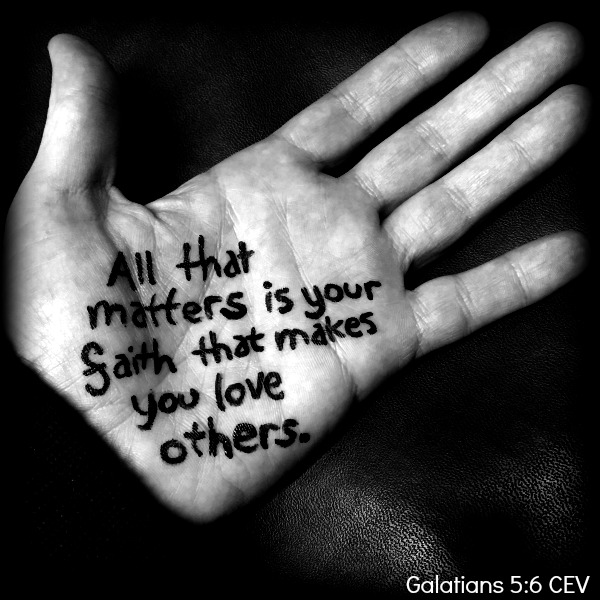
Did you see the prank video floating through our Facebook streams recently about who helps a nicely dressed business man who falls and who helps an apparently homeless man who falls? The video opens many questions for us and itself seems to focus mainly on the appearances of the two men… I immediately wanted to go deeper with the video. If you haven’t seen it, here it is…
Perhaps like me, you live in and among a homeless population. We have many homeless folks in downtown Bethesda and more and more you can’t catch a red light on many main streets without a homeless or needful person asking for help while you wait. Homeless neighbors sit by us at Starbucks, greet us at the Metro and some will come and sit in our church building during the day as a quiet respite from the street. For the most part I believe we have created a different set of rules for interacting with our homeless neighbors, and that is a large part of what is happening in the video.
I dug around to see if my thoughts were online anywhere, and I at least found this bit on social interactions that better defined the thing I think we’re talking about in this case of this video… (the bolded emphasis in mine)
In sociology, social interaction is a dynamic sequence of social actions between individuals (or groups) who modify their actions and reactions due to actions by their interaction partner(s). Social interactions can be differentiated into accidental, repeated, regular and regulated.
A social interaction is a social exchange between two or more individuals. These interactions form the basis for social structure and therefore are a key object of basic social inquiry and analysis. Social interaction can be studied between groups of two (dyads), three (triads) or larger social groups.
Social structures and cultures are founded upon social interactions. By interacting with one another, people design rules, institutions and systems within which they seek to live. Symbols are used to communicate the expectations of a given society to those new to it, either children or outsiders. Through this broad schema of social development, one sees how social interaction lies at its core.
Source: Boundless. “Understanding Social Interaction.” Boundless Sociology. Boundless, 03 Jul. 2014. Retrieved 06 Feb. 2015 from https://www.boundless.com/sociology/textbooks/boundless-sociology-textbook/social-interaction-5/understanding-social-interaction-50/understanding-social-interaction-314-5912/
I believe the business man in the video represents someone living by our social rules, within acceptable systems and institutions. So when he falls, there is an immediate need among others to restore him. He better represents what we have invested ourselves in, an acceptable life by normative social standards. The homeless man? He is presumed to be living outside those systems and institutions, and therefore his fall has less impact on the passersby. They are not invested in him already, and so his immediate predicament is less impactful for them. In fact, he represents a threat for many people, either an immediate threat to their safety or a more cosmic threat to our presumed rules for living.
Am I trying to explain away the video and lessen it’s moral message and impact? No way! I want to take it’s message and come up with a deeper message than just, “Yo, help a brother off the curb!” As a human, I need to intentionally invest in my neighbors, even when they are living and doing life outside of my normative bounds, rules and institutions. Otherwise, I risk developing the kinds of blinders that allow me to walk past a fallen person without helping.
As a human who tries to operate out of a specific faith orientation, I am further challenged by following a religious leader who personally rejected and moved outside of many normative societal rules and regulations of his time. Yes, Jesus.
I’ve grown up hearing sermon after sermon about Jesus touching the untouchable, but has sermon after sermon changed any of us? Have we been equipped with eyes and understanding that allow us to risk stepping into the lives of those outside the social norm? The answer is a qualified and limited yes… I know and have known many amazing human beings, inside and outside of faith communities, who routinely step over those social lines and engage neighbors living outside the bounds of social norms. The answer is also a qualified and limited no… because many of us still operate almost exclusively inside the norms, some even religion’izing the social norms to become matters of faith. Don’t know what that means? Try to find the verse in the Bible that says, “Cleanliness is next to godliness.” (Hint: It ain’t there.)
If I’m being a bit too esoteric for you here, think of it this way… when a clean-cut businessman falls, there is very little cost to helping him… his clothes are less likely to stink or to get me dirty, he probably won’t ask me for money, and after a nice verbal gesture of appreciation we’ll both go on about our day with very little time lost. However, operating on our usual assumptions about people who live outside our normative rules and systems, I wonder if helping a homeless man will get me dirty, if he’ll smell bad, if he’ll ask me for money, if he’ll have a mental illness and hurt me, if he’ll want to talk and take up a bunch of my time… the assumptions go on, and those assumptions increase my projected cost to any social engagement with that person. Seriously, it takes a while to say it, but I think we routinely make these mental and spiritual calculations in a nanosecond.
Let’s pay up. Let’s intentionally reframe some of our social rules so that we are prepared to pay the cost of stepping outside the easy social norms and engage people less like us. It makes us more human. It makes us more faithful.
Just the other day I tried to give a friendly greeting to a certain local homeless man I often see at my favorite Starbucks. It’s one of the things I do, with homeless or well-off-seeming locals… I say hi and introduce myself. We’re neighbors after all. This particular homeless man wanted nothing to do with me. He rudely rebuffed me, loudly proclaiming that he didn’t want to talk to me, see me or shake my extended hand. And, it was a little embarrassing for me.
Now, at that moment of rebuff, I have a choice: 1) I can narrow my social rules and interactions, letting that experience confirm assumptions and stereotypes about “certain people,” and I can be very less inclined to try again to greet someone who is doing life outside my norms, or 2) I can pay the cost of that interaction, a blush and a rebuff, and offering a prayer for the pain and hurt this man is obviously carrying, I can prepare myself for loving the next neighbor to come along in my little sphere of life.
You see, Jesus did not touch the untouchable. Please, hear that… Jesus did not touch the untouchable. For Jesus all people were touchable, worthy of touch, deserving of touch and imminently desirable to touch. He wanted to engage them and was willing to pay the price, which could sometimes be high. He was whispered about, condemned and made fun of for engaging some folks, and in one memorable event he helps ten people, with only a single person taking the time to thank him.
Now, if you don’t live in a place with a present homeless population, I bet there still people not like you… I bet there are people who seem to live outside your rules and norms. Can you pay the cost of loving them? Can you move outside the norms of what you are most comfortable with and find them touchable? Can I? Or as our more grammatical gifted friends would correct me, “Will I?”
AMDG, Todd
Dreaming With Peter
 As I’m working on message notes for this coming Sunday, and I’m thinking that I haven’t done much on my blog in 2015 as of yet, I thought I’d share something I’ve been thinking of, along the lines of my post last year looking for an Acts 15 Council Redux on LGBTQ Inclusion.
Today’s post is similar in that I’ve been dreaming with another passage from the book of Acts, Acts 10 and the story of Peter and Cornelius. Today, I’m praying for more and more followers of Christ to dream with Peter. I want them to have visions of God’s grace and love enveloping people who maybe aren’t like them, people of whom they have have been taught are outside of God’s presence and present work.
I invite you to read that chapter, even if it is very familiar to you already. This post may feel a bit like a defense of my affirming beliefs, but believe me, I’m not feeling too stressed about defending myself. What little negativity I have experienced in being a straight ally is no comparison to the hurt and pain that some of my LGBTQ brothers and sisters have experienced in and outside of the church. These are just some of my thoughts right now…
I Relate to Peter’s Experience
I feel as though I have gone through something very similar to Peter’s vision and the events at the home of Cornelius. Like Peter, I was also raised not to associate with certain people and certain things, and I was taught that they were unclean. But as I opened my eyes and desired to see clearly for myself, I began to see things in a different light, and people that I had been taught to see as so wrong no longer seemed so wrong at all, but more wrongly understood. Then as my thinking begin to change I experienced something even more powerful; I began witnessing their faith and I saw God’s Spirit moving among them. More than my mind changed along the way; my heart changed as well.
And so I have moved in my life from just not wanting to condemn my LGBTQ sisters and brothers, to vocally advocating for the affirmation of their sexual identities and their inclusion as full members of Christ’s kingdom and fellow human beings endowed with all the dignity and value God bestows on us. I’ve written about my understanding of many scriptures that are often related to this topic of conversation, but it’s passages like Acts 10 and 15 where my hope truly waits for us to move. I do believe that this is something a bit new that God is doing in the church and it’s not a question to be answered by only by digging in ancient texts and arguing over Greek words… this is movement of the Spirit in us all.
God initiates all the action in Acts 10. God sends an angel to answer the prayer of Cornelius, a Roman soldier outside of God’s people by birth, ethnicity and religion. But this soldier has faith and is called devout and God-fearing, and in answer to that faith God instructs him to send for Peter. Meanwhile, God is also moving in Peter’s life in a surprising way; Peter has a vision of God tempting him to act against his religiosity and spiritual upbringing! Whoa. The vision presents Peter with animals to eat which have been forbidden to him by religious law and practice, and Peter refuses on religious grounds to do as the voice from heaven instructs him. But the voice answers Peter, “Do not call anything impure that God has made clean.” This happens with Peter three times until he hears the voices of the men sent by Cornelius.
Peter is a quick guy, pretty smart. He puts it all together and goes to the home of Cornelius. He goes and begins speaking with everyone gathered in the house and explains that though he would never have come there before, now “God has shown me that I should not call anyone impure or unclean.”
If you know the story, or if you just read it earlier, then you know how the narrative goes. Peter hardly gets through his explanation about Jesus before the Spirit is seen moving in the audience in an amazing way, and Peter and the others from Joppa are astonished. Peter calls for their baptism because, “They have received the Spirit just as we have.”
Do you feel the connection that I feel with this passage? Just as the Spirit moved to manifestly convince Peter that he should affirm and accept the faith of those Gentiles who were so unlike him, I believe that we heterosexuals, who constitute the majority, in and outside of faith, are being called to witness God moving outside our expectations. Some of us are so sure, after years of religious life and years of religious practice, that we know exactly all that God has done, is doing and will do. I’m encouraged by Peter’s example of following the Spirit, even into some new places and some new understandings.
Peter surely had to do some rethinking with his scriptures after this experience. He surely had to do some restructuring of his religious thought and practice. And in fact we know that this is not only difficult to do but we make mistakes and stumble along the way. Later on Paul will recount his public chastising of Peter for refusing to eat with Gentile converts, even after Peter has had this incredible experience (Galatians 2:11-21). Change is tough, scary and requires an on going commitment to making it last in meaningful ways.
I Was Already Re-Reading My Texts
Since I made a public statement of my affirming and inclusive interpretations of scripture and religious life, I’ve had some emails and messages to me asking in various ways, “How can you?” How can I deny what I was taught in my youth? How can I deny what is so plainly written (in English at least) in our scriptures? How can I break with tradition? How can I risk alienating people from God by teaching them falsely? Though I will try to answer those emails when I have time, the answer is simple and kinda like the story of Peter in Acts 10: You see, I went and found God there already. I didn’t need to necessarily save anyone.
I Found God With Them Already
As I came to understand many of our scriptural passages differently than I had been taught, I also began to know LGBTQ Christians, people of deep and authentic faith. I experienced the real disconnect between the criminalizing speech of many straight Christians about “the gay lifestyle” or “the gay agenda” and the reality of their beauty, faith and struggle. Indeed, I found that we are far more united in our similarity and faith than we are divided in our dissimilarity and sexual orientations.
I Believe I’m Simply Following God’s Lead
Some keep asking me about a presumed arrogance on my part, that I have in someway chosen to reject God’s authority and wisdom to rely on my own. Really, I don’t claim a single new thought here, folks. Yes, my thinking has changed a lot over the last ten years on this, and even more in the last few years, but I don’t claim for a moment that I have received any kind of a special vision or message from God… I’m using Peter’s story in Acts 10 as a metaphor. I think it’s an exciting metaphor for the way we can see and follow God moving through the world and through people. As the Gospel crushes ethnic and national barriers, so can it remove the barrier of our differing sexual orientations.
If you’re a traditionally non-affirming pastor, preacher, teacher, parent or average Jolene on the street, it can be scary to entertain the option of changing your mind. It can be isolating, endangering of your friendships, and even threatening to your job security if you are engaged vocationally with a non-affirming congregation, school or religious entity. Just to risk asking the question if there’s room for changing the way you’re currently interpreting scripture and taking certain stances on human sexuality can put you in jeopardy and make you feel as thought you are losing firm footing in your faith. I want to assure you that in my experience, God has been waiting for me catch up far more often than trying to hold me back and keep me reigned in. If you need a safe person to ask your questions with and discuss a new way forward, please just let me know!
Worshiping with my LGBTQ sisters and brothers, and hearing their stories and expressions of faith, I’m left with Peter joyfully proclaiming, “God has shown me that I should not call anyone impure or unclean.”
AMDG, Todd
8 Weeks of Spiritual Direction, Part 2
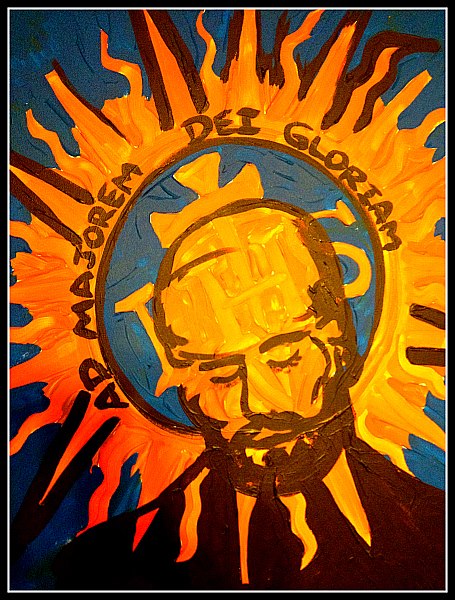 If you have been using the prepared readings and prayer prompts for the first four weeks, here are the second four weeks. I didn’t realize it’s been a month this I blogged! I must be busy, how about you?
An 8 Week Adaptation of The Exercises Second 4 Weeks
By the way, have fun with the Super Bowl, tonight!
AMDG, Todd
- ← Previous
- 1
- 2
 toddthomas.net