
Social Justice
Recommitting to All People’s Dignity
Just a quick note!
 As I’m doing my whirlwind of usual Sunday morning stuff to get ready for our worship gathering and fellowship time, I’m struck by the intersection of two news stories coming across my desk… the first is of Pope Francis throwing in on peace in the Middle East, and the second is of a conference of atheists in “Bible Belt.”
Of course, the Middle East won’t have peace just because the Pope encourages them to have peace. And the article about atheists in the South probably has a lot of hyperbole and exaggeration.
But it’s undeniably powerful when a Pope speaks of everyone’s dignity, especially the value and dignity of Jewish and Muslim neighbors. And a little hyperbole doesn’t change the fact that many people in communities across America fear the reactions of their Christian neighbors and coworkers to their chosen lack of faith.
Today, let’s recommit ourselves
to upholding the dignity
of all our neighbors.
Let’s be people who sow peace instead of fear. Let’s be people who live grace instead of just singing about it. Let’s be people who transform the world by simple kindness and sincere friendship. This is again our day to shine. This is again our day to commit to salting the earth with joy and with love.
AMDG, Todd
Arizona SB1062 and Religious Liberty
 Let me give you the punchline right out the gate, and then I’ll explain myself: I find the idea of legislating public discrimination as the antithesis of religious liberty as we are taught by our Christian scriptures. It is an egregious error to use one’s faith as a reason to deny service to anyone in the public arena based on one’s personal held beliefs and/or the other’s sexuality or perceived sexuality and decisions of conscience. We must hold true to the values Jesus related to us to be of the greatest importance, loving God and loving our neighbors. We also must hold to the example of Jesus, the suffering servant, the powerful-yet-disenfranchised Lord, the One who gives his all for others. (Matthew 22:34-40)
In Arizona they have done what was attempted just a few days before in Kansas, they passed State legislation removing legal penalties for denying business services and public access of services to someone based on their sexuality, if the reason for that denial of service was justified by the provider’s religious convictions. This has been called and defended as an expression of “religious liberty.”
The problem with this scenario for Christians is that our scriptures teach us the exact opposite about liberty. Jesus teaches us about the problematic exercise of judgment and the imperative expressions of love for all people, and he models a life and ministry which seems to have no filters for picking and choosing with whom he will minister and associate. He is seen in the homes of the wealthiest and most influential, and he’s on the street defending a guilty “sinner” against an angry mob. He heals all those who come to him and denies his followers request to punish those who do not accept him. (Matthew 7:1-6, Matthew 5:43-48, Luke 14:1-14, John 8:1-11, Luke 9:51-56)
Jesus is the one who removes his clothes and wraps himself in a towel to do the most menial of service for his friends, washing their feet. When he finishes washing their feet he says to them, “My very position and authority, my power, as Lord and teacher, make me a servant. Now you should be servants as well.” (That is, of course, my paraphrase.) Jesus takes our understanding of power and authority and inverts it so that any power and authority we have becomes the basis of service to others and not service to ourselves. This is a crucial understanding of our Christ that should not be overlooked right now because we have a special opportunity in our democratic system of government to live this and experience this very truth in a real way. We have power and position based on our ability to vote and shape public discourse. Will we use that power and position to serve ourselves or others? (John 13:1-17)
The idea of using religious liberty or freedom as a rationale for discriminating against another person and refusing to serve them stands in complete contradiction to the New Testament witness of the freedom and liberty we have received from Christ. This is something that other New Testament writers understood and also addressed in their own ways and in their specific contexts. Paul tells us explicitly that our liberty and freedom are the foundation for service to one another. James will highlight the problem with showing partiality and living judgmentally without mercy.
Paul’s entire letter to the Galatians is dealing with a specific problem in Galatia; they (as Gentile Christians) have been taught by others that after becoming Christians that they must also submit to the Law of Moses, in effect becoming observantly Jewish in order to be truly Christian. Paul discusses the difference he sees in Law and grace, defending their freedom from legalistic requirements. This is an entire letter written about our religious freedom and liberty. (Galatians 1:6-10, 2:11-21, 3:1-14)
Paul strenuously makes his case to the Galatians that in Christ we experience a righteousness (essentially a state of restored relationship with God) while receiving freedom from legalistic performance instead of being righteous through that performance. He sums up his specific arguments about this contrast of religiuos legalism and freedom in the beginning of chapter five by asking the Galatians if they would willing choose a state of slavery over a state of freedom. He then goes on to relate a broader expression of religious liberty in the same chapter, making our freedom in Christ the foundation of service to other people. Freedom then is not just our freedom from legalism, but our freedom is being free from self-service. Paul will frame this broadening of the discussion of liberty by referencing familiar words from Jesus about “loving one’s neighbor.” (Galatians 5:1-12, 13-26)
Paul moves our liberty and freedom into a more global arena. We are free to be servants to our neighbors. And who is our neighbor? According to the way Jesus taught, a neighbor is what we become when we meet the needs of and serve another human being, and a neighbor is a person in need. A neighbor is both a needful person of whom we have an awareness, and who we are when we serve them. It’s troubling that years later followers of Christ would use religious liberty as a rationale to deny service to a neighbor. It’s just too ironic. To be honest I find it more than troubling. It hurts my soul that people might evaluate our God, our Christ, our scriptures or our religion based on such a selfish and hurtful idea. (Luke 10:25-37)
Again, the proponents in the bill in Arizona keep referencing the “attacks” on faith and Christians. In his first chapter James gives us a reminder of a familiar New Testament theme of “joy during adversity.” I don’t feel like anyone is truly facing persecution as a Christian by having to do business with or to relate in a public context with a person of differing sexual orientation, but even I did feel that way, my response should not be to raise my fists or my votes in conflict. I should appreciate the tension and conflict, even if it escalates to a true persecution, as a chance to grow and practice perseverance. God’s love for me transcends any discomfort or stress of life.
We tend to think there’s only joy in dominance, but James reminds us that there’s joy in hardship. He also repudiates responding in anger, but instead advocates shutting our mouths and listening better. It’s an amazing chapter! It probably finds it’s fullest meaning when applied to a time when we might be a minority voice or simply in a conflict of ideas. (James 1:2-12, 19-25)
In the second chapter James will talk about the problem of Christians who show partiality, using as an example a time when they might treat people of different economic levels with an inequity of grace and respect. It’s a problem because God doesn’t show partiality, especially not based on economics. James will also quote the “Second Greatest Command” as named by Jesus, the responsibility to love one’s neighbor. Isn’t that an interesting recurrent theme? When speaking of liberty and freedom, and upholding people’s inherent value and dignity, we keep hearing about our call to love our neighbor.
Again the context is broadened with the evocation of loving one’s neighbor and we can easily see that disparities and diversities exist among us on many levels like economics, race, nationality, education, etc. Our principle of not showing partiality becomes a secondary foundation after liberty for humbly serving all people. This broader application of impartiality is affirmed by the next discussion from James about judgment without mercy. We do not sit in judgment over people, showing a favoritism that values some and devalues others, because we know all about our own dependence on mercy. (James 2:1-13, *8-13)
I think the thing about judging that really messes us up is that we’re often justified in our judgment. By this I mean that others have sometimes actually misbehaved or given evidence of misbehaving. Though this is not always the case, it can be the case, and we can feel very correct and justified in passing judgement. We might sometimes be correct in judging, but being correct is not the point. James brings this home to us with his mercy discussion. Mercy trumps judgment. He says it quite clearly. Mercy wins. Mercy is more powerful than judgement. Mercy defeats judgement. Mercy is greater than judgement and so we are called to be merciful and not to be judgmental.
What does Arizona SB1062 represent? It represents judgment and not mercy. Arizona SB1062 is exactly how we give people a mistaken image and impression about Jesus, about scripture and about our religion.
Taken to their fullest extension, all these passages represent the kind of teaching that should be producing Christians who humbly serve others, even in the environments most hostile to their sensibilities, without the “culture wars” we‘ve been seeing in our contemporary public discourse. Also, this would produce Christians who are vehemently fighting for the rights of other people, especially those not like them.
This has been a long post already and I won’t drag it out it much more. At the end of the day, there are many diverse beliefs and convictions held by Christians (both Christians identifying as straight and gay) about human sexuality, and we are each free and responsible to make our own journey of discovering exactly what we believe and practice in our own lives with regard to the complexity of human sexuality. We are called to study, to pray and to trust God to lead us. What we do not have as Christians is a religious or spiritual license or rationale to deny our neighbor their personal dignity, respect or our humble service to them. Will we embrace the servant’s humility and suffering as we are called to do, or will we try to make the world in our own image, a world where we push suffering off to our neighbors to accommodate ourselves?
If I cannot live out the mandate of Christ to selflessly serve others in my public arena then I have to question if I have an understanding of Christ’s own humble, redemptive service to me. Perhaps I will have fallen into the very thing Paul warned the Galatians about, namely exchanging my restful and gracious dependence on God through Christ with a feeling of entitlement and a sense of deservedness achieved by my exceptional religious performance. That thought scares me because I’ll not stop needing grace any time soon.
Christ has used his power, position and authority to menially (and amazingly) serve me in my messiness and neediness as well as in my goodness and my best effort to live by my conscience. Christ has loved and served the whole of me, redemptively serving me in such a way that I learned of my own value and worth through him. My neighbor, my every neighbor, deserves no less from me, and Christ has asked no less from me. Now, I have to try to live up to that calling as best I can.
AMDG, Todd
*A Note on Scriptural References: After each paragraph I have listed the passages I am using in that moment. When I mention several, they are listed in the order to which they are alluded or referenced in that paragraph. Please don’t take my word for it when wondering what a passage means, but dig in and enjoy!
The Bullies And The Be’s, and A Boy Name Michael
This is a blog post about a boy being bullied for liking a cartoon and it’s characters, bullied to point he attempted suicide. Even as we pray for him and his family and we watch for his story to unfold, I want to talk about talking about bullying.
Reading this story about a boy too young to be so terrorized and pushed to a suicide attempt I realize it’s worth the time to encourage our commitment to the discussion of bullies and how we are to “be.” I’m going to say bullies and “be’s” because it’s more than just telling our kids not to be a bully, but it’s also about teaching our kids to support one another, to show compassion and be aware of the other children around them. This is a parental issue. We need to own it. We need to own the story of Michael’s suicide attempt and be taught by his story. We need to pray for him and his family. We need to open our eyes to how we as adults, and especially as parents, model life for the children in our radius of influence.
You caught the allusion to the infamous talk about “The Birds and The Bees” as we have come to call the time when a parent tries to impart our knowledge and wisdom to our child about human sexuality. Talking about sexuality is difficult, but we do it because our kids need to learn from people in whom they can place trust and who are looking out for their best interests. The talk about bullies and becoming the right kind of person is just as important. We hopefully talk about sexuality with our kids before they hurt themselves, before they are victimized or grow into victimizers. The same idea goes for the talk about bullies… it’s not just a talk for the kid who’s being a bully, but for all kids. Every needless death and suicide attempt is a reminder that too many of us as parents aren’t addressing the problem before the victimization begins and remains unchecked. You can search around for yourself, but suicide is third leading cause of death for young people and bullying often has a strong link to suicide attempts.
You Are Not To Be A Bully, Ever.
Start here with your child. It’s not a complicated lesson to impart. We tell our children that they are not to make fun of other kids. We teach them to empathize, to imagine how it hurts to be ridiculed and “left out” at school. Bullying happens on the playground, on Facebook, on MySpace, Twitter and every social media platform that has been invented. We tell our children that they do not speak rudely of or to other kids or even adults, for any reason.
We have to tell our kids that they may not ever hit, kick, push, shove or physically embarrass another child. They may not threaten or intimidate another child. It’s a clear message that can be easily shared with a child, “You may not.” We deliver this message again and again and again. It’s one of parental mantras that we repeat until they’re sick of hearing it and will never forget it. “You are not a bully.”
If a child has been a bully, then they stop and they bully no more. I’m not looking to vilify and hurt kids who hurt other kids. We impart these kinds of lessons because kids often don’t realize the impact of their words and actions. I have heard it many times, and said it myself, “Kids can be cruel.” But that’s a bit of an evasion to be honest. The truth is most often more like, “Kids can be immature and unaware.” The vast majority of kids wouldn’t set out to so emotionally and psychologically hurt another being that the victim is driven to a suicide attempt. We as parents know it can happen, and that’s why the burden of teaching falls to us.
The harder part of the lesson is modeling these things for our children. They have to see us treating people and speaking of people with respect and dignity. They need to hear us speak in ways that show dignity and respect for others, especially those not like us and with whom we disagree. If we continually rail against people and angrily denounce others for their viewpoints, life-styles or for their physical attributes, our children will mirror our behavior at school and in their social circles.
 Parents, we influence our child when we speak of “the gays” with fear, anger or negativity. We influence our children’s behavior and speech when we verbalize fear or anger at “the Jews,” or when we give an angry tirade against “those Christians.” We do no one a favor, especially our children, when we speak with disgust or anger of “the Muslims, the Right Wingers, the Liberals, the Illegals, the Mexicans, the blah blah, <insert people not like me here>.”
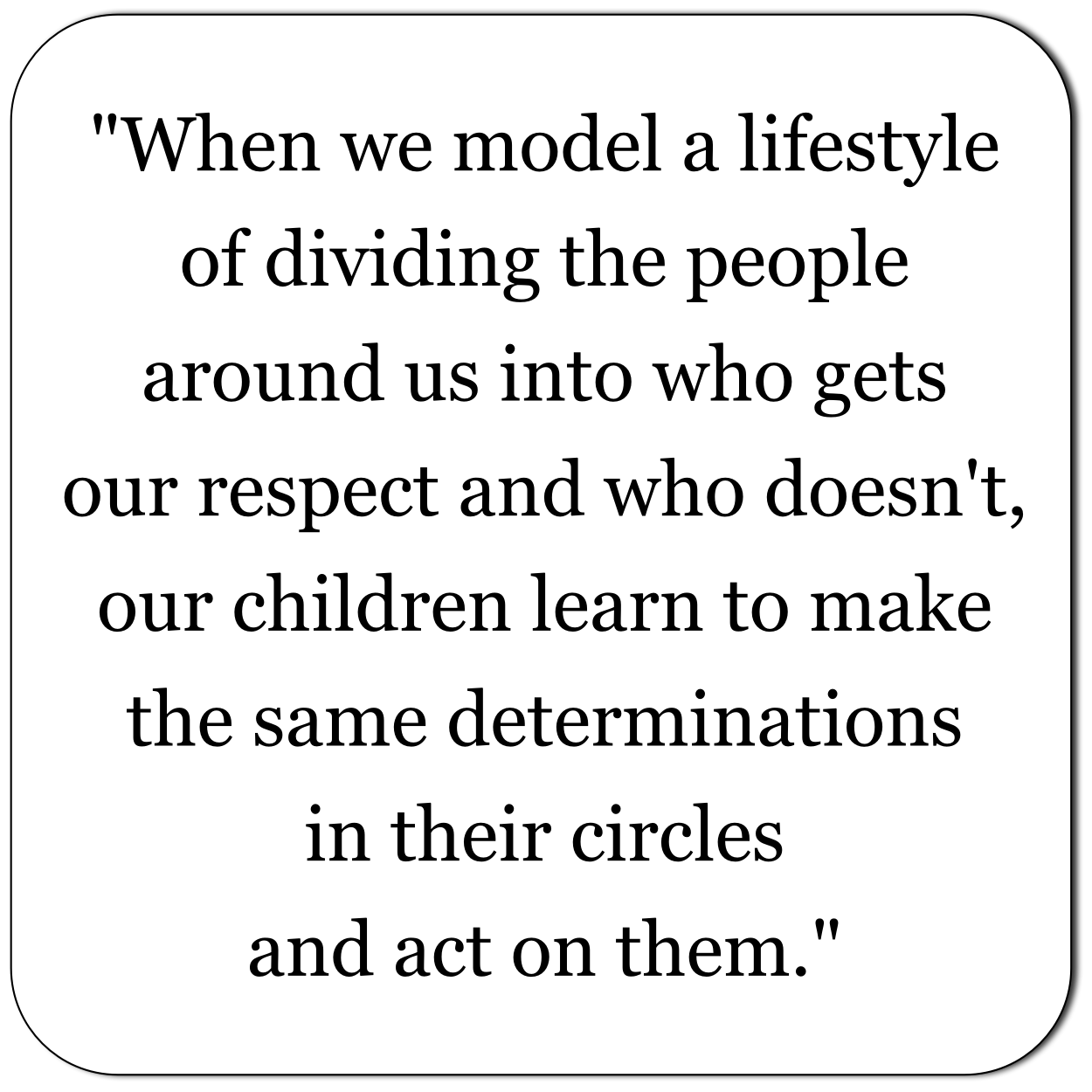
When we model a lifestyle of dividing the people around us into who gets our respect and who doesn’t, our children learn to make the same determinations in their circles and act on them. And let’s be honest, we’re talking about the words we use and the actions we take, but also about the media which we allow into our homes. Media and shows which engender fear, division, hatred or anger should have no place among our families. We can get our news, regardless of our political and social leanings, without subjecting our children to thinly veiled bigotry and divisiveness.
Does this mean we lose our ability to teach our values and beliefs to our children? Of course not. It does mean that we include the values of respect and personal dignity, of civility and responsibility. You may not like the politics and social stances of Republicans, but you can teach your children your political values while teaching them to be respectful of others. The same goes for every issue from immigration to sexual orientation to economics.
You Are to Be Kind.
 Again, the simplicity and clarity of this message is difficult for a child to miss. This is the positive side of the negative message to “be not.” Our message to our kids is not complete if it rests in the “be not” realm, but it has to move into the world of being something. Our message is this:
1) Kindness is strength, it is power and it is truth. Let’s have a round of applause for Thumper’s dad, shall we? And now one for his mom… they tag team this idea perfectly (for imaginary characters in a cartoon movie). Kindness means that even if what we are going to say is true, it may not be right or kind to say it. The substance of a statement can be correct while the speaking of the statement is not correct. It’s not as complicated as it sounds. Thumper’s been teaching it since 1942. “But it’s true” isn’t a good enough reason to say it.
2) Kindness is more than manners, but it includes manners. Kindness is sometimes costly and requires an expenditure of energy. Kindness is practiced and cultivated, it’s learned behavior. Kindness is a choice about the way a person will speak and act, and it’s a choice best made before a situation in which we hope to be kind or to show kindness. We teach our kids to choose to and then practice treating people the way they want to themselves be treated.
3) Kindness is also muscle memory. Grabbing a door to hold it open or moving to help someone when they drop something… these things are best as reflexes. Some kids will learn to point and laugh, and some kids will learn to look away and move on. Who will practice and develop the instinct to kindness? What kids will jump to help?As parents we are at the forefront of teaching our kids how they behave in common, every day situations. Do we model kindness for them? Do we stop and help someone who has dropped something or fallen? Do we hold the door at a restaurant or rush to get in front of one or two people and get our food maybe 60 seconds faster? What do our kids learn of kindness from us? It should be a positive message that they hear and see from us all the time, and not just when they’re being naughty.
You Are To Be Supportive.
Teaching kids to be empathetic and aware of what others are experiencing is easier than you think. Kids know who is being bullied, and they know how it feels to be bullied. In fact, we may be teaching children not to be empathetic or actually removing their empathy by not teaching, modeling and reinforcing a good awareness of others and their suffering or joy. There is evidence showing kids to be naturally empathetic. As our children grow up, they are in general ready to learn this from us and have it affirmed. The seed of empathy is there, but will it be nurtured and grown in our care or neglected and extinguished?
Looking back to the sad story of young Michael attempting to take his life, I’m left wondering how many of his classmates could empathize with his pain, but did not have the formation from parents to act on their empathy? How many times do we say to our children, “Reach out and support the hurting.” A parent may want to argue that putting such moral responsibility on a young person could be too much for them at age 11 or 12, but they have it within them to see another’s pain and offer support.
This is not in any way to suggest that his classmates who did not bully him are responsible for his attempted suicide. It is to ask if we are affirming what our kids already feel, that the pain of another person is something to which they can and should respond in helpful, healthful, constructive ways. Not only can classmates lend support and strength to a bullied student, but they could also engage adults to help and be more aware of the problem.
As I’m writing I’m also reading to my wife and we’re batting things back and forth. She just asked, “So how do we teach kids to be supportive?” She means, “How is this actually done so that my child knows what to do?” Kids are naturally empathetic, but they may not have the knowledge or maturity to act on it in the best ways. Let’s think of several things our kids can do, and we’ll frame these as “we can” statements, because we all can do this:
1) We can speak up. When someone is being hurt, humiliated or bullied, it sometimes just takes one voice in opposition saying, “Enough!” Our kids don’t have to get in a fight to stand up for someone. That don’t have to scream to say, “No more. Not right. Not true.” Thinking back on my statement that kids aren’t always cruel, but often unaware, they can be easily caught up in a moment of escalation. They may not be prepared to not follow when their group is gaining momentum in bullying a classmate, unless we have taught them to watch for it. And if it’s too crazy, the bullying is just too scary and we’re afraid… then we can speak up to someone else who can help. Our kids need to know that we as parents and other adults want to help the hurting. They can come to us.
2) We can give encouragement. Speaking up is not always in opposition, but can be in support of the person being hurt. Our kids can learn to respond to people’s pain with kindness shown in words like, “What they said about you isn’t true.” Maybe it’s written in a note and passed along later. Maybe it’s a smile. When someone else is being robbed of their dignity and worth by hurtful actions and words, we can supply the positive words and actions which help make up the difference. Know what this takes? It takes parents who really do believe that kindness is strength. It takes parents who are willing to model kindness for their children.
3) We can show friendship. It’s done in simple ways like saying hello, goodbye, good job and otherwise acknowledging another’s worth. A bullied child lives in fear and isolation. We can end that isolation. We can say hello to the person that no one greets. We can congratulate another person’s good work. We can let someone know that we are watching to see them again tomorrow. We can make sure someone has a point of contact and are not completely lost and alone.
An ongoing conversation, and Michael’s future…
This is not a lesson that we get to sit down and share once, but it’s a way we model life for our kids and a lesson that we have to reaffirm again and again. I hope you hear in my post that I’m not interested in vilifying or witch-hunting anyone, especially children, even bullying children. I’m interested in being involved and engaged enough to talk with our kids and help them to learn to take their natural empathy and act on it in helpful, healthful ways.
Michael’s full physical injuries are not known at this time. Let’s pray for a full recovery! If you want to help with his medical costs, you can do that here at a GoFundMe campaign. There’s a touching interview with Michael’s step-father here.
And what about My Little Pony? I have to say that I didn’t watch the original series from way back in the 80’s and I barely remember the toys when I was young. I have however watched a lot of episodes of the newer animated series and anyone who says it’s just for girls is simply wrong. The show is funny, clever and wonderfully supportive of moral behavior. Here’s the Hasbro site, Wikipedia, and the MLP Wiki. It’s fun, just simply fun. And nothing as fun as MLP should be used as a weapon to hurt a human being.
AMDG, Todd
Jesus Didn’t Weep Over Liberty
With the historic ruling this week by our Supreme Court on same-sex marriage we have been inundated with media coverage of responses from both sides of the issue. I understand that emotions run high on issues like this one, but I also know we still need to speak and react in responsible ways, especially if we step out to offer what we suppose would be God’s commentary on events, or more specifically, commentary from Jesus.
I was honestly, totally, down-right majorly peaved off when I saw this Tweet start making some headlines, from Gov. Mike Huckabee (@GovMikeHuckabee), My thoughts on the SCOTUS ruling that determined that same sex marriage is okay: “Jesus wept.” He also Tweeted this gem, 5 people in robes said they are bigger than the voters of CA and Congress combined. And bigger than God. May He forgive us all.
Now, first I want to give the one nod to the Gov. that he’ll get from me, the fact that he began the “Jesus wept” Tweet with the words “My thoughts on…” But that’s all the praise he’ll get from this Pastor after moving on to a complete misuse of the tears of Jesus to essentially make Jesus appear as the enemy of our gay neighbors. Wrong, sir. For the love of all that is Holy, stop it! Here’s a bit of the text the Gov. quotes from, John 11:32-37:
32 When Mary reached the place where Jesus was and saw him, she fell at his feet and said, “Lord, if you had been here, my brother would not have died.” 33 When Jesus saw her weeping, and the Jews who had come along with her also weeping, he was deeply moved in spirit and troubled. 34“Where have you laid him?” he asked. “Come and see, Lord,” they replied. 35 Jesus wept. 36 Then the Jews said, “See how he loved him!” 37 But some of them said, “Could not he who opened the eyes of the blind man have kept this man from dying?”
Let’s just break a few things down, shall we? Why did Jesus weep in that famously short verse the Gov. quoted? He wept over the death of a good friend whom he loved. He wept with hurting people, hurting friends. The weeping of Jesus is not a rejection of anyone, but a connection to all hurting people. Jesus wept in love, sorrow, loss and the experience of both his own pain and empathetically the pain of those around him.
To take the empathetic, beautiful weeping of our Lord and turn it into a hateful rejection of our neighbors’ search for civil justice is despicable and unGodly in the extreme. As a Pastor, I renounce this distortion of my Lord, I renounce the Gov.’s words and intentions. The Gov. rightly speaks for himself, himself alone. If he cannot do better textual work than that, he needs to shut his mouth and spend some more time in study and prayer.
Why take the time to blog on this? Because every voice that counters that kind of textual abuse is needed. Our gay neighbors who have so long been civilly disenfranchised from basic spousal rights and privileges have a lot of reason to celebrate this week. And to posit the idea that Jesus would weep at their joy, weep at their liberty, weep at this corrected injustice, is horribly wrong. In fact, I find it counter to the Jesus who wept at that scene in John 11. I find it counter to the Jesus who wept in love, not in rejection of people’s joy and liberty.
I respect the Gov.’s right to speak his own mind, hold his own opinions, and even maintain his own beliefs of what his faith may or may not say about same-sex marriage and attractions. To deny the Gov. his liberty would only lessen the hard won liberty bestowed on his gay neighbors this week by the Supreme Court. But I will not respect, condone or be silent at the abusive misuse of Jesus for the Gov.’s political, social or ratings gain.
Just as a reminder, back when so many children were viciously gunned down at Sandy Hook Elementary, when it would have been SO INCREDIBLY CORRECT to say that “Jesus wept,” the Gov. chose instead to rail on his political stump against gun control. He says something about slipping over to the “pastor side” and then speaking in blame about a mythical removal of God from schools. Why not let Jesus weep then with those hurting people? Why not let God be seen in the amazing person of Jesus, present with us and hurting with us and ready to make any journey with us, on good days and horribly bad days? Because the Gov. did not ever slip to the “pastor side” of things, but instead remained intrenched in his political/social agenda.
There is a lot more injustice to be righted in our country. There are still many disenfranchised neighbors waiting for us to move in their favor and right the wrongs that have often shaped their lives to their loss. God is not ignorant of their tears, even if pastors sometimes are. Jesus weeps with them, never against them, regardless of any pastor’s personal agenda.
Live For Healing, Not the Blame Game
When tragedies strike, or even multiply as they have this week in Boston and down in Texas, we have a myriad of reactions as humans and as people of faith. We hurt… we feel empathy and a real human connection to the victims. We pray… because we feel like our hurt needs to take action and bring about a response in us. We have been praying all week for our friends and neighbors in Boston and Texas. And we begin to question… we want answers. We hope that the answers, and more often the blame for these tragedies, can help assuage the hurt, confusion and fear.
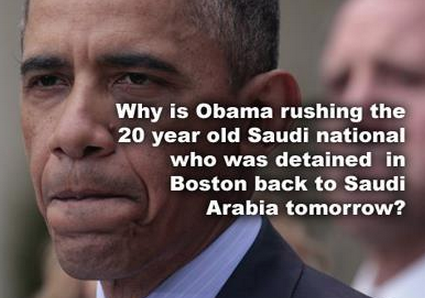 Too many times we turn to angry accusations and blaming games that endanger people and multiply harm. We “want someone to pay” and our prejudices always supply a handy suspect. And when those desires also serve a political grudge? Well, all the better it seems. Yet this is not thoughtfulness or healing. This is not service to the hurting or help to the injured. But blaming feels good to us sometimes. Blaming feels “right” and justified to us. By the way, the Saudi national that many jumped to blame, along with the President, was not to blame. And of course today we know that it seems to have been the work of two brothers who are not from Saudi Arabia. I thank God that whatever steps were actually taken to keep more tragedy from happening with this Saudi man were taken! If he was whisked away to prevent unnecessary violence, then “Well done!”
The Problem of Blame
Here is a bit of what I see as the problem with our need to blame and rush to blame:
- Blame can avoid actually dealing with the hurt and delay healing.
- Blame can attack and injure innocent people, compounding the harm.
- Blaming exposes and strengthens our deepest prejudices.
Let’s look at a text in John 9 about a man born blind. It may be familiar to you or it may not. Really, we’ll just be working with the first 12 verses, but the whole chapter is a very interesting story of Jesus healing a man and the dramatic aftermath of the healing within his family and community.
What is happening in the this passage? Jesus is walking along and comes upon a man born blind and about whom his disciples make an inquiry, “Whose sin caused this suffering?” There must be a little more action happening that we aren’t in on, like how does John know he’s born blind at that point, what kind of attention did Jesus show to the man to inspire the disciples to ask for details? Things like that… but the case seems to be a bit of a random event happening as Jesus moves through his day.
The Question: “Who sinned? Who is to blame?”
I first encountered this kind of thinking on blame when I lived in East Africa. It may seem strange to us in the West to automatically ask for spiritual causes for physiological problems, but it’s common place in other cultures and parts of the world. In East Africa a person rarely asked “why” someone was sick, they asked “who made them sick.” The change in question stemmed from the acceptance of the idea that bad things happening in life were caused by the bad thinking of a person that translated into spiritual energy such as an intentional or accidental curse upon another person. So why did my crop fail? Because my neighbor was envious of it. Why did no rain come this season? Because the spirits of our dead family are unhappy that we don’t pound dry corn the way they did.
For the materialist magicians that we are in the West this can sound very alien to us, and yet when we have bad things happen to us or in our nation we always hear the cry of “Why did this happen, God?” And there’s never a lack of unthoughtful preachers making news by blaming the people around them they love the least. And if they don’t love someone God must not either, right?
This happened after the attacks on 9-11 and after Sandy Hook. It happened when a tsunami hit Japan and it happens when an earthquake strikes the Middle East. It happens when bombs go off in Boston and it has probably happened when the building unexpectedly exploded in Texas, though thankfully I haven’t seen or heard the blame given to anyone yet.
In tough times, tragic times, we turn to blame someone. We crave to lay blame on someone. We rush to judge, to blame and to find someone upon whom to lay our pain and suffering. It brings out the worst in us socially, politically and often religiously.
Walking down the road the disciples had a chance to clarify their need for blame. Here’s a man born blind. He was blind before he had a chance to sin or do something to deserve the affliction, so who might have sinned to have caused this? Did his parents not attend synagogue enough? Were they bad Jews? Did they neglect to tithe?
It’s not as weird a question as we might immediately think. Did God not take King David’s child from him, the child born from the sexual sin and murder in which David took Bathsheba from her husband? Have we not at times seen in the scriptural narrative that God levies punishment on people in specific ways for specific sins? Have we not heard New Testament writers assure the people of faith to whom they wrote that trials and afflictions are God’s way of proving our patience and chastising us?
I don’t intend to remove any power or meaning from any of those passages, but I do intend to question the idea that such passages and pieces of our scriptural narrative give us license to lay blame at people’s feet when we feel the need to have a scape-goat for our hurts. I question our ability to know more than that group of speculating disciples walking down the road with Jesus. We often have the same question, and it’s not a bad questions. The real kicker here is where we get our answer. I hope it’s from Jesus.
The Answer to the Question: “Look for healing.”
The answer Jesus gives is both clear and a little ambiguous. Don’t you love that? He says clearly that neither the man nor his parents sinned to cause the blindness. Instead he says that the blindness of the man is intended to be an expression of God’s power, presumably in healing. So he clearly releases the man and his parents of the blame, but seems to sorta say it’s God’s fault. I immediately thought of poor Job. Remember him? He was the guy just living and loving life until God asks Satan, “Hey, what do you think of my man, Job?”
But is Jesus just playing the blame game that was set up by the question, only adding a third option for the blame, or is he doing something else? Is he simply saying, “No, it’s not him or his parents, but you’re on the right trail… it was God to blame!” Or is he trying to get the disciples thinking on a higher level, or deeper level we might say.
Jesus ramps the conversation up by rejecting the sin causality, “Neither this man nor his parents sinned” and introduces a shared activity of revelation, “…but this happened so that the works of God might be displayed in him. As long as it is day, we must do the works of him who sent me. Night is coming, when no one can work. While I am in the world, I am the light of the world.” Interesting use of the light and dark themes so beautifully illustrated in the man’s blindness and restored sight! I love it when Jesus does stuff like that.
Jesus says the man’s blindness is an arena for seeing God work. He’s not really blaming God as much as tying the man’s blindness into a greater level of meaning. The man’s suffering in life is not simply a blame game, but a chance for good to move into action. Jesus says he is stepping past the blaming to grab hold of the healing, and I think we are invited to do the same.
In rejecting the sin argument of blame Jesus opens the door for healing and change. What would the story have been like if Jesus had simply said, “His parents cheated a household laborer out of her wages, and God hates injustice, so their child is blind,” and then just kept walking? That story would have sucked eggs. And in fact, that kind of story would have been too painfully similar to the times when we and/or our neighbors experience tragedy or suffering and some nearby person of faith starts in with, “Well, we have legalized abortion… It’s the homosexual agenda… It’s the atheists… We don’t pray over the loud speakers at our football games any more… It’s the Republicans… It’s the Democrats… It’s blah blah blah.”
I’m glad that we are being called into account for our words more and more. Soon after the bombs on Monday, when some voices started the blame game against their favorite prejudice (the atheists), a response from a thoughtful atheist hit CNN’s front page. Good. The blame game causes us to de-humanize our neighbor and build walls of “us-them” thinking that need to be torn down!
I have been personally saddened by the speculative blaming that has meme’d across Facebook and other social outlets this week like “Obama Protects Saudi Suspect!” We are so bent to name and demonize the usual suspects that we turn immediately to the worst kind of unsupported reporting and blame game tactics to attack the people we least love. And do we beat people in parking lots now for looking Arabic? It seems that maybe we do. Truly, truly sick. Blame game crap never brings healing… it exponentially expands the suffering. Blame brings out our worst.
What to do?
People of faith should be some of the first to recognize that we have many questions, some that get pretty satisfactory answers and some that never do. We travel a road of faith, a balancing act of certainty and speculation. There is plenty in the scriptural narrative to point out that, though our dumb actions are often the cause of our suffering, there are also times when “rain falls on the wicked” and the world caves in on the righteous. Our task is not to assign blame, and then I guess go on with administering some punishment. Our task is to move into healing action. Our task to look at the ways that the goodness and glory of God can move to lift humanity from affliction and into wholeness, and how we participate in that. Our task is to gracefully love, pray, and hope and thereby act out of gracious love, prayer and hope.
Is it unjust when the sinful hatred of two young men sets off bombs on a crowed street and kill innocent people including an eight year old boy? Yes, it is. Is it unjust then the actions of those two young men maim and injure hundreds more? Yes, it is. Is it truly saddening when an unexpected explosion devastates a small town killing workers and first responders? Yes, truly saddening. Is it gut wrenching to watch the town scramble to rescue and serve their neighbors in the choking, blighted aftermath of that explosion? Yes, it twists our guts inside out.
The question that matters most on the Friday of such a hard week are not “Who do we blame? Who will pay for this? Who will be punished for this?” The questions that matter most on Friday of this week are “How do we serve? How do we help heal? How do we better love? How do we better raise our friends and neighbors from their suffering?”
Already one Boston bombing suspect has died in a confrontation with the police. His brother and suspect #2 is still running. I keep looking over at the news outlets to see if there’s any resolution to the chase yet, not because I’m jazzed to see news of his death, but because the sooner we can divert all this energy from hunting to healing the better served many of our hurting neighbors in Boston will be. I hope he is caught soon, and I am sure he will face justice for his actions.
But for us though, watching from afar, let’s multiply the healing and not harm with our words and actions! This is our task. I am so encouraged by the people running to the bomb sites Monday instead of away from them… they accepted the task of moving for goodness. As tragic as it is, I am so honored to be a human being when I read of first responders giving their lives in Texas as they rush to defend and serve life in the midst of a volatile situation. They are the heroes who make a lump in my throat. It’s a very human responsibility to serve and love, to raise a neighbor from the depth of pain in any way they can, and humans of faith should not be the first to forget it.
Our words in these days matter. Love. Hope. Healing. Let’s speak the greatest things and live them and never trade them for the burning drive to blame, isolate and divide. It may not be the answer our questions might seem to ask for, but it’s the answer that will speed healing for us and all who need it most.
The Frustrated Body Politic Gets Some Encouragement
 Welcome news was seen today that the idea of having a Congress that does the work of the people is not a completely lost or antiquated idea. A high profile loss for the NRA should encourage all of us who believe that the Senate should be swayed by the will of the people, not the will of special interest lobbyist groups such as the NRA.
What really threatens our Liberty?
I hope there continues to be a growing realization about today’s NRA. When they position themselves as a bullying lobbyist group that opposes such needed and wanted bipartisan legislation, crafted by the moderates of both parties, they do two things: 1) they move themselves into the disconnectedness and irrelevancy of all extremism, and 2) in my humble opinion come dangerously close to subverting our liberty as American citizens by leveraging fear and money to sway our legislature away from what is blatantly an overwhelming desire of the American people. This is where I fear our liberty is at stake… not in having to pass a background check to buy a gun, but in our ability to elect people to a Congress that will reflect the will of the American people.
As for me, I will continue to stand with Gabrielle Giffords and all who believe in a “government of the people, by the people, for the people” not perishing from the earth, even in the face of powerful lobbying like the NRA and the weapons industry. The following quote just doesn’t get old….
“Mark my words: if we cannot make our communities safer with the Congress we have now, we will use every means available to make sure we have a different Congress, one that puts communities’ interests ahead of the gun lobby’s. To do nothing while others are in danger is not the American way.”
~ Gabrielle Giffords
http://www.nytimes.com/2013/04/18/opinion/a-senate-in-the-gun-lobbys-grip.html?_r=1
The Frustrated Body Politic: 101, 102 and 103
 My frustration at our Senate’s refusal to act on our behalf with today’s gun control legislation has led me to write several posts on Facebook which I will give all together here. I am so appreciative of my wife Teresa holding me accountable to my commitment to civil discourse. With her help I have tried to moderate my frustration and present some of the cogent ideas and concepts I believe are missing from our gun control debate.
I have tried to present a clear rebuttal of the Senate’s inaction on gun control, and why I think it is a very bad turn of events for us as citizens. I have tried to avoid name-calling and uncivil or unfair treatment of anyone, though I have been clear on my disagreement with their actions and/or justifications. Instead, I have turned name calling on myself… I am the frustrated body politic.
Here’s the syllabus on what I think is going wrong:
The Frustrated Body Politic: 101
So where do the people turn when their legislative body has great power but lacks the will to act? The American people overwhelmingly want expanded background checks as a beginning place for making our nation safer. Our Senate says we cannot have them.
Here’s a reminder of the kind of polling that shows our support for background checks… our President is not lying about public suport for expanded background checks.
http://www.foxnews.com/politics/2013/03/22/fox-news-poll-majorities-support-new-gun-measures/
And yet enough of those sent to represent our will in the Senate find justification to do nothing.
We are stuck with a “Legislature of Inaction.” They lack the will to move on issues that matter to the American people. Here’s little a reminder of how well that’s working for them… the Congress enjoys an amazing 13.5% approval rating and a staggering 80.3% disapproval rating, on average…
http://www.realclearpolitics.com/epolls/other/congressional_job_approval-903.html
Inaction creates complicity on the part of our legislature. In the search for approaches to the problem of how to make us safer, inaction is the only response guaranteed to have no impact. As valid as the question of a bill’s ultimate efficacy might be, any effect would still be greater than the lack of change guaranteed by inaction.
I’ll let Gabrielle Giffords have the last say tonight.
http://politicalticker.blogs.cnn.com/2013/04/17/giffords-on-senators-shame-on-them/?hpt=hp_c3
The Frustrated Body Politic: 102
“Mark my words: if we cannot make our communities safer with the Congress we have now, we will use every means available to make sure we have a different Congress, one that puts communities’ interests ahead of the gun lobby’s. To do nothing while others are in danger is not the American way.”
~ Gabrielle Giffords
http://www.nytimes.com/2013/04/18/opinion/a-senate-in-the-gun-lobbys-grip.html?_r=1&
“These senators have heard from their constituents – who polls show overwhelmingly favored expanding background checks. And still these senators decided to do nothing. Shame on them.”
~ Gabrielle Giffords
http://politicalticker.blogs.cnn.com/2013/04/17/giffords-on-senators-shame-on-them/?hpt=hp_c3
The Frustrated Body Politic: 103
“‘Criminals do not submit to background checks now,” said Senator Charles E. Grassley, Republican of Iowa. ‘They will not submit to expanded background checks.'”
http://www.nytimes.com/2013/04/18/us/politics/senate-obama-gun-control.html?hp
This is defeatism, not snappy wisdom or common sense. Defeatism is “an attitude of accepting, expecting, or being resigned to defeat,” and it seems to be the majority view in the Senate on making us a safer nation. Defeatism drives inaction.
A frustrated body politic might ask about the value of making it harder for untraced firearm purchases to happen when expanded background checks are enacted. A frustrated body politic might ask if the commitment level of the criminal to break the law should also lead us to abandon stop signs, or laws against murder, or laws against theft, or any other law we have made to increase our safety and remain in effect even though those laws are broken every day.
Defeatism is the assurance of defeat. Defeatism is a simple lack of will to act and it is an inexcusable trait for those invested with acting on our behalf.
“A battle is won by the side that is absolutely determined to win. Why did we lose the battle of Austerlitz? Our casualties were about the same as those of the French, but we had told ourselves early in the day that the battle was lost, so it was lost.”
― Leo Tolstoy, War and Peace
http://www.goodreads.com/quotes/tag/defeatism
Same-Sex Marriage, A Response
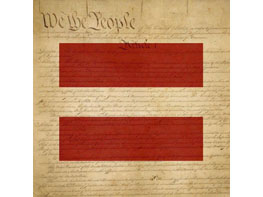 There is a comment thread in my first post on same-sex marriage that I will respond to here in this post. I’d like to make a couple of points that might get lost in just replying in that thread…
A reader named Deanna asked me to go look at a blog which leveled the charge of “idolatry” at people of faith who do not condemn their gay neighbors and same-sex marriage. My friend Greg went and read it and responded, and I checked out as well. Here are a couple of points I’d make…
First Point: Name calling is just too easy and evasive.
There are so many arenas on the web to talk about and debate what the scriptures actually say about same-sex attractions or practices, and I really encourage people to dig in and try to answer some of the tough questions surrounding the issue of same-sex activities recorded in the scriptures and how we interpret them, if living by the scriptures is one of your personal drives. I will say that I agree with Greg on his take on the referred article… too simplistic and unfair. It’s far too easy to simply accuse people you don’t agree with as idolaters. When you can’t hold a substantive argument, the recourse should be doing more scholarly homework, not resorting to name calling.
Maybe, one day soon I’ll unpack my reading of scripture and same-sex attractions and relationships here, at least as I have come to believe and read the scriptures. I am someone who holds scriptures at the core of my life and thought, dependent on and grateful for them.
However, in my previous blog post, though I did mention own belief that a same-sex orientation is not antithetical to my faith, all the ideas I expressed were about removing inequalities in our civil laws about marriages and it’s benefits. The article to which I was referred at least began at the marriage question, but only as a spring-board to move to other things, like name-calling in disagreement. Why change the subject? Scallia’s exchange was interesting, but hardly definitive.
The bottom line is that I am happy to respect anyone’s right to hold a view on same-sex marriage and to have their own thoughts on same-sex orientation, but I am not happy to have anyone’s views unnecessarily held above their neighbor’s views to their neighbor’s detriment. That is not “neighborly,” nor kind nor civil.
Second Point: Has no one ever taught us to disagree?
I’m afraid that people of faith who do believe that same-sex attractions and relationships are antithetical to their faith are missing a great opportunity to grow in their own beliefs and at the same time make a fair, just statement to their neighbors who believe differently. I wonder why we so often think that someone’s differing opinion undermines our own? Universal agreement is certainly not the best test for one’s own convictions.
Suppose that more traditional thinking people of faith who opposed same-sex mariage would say something liek this:
“Well, it is a ‘free country’ and you are responsible for your own life. So I will not try to get in your way on such a personal issue that involves consenting adults living their lives. By the way, if you ever want to consider my views on the issue, I’d be glad to buy you a cup of coffee and chat.”
Such an offer may not get many takers, but it’d be respected far more than shrill name calling and denial of people’s civil rights.
People of faith have been disagreeing poorly for a long time, so I don’t blame our current generations for the problem. I do however think we could make some real strides forward on disagreeing better. We can be part of the solution!
This is especially needed when we are thrown in the public spotlight. I grew up in churches that happily argued and condemned each other all the time, relishing the delight of publishing scathing articles about another congregation, a college or some preacher who disagreed with their view. The worst days were when one congregation would take out a full-page ad in the local paper to condemn another. What a horrible witness to the reconciling power of Christ.
People of faith who want to point to the faith of the writers of our national documents like the Declaration of Independence and Constitution should be humbled that faith had such a grand part of crafting these documents of freedom and liberty, not restriction and denial. Faith helped create the guarantees of freedom that we now debate in our national conversation and in the highest court of the land. In such a national arena we need to recognize that our views and opinions are best shared with respect, dignity and a large dose of humility.
Same-Sex Marriage
 Ok, here we go. Over twenty years ago I was so very blessed to marry my life’s love, my soul mate and best friend, Teresa. I cannot imagine having taken this journey with someone else. I am so thankful.
Because Teresa and I are Christians, our marriage took place in a church building, with a Christian minister officiating. But interestingly, the “paper trail” of our wedding began earlier, not in a church building, but in a county office in Abilene, Texas. The civil authorities issued our marriage license and demanded a copy back, signed, for their records.
I believe our faith has framed and guided our marriage, and it is integral to who we are. But it was the civil government which allowed us to marry and have all those rights and privileges afforded a married couple. Those privileges, by the way, have nothing intrinsically to do with gender, faith or sexual orientation… visitation rights, filing joint taxes, hospital visitation, insurance coverage, etc.
Why does the civil government do this? Well, because we have this amazing document we call The Constitution that was created to, among other things, “..secure the Blessings of Liberty…” Those nation builders were poetic rascals, and that phrase rings very similar to the idea put forth in our nation’s Declaration of Independence that all people have certain rights as human beings including the rights of “Life, Liberty and the pursuit of Happiness.”
Being married has made me so happy! Living with the liberty to seek marriage to the one I love, and then to obtain marriage to the one I love, has been one of the most worthwhile pursuits of my life. It has been a pursuit and realization of happiness.
Today, in the same country many simply do not have the same rights and protections as I do, because they love and wish to marry someone of the same gender. In some way, we have decided their endowed right to life, liberty and the pursuit of happiness shall have restrictions imposed that are not imposed on my own. All those rights and privileges I mentioned, that have nothing to do with gender or faith, can and are most often denied to them.
My friends, I do not believe that my own faith instructs me to oppose same-sex marriage. I do however understand that many of you believe that your faith does not allow you the option of same-sex marriage or orientation. And for the sake of your conscience, and because it is your right to live life based on your faith convictions, I respect and support your living by that faith. No one should ever force you to live in an orientation or marriage that you do not desire. But we are talking civil rights, folks. We are talking about the very base of civil rights which afford you and I and everyone the opportunity to worship and live according to personal faith, as one’s conscience dictates. These are shared rights to pursue happiness in freedom.
While proofing this blog for me, my previously mentioned wife, the beautiful Teresa, asked me to mention something about interracial marriage in our nation. She said, “This isn’t a new issue” meaning that the denial of people’s right to marry whom they choose is not a new problem. Many Americans fought the civil right of others to marry someone of different ethnicity, often again on religious grounds. Though it was legal in many States, marrying a person of another ethnicity was not a protected right for all people in our country until a 1967 ruling by the Supreme Court. 1967!
You may answer the question of same-sex marriage by any criteria you wish to use, for your own life. This is your right. Answering it for your neighbor, by any criteria of your own choosing, is not however your moral, ethical or constitutional right.
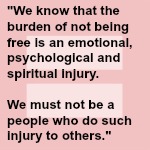 Everyone can empathize with a person’s desire to pursue life-long love with their chosen partner. And we can also empathize with the desire simply to be free to do something, even if we ultimately choose not to do it. We know that the burden of not being free is an emotional, psychological and spiritual injury. We must not be a people who do such injury to others.
For straight people, the freedom to marry remains their right whether they marry or not. A freedom is strength. A freedom is joy. Not being free is painful. Right now, a majority of people in our country enjoy the strength and happiness of a basic civil right to pursue personal happiness in the agreement of marriage and all it’s attendant rights and privileges. And at the same time in the same country a minority is held bound in the pain and loss of being denied the same right.
For me, the burden of my own rights will necessitate that I support the rights of my neighbor. My freedom to marry cannot be a selfishly hoarded treasure. If I am given this gift by my civil authorities, pursuant to the execution of our nation’s founding documents, then this gift is also for my neighbor, regardless of ethnicity, gender, orientation or personal faith.
In short, I stand with my homosexual neighbors, now and always, in support of their intrinsic human dignity and their full, complete set of civil rights. My faith tells me that they are beloved of God, and so it is my joy to serve them and love them. Whether my gay neighbor is a citizen of my country or not, I will always support their freedom and human rights, but especially in the country of my birth, I will expect that they are treated as full citizens, endowed with every right I myself enjoy.
And maybe one day, one glorious day off sometime in the future… I won’t have to even clarify that I am standing with my gay neighbor, or my straight neighbor, or my Christian neighbor, or my Muslim neighbor, or Hindu neighbor, my atheist neighbor, my male neighbor, my female neighbor… maybe, just maybe, we’ll grow up into a mature respect of people that no longer needs such labels to engage their amazing worth, value and dignity as human beings. Amen.
The Politics of Punishment
I’ve had a thought steeping in my head for a while, and I need to serve it up. I’m not sure if you’ve followed the fate of the “DREAM Act” or not, but it’s an attempt to assimilate and welcome minors who were brought to our country illegally by their parents.
Now, I’m one of those political cats who can’t always decide which view to hate more, so I’m usually a little more conservative than my neighbors in DC, but am usually way more liberal than my neighbors in Alabama and Texas. I rarely have big political statements to make. A lot of people think that’s the problem with “moderates,” but at least you can’t blame us for clogging the blog-o-sphere with our rants.
Today is different for me. I have a statement to make. Opposition to the DREAM Act is not “conservative” politics, it’s the politics of punishment. I grew up in conservative geography in which I was taught a love of one’s neighbor, compassion and empathy. I grew up in conservative geography where I was taught that we are a country of many kinds of people, and that’s alright. I was raised in a conservative geography where I was taught that I am in fact “my brother’s keeper.”
So what happened to all those ideas? When did “conservative” come to mean conserving an ideological viewpoint at the price of people’s futures? When did the politics of punishment take over?
The answer is partly found in the polarizing nature of Conservative and Liberal points of view, and the necessary vilification of “the other” to win in an arena of competitive viewpoints. We simply cannot share an issue, and that’s just sad… it may be the great American weakness.
But something like the DREAM Act rolls along and suddenly we have a moment of sublime clarity… a lot of us are just pissed off, and we want to punish someone because we’re pissed. Kids? Sure, we can punish them too. And we’re blinded enough by a politics of punishment to think it’s OK to refuse a simple gesture of welcome to someone who is already our neighbor. The sadness deepens.
Go ahead and quote the reasons for wanting to punish minors who were brought to a country by decisions not their own… really, this is your time. Right here. Spill it. Say how the influx of undocumented illegal immigrants is destroying our health care system. Say that it’s overwhelming our social services. Say that it’s depleting our job pool. Say that it’s unfair to those who came here documented. I’m pausing now for you to do that.
Now, tell me that those reasons are good enough for you to reject a neighbor who was brought to our great country as a minor and knows this as their home. Tell me that even with the included requirements of education and proof of moral character in the DREAM Act, that we can’t open a door for them. Tell me that it is for all those reasons just stated that we faced our recent economic depression, collapse of banks, sky-rocketing unemployment and record setting home foreclosures. Hmmmm, you can’t. I can’t. We “legals” made that mess. Our banks made that mess. Our home lending policies and practices made that mess. We have a fine enough time designing our own demise without ferreting out the least among us to scapegoat.
Did you read up on the DREAM Act? If these kids manage to get citizenship, according to the terms of the DREAM Act, some of them will have done a whole lot more with intentionality for their citizenship than I’ve ever done for mine. (I’m whispering this part, “Or the vast majority of you.”) I was just along for the ride… oh, wait! So were they! Truth is, as minors go, they are in about the same position I was in as far as choosing where we’d call home. My neighbor is me.
We all honor those who come to our country in an open and legal process. But that’s just lip service. Have I ever found a way to help tutor someone in process for citizenship? Have I ever written a “thank you” note or a given a congratulatory gift to someone who was naturalized as a citizen in our country? Of course I haven’t. And though someone out there surely has, I’m betting the vast majority of us haven’t unless we by chance had a family member or close friend go through the process. No, we’re not galvanized into action by that to which we give lip service. We are moved by indignation.
The politics of punishment offends my ingrained Texan neighborliness. I was taught that being a neighbor meant better than that. The politics of punishment offends my sensibilities as a Christian. As one who has been shown the grace of God and heard the stories of Jesus, I am offended. I think of the servant who choses to punish another servant after witnessing the grace of One greater than he; Matthew 18:21-35. I think of the servants who have come late to the fields and are just as welcomed and paid by the owner of the fields as those who came earlier; Matthew 20:1-16. These are the stories of Jesus Christ. This is the legacy I was raised to carry forward.
 So, I support the DREAM Act. Because my unintentional arrival on this continent makes me no more important than these other children who arrived here by no choice of their own. I need to work hard to love my neighbor, every neighbor. There are in fact people in this life deserving of some of the punishments that come their way, but let’s not ever let our political needs lead us deny a neighbor. That would be a fundamental mistake.
My neighbor is me. That’s how I was taught.
- ← Previous
- 1
- 2
- 3
- 4
- Next →
 toddthomas.net