
Just Life
A Gift from a Homeless Brother
One of the joys for me living and working in downtown Bethesda has been knowing such a diverse group of people on a daily basis. From my wonderful Muslim neighbors to the greater Jewish community of Bethesda, to the many homeless friends I have made and the chances of running into folks from Church in Bethesda or other local groups I’m active with; any given day is filled with such deep relational potential.
 It was not a surprise to chat with and share some mutual encouragement with a homeless brother of mine at La Madeleine this morning in Bethesda while having breakfast. It was however not expected that he would follow me out to the parking lot to give me a piece of jewelry, a very nice BORA watch and say, “God laid it on my heart to give this to you.”
Yes, I’m that guy. I’ll let a homeless friend give me a gift. I told him it wasn’t necessary to give me anything, but I did accept the gift when he insisted I have it. I have certainly never helped him, or my family done anything for him, with the intention that I or we would get anything from him in return. We help him because we love him. And he felt the tug to lay a gift on me for the same reason. He said that he felt it was right to give me something for all I do and try to do for him. He also explained that he has connections to get jewelry, so I shouldn’t worry about it setting him back too much. <insert my nervous chuckle here>
I first experienced this kind of humbling when I lived in Kenya way back in 1989 and 1990, and later in Tanzania… people would give us gifts of food and drink when we visited their villages and homes, gifts they could not always afford. We would be presented with a soda, a luxury they often would never have bought themselves. And we learned not to say no to the gifts that were presented to us. It is affirming of a person’s dignity and an act of gratefulness to receive a gift well.
I’m not saying I would ever allow a person to do injury to themselves or their family for the sake of my comfort, but I am willing to be humble enough to receive a gift, even when it makes me feel kinda funny to do so. I think it’s part of being a whole healthy person that one gives and receives. Giving a gift is a great feeling. It empowers the one doing the giving. Giving enriches the gifter as much as the gifted. Giving is healthy. And the dignity of my friend is important to me, so I would never want to injure him by saying no to such a proffered gift.
It’s too easy to judge our homeless brothers and sisters as “other” and not “us.” It’s too easy to forget that they were born with the same factory wire harness that we were, and though we may have walked diverse roads, we are still so deeply similar and connected. My heart hurts when I see someone post a meme on Facebook or hear them make a comment about things like homeless people who have cell phones not having the right priorities in life. You don’t want to be connected with the world? With support structures? With friends?
Keeping a cell phone going is often a major ordeal for a homeless person who has to prepay for minutes and has no “grace period” when cash is short. You ever paid your cell phone bill late? I think mine is late right now. A cell phone is a “little home” when you have no street address, land line or contant place to belong. Homeless or not, we yearn to participate with life, with those around us. I don’t bat an eye at a homeless person having a cell phone, an iPod, or even a notebook computer. Good grief, considering their anxieties and stresses, why would I begrudge a homeless friend a little chance to enjoy life? Why would I begrudge him or her the chance to joyfully give a gift?
At the end of the day I think I accepted a gift from my friend today for two reasons: 1) giving gifts it is way that people share life and love, and he and I are on a two-way street that I would never want to trade for a one-way street where I’m always the giver and he’s always the taker, and 2) receiving a gift from him renews my hope. I hope that there is good stuff in store for my brother. I trust that there is good stuff in store for him. And as I continue to pray and share life with him, his giving a gift bolsters my excitement and expectation that he is going to be on a good road, seeing better days and knowing joy on joy on joy. Oh God, let it be so.
Same-Sex Marriage, A Response
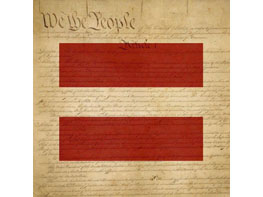 There is a comment thread in my first post on same-sex marriage that I will respond to here in this post. I’d like to make a couple of points that might get lost in just replying in that thread…
A reader named Deanna asked me to go look at a blog which leveled the charge of “idolatry” at people of faith who do not condemn their gay neighbors and same-sex marriage. My friend Greg went and read it and responded, and I checked out as well. Here are a couple of points I’d make…
First Point: Name calling is just too easy and evasive.
There are so many arenas on the web to talk about and debate what the scriptures actually say about same-sex attractions or practices, and I really encourage people to dig in and try to answer some of the tough questions surrounding the issue of same-sex activities recorded in the scriptures and how we interpret them, if living by the scriptures is one of your personal drives. I will say that I agree with Greg on his take on the referred article… too simplistic and unfair. It’s far too easy to simply accuse people you don’t agree with as idolaters. When you can’t hold a substantive argument, the recourse should be doing more scholarly homework, not resorting to name calling.
Maybe, one day soon I’ll unpack my reading of scripture and same-sex attractions and relationships here, at least as I have come to believe and read the scriptures. I am someone who holds scriptures at the core of my life and thought, dependent on and grateful for them.
However, in my previous blog post, though I did mention own belief that a same-sex orientation is not antithetical to my faith, all the ideas I expressed were about removing inequalities in our civil laws about marriages and it’s benefits. The article to which I was referred at least began at the marriage question, but only as a spring-board to move to other things, like name-calling in disagreement. Why change the subject? Scallia’s exchange was interesting, but hardly definitive.
The bottom line is that I am happy to respect anyone’s right to hold a view on same-sex marriage and to have their own thoughts on same-sex orientation, but I am not happy to have anyone’s views unnecessarily held above their neighbor’s views to their neighbor’s detriment. That is not “neighborly,” nor kind nor civil.
Second Point: Has no one ever taught us to disagree?
I’m afraid that people of faith who do believe that same-sex attractions and relationships are antithetical to their faith are missing a great opportunity to grow in their own beliefs and at the same time make a fair, just statement to their neighbors who believe differently. I wonder why we so often think that someone’s differing opinion undermines our own? Universal agreement is certainly not the best test for one’s own convictions.
Suppose that more traditional thinking people of faith who opposed same-sex mariage would say something liek this:
“Well, it is a ‘free country’ and you are responsible for your own life. So I will not try to get in your way on such a personal issue that involves consenting adults living their lives. By the way, if you ever want to consider my views on the issue, I’d be glad to buy you a cup of coffee and chat.”
Such an offer may not get many takers, but it’d be respected far more than shrill name calling and denial of people’s civil rights.
People of faith have been disagreeing poorly for a long time, so I don’t blame our current generations for the problem. I do however think we could make some real strides forward on disagreeing better. We can be part of the solution!
This is especially needed when we are thrown in the public spotlight. I grew up in churches that happily argued and condemned each other all the time, relishing the delight of publishing scathing articles about another congregation, a college or some preacher who disagreed with their view. The worst days were when one congregation would take out a full-page ad in the local paper to condemn another. What a horrible witness to the reconciling power of Christ.
People of faith who want to point to the faith of the writers of our national documents like the Declaration of Independence and Constitution should be humbled that faith had such a grand part of crafting these documents of freedom and liberty, not restriction and denial. Faith helped create the guarantees of freedom that we now debate in our national conversation and in the highest court of the land. In such a national arena we need to recognize that our views and opinions are best shared with respect, dignity and a large dose of humility.
Same-Sex Marriage
 Ok, here we go. Over twenty years ago I was so very blessed to marry my life’s love, my soul mate and best friend, Teresa. I cannot imagine having taken this journey with someone else. I am so thankful.
Because Teresa and I are Christians, our marriage took place in a church building, with a Christian minister officiating. But interestingly, the “paper trail” of our wedding began earlier, not in a church building, but in a county office in Abilene, Texas. The civil authorities issued our marriage license and demanded a copy back, signed, for their records.
I believe our faith has framed and guided our marriage, and it is integral to who we are. But it was the civil government which allowed us to marry and have all those rights and privileges afforded a married couple. Those privileges, by the way, have nothing intrinsically to do with gender, faith or sexual orientation… visitation rights, filing joint taxes, hospital visitation, insurance coverage, etc.
Why does the civil government do this? Well, because we have this amazing document we call The Constitution that was created to, among other things, “..secure the Blessings of Liberty…” Those nation builders were poetic rascals, and that phrase rings very similar to the idea put forth in our nation’s Declaration of Independence that all people have certain rights as human beings including the rights of “Life, Liberty and the pursuit of Happiness.”
Being married has made me so happy! Living with the liberty to seek marriage to the one I love, and then to obtain marriage to the one I love, has been one of the most worthwhile pursuits of my life. It has been a pursuit and realization of happiness.
Today, in the same country many simply do not have the same rights and protections as I do, because they love and wish to marry someone of the same gender. In some way, we have decided their endowed right to life, liberty and the pursuit of happiness shall have restrictions imposed that are not imposed on my own. All those rights and privileges I mentioned, that have nothing to do with gender or faith, can and are most often denied to them.
My friends, I do not believe that my own faith instructs me to oppose same-sex marriage. I do however understand that many of you believe that your faith does not allow you the option of same-sex marriage or orientation. And for the sake of your conscience, and because it is your right to live life based on your faith convictions, I respect and support your living by that faith. No one should ever force you to live in an orientation or marriage that you do not desire. But we are talking civil rights, folks. We are talking about the very base of civil rights which afford you and I and everyone the opportunity to worship and live according to personal faith, as one’s conscience dictates. These are shared rights to pursue happiness in freedom.
While proofing this blog for me, my previously mentioned wife, the beautiful Teresa, asked me to mention something about interracial marriage in our nation. She said, “This isn’t a new issue” meaning that the denial of people’s right to marry whom they choose is not a new problem. Many Americans fought the civil right of others to marry someone of different ethnicity, often again on religious grounds. Though it was legal in many States, marrying a person of another ethnicity was not a protected right for all people in our country until a 1967 ruling by the Supreme Court. 1967!
You may answer the question of same-sex marriage by any criteria you wish to use, for your own life. This is your right. Answering it for your neighbor, by any criteria of your own choosing, is not however your moral, ethical or constitutional right.
 Everyone can empathize with a person’s desire to pursue life-long love with their chosen partner. And we can also empathize with the desire simply to be free to do something, even if we ultimately choose not to do it. We know that the burden of not being free is an emotional, psychological and spiritual injury. We must not be a people who do such injury to others.
For straight people, the freedom to marry remains their right whether they marry or not. A freedom is strength. A freedom is joy. Not being free is painful. Right now, a majority of people in our country enjoy the strength and happiness of a basic civil right to pursue personal happiness in the agreement of marriage and all it’s attendant rights and privileges. And at the same time in the same country a minority is held bound in the pain and loss of being denied the same right.
For me, the burden of my own rights will necessitate that I support the rights of my neighbor. My freedom to marry cannot be a selfishly hoarded treasure. If I am given this gift by my civil authorities, pursuant to the execution of our nation’s founding documents, then this gift is also for my neighbor, regardless of ethnicity, gender, orientation or personal faith.
In short, I stand with my homosexual neighbors, now and always, in support of their intrinsic human dignity and their full, complete set of civil rights. My faith tells me that they are beloved of God, and so it is my joy to serve them and love them. Whether my gay neighbor is a citizen of my country or not, I will always support their freedom and human rights, but especially in the country of my birth, I will expect that they are treated as full citizens, endowed with every right I myself enjoy.
And maybe one day, one glorious day off sometime in the future… I won’t have to even clarify that I am standing with my gay neighbor, or my straight neighbor, or my Christian neighbor, or my Muslim neighbor, or Hindu neighbor, my atheist neighbor, my male neighbor, my female neighbor… maybe, just maybe, we’ll grow up into a mature respect of people that no longer needs such labels to engage their amazing worth, value and dignity as human beings. Amen.
Comparing Presidents and Hitler: Lame.
I am going to just to say it out loud: Comparing any U.S. President to Adolf Hitler is about the most overused, ridiculous and vapid attempt at humor or political astuteness that can be imagined. It simply serves to embarrass the person doing so, and it serves to move everyone exposed to it a bit further from any meaningful dialogue or engagement with current policy issues. Every President deserves better than this. You and I deserve better than this. It is simply demeaning for us all.
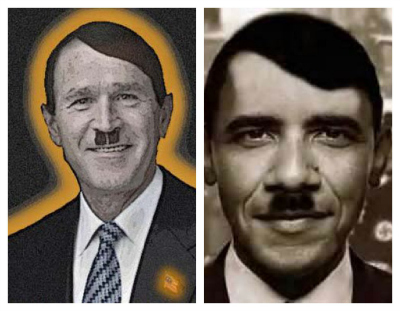 It isn’t funny. It isn’t clever. It isn’t civil. And however well intentioned or sincere a person might be, it doesn’t advance any valid political ideas or highlight any useful policy insight. In the most blunt terms it is a waste of time and extremely disrespectful to our nation’s highest office and any person who might be holding that office.
I would remind my fellow Christians that disrespect for others is not a spiritual gift nor is it something to which we are called to aspire. We are not called to be disrespectful, but to submit ourselves in genuine honor and concern for others, even to the point of loving one we would consider an “enemy.” (Matthew 5:43-48 “Love your enemy.” 1 Peter 2:11-17 “Honor everyone.” Ephesians 4:25-5:2 “Put away from you all bitterness and wrath.”)
This is also not a problem of the political right alone, or solely of the political left. This has recently been done with both past President George W. Bush and current President Barack Obama. Both have been vilified by an attempt to connect their actions and intentions to a dictator with whom neither have any political, national or religious common ground. This is a problem of American discourse, not just of one political party or political persuasion. And when followers of Christ engage in it, it becomes a spiritual problem, a spiritual short-sightedness.
Of all of my friends and neighbors who believe that implicating connections and commonalities between their political adversaries and an historical evil such as Adolf Hitler, I ask only this: Find something constructive to do with your time. It might look like this…
- Find someone to encourage.
- Find someone to help.
- Pray for the political leader you feel the urge to slander and defame.
- Pray for people around the world suffering under political and tyrannical regimes that are actually reminiscent of Adolph Hitler’s abuses and murderous evil.
Philippians 4:8-9
8 Finally, beloved, whatever is true, whatever is honorable, whatever is just, whatever is pure, whatever is pleasing, whatever is commendable, if there is any excellence and if there is anything worthy of praise, think about these things. 9 Keep on doing the things that you have learned and received and heard and seen in me, and the God of peace will be with you.
election day limerick (nov. 6 2012… tongue in cheek)
My little election day limerick…
“election day is finally here
time for you to vote!
your side will surely win it all
or at least you hope
but either way you did your part
you braved the crowds, you stood in line
to guarantee for four more years
your right to cheer or right to whine
or letting loose that thousandth tear
so just be safe, and pack a bag
I hear Canada’s nice this time of year”
new notebook (a poem for november 3, 2012)
Just some quick backstory… my dog ate my notebook. Yes, he ate the notebook in which I write my poems! But undaunted, I strode manfully to the mall and bought a new notebook. That notebook is the subject of a little poem I write tonight.

smell of the paper
feel of the grain
this notebook needs to be lettered
like the ground needs the rain
it holds my pen
steals my breath
i must dig into this paper
plumb it’s width, breadth and depth
something will be found
treasures yet unknown
despite all other gain
i shall have arrived home
sacred unease (a poem for nov. 1 2012)
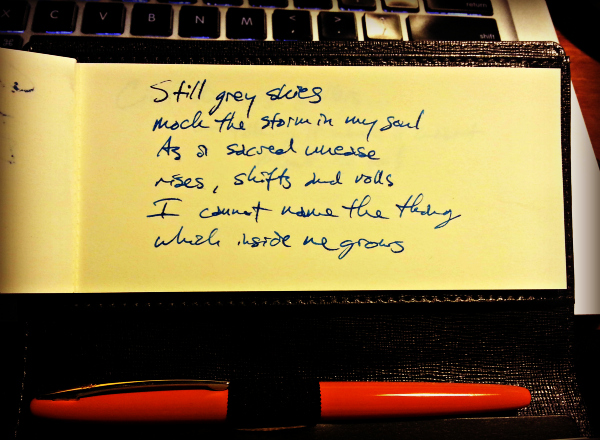
still grey skies
mock the storm in my soul
as a sacred unease
rises, shifts and rolls
i cannot name the thing
which inside me grows
This often happens when I sit to intentionally write some poetry. A still, quiet moment allows me to hear some of my more painful inner movements that are drowned out in the usual activity of the day. It’s not that I’m totally filled with melancholy, but it’s there.
In recent months I’ve been in several different situations discussing the impact of depression on our lives and those conversations have had me thinking. I have lived with the ebb and flow of depression as long as I can remember. I don’t think it’s ever outright owned me, but it’s been there. I’ve learned to watch the seasons and to be aware of their impact on my moods. I’ve learned to listen to the people who love me and live with me; Teresa will let me know when I seem to be letting it get an upper hand.
I’ve been thinking about some of the ways that being a person of faith has impacted the way I deal with my depression and darker moods. I think that growing up with a “seen and unseen” worldview has been helpful for me. I was raised to put my faith in something beyond my senses, beyond my ability to perceive, as I could perceive other things. So when the dark thoughts come and I perceive no hope, I have this reflex to look past it and try to see what may not be seen.
I have a cognitive trigger built into me that causes me to seek. When I seek I am in movement. When I am in movement I cannot be held in the grip of anxiety, fear or hopelessness for too long. So when I am in the grip of depression, it never holds all of me, there is a bit of me still free to roam.
I’m not saying that this idea is a panacea or a magic cure all of some kind. And there will always be times when our imbalanced physiology demands the help of trained professionals, both for counseling and for medication. When I stop seeking, then I think it will be time for me to see a professional.
But having that safety valve built into me allows me to be very open about the presence of darkness in my soul. I can deal with the fact that even as a creature of the light, I retain these shadows; I own the shadows. But the shadows don’t own me. I’m grateful to God for this. And so even as I write something that questions what “inside me grows” I am also very assured that it will not one day rule me and destroy me, or supplant in me what God would do. My unease is sacred.
Chick-fil-A vs. Muppets… What A Bummer
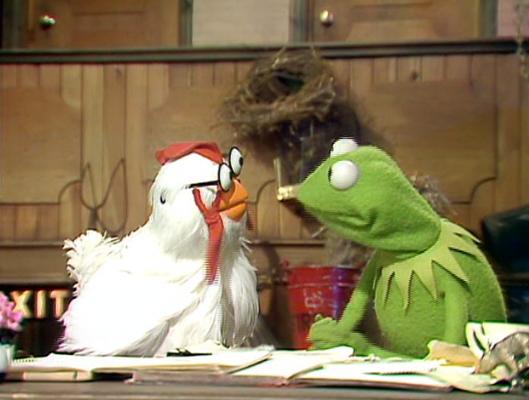 I have avoided writing or saying much on the Chick-fil-A vs. Muppets squabble. I like Chick-fil-A’s sandwiches and their slaw is awesome. And I like the Muppets, a lot. But since I didn’t even realize they were doing business together, it’s no heartache for me that they broke up. I suppose that I have been most afraid that saying something lends validity to the squabble, but it’s grown big enough to captivate a nation without any input from me (said tongue in cheek, since probably twelve people will read this blog), so here goes…
It’s been common knowledge my whole life that the Chick-fil-A tries to mix it’s owner’s values with the way they do business. They’ve always been closed on Sundays. I’m pretty sure they used to have Veggie Tales toys and prizes, and I am quite sure they have had other kids toys of that tied into Bible stories and characters. That’s who and what Chick-Fil-A has always been. I have to wonder what the Henson folks were thinking when they entered into a business relationship with the group if they weren’t aware of this.
Chick-Fil-A has given money to organizations that promote heterosexual marriage and oppose same-sex marriage. However, I’ve not found any articles or accusations that they have discriminated against people in their hiring/firing policies or broken the laws of our country. I’d be curious to know if they have had such accusations or problems.
Then, there’s the actual quote that this whole broo-ha-ha has grown out of… did you read it yet? Before presenting the quote, I’d like you to do something: Stop thinking about gay marriage! Gay marriage doesn’t seem to have been mentioned in the article, and Mr. Cathy wasn’t asked about it. Try for a moment to step back and let the quote be itself: “‘We are very much supportive of the family — the biblical definition of the family unit. We are a family-owned business, a family-led business, and we are married to our first wives. We give God thanks for that,’ Cathy is quoted as saying.”
Ok, so this guy is all about the “family.” And he invokes the idea of a “biblical definition” of the family. We can all read different things into that depending on our theology and cultural experience/tradition. We can even safely assume he would include defining family as based on the marriage of a man and a woman. But he didn’t decide to go there. When he expanded on things he said this… “We are a family-owned business, a family-led business, and we are married to our first wives.” What? What?!
I understand that someone reporting on this story may not be up on all the conservative Christian vocabulary that gets thrown around, but I’ve not heard a single friend or Christian writer respond to “first wives.” Now, if Mr. Cathy were Mormon, then maybe he would mean that those men in his family aren’t polygamists. But he’s Baptist, and “first wives” means that they don’t practice the ultimate evil (at least it was before gay marriage supplanted it) of divorce. That quote is a direct slap at divorced people, not gay people, by it’s own explicit content.
Of course, we can assume he would exclude gay marriage from his “biblical definition,” but he chooses to hang his hat on the absence of any “second wives” in his family. I know a lot of Christian friends who have been like “Whoo Hooo, let’s go support Chick-Fil-A!” who are also divorced, the spouses of second wives and even, dare I say it, “second husbands.” Why aren’t they aggravated at the lack of grace Mr. Cathy showed for divorced people? I think it’s because of the great law of media that once a story has been framed one way, it doesn’t get a second framing. A wise friend who spent years in news broadcast around the DC area let me in on that media law, and it’s so true. The story was framed around gay marriage, and there it has remained.
Plenty of people have written on the absurdity of this public debate over eating at Chick-Fil-A or not. I haven’t seen anyone actually pointing out that Mr. Cathy was blithely devaluing divorced people, not gay people. Why not? Because the story was framed about gay marriage, and that framework holds, it sells, it galvanizes, it’s fires people up on both sides of a silly culture war that no one will win. And that framework has no place to process the “first wives” vocabulary.
So, what do I do with the “first wives” thing? I would say to the divorced people out there, the second wives and second husbands, “You’re welcome in my church family!” I say that because my biblical definition of family is inclusive of biblical things like grace, love and humility. We don’t distribute labels in our church family like “divorced,” “first” or “second.” I personally thank God for my wife, not because she’s my first wife, but because I get to share life with an amazing woman. I’ve known many people who felt the same about their second spouses. I’ve spoken with and read things by gay friends who felt that way about their partners and spouses.
What do I do with the whole “gay” thing? I would say to gay people out there, married or not, divorced or not, “You’re welcome in my church family!” I say that because my biblical definition of family, whether we’re talking about my biological family or my faith family, is based on biblical things like grace, love and humility. We don’t distribute labels in our church family like “straight” or “gay.”
Grace, love and humility. God forbid I ever make a move or say a word to win an argument or achieve dominance in any cultural arena of thought, if I have to trade one single opportunity to show grace, love or humility to claim that win. So where’s the grace, love and humility in this whole Chick-Fil-A vs. Muppets carnival? I’ve not seen much on either side of the argument. So, it’s not my argument. I’ll let Chick-Fil-A and the Muppets handle their own fight, after all they’re the squabbling couple. I’ll just keep trying to find those moments when I get to live the grace, love and humility the Bible has taught me. And I’ll pray I’m better at it today than I was yesterday.
On Preachers Who Incite Violence
 Here are some of my thoughts on the seeming trend with preachers down in North Carolina who have turned to inciting violence to effect change in people. Have you followed the recent hermeneutical gaffs coming from North Carolina? Here’s the lineup: Mr. Worley & Mr. Harris. They have incited a violent reaction toward male children not acting macho enough and even dreamed of fencing off gay people to ensure their extinction. (Wait, did Worley unintentionally admit that he understands homosexuality as genetic and not preference with the fence idea? And gay people are only born from other gay people? Confusing.) This whole thing of preachers inciting violence on the basis of their personal beliefs is extremely problematic from a Christian standpoint, and so weirdly American.
So American?
Let’s chat about why it’s so oddly American. Does anyone catch how ironic it is that Mr. Worley is constitutionally protected to freely speak his beliefs even while he asserts the idea that a group of people might be forcibly and illegally interned behind fences, which won’t happen precisely because of their constitutional rights? As he lays out his grand idea for how he’d like to deal with gay people one has to wonder if he’s cognizant of the fact that he’s wasting everyone’s time on an idea that will not ever come to fruition. I’m guessing not. People are free to speak, even their dumbest beliefs and ideas, and even when their dumbest ideas and beliefs can’t become a reality because of the same constitution giving them their speech rights. This is a true American Drama.
But there’s a dark side to the humor of how silly these preachers sound. We can laugh that this pastor is wasting his time and the time of his congregation by expounding on ideas that cannot happen and therefore are not worth consideration, and yet we all know that as a nation we carry a guilty conscience. Did anyone immediately think of the forced interning of Japanese Americans during World War II? I did, and that’s why this drama has such a dark side. Did you think about the forced chemical castrations we have committed against citizens in the past when identified as homosexuals? I did, and these kinds of national memories scare me. We Americans as a mob/nation can be so fearful as to act outside of our constitutional values. We did it before. Might we do it again? And does this man really want that on his conscience?
And then there’s the case of the other preacher, Mr. Harris. He actually had the temerity to encourage physical violence against one’s child. He crossed the line in advocating violence. He wrapped up his own personal ideas of masculinity and what he perceives as an acceptable male role, disguised them as scriptural expectations, and called on fathers to enforce them with violence. “Walk over there and crack that wrist. Give him a good punch.” Yes. He did. But wait… what could be more Americana than the strapping sawmill father who rules the roost with an iron fist and fast flying leather belt? What could be more Americana than depressed, guilt-ridden fathers who are made to feel that they have failed in their one great cosmic duty (to raise heterosexual sons and subdue wives), and so turn to their only two possible balms: booze and beating said sons and wives. It’s sad, but so American it hurts.
Problematic for a Christian, Much Less a Preacher
This is all very problematic for a Christian, especially a Christian Pastor. One simply cannot find Jesus making sexuality a keystone of proclaiming the Kingdom, and therefore these preachers must realize when they are “leaving the map.” In the most memorable cases of when Jesus might have made sexuality an issue (in the cases of two women, one at a well and one about to be stoned… John 4 & John 8), he did not. Indeed, human sexuality is a complex and very present topic throughout our scriptures, and therefore does enter into sermons, but a preacher must ask himself or herself why they have made it a keystone salvation issue and Christian identity issue when Jesus didn’t. And even when sex and sexuality is a needed conversation from the pulpit, where does this sense of entitlement to meanness and inciting violence come from? Not the Bible. Encouraging fathers to physical violence in the name of Christ is simply despicable. Enjoying fantasies of fencing off the people you don’t like and denying them dignity and joyful existence is sick. This sounds a lot less like preachers fretting over a culture war and more like terrorists plotting their next move.
Hey, I’m a preacher. Can I just say that I get how intoxicating it is to feel an audience vibe? Can I admit that it’s so very tempting to say things that will get an amen, a nod, a smile, an affirmation that I’m ok? I know how Mr. Worley and Mr. Harris both felt that morning. They were on top of the world! They were feeling great. Did it bother them that their personal elevation was effected at the cost of encouraging violence toward children or fantasies of forcibly interning American citizens? It seems not. Did it bother them that they were garnering feelings of affirmation for themselves by inciting feeling of disenfranchisement for others? I guess not. Once you start to get the buzz, the bar tab gets a bit hazy and you just keep ordering drinks without worrying about the cost. These guys might be good teetotalling Baptists who never touch a bottle, but they obviously like the buzz. Preachers need to renounce the buzz. And the next time a preacher says something so amazingly dumb and a friend asks, “Is that dude high?” you can answer, “Yeah, he totally is.”
And to set the record straight, at least from my view of scripture and the role of a pastor, and the message of Jesus Christ: These pastors are definitely not just “defending the Bible”. These pastors are not simply defending their beliefs or taking courageous stands, as cornered supporters like to say. Though constitutionally free and able to make those statements and hold those beliefs, they are not defending a Christian message when advocating physical violence to change a child’s character, identity or sexuality. They are not defending the biblical message of Christ when advocating the forced incarceration of U.S. Citizens based upon their sexuality, even if the pastor is so kind as to suggest dropping food behind the fence for them. If they want to defend the Bible, or in actually have the Bible defend them, then let them take their stand on a beautiful line from St. Paul, “Let your gentleness be evident to all.” (Philippians 4:5) Because you simply don’t fence your neighbor off from life and liberty or crack your son’s wrist with gentleness. Those actions require violence. Those actions are not biblically defensible, nor can they be invoked in defense of biblical things.
Jesus Has Left the Building
I believe that when these preachers go off into their dreams of violence that Jesus catches the bus to the mall. He has left the building. The Jesus who sat in the midst of dropped stones will not be standing up there with the preacher waving his stone from the pulpit. As American as free speech might be, this is not at all Christian when “Christian” means “identifiable with the life, message and meaning of Christ.” When these guys sober up, I hope they get it right.
Carrying One’s Cross
Carrying One’s Cross
Luke 9:23-26
Then he said to them all: “Whoever wants to be my disciple must deny themselves and take up their cross daily and follow me. For whoever wants to save their life will lose it, but whoever loses their life for me will save it. What good is it for you to gain the whole world, and yet lose or forfeit your very self? If any of you are ashamed of me and my words, the Son of Man will be ashamed of you when he comes in his glory and in the glory of the Father and of the holy angels.
In Christian-speak there are some very common and beloved phrases. For those not raised in Christian circles the words can be confusing, and even for those raised in the world of church, we can get them a bit confused as well. It seems to me that “carrying my cross” is one of those that is in danger loosing it’s meaning.
I think it happens when we start mixing metaphors in our heads. Jesus said that those who follow him should be willing to “take up their cross” and then follow. Later Paul will write about his “thorn in the flesh” (2 Corinthians 12:6-10) that he has come to view as God’s chastening in his life. It’s a short step to move Paul’s thinking over to the words of Jesus and suddenly have the “cross I bear” viewed as the minor to major irritations of life. I can only imagine that the seemingly flippant references to carrying their cross that some Christians make reflect this mistake. I hear Christians say, “Oh, that’s my cross to bear” and I wonder if they don’t actually mean it’s what they feel as a “thorn in the flesh.” They might be reflecting on a naughty child, an illness or some other frustration of life. To begin gaining some clarity, let’s start by looking at the cross that Jesus carried.
The Cross of Christ
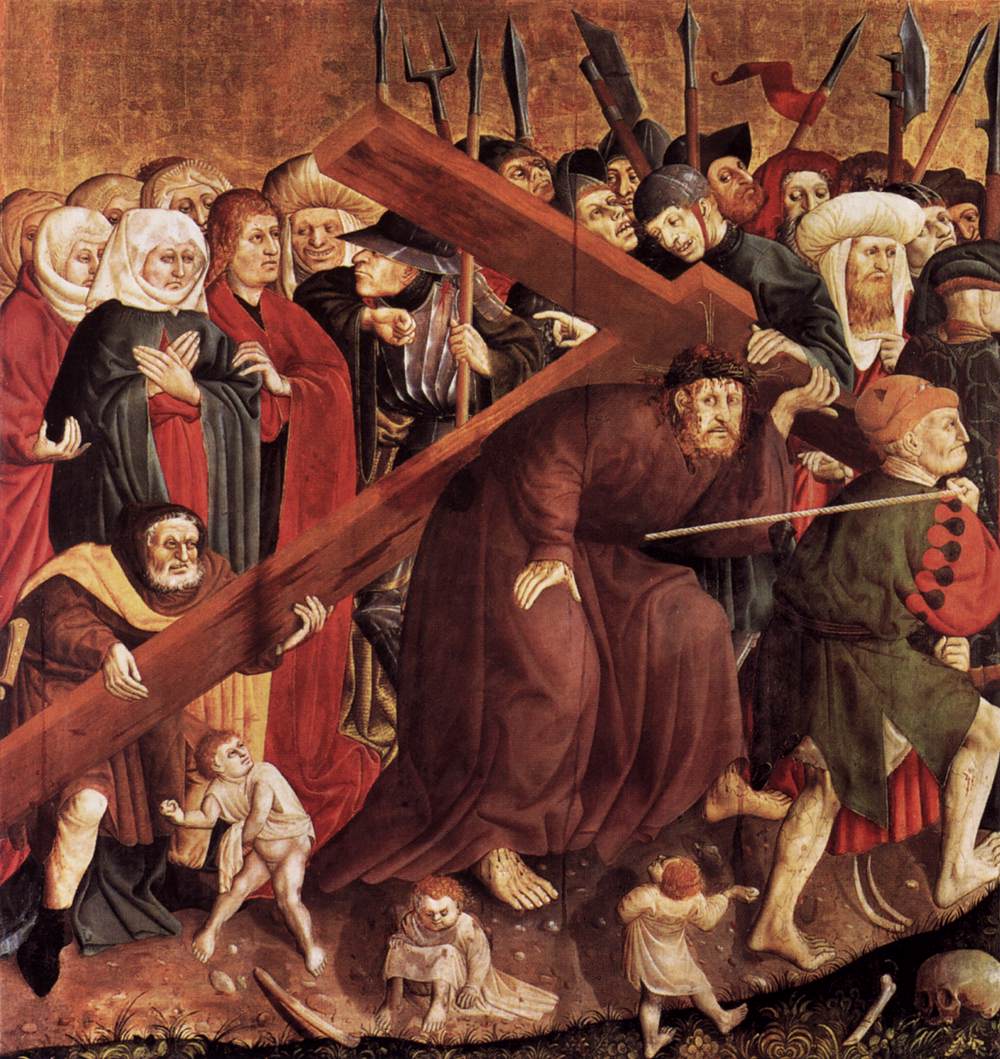
What is the cross of Christ not? The cross of Christ is not a cross of annoyance. It is not a cross of condescending tolerance. It is not a cross of the righteous one’s sensibilities being bruised by the sins of one’s egregious neighbors. The cross of Christ is not the things about our society that I don’t like. It is not the quirks of my neighbor’s behavior that offend me. The cross of Christ is not a President of the other party being elected. It is not my loss of political power. It is not what I don’t like about the world, my neighbor, my workplace, current legislation, my family, myself or my school.
What is the cross of Christ? It is a cross of forgiveness. It is a cross of love. It is a cross of sacrifice for the undeserving (us). The cross of Christ is when Jesus intentionally lost so others could win. The cross was painful, so painful that Christ prayed he not have to carry it. The cross is an intimate view of murders, accomplices, thieves, mobs that called for blood, and of the beloved. The cross of Christ was Jesus daily touching the untouchable, eating with the unsociable, rejecting religious elitism and pride, denying political aspirations, and of renouncing his personal rights.
So then what is the cross that we are compelled to carry? Looking back at the text I believe it is a very personal thing, a very real dying to self. It is a daily thing. It is a decision made day to day to live a certain way, and from the text it seems clear that the “way” is to choose losing as Jesus did himself. The cross we carry is not the secret moral victory that we grasp close our breasts and nurse through the dark nights of the worst the world might throw at us. The cross is the daily decision to deny oneself and move in sacrificial love and forgiveness, sincere love and forgiveness for those who may or may not be at all deserving. The cross makes us look like losers. The cross identifies us with losers. It is not easy. It is certainly not flippant.
Discerning Our Thorns and Crosses
I would hazard a guess that when we make the cross into our “thorn in the flesh” we make the dire warning of Luke 9 become a reality, “For whoever wants to save their life will lose it, but whoever loses their life for me will save it. What good is it for you to gain the whole world, and yet lose or forfeit your very self?” I think that if I make the cross into my thorn in the flesh then I would be placing myself at the center, and I would be deciding that the world’s evils are meant against me. I would run the risk of placing myself above all others in my inmost heart and secretly saving my own self while the cross loses it’s sincerity or even stands forgotten in the corner. In an odd way, I would be making the world mine, and holding it accountable to me, so as to save myself.
Jesus did marvelous things for us when he taught using symbols and metaphors. In Luke 9 he is speaking of his coming death, a physical death on the cross. The cross toward which he walked was horribly real and deadly tangible. Our cross in contrast is a decision of the heart, but may lead to the same very real loss of self in driven service and sacrifice for others. Choosing to carry the cross is less a matter of choosing to follow Jesus as it is an expectation of those who have chosen to follow. By using the image of the cross and our daily choice to carry it Jesus invites us to join him in this divine sacrificial way. And honestly, I can think of few other ideas less suited for flippant usage. Here’s the bottom line for me: It is a necessary step for anyone coming to Christ to move from the personal experience of spiritual salvation and victory in their own life into the spiritual way of service and offering. If I don’t make that move, then I remain a perpetually self-centered seeker of new victories and greater personal satisfaction. Carrying my cross then becomes my banner and slogan of victory instead of sacrificial love and offering of myself.
Though we celebrate the cross of Christ for all it means to our lives and souls, our own choice to bear the cross is no less deserving of some sleepless nights praying in a garden alone. Metaphor it may be, but slogan is it is not.
Three Ideas to Wrestle With
At the end of the day here is “where I hang my hat” as my Texas genetics would say:
1) The cross that I carry is not a test or sign of discipleship. Jesus said that my love for others was the sign of my discipleship in John 13.
2) The cross that I carry is not a matter of conversation. There’s no need to say I’m carrying my cross, it should be self-evident.
3) The cross is not my decision to follow Jesus, it is the reality of my life in the following. The moment I begin to look upon the world from any height of pride, scorn or condescension, I am not looking down from the cross. The divine sacrificial way is one of driven love, of forgiveness, and of losing so that another gains the victory.
Do I have thorns? Sure I do. I lost my hair for one thing. And believe me, I’d probably be one vain son of gun if I had a wavy, handsome quaff. I also stutter. I struggle with th’s, especially when th’s come anywhere near s’s and z’s! So saying “Nazareth” correctly is very hard for me. Not being able to say to Nazareth easily is kinda rough on a preacher, huh? If I’m not really concentrating it becomes “Jesus of Natharess.” We all have thorns, whether in exactly the manner St. Paul spoke of or not, and I’m way more comfortable making jokes about thorns than crosses.
It’s valid to ask if I am just taking time out of the day to condemn or judge someone’s use of “carrying my cross.” Am I just looking for someone or something to peeve about? I’m not really looking to judge as much I’d really like to clarify. I’m less interested in condemnation than I am in reflection. I think that more than ever, as our country truly becomes a pluralist society, we who know the Christian-speak need to stop and slow down, and think about what we are saying and if we should even be speaking at all. Some of our cultural idioms might need some time off, or permanent retirement. Carrying one’s cross is not a conversation, but a way. It’s a needed way to live, love, serve and make an offering of our lives. We owe it to our Lord, to ourselves, and to our neighbors. The world needs us daily taking up our cross, as do our families, friends and neighbors.
 toddthomas.net