
A Week With Psalm 42
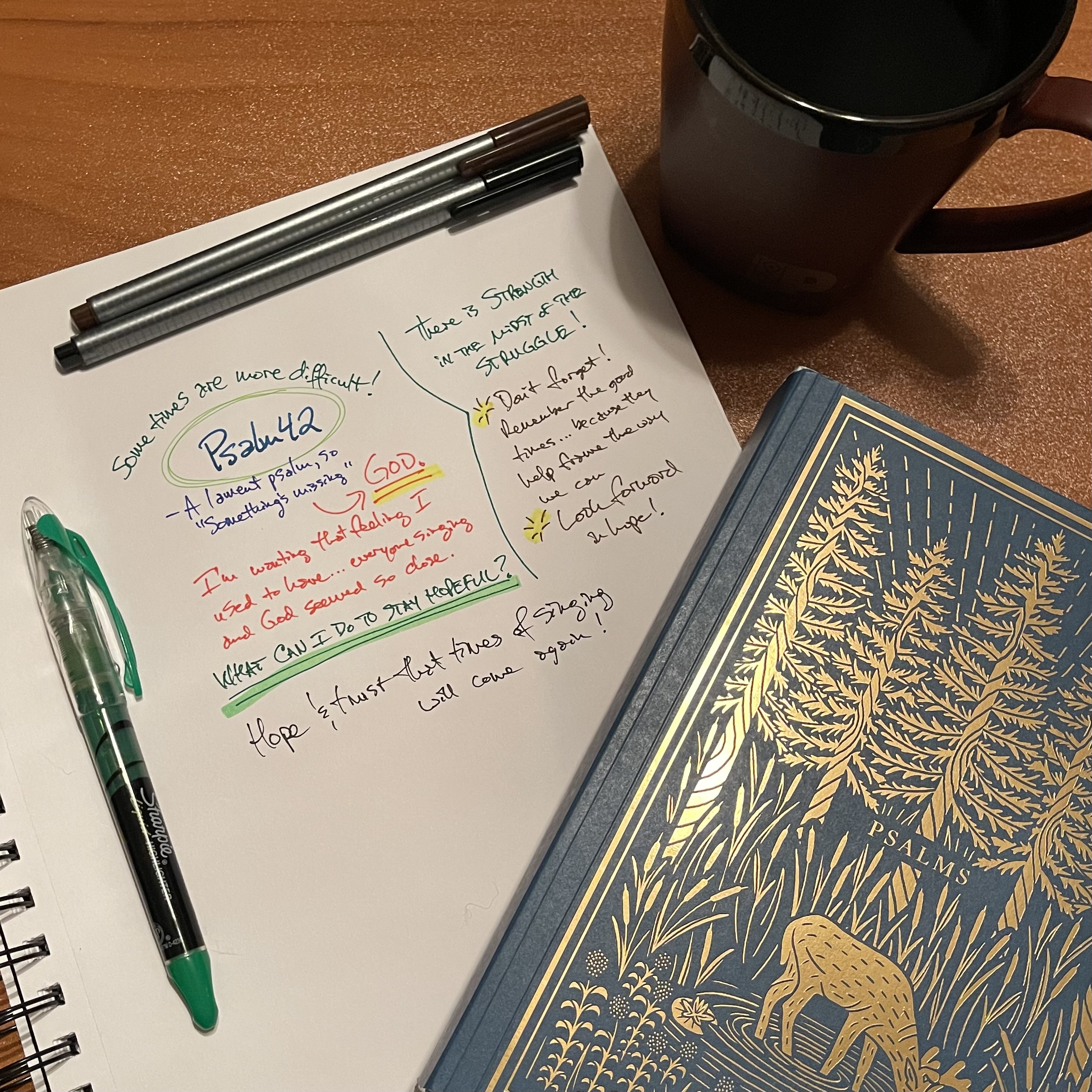
In my post last weekend I chose to spend five minutes each morning last week with a cup of coffee and Psalm 42. Since I’m not preaching today and don’t have a sermon to share, I thought I might reflect on the week’s intention with scripture. Whatever else I was doing in practicing morning prayer or starting up each day, I was sure to refresh my coffee, set a five minute timer on my watch and open up to Psalm 42 to read and meditate a bit. It’s a familiar and beloved Psalm, especially if you grew up as I did in church circles singing some version of As The Deer.
Psalm 42 is a song of lament, that means it’s essentially a song about being upset that something is missing. In Psalm 42 the singer is missing their past closeness to God and the peace that comes with God’s presence. I’ve used and enjoyed several different translations during the week, but by far I’ve most loved the wording from the New Living Translation. It renders the opening line of verse 4 as “My heart is breaking as I remember how it used to be…” That line has really resonated with me, the sentiment of remembering better, or at least good, times.
Looking Back
We can all relate with that sentiment in some way, can’t we? Whether remembering all that we took for granted before the COVID pandemic, or times when our younger bodies had more energy and fewer aches and pains, or a time gone by when our spirituality was easier, richer and more satisfying: we get it. When today gets difficult, memories of yesterday can be a comfort. The psalmist has obviously fallen into some hard times, but there’s some peace and comfort in looking backward and remembering the good days of joy and praise.
Looking Forward
The psalmist also looks forward using a refrain which occurs twice in Psalm 42, in verses 5 and 11, and even again in Psalm 43, verse 5: “Why am I discouraged? Why is my heart so sad? I will put my hope in God! I will praise him again – my Savior and my God!” The NRSVue translation reads this way: “Why are you cast down, O my soul, and why are you disquieted within me? Hope in God, for I shall again praise him, my help and my God.”
Strength in the Struggle
The sentiment is clear, we have strength in the struggle remembering what we have experienced of God to be true and looking ahead in faith and hope. Our faith and our scriptures don’t deny that we will have struggles or ever promise to eliminate all the struggles. Our faith doesn’t judge us for struggling. We all have times when our souls are heavy with grief, anxiety or fatigue, times even when breathing seems a chore. Looking back to remember the good times can be a source of strength for the moment and a way to frame the way we look forward, hopefully looking to the day when the good times will return and we will again hear the music and sing the songs.
Are we in a time of lament, today? What was a good time? What was it like and how did it feel? Those times will come again, and God has never left. We can rest in the memories and faithfully hope that good times are coming again. God’s love has never ended, faded or been stolen; God’s love is our anchor in the storm and energy when it’s time again to dance.
Be blessed, Rev. Todd
Being a Good Neighbor
This is my sermon for Sunday, October 2, 2022, at St. Timothy’s Episcopal Church as we celebrate our annual Homecoming . Our theme is Being a Good Neighbor and our scripture readings in worship are Micah 6:6-8, Psalm 8, Romans 12:1-8 and Luke 10:25-37. We’re focusing on the Micah and Luke passages.
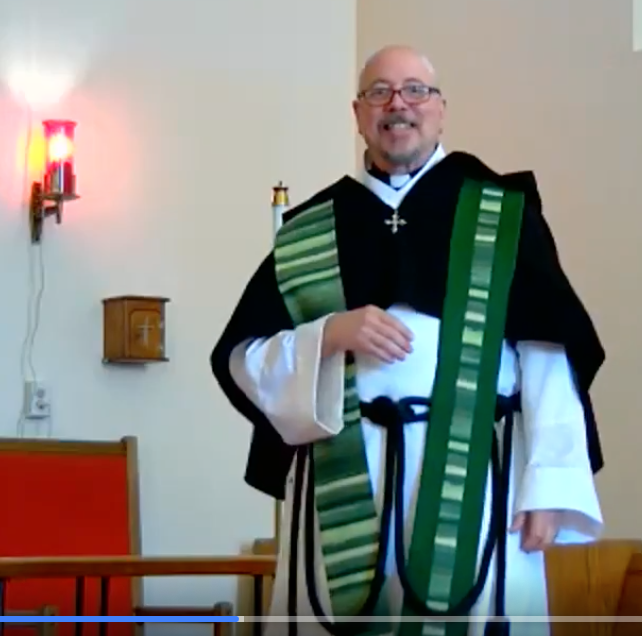
Good morning, St. Timothy’s family and friends, everyone who has gathered for worship and celebration this morning! It is so good to be together.
I want to begin with a word of gratitude for the last year, mine and Teresa’s first year with you. Thank you for welcoming us and adopting us into the St. Timothy’s family. We are so happy to be here with you. Thank you for all you do, for serving on the Vestry, for leading and serving in various ministries around the church and neighborhood, for consoling one another, praying for one another and keeping tabs on one another through the best and the most difficult days. Thank you for showing up, smiling, even if behind those masks, in person and on Zoom, for reading in worship, for lending us your voices, and for sharing encouragements all along the way. Thank you. Thank you. Thank you.
And as we gather to celebrate this Homecoming Sunday and think on the year gone and to regroup for the year to come, it’s the perfect time to hear Jesus tell a story, that familiar and yet never-gets-old story of being a good neighbor.
A Good Story
The story begins with a question, “What must I do to have eternal life?” I know we often read eternal life as simply “personal salvation” or we hear the question as “how do I get saved,” but I’d invite you to expand your hearing of that question: “What must I do to really live… to live in a way that matters, to live in view of and in step with things which are eternal?” Because the answer is not all that individualistic or only about getting saved and going to heaven when we die… the answer from Jesus is both individual and communal, about the now and the then.
Jesus turns the question back on the asker and asks “what do you think?” And we really so often know the right answer don’t we? We aren’t dumb. We know what is right and what is good, we know how to live as in step with things eternal: we embrace our God in love, and we embrace our neighbor in love. The answer given to Jesus is a reflection of scripture, and it’s a really good expression of what Micah said: do justice, show kindness and humbly walk with God. The same understanding of what is right and good must have been on your minds as well here at St. Timothy’s when you crafted our mission as a church: to live in love, walk by faith and serve our community.
The story could have stopped there, right? I mean, that’s good stuff… in church we would say, “that preaches!” Love God and love others! Done. But wait… I don’t like all my neighbors! In fact, if we’re honest we’re pretty good at not liking a lot of people around us! In the text Jesus has to deal with the perfectly human follow-up question to loving one’s God and loving one’s neighbor….. yeah, but Jesus, you don’t mean that neighbor over there do you? I mean really, who is my neighbor? If you want to avoid anything, make it a philosophical or rhetorical question, right?
But Jesus is ready, as Jesus always is, to help us past some of these very human foibles we carry in our hearts. He tells the story that many of us are super familiar with by now. The phrase “Good Samaritan” is part of the English language and we use it to means someone who is helpful in the moment, right? In the story Jesus tells of a person who falls victim to some the rougher aspects of this life, beaten down, robbed and left in an undignified ditch. He’s passed over and passed by by folks who should know better, religious folks, good folks. But when our neighbors are dirty, hurt and complicated, it’s easy to look away isn’t it? When stopping to help and to be with our messiest neighbors means that we may also get a bit dirty, and maybe we’ll have to spend some time in that same undignified ditch, it’s all too easy to move along and find another neighbor to love. And so we come to the point of the story from Jesus: the question is not who is my neighbor, the question is will I be a neighbor? We will you be the neighbor? Will we be the good neighbors that the world around us so desperately needs?
Being Good Neighbors
The invitation from Jesus is to go and do likewise. We’re sent to be neighbors to the world around us. It’s an invitation to embrace the role of neighbor, not looking away, not ignoring or seeking an easier road, but seeing those around us and loving them, caring about them and even lending a hand when things get rough and dirty.
As we move into this next year, from now until next Homecoming Sunday, let’s explore the ways that we can be the best neighbors! It starts right here right now in that very pew, or at home on that very couch where you’re sitting. The people you see right now, or will see soon and visit with today… love them, see them, and make a promise to yourself that you won’t look away.
As you go through the coming week and the coming months, going to school, to classes, to work, coming to church services, going to the grocery store, on vacations, walking down your street and going about the routines of daily life, love the people you see, care for them and let your heart wrap around them even in the messiness and struggle in which we often find them.
The Samaritan in the story that Jesus told paid a price for seeing that neighbor and loving that neighbor. Money changed hands. The way Jesus tells the story it also sounds like that Samaritan had every national, ethnic, racial and religious reason to pass on by… but instead they tore down the barriers that might divide and the paid the bill for meeting someone else’s needs. And being a neighbor sometimes will come with a price tag, and the question of whether we are willing to pay with our money, time and energy.
But why? Why should we have to be the neighbor? Why should we have to humble ourselves and get dirty? Why shouldn’t we look away? Why shouldn’t we hurry past like the priest and the religious folks in the story? Why not just lower our heads and watch out for ourselves? Because we want to have that life too, right? Back to the question that started this off… we want that life of meaning, that life in step with things eternal, we want the kind of life that carries us through hard times and the ditches in which we find ourselves. Because sometimes we need a neighbor, too.
As we continue to emerge from the years of pandemic separation, and we try to make things familiar again in life and figure out what really living means, as we work to build back lives of purpose and joy and eternal’ness, to build up our church family and grow it with folks joyfully learning of God’s love and life, we’ll do that in the neighborhoods in which God has placed us and with the many neighbors with whom God has placed us. Together is how we find life. Together is how we love. Together is how we really live. Amen, amen and amen. ~ Rev. Todd
Let’s go a little deeper…
A Starting Place for Being a Good Neighbor
Ok, I want to be a good neighbor, but where do I start? Let’s try using the Micah 6:6-8 passage as a framework for being a good neighbor: embracing justice, doing kindness and growing our humility.
“With what shall I come before the Lord and bow myself before God on high? Shall I come before him with burnt offerings, with calves a year old? Will the Lord be pleased with thousands of rams, with ten thousands of rivers of oil? Shall I give my firstborn for my transgression, the fruit of my body for the sin of my soul?
He has told you, O mortal, what is good, and what does the Lord require of you but to do justice and to love kindness and to walk humbly with your God?”
Let’s look a little deeper…
Two of those requirements seem to express life with our neighbors: 1) advocating and acting for justice, and 2) crafting a life of kindness in our words and actions. Can we look around and explore what justice means for our neighbors? What are our opportunities to advocate for all people to have the same opportunities and to be treated with the same respect and dignity which we enjoy or demand for ourselves? Today’s culture wars in our society often seem predicated on winning and losing, as if dignity and respect were limited commodities which we either give away or keep. In truth, those are limitless commodities which we can share and give away without losing a bit of our own.
The third requirement, that of humility, seems rooted in our time with God and the intentionality we have for growing into the people God has called us to be. We need to make sure that we are filling our hearts with good things so that the fruit of our words and actions are good. (Luke 6:43-45) But remember, we aren’t putting on capes and becoming super heroes flying around and saving the world! We’re just people, fashioned and empowered by God’s love and grace, doing what we can to make little bit of difference for the people around us, sharing the kind of life that is really living.
Justice: what is right?
What are some ways we can advocate or uplift the cause of justice in our neighbors’ lives? The perfect place to begin is in prayer, but then we have to make sure that our prayer includes asking God to help us to act; prayer should lead to action. We can write to our political representatives to encourage them to uphold someone’s dignity or to protect our neighbors’ needs for justice. We can sign petitions and advocate for other’s rights. We can be voice for the marginalized and a voice of welcome for those who are being excluded. We can make sure that in our own language and choices we practice welcome, inclusion and uphold respect and dignity for all people.
Kindness: sharing joy.
What about kindness? Is there a need in your neighborhood you could help meet? Who do you know who needs a hand with something? Is there some litter that could picked up, someone struggling who could use an encouraging word, a note or a visit? Remember that kindness is sharing the joy that God has poured into our lives, not what someone has deserved or earned. We can be intentional about kindness; kindness is a choice and a lifestyle.
Humility: time with God.
And there’s our walk with God. How are we making time to be with God in prayer, meditation, study and conversation? How are we seeking God? There are many ways to grow our faith and our experience of God. We can read and study scripture and other supporting books and devotionals. We can spend time in quiet meditation or going for a walk with God, walking down the street or on a wooded path. We can immerse ourselves in music and praise. We can find a spiritual director or friend to help us go deeper in prayer and listening for God.
Making a plan.
What’s keeping us from sitting and prayerfully and choosing an issue of justice, an act of kindness and a practice of spending time with God on which to focus for the week? Imagine the intentionality of choosing an issue of injustice to confront in ourselves and our society, a concrete way we intend to be kind to the people around us, and a practice of growing our faith, and then placing reminders around for us in the coming week. What could we accomplish? How much better would the world be for each person in it who actively embraces justice, kindness and humble growth?
Here’s how this might look, choosing intentions for a week or even a month, developing habits and embracing our place in community as a good neighbor:
- Justice: One group of people who so often get treated as political pawns and not as human beings are the poor souls seeking asylum in our country. I’m going to learn about the situations they are fleeing from in their home countries, and learn about the groups local and national who are helping them, and I’m going to see how I can be involved in supporting these most vulnerable of neighbors.
- Kindness: When I go for my neighborhood walks I’m going to take gloves and a trash bag and get all the litter I can carry! And if there’s a neighbor outside they are going to get a big smile and greeting from me. I hope to greet and get to know a neighbor I currently don’t know.
- God Time: I’m going to start every day with a five minute quiet time, using my phone to set a timer, to just sit and sip my coffee and read and meditate on Psalm 42.
What would your intentions look like?
Your friend,
Rev. Todd
Always There Is Jesus
These are notes from my welcome and sermon of Sept. 5, 2021, at St. Timothy’s Episcopal Church in DC. I’ve included the Gospel reading for the day and the James text from the lessons. The service can be found on Facebook.
Good morning, family, it is good to be together, even digitally! David in Psalm 133 sings about “How very good and pleasant it is when kindred live together in unity! It is like the precious oil on the head, running down upon the beard, on the beard of Aaron, running down over the collar of his robes. It is like the dew of Hermon, which falls on the mountains of Zion. For there the Lord ordained his blessing, life forevermore.” What does that oil on the head and beard stuff mean for us? I believe it reminds us that is a deep blessing for us when we gather and choose to love one another and be one family… it’s like feeling good, and looking good, it’s refreshing like a new day with dew on the ground… it’s where we find God’s blessings waiting for us, where we find life! So as we gather to worship and look into the scriptures and to love one another, may the words of our mouths and the meditations of our hearts be acceptable to God, our Rock and our Redeemer. Amen. Let us worship our God!
____________________________________
Mark 7:24-37
Jesus set out and went away to the region of Tyre. He entered a house and did not want anyone to know he was there. Yet he could not escape notice, but a woman whose little daughter had an unclean spirit immediately heard about him, and she came and bowed down at his feet. Now the woman was a Gentile, of Syrophoenician origin. She begged him to cast the demon out of her daughter. He said to her, “Let the children be fed first, for it is not fair to take the children’s food and throw it to the dogs.” But she answered him, “Sir, even the dogs under the table eat the children’s crumbs.” Then he said to her, “For saying that, you may go—the demon has left your daughter.” So she went home, found the child lying on the bed, and the demon gone.
Then he returned from the region of Tyre, and went by way of Sidon towards the Sea of Galilee, in the region of the Decapolis. They brought to him a deaf man who had an impediment in his speech; and they begged him to lay his hand on him. He took him aside in private, away from the crowd, and put his fingers into his ears, and he spat and touched his tongue. Then looking up to heaven, he sighed and said to him, “Ephphatha,” that is, “Be opened.” And immediately his ears were opened, his tongue was released, and he spoke plainly. Then Jesus ordered them to tell no one; but the more he ordered them, the more zealously they proclaimed it. They were astounded beyond measure, saying, “He has done everything well; he even makes the deaf to hear and the mute to speak.”
____________________________________
I am humbled and thrilled to be with you on this our first Sunday together and the end of this time of transition for me and for St. Timothy’s! The transition is done, but we most certainly are not! The transition is done, the search is done, and we have found each other, and we are far from done. I am thrilled and humbled to be joining you on the mission to follow Jesus by living in love, walking by faith and serving our community… these things are completely relevant and needed today: love, faith and service… living life, walking and moving forward, and seeking, making and expressing community.
I’m going to say it again, our transition is done, but we are not. And I hope you just scared your pets at home shouting amen! I capture such a spark of hope and promise in the Psalmist’s words which we used in opening our time together this morning, that by coming together, loving one another, unifying in our mission, in being kindred, we find God’s richest blessings, we find life. I feel that hope and that promise even when things can also feel a bit overwhelming, confusing, or just not quite like we expected. There’s so much to do, so much to learn of one another and so much to discover of our shared ministry together… it’s ok when things still feel a little wobbly and uncertain, because what we can count on is Jesus moving through it all, meeting us here and healing and us making whole.
The Gospel reading today is an interesting couple of short vignettes, a couple of short stories which vividly illustrate that times don’t always go as planned and can feel a bit uncertain and even derailed. Did you notice how the first story began? Jesus was trying to hide! He needed some time to recharge and just wanted to escape the people for a little while. We can relate to that can’t we? We can also probably relate to it not working at all. He’s found anyway, and then the story doesn’t really flow like we have come to expect these stories with Jesus to flow. We don’t expect Jesus to react as he does in this story, do we? I mean this is the Jesus who sat with the Samaritan woman at the well, who healed ten lepers and praised the one, a foreigner to Israel, who returned to give him thanks. This is the Jesus who opens the Good News to the Gentile non-Jewish world! But in this story he challenges the outsider’s right to his attention. What?
And it goes on… in the second story, after healing a man’s deafness and speech impediment saying “be opened”, Jesus turns and orders them all to keep it quiet. But what happens? That’s right, the scriptures say that, “the more he ordered them, the more zealously they proclaimed it.” The best laid plans can get a bit wobbly, even for Jesus.
If anything, these two stories show us how the best laid plans can go in ways least expected, but always there is Jesus making things whole. When the path is long, when the path is hard, and when the path may not yet be known, always there is Jesus making things whole, healing the woman’s child, curing the man’s ailments, and I believe moving forward with us as we live in love, walk in faith and serve our community. I can’t tell you that I know exactly why Jesus chose to challenge this woman’s faith, why he challenged her right to make a request, but we can’t miss the fact that Jesus is there healing and making the child whole. This story also appears in Matthew’s Gospel in which Jesus really highlights her not being Jewish, but also openly praises her faith. And in the second story we have Jesus healing and hushing, which he does a lot in the Gospels. We may assume that he does it to be able to move about more freely, and that makes sense. But the thing we know for sure is that he is in the middle of the action, as usual, making someone whole. We have much ahead of us, a lot to do, and building on the faithful legacy of this parish family, we will see Jesus moving, mending the broken and making us whole, moving alongside us as we love one another do our ministry.
Who better for the Lectionary to use to remind us of what following the Way of Jesus looks like day to day than James? I have to admit, I do love me some James. James is the no-nonsense, get busy and get real kind of voice of faith that I often need in my life. Who has been a voice like that in your life for you? Someone who says, “Good idea… are you going to do it? Good idea, do you really mean it? Good idea, let’s go, let’s get started!” For me, it was my grandfather, my mother’s father, who we called Pa. Pa had this habit of putting me on the spot when I was teenager… when I’d see him he would stop me and ask, “Where are you at the Word right now?” He wanted to know where I was digging into scripture to grow and learn and get strong. I was so grateful when I finally entered seminary studies and could say, “Well Pa, we’re studying this and that and I’m in Greek class and…” naw, Pa didn’t stand for that, not for a minute. He would still drill down on me, where am I digging into the Word? Today, James often does it for me…
James reminds us that showing partiality and favoritism is not living in love. In truth, we all have our various richness, our riches of money or education or privilege or experience, which can blind us to the value and dignity of those in whom we don’t see those same riches. James says it is not to be so among us.
James reminds us that legalism and rule keeping is not walking by faith, it is not our path. He makes the point that no matter how good we think we might be at keeping all the rules, we’re going to miss one, and all end up in the same basket of rule-breakers. So he says to live by the law of liberty, a life of freedom to love, freedom to embrace one another and to love our neighbors, not to judge them. Our path, our walking by faith, is guided by what James calls the royal law, the freedom and mercy to love our neighbor.
And James reminds us that serving, our community and one another, is done not just spoken. Faith has to be put into action, made real and present, and so does our love and our commitment to one another and our neighbors. James contrasts for us a faith that is only spoken and a faith that is put into action, and he shows us the value of acting on what we have chosen to believe and follow.
If I didn’t know better I would think that James had read our baptismal promises, in an advance copy of the 1979 Book of Common Prayer made available a couple thousand years ago: in which we promise that in study, fellowship and prayer, in resisting evil and embracing repentance, we will proclaim the Good News of Jesus in word and action, seeking and serving Jesus in all people, loving them as ourselves, and striving for justice, peace and dignity for every human being. Joking aside, it’s not James who is reflecting our baptismal promises, but I’m so glad that our baptismal promises reflect the kind of active and serving faith to which James calls us! I invite you to spend some time with the reading from James this week and let that Law of Liberty wash over you. Let his call to an active faith inspire you. Revel in the beautiful worth of the people around you like never before.
Family… again, I am so glad to be with you. I’m so grateful for the history of service and ministry here at St. Timothy’s, so grateful for the chances that I’ve begun to have to meet you and share some time together, sometimes digitally in Zoom, in phone calls, and sometimes face-to-face. I covet your prayers and I will be working to get to know you and I want to hear your stories and your hearts. Know that I am praying for you, every day. Watch for emails to come in the next few days and weeks about the opportunities which we’ll create for praying, studying, fellowshipping and serving together.
Believing that Jesus will be in the middle of us, healing and making whole, we look forward to the ways that God will grow us together and use us to serve our city and our neighbors! Amen.
____________________________________
James 2:1-10, [11-13], 14-17
My brothers and sisters, do you with your acts of favoritism really believe in our glorious Lord Jesus Christ? For if a person with gold rings and in fine clothes comes into your assembly, and if a poor person in dirty clothes also comes in, and if you take notice of the one wearing the fine clothes and say, “Have a seat here, please,” while to the one who is poor you say, “Stand there,” or, “Sit at my feet,” have you not made distinctions among yourselves, and become judges with evil thoughts? Listen, my beloved brothers and sisters. Has not God chosen the poor in the world to be rich in faith and to be heirs of the kingdom that he has promised to those who love him? But you have dishonored the poor. Is it not the rich who oppress you? Is it not they who drag you into court? Is it not they who blaspheme the excellent name that was invoked over you?
You do well if you really fulfill the royal law according to the scripture, “You shall love your neighbor as yourself.” But if you show partiality, you commit sin and are convicted by the law as transgressors. For whoever keeps the whole law but fails in one point has become accountable for all of it.[ For the one who said, “You shall not commit adultery,” also said, “You shall not murder.” Now if you do not commit adultery but if you murder, you have become a transgressor of the law. So speak and so act as those who are to be judged by the law of liberty. For judgment will be without mercy to anyone who has shown no mercy; mercy triumphs over judgment.]
What good is it, my brothers and sisters, if you say you have faith but do not have works? Can faith save you? If a brother or sister is naked and lacks daily food, and one of you says to them, “Go in peace; keep warm and eat your fill,” and yet you do not supply their bodily needs, what is the good of that? So faith by itself, if it has no works, is dead.
____________________________________
We Have to Do Better

I love to binge series on Netflix and Amazon Video. Recently, finding myself between series, I was looking at available offerings on Amazon Video and stumbled across the Expendables franchise. I thought, “Hey, I like action, and this is just good old fashion gratuitous action, yeah? I’m in!” I seem to recall watching the movies years ago, but after the first movie and a few minutes into the second this time, I’m out.
Here’s the problem… these movies are all about a group of white guys roaming the world indiscriminately destroying black and brown bodies with impunity and a smile. Oh yes, they have a token black Expendable, Terry Crews (whom I adore in other roles). But his character is just shallow sexual comic relief. There’s even a token Asian Expendable, Jet Li, whose character is a punching bag for a white teammate and is always grubbing for more money owed him because of his diminutive stature relative to the white Expendables. I also noticed by the third movie they add a token female to the team. Wow.
The added value of being white in the movies? You can get shot, and not die from it. You can attack your own team, brutalize the token Asian Expendable, and be redeemed by the second movie. In fact, as an added bonus, the Asian Expendable will now be your buddy sidekick.
The added value of being brown or black in the franchise? You’ll be an incompetent. As in you’ll be an incompetent pirate, despot, soldier or hapless bystander who is shot, run over, cut, burned, crushed, exploded or otherwise dismembered by a grinning white Expendable, unless Terry Crew’s character hasn’t delivered an on-camera sexual innuendo about his gun lately, and then he’ll kill you.
So, what’s the big deal? Why this big post? It’s because we who are white have got to wake up to this not so subtle but constant degradation and devaluing of black and brown bodies. How else do we think so many armed police officers who claim not to be racist end up killing all those unarmed black and brown bodies? In part because gratuitous violence by white do-gooders upon black and brown bodies is a movie mainstay, an unquestioned entertainment, and a national on-screen pastime belonging to white America. Most of the time we don’t even notice it when it’s so prominently displayed in front of us without any effort to hide or nuance it.
Notice I’ve not said that Sylvester Stallone, the power house actor and force behind the franchise, is racist. I’m not saying that any of the actors in the franchise is particularly racist. I’m saying that the systems which produce such garbage, the movie industry, the white penchant for needing black and brown antagonists, our viewing habits as consumers, our desensitization toward violence done to brown and black bodies, and our understanding of the world and its people and politics, are steeped in generations of racism and racists assumptions. Every time we white consumers notice the blatant ugliness of the way we devalue and destroy brown and black lives on-screen for our entertainment, we have to stop and seek something better. We can no longer quietly accept the racially destructive and hurtful expressions on-screen and consume them without question. It just may be that our souls are at stake. I know without a doubt that our black and brown neighbors’ lives are at stake.
AMDG, Todd
Nov. 3 St. Martin de Porres
 As we approach an important, divisive and decisive day next week on November 3rd, I’d love to share a bit about Saint Martin de Porres. November 3rd is our Election Day, but also his Feast Day, the day upon which many Christians will recall his example of faith and explore his life and legacy for nobility, truth and courage with which to animate our own journeys. This is my icon of Brother Martin to the right…
Brother Martin is remembered for an amazing life of faith and service, caring for the sick, putting others before himself, and a deep humility. This Peruvian saint was the rejected son of a Spanish noble and a freed slave of African and native descent. He was taken in as a young man by the local Dominicans, of whom he would become a treasured and trusted lay member. His selfless service was amazing. His ability to beg alms to feed his destitute neighbors and to care for orphans endeared him to many who knew him.
Today, St. Martin de Porres is held as the patron saint of many people and endeavors including African Americans, any People of Mixed Race, and of Social Justice. As his feast day falls on election day, I find myself looking to his example of faith, service and selflessness as a much needed filter for voting my conscience.
Imagine voting as Martin served, all to the benefit of my most needful neighbors. Imagine voting as Martin lived, placing our my interests aside and valuing those around me who may not have the power, voice and comfort which I enjoy. Imagine voting as someone who looks at all of God’s beautiful creation and loves it. Imagine voting as someone who looks at all God’s people, great and small, and loves each and every one. Can we vote as Martin served? Can we vote as Martin lived? Can we vote as Martin loved? I believe we can.
I’m not writing to tell you who to vote for in this election. Many have already voted, but most are still making our way to the ballot box. I am writing to say I believe there is a way to vote which can change our nation, serve the most needful and love our neighbor. Which candidate will advance compassion? Which candidate has shown humility? Which candidate will lead us to serve and uphold our most vulnerable and disenfranchised neighbors? Which candidate will better serve my neighbor than me myself? Which candidate is most capable of seeking the welfare of, upholding the dignity of, and serving the justice of those in our society with the least power, voice or representation?
Voting this way will keep me from bruising my conscience too badly when I approach the ballot box.
“God of Goodness, and God of Hope,
pour into us the kind of humility, love and courage
with which you animated our Brother Martin.
May we love our neighbors, honor their needs,
and vote to advance their lives.
Help us follow our Brother Martin’s example
as he followed the example of Christ,
through whom we pray. Amen.”
Be blessed, all
Todd
In Our Time of Waiting, COVID-19 Response
 As the saints of my Diocese all surely know by now, Bishop Mariann has called a two-week suspension of worship services and public gatherings at our parishes all across our Diocese of Washington. The Diocese of Virginia has taken a similar step. Bishop Mariann’s letter to the Diocese is found here, and let me simply affirm that this is not a move made from fear or panic, but a thoughtful service to our people and our communities. Our Bishops are showing wisdom, care and courage in calling for these suspensions.
In the meantime, we Christians formed in the Anglican tradition feel a loss, a real and authentic loss. We value our common prayer and worship, the prayer and worship which is shared among us as a faith community. This time of suspension is a time without that common prayer and celebration. In response to this loss we have many superb clergy across our Diocese and beyond sharing their wisdom and insight for online services and remote sharing, and the Diocese is compiling those resources on EDOW.org. Our Bishop is even popping up on Facebook Live!
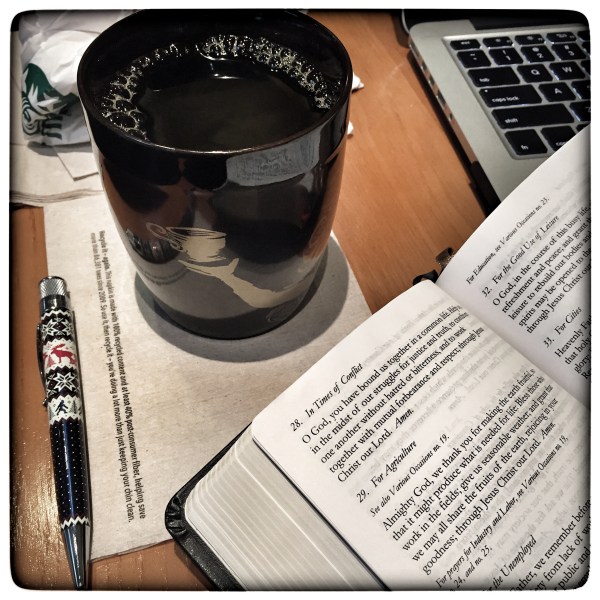
To all these efforts I would add only this complimentary addition; as we work to meet virtually and continue our common prayer, let’s not forget that our life of common prayer was never meant to remove or negate our life of personal prayer. This just might be a fantastic opportunity for many of us to reengage our personal prayer lives in dynamic and meaningful ways. There is another important perspective to keep in mind: personal prayer is not really praying alone… we’re engaging with God and all those who similarly pray. Physical proximity with our community is warm, life-giving and central to who we are as Christians. Our connection goes much deeper than just our physical proximity. We are truly surrounded by and connected to a great cloud of witnesses.
There are a couple of resources I’d like to highlight…
There’s good stuff in the Book of Common Prayer! Morning, Noonday and Evening prayers are found beginning on page 37 for Rite I, and page 75 for Rite II. If you didn’t know, Rite I uses older expressions while Rite II uses more contemporary language. Much simpler devotions are found for morning, noon and evening beginning on page 137! There’s no shame in going simple, so maybe start with those devotions. Knowing what Lessons (scripture readings) to use in the daily prayers when prompted can be a struggle. I go online for any day’s readings at The Lectionary Page, or to an app on my iPhone, Electronic Common Prayer. There’s a nice online compilation of the prayers and readings here from our family in Province VIII! We also have a variety of prayers beginning on page 810 and one of my favorite prayers of thanksgiving on page 836. The entire Book of Common Prayer is available online.
Hour by Hour! This is a fantastic little book which simplifies the Daily Prayer Offices of the Book of Common Prayer into a week’s worth of daily Morning, Noon, Evening and Compline prayers. Compline is the late night prayer before bed. The beauty of Hour by Hour is that all the readings and prayers are right there, no page flipping or calendars required. It’s available in print or as an electronic book. It’s even a Nook book.
 Finally, just a reminder that though we may suspend gatherings, we never suspend faith, mutual love and concern, or our deep connections to one another. Does your parish record worship services to post on YouTube or Vimeo for those who miss a Sunday? Go back and relive some of that worship when you need a lift. Go back and relive our amazing revival in January! If you need a moment of prayer and blessing with your Priest, contact your parish clergy to set up a phone call. I’d love to pray with you and bless you! Send me a note and I’ll call you. Of course, you don’t need a collar to pray with one another. Reach out to folks in your church you know would be encouraged to hear from you and pray with you.
AMDG, Todd
A 2020 Civility Resolution
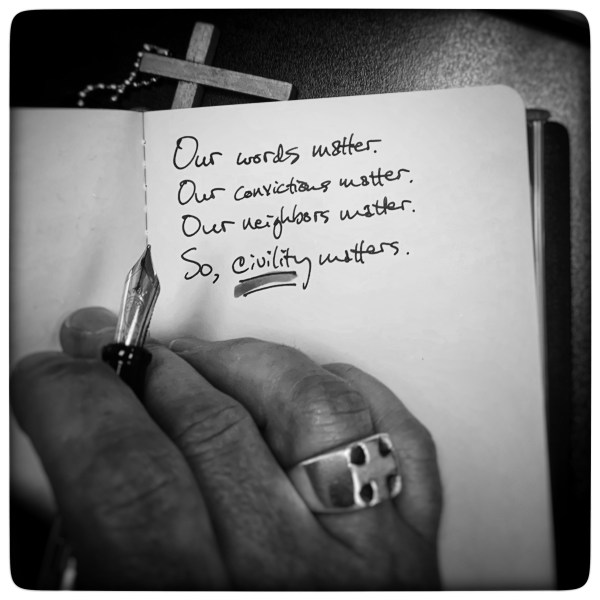 With an election year looming and our energies running hot these days, let’s take a few minutes to talk about civility and how some extra care given to civility in 2020 might look. Civility is not compromising or giving up on our strongly held convictions, but it’s a more productive and honest way of speaking to the issues and ideas which move our politics and public discourse. Our words matter. Our convictions matter. Our neighbors matter. So, civility matters. I’m asking us to commit to a higher level of civility in 2020 in two specific ways…
First Resolution: Let’s not post and share the name-calling mean memes in 2020, or ever. They aren’t fair, usually aren’t too accurate, and they likely hurt someone we love, a friend or family member. Let’s just be done with mean memes. Name-calling is simply the least productive and least accurate way to talk to, with and about people, and accuracy is important. Name-calling generalizes people, usually undercuts their personal value and worth, and it’s a childish way to score a point or make ourselves feel better. We often proudly claim and use titles and political designations like Conservative, Liberal, Progressive, Libertarian, and more, and using those titles is ok. But using offensive slurs like dopey, traitor, libtards or deplorables, meant to degrade people and grab a laugh, is when we stray into incivility, stop advancing what we actually hold as political convictions and lose the argument. Really. As soon as we start throwing around names and meanness like that we’re no longer arguing a political point of view, but we’re resorting to bullying tactics and personal attacks to intentionally hurt someone. We’re also possibly hurting someone we love with these ugly names, someone who thinks a bit differently than we do and just got a derisive label slapped on them by our social media post. It’s not a joke, not laughable and not right. Besides, that mean meme is probably not only wildly inaccurate but was made by an internet troll to do exactly what it’s doing: to cloud issues and to wreck your civility and relationships with family and friends. Don’t feed the trolls, my lovely people. Let’s stop the mean memes.
Second Resolution: Let’s speak to people’s actions and words, not evaluations of their character. Ridiculing or attacking people just doesn’t get the job done. We’re taking about de-weaponizing our speech. We have to speak with civility, which means making our point about ideas and issues, while not stooping to attacking personalities and personal attributes. This is admittedly a tough one, but it’s such a powerful habit if we can throw some real energy behind it. Let’s apply this to President Donald Trump and me… I personally cannot abide most all of his rhetoric. I do not approve of his calling people names or attacking them personally. I don’t like his use of Twitter to throw personal attacks at children, public servants and other politicians. I cannot stand all the false statements he makes. And yet, I can say all that without saying “F*%k Trump.” I can also study up on and speak against all his inaccurate and false public statements without saying “he’s a liar” or attacking some aspect his personal appearance with a mean meme. Just point to the facts. We can apply this to any politician. I can say, “I really wish Joe Biden didn’t have so many public gaffs, and I’m actually worried at the thought process and disconnect which leads him to say something like, poor kids are as smart as white kids.“ I don’t have to attack Biden’s character or call him a racist to talk about the systemic racism in America which has encoded ideas like equating poor with non-white and therefore equating white with wealth and intelligence. I can be appalled that he would say such a thing and I can hope he reflects deeply on his way of thinking about the world, all without calling him a racist or needing to demean his character. As someone so completely opposed to our current President on so many issues of economics, environmental protection and civil rights, I do find this a tough task. President Trump’s words and actions are hurting people, or have great potential to hurt people, often people whom I love. Attacking his words and actions instead of him personally helps me stay sane, helps me better present an opposing position (which will hopefully help make a safer world for those threatened people), and honors my commitment to civility.
This is a heavy lift and will demand more from us as participants in our civil discourse and interaction with issues and details. It’s takes way more energy to construct an opposing view on something or to deconstruct a stated view, than just saying “they’re a piece a sh*t” or “they don’t love America.” We cannot allow ourselves to get distracted with name-calling and pettiness when there are simply too many things being said and done which we must strongly and unequivocally oppose. We need to maximize every opportunity to expose the threats and crimes which must be confronted. Civility will help us get more done for more people.
Ok, that’s a lot of writing about only two things I’m asking us to embrace: 1) no more mean memes and name-calling, and 2) speaking to people’s words and actions instead of character assassinations. This is doable, and as crazy as 2020 is bound to get, civility is going to be so needed. Also, there are political ideas which need to be confronted and defeated, for our neighbors’ sake. We’ll accomplish that when we keep our convictions and keep it civil.
AMDG, Todd
A Problem of Religious Snobbery
This is a sermon manuscript from my message on Sunday, September 15th 2019, at St. James Episcopal Church, Potomac MD. As a sermon manuscript it breaks my usual goal of staying at 500 words in a blog post, lol, clocking just over 1,700. The day’s Gospel passage was Luke 15:1-10.
Who has ever lost something and found it?
Our gospel passage today is in part about losing and searching and finding, and the joy that comes with being found. Jesus tells two stories about things being lost, first one of a hundred sheep, and then one of ten coins. When was the last time you lost something, and found it? Or maybe you’re like me, you like to think that you never lose anything important and love to be a little judgey when other people do? I’ll admit it, I’ve been that “How could you?” guy too many times… that is I was until I lost my wallet… on a cross country drive… in East Africa.
I don’t have my wallet at the hotel!

It’s the year 2000, and I’m driving across Tanzania with a friend, bringing home a new truck which we had just imported and outfitted for work in the rural areas where we were planting churches. After a long day of driving toward home from an area near Mount Kilimanjaro we were pulling into a beautiful safari hotel in the heart of the Serengeti game reserve for a well-earned night’s rest. But when I went to check in, I didn’t have my wallet and I couldn’t find it anywhere in my new truck. The folks at the hotel were understandably like, “Sorry, no money, no room.” That wallet had my money, US ID, Tanzanian drivers license, checkbook, everything… oh man.
Jesus is speaking to religious snobbery.
So we find Jesus was doing his normal thing one day, teaching the crowds around him… you might remember some of the recent gospel passages have been a little on the hard-to-hear tough side, yeah? He’s been talking about the cost of discipleship, or how seriously they should think of a decision to follow him. It’s a deep thing, choosing to follow Jesus, and it should be treated seriously and with dedication. And who should gather around and be listening to Jesus, but sinners. And worst kind of sinners, tax collectors, those who colluded with Rome and stole the wealth of the people. The good religious folks watching are like, “Man, Jesus hangs out with the worst people: Sinners!” Sound a bit snobby? Sound a bit judgmental? Yeah, it does.
A Clue! I find a map on the grill of my truck!
Back in Tanzania I’m standing at my new truck with my friend and we’re talking about this missing wallet thing while my stomach twists and sinks lower and lower. I last had the wallet at the gate into the park where we stopped to pay the game park entry fees… I know I had it at the gate! I start looking around some more and as I inspect the truck inside and out, I find a game park map stuck to my front grill. Putting things together I begin to imagine what I had done… leaving the office at the park gate after paying my entry fees, I must have set my wallet and the map I had grabbed on the hood of my truck. I must have forgotten and left them there. And as my luck would have it, my wallet didn’t get stuck anywhere in place like the map.
What does sinner mean? What will make the angels party?
Something else we know about Jesus from the recent gospel readings is that when invited he would totally go to the house of a Pharisee or religious leader for a meal. It’s not even like he exclusively eats or only hangs out with those sinners, but he is available to everyone. They’re a bit jealous maybe? We also know from many Gospel stories that Jesus doesn’t tolerate religious snobbery. To answer their anxiety at his choice of company he tells a couple of parables, short stories, actually two of three we find in Luke 15, to very pointedly reorient them back from their judgmental stance. He tells stories that will help them understand that sinner doesn’t really mean what they think. Lost doesn’t really mean what they think. For Jesus, sinner apparently means beloved. Lost means desirable. In the first story a man finds one of a hundred sheep has gone missing. Instead of simply being glad of the 99 and writing off his loss, he leaves them to find the one. And when that one is found the party gets started. There is rejoicing! I wish rejoice wasn’t such a church word these days… if we’re going to honest, the man and the angels partied when the lost one was found. In the second story we meet a woman who has lost one of ten coins, and she is relentless in finding that coin! She doesn’t give up but turns her world upside down to find what was lost. And when the lost coin is found? You guessed it, she and the angels start partying.
We just have to drive back, hoping and praying for the best.

Having figured out that I had left my wallet on the hood of my truck we were faced with a couple of problems. We had driven two hours since coming in that park gate, and it was getting dark. We’re not supposed to drive in the park after dark, it’s too dangerous with animals and possibly even poachers roaming around. I mean, could we even hope that it wasn’t already seen and grabbed up? Or maybe it was run over and scattered? It was also beginning to rain. We talked it over for a few minutes and eventually decided to drive back toward the gate and hope, and pray, for the best. You know that sick feeling when you can’t even talk? Everything inside is so tied up and you’re feeling so stupid and worthless that you just can’t even. I drove on, even out pacing the rain after some time, eyes glued to the road, and my friend sat there with a hand on my shoulder praying grace for me, for courage for me and for a wallet for our hotel stay.
Jesus is consistent that this kind of snobbery is not acceptable.
Maybe you’ve heard the kind of whispers and judgements that the people with Jesus heard from the religious leaders that day. Maybe you have felt unworthy in life, in church, in work, in play, in anything and everything. Maybe you’ve had the label sinner applied to you. Maybe you’ve had the label lost applied to you. Like many of the religious folks that day, we at church mostly find ourselves among the 99, the found. We find ourselves among the nine, tucked safely away in God’s purse. When you’re the 99 or the 9, terms like sinner or lost start sounding kinda bad. But in the stories told by Jesus, lost seems to mean desired, sinner seems to mean beloved. What the 99 and the 9 have to remember is that they aren’t giving up any of God’s love for it to be shared with the outsider, the other, the one whom God is pursuing instead of just always hanging with the insiders. So here’s a thought… we recently read Jesus telling a dinner host not to invite just friends and family to the table, but those who needed a meal, those without food, those without a table. Does that start to make more sense now? Do we have an extra layer now of understanding of the kind of love God has for all people so that we get a better idea of why spreading a table for the ones least likely to be invited, most likely to be overlooked, is so important?
What about my wallet?
We had out paced the rain and were driving in the dark for about an hour heading back toward the gate. We’d seen nothing in the dusty dirt road and now strained to peer through the high beams of my truck as we moved as fast as we dared. No, this wasn’t a paved highway, this wasn’t I-95 South toward Richmond. This was dirt, soon to be mud when the rain caught up to us again. Can you imagine what my heart did when at the edge of the high beam’s light, a small brown shape off the side of the road came into view? Can you imagine my lack of strength to even get out of my truck and go pick it up, when it was so obviously my wallet with the colored rubber-bands still holding all the contents safely in place? Can you imagine the relief, the joy? Can you imagine the party on our drive back to the hotel? I kid you not… we had found the wallet and started back for no more than ten or fifteen minutes when the rain storm caught up to us and poured down, obscuring a lot of our visibility for the drive back to the hotel. I don’t know if we could’ve found that wallet in the rain. Oh man, we partied like the angels in heaven! God is good.
Let’s make more solidarity, less fear more love!
What I believe Jesus is so often pushing the people around him to do, is to fear others less and feel a deeper sense of solidarity with them, a longing for them, a love that shatters complacency. He would seek and spend time with the lost and the sinner, because those are just synonyms for the beloved ones, the desired and desirable ones, the ones worthy of a great search, worthy of turning the world upside to get close to. Behind all that we do, all that we say, all that we would accomplish, let there be a deep sense of our being found, our being loved of God, and our being made worthy. From that understanding, let us also hold tight to the love of God that also embraces those outside of our community, making them worthy, worthy to be missed, worthy to be sought, worthy of our love and respect. Amen.
The Lessons of Howard Jones

Howard Jones has been singing to me for years upon years, and his lessons are still as golden now as when I was a teenager. I’m feeling grateful for Jones today, and I’d like to review some of the best things he has been preaching to us through the years. Some of the things are obvious and built right into the song titles, and some come back again and again through his lyrics…
Don’t get in a rush, it won’t help. Life In One Day
Don’t always look at the negatives. Don’t Always Look at The Rain
Chill, it’s not just you. No One Is To Blame
There are some things we all must learn for ourselves. Look Mama
Hold on. Things Can Only Get Better
We’re all unique and awesome, so be your authentic self and accept others in their realities. Like To Get To Know You Well, Conditioning & Equality
Wait for an exciting, fun & valuing love. You’re worth it. An Everlasting Love
You’re good. Believe it. Specialty
Open your mind and enjoy the ride. New Song
There’s so much more; keep exploring! Hide And Seek, Hunt The Self & Always Asking Questions
Enough with the hate. We’re all one. Elegy
But Jones is not all pop sugar and happy feelings. We hear him lamenting loneliness (City Song) and all of our unfulfilled hopes and dreams (Hunger For The Flesh). We hear his pain and struggle to understand his own thoughts and the desire that we would hear his lessons before we’ve lost too much (Assault and Battery, The Prisoner, Last Supper, What Is Love, Human’s Lib, Pearl and The Shell & Exodus). All this is what I’ve heard from Jones, and might be incredibly far from what he intends with his music, but I am grateful. These are the lessons he has instilled in me, and he’ll always be one of my favorite teachers. I’m better for having his music in my life.
It was such an amazing thing to hear him live in concert in 2015, a full 30 years after I first began my journey with his music. Jones has always been so real to me, though never even an acquaintance, and it’s been a blast to grow old together. He’s hopeful, hurting, healing and seemingly unstoppable. Amazingly, he sounds as good today as when I first popped that Dream Into Action cassette into a player in 1985. I truly hope he lives forever.
With gratitude, Todd
 toddthomas.net