
Carrying One’s Cross
Carrying One’s Cross
Luke 9:23-26
Then he said to them all: “Whoever wants to be my disciple must deny themselves and take up their cross daily and follow me. For whoever wants to save their life will lose it, but whoever loses their life for me will save it. What good is it for you to gain the whole world, and yet lose or forfeit your very self? If any of you are ashamed of me and my words, the Son of Man will be ashamed of you when he comes in his glory and in the glory of the Father and of the holy angels.
In Christian-speak there are some very common and beloved phrases. For those not raised in Christian circles the words can be confusing, and even for those raised in the world of church, we can get them a bit confused as well. It seems to me that “carrying my cross” is one of those that is in danger loosing it’s meaning.
I think it happens when we start mixing metaphors in our heads. Jesus said that those who follow him should be willing to “take up their cross” and then follow. Later Paul will write about his “thorn in the flesh” (2 Corinthians 12:6-10) that he has come to view as God’s chastening in his life. It’s a short step to move Paul’s thinking over to the words of Jesus and suddenly have the “cross I bear” viewed as the minor to major irritations of life. I can only imagine that the seemingly flippant references to carrying their cross that some Christians make reflect this mistake. I hear Christians say, “Oh, that’s my cross to bear” and I wonder if they don’t actually mean it’s what they feel as a “thorn in the flesh.” They might be reflecting on a naughty child, an illness or some other frustration of life. To begin gaining some clarity, let’s start by looking at the cross that Jesus carried.
The Cross of Christ
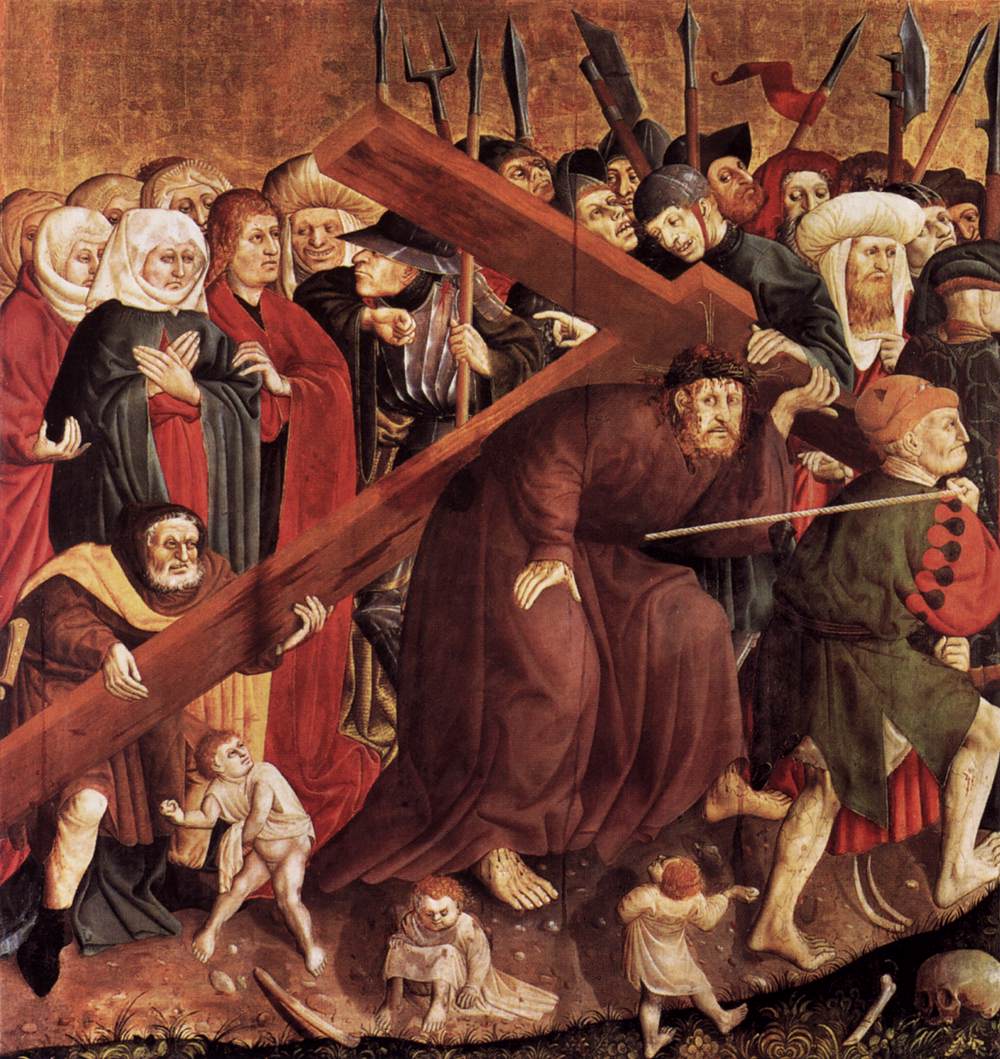
What is the cross of Christ not? The cross of Christ is not a cross of annoyance. It is not a cross of condescending tolerance. It is not a cross of the righteous one’s sensibilities being bruised by the sins of one’s egregious neighbors. The cross of Christ is not the things about our society that I don’t like. It is not the quirks of my neighbor’s behavior that offend me. The cross of Christ is not a President of the other party being elected. It is not my loss of political power. It is not what I don’t like about the world, my neighbor, my workplace, current legislation, my family, myself or my school.
What is the cross of Christ? It is a cross of forgiveness. It is a cross of love. It is a cross of sacrifice for the undeserving (us). The cross of Christ is when Jesus intentionally lost so others could win. The cross was painful, so painful that Christ prayed he not have to carry it. The cross is an intimate view of murders, accomplices, thieves, mobs that called for blood, and of the beloved. The cross of Christ was Jesus daily touching the untouchable, eating with the unsociable, rejecting religious elitism and pride, denying political aspirations, and of renouncing his personal rights.
So then what is the cross that we are compelled to carry? Looking back at the text I believe it is a very personal thing, a very real dying to self. It is a daily thing. It is a decision made day to day to live a certain way, and from the text it seems clear that the “way” is to choose losing as Jesus did himself. The cross we carry is not the secret moral victory that we grasp close our breasts and nurse through the dark nights of the worst the world might throw at us. The cross is the daily decision to deny oneself and move in sacrificial love and forgiveness, sincere love and forgiveness for those who may or may not be at all deserving. The cross makes us look like losers. The cross identifies us with losers. It is not easy. It is certainly not flippant.
Discerning Our Thorns and Crosses
I would hazard a guess that when we make the cross into our “thorn in the flesh” we make the dire warning of Luke 9 become a reality, “For whoever wants to save their life will lose it, but whoever loses their life for me will save it. What good is it for you to gain the whole world, and yet lose or forfeit your very self?” I think that if I make the cross into my thorn in the flesh then I would be placing myself at the center, and I would be deciding that the world’s evils are meant against me. I would run the risk of placing myself above all others in my inmost heart and secretly saving my own self while the cross loses it’s sincerity or even stands forgotten in the corner. In an odd way, I would be making the world mine, and holding it accountable to me, so as to save myself.
Jesus did marvelous things for us when he taught using symbols and metaphors. In Luke 9 he is speaking of his coming death, a physical death on the cross. The cross toward which he walked was horribly real and deadly tangible. Our cross in contrast is a decision of the heart, but may lead to the same very real loss of self in driven service and sacrifice for others. Choosing to carry the cross is less a matter of choosing to follow Jesus as it is an expectation of those who have chosen to follow. By using the image of the cross and our daily choice to carry it Jesus invites us to join him in this divine sacrificial way. And honestly, I can think of few other ideas less suited for flippant usage. Here’s the bottom line for me: It is a necessary step for anyone coming to Christ to move from the personal experience of spiritual salvation and victory in their own life into the spiritual way of service and offering. If I don’t make that move, then I remain a perpetually self-centered seeker of new victories and greater personal satisfaction. Carrying my cross then becomes my banner and slogan of victory instead of sacrificial love and offering of myself.
Though we celebrate the cross of Christ for all it means to our lives and souls, our own choice to bear the cross is no less deserving of some sleepless nights praying in a garden alone. Metaphor it may be, but slogan is it is not.
Three Ideas to Wrestle With
At the end of the day here is “where I hang my hat” as my Texas genetics would say:
1) The cross that I carry is not a test or sign of discipleship. Jesus said that my love for others was the sign of my discipleship in John 13.
2) The cross that I carry is not a matter of conversation. There’s no need to say I’m carrying my cross, it should be self-evident.
3) The cross is not my decision to follow Jesus, it is the reality of my life in the following. The moment I begin to look upon the world from any height of pride, scorn or condescension, I am not looking down from the cross. The divine sacrificial way is one of driven love, of forgiveness, and of losing so that another gains the victory.
Do I have thorns? Sure I do. I lost my hair for one thing. And believe me, I’d probably be one vain son of gun if I had a wavy, handsome quaff. I also stutter. I struggle with th’s, especially when th’s come anywhere near s’s and z’s! So saying “Nazareth” correctly is very hard for me. Not being able to say to Nazareth easily is kinda rough on a preacher, huh? If I’m not really concentrating it becomes “Jesus of Natharess.” We all have thorns, whether in exactly the manner St. Paul spoke of or not, and I’m way more comfortable making jokes about thorns than crosses.
It’s valid to ask if I am just taking time out of the day to condemn or judge someone’s use of “carrying my cross.” Am I just looking for someone or something to peeve about? I’m not really looking to judge as much I’d really like to clarify. I’m less interested in condemnation than I am in reflection. I think that more than ever, as our country truly becomes a pluralist society, we who know the Christian-speak need to stop and slow down, and think about what we are saying and if we should even be speaking at all. Some of our cultural idioms might need some time off, or permanent retirement. Carrying one’s cross is not a conversation, but a way. It’s a needed way to live, love, serve and make an offering of our lives. We owe it to our Lord, to ourselves, and to our neighbors. The world needs us daily taking up our cross, as do our families, friends and neighbors.
A World Without War, Poverty or Gay Jokes
I pray that my children may one day inherit a world without war, poverty or your gay jokes. Of course, if you yourself don’t tell gay jokes, then I thank you for helping make my prayer a reality. If you do, then I humbly ask you to stop. Cease. Desist.

Last week as I prepared for sharing Mother’s Day on Sunday with my church family in Bethesda I spent a bit of time mulling over the “Honor your father and mother” command. (Exodus 20:12) I was thinking about the honoring of our mothers and how that command is as St. Paul called it, “the first command with a promise.” (Ephesians 6:1-3) The people of Israel were told that if they were a people who honored their parents, it would impact their living long in the land of their inheritance. That’s really a curious thing.
I would assume the payoff of honoring one’s parents might be having obedient, honoring kids yourself. That seems more tit for tat, doesn’t it? Instead, God says that being an “honoring people” will bless the nation and the land, the two will be joined longer and better. That’s a curious blessing.
Of course the idea of claiming a blessing for ourselves as a nation today is a little fuzzy. In it’s original context the blessing was promised to the nation of Israel way off in the Middle East. But St. Paul felt compelled to bring it into the conversation with the Christians in Ephesus. So there must be some kind of active blessing for the Ephesians then and us today for being an “honoring people,” a people who show honor to mother and father.
On mother’s day I was bold enough to assert that I believe that someone who does not honor their mother does not have a very good foundation for knowing how to honor their wife, or their daughter, or themselves. In all their imperfections and broken humanity, we honor the moms who have blessed us and given so much for us. Honoring them includes obedience, respect, appreciation, love and forgiveness. Those are a few of the things our church family identified last Sunday as integral parts of honoring. It’s a good list.
Oh Yes, The Gay Joke
 So are you waiting on the gay joke rant? Confused that it’s not even been mentioned? Wondering how it even fits in the discussion? Well, last Saturday, just before Mother’s Day, I went downtown for one of my personal traditions, the Saturday morning cheeseburger. I chose one of my favorite diners; it has one of the old-school sandwich counters. It’s awesome. However, I ended up sitting between two gentlemen who were seated a ways apart, and so conducted their conversation loudly enough to break over the other diner sounds. The conversation ended with a loudly worded joke at the expense of a couple of well-known gay celebrities, and all gay people everywhere. It was a rude joke that managed to give the image of a specific sex act and even make light of life and death, suicide to be exact. They thought themselves boisterously funny.
I didn’t. In fact I lost my appetite looking over at the young son of one of the men, maybe four years old. What would he process and remember from that morning? I lost my appetite wondering if they had alienated and even frightened someone else in the diner who might not have felt the joke was not very funny. I lost my appetite because I was suddenly in a place where it was ok to ridicule and dishonor two people in particular, and a whole group of people along with them.
Have you ever been in an argument and the other person tried to make a joke to lighten the mood, but it more than backfired? We are in a heated national argument right now about the right of our homosexual neighbors to marry in the traditional sense of the word. Does it seem like a good time for ridicule and dishonor? I don’t think so. In fact, even if we weren’t in the midst of our national argument, the ridicule and dishonor would still not have an appropriate place in our diners, our homes, our churches, our mosques, our synagogues, our temples, our workplaces, our schools, or our Facebook pages.
Sitting at the sandwich counter on Saturday I really didn’t care about any particular argument anymore, because we had all just lost, we had become lost, in every sense of the word. If there is a blessing for the land that is made real and present in the lives of an honoring people, then there is most definitely also a curse made real by the lives of the dishonoring. I felt it. It was real. It was tangible.
St. Paul had previously said in that letter to Ephesus, “Do not let any unwholesome talk come out of your mouths, but only what is helpful for building others up according to their needs, that it may benefit those who listen. And do not grieve the Holy Spirit of God, with whom you were sealed for the day of redemption. Get rid of all bitterness, rage and anger, brawling and slander, along with every form of malice. Be kind and compassionate to one another, forgiving each other, just as in Christ God forgave you.” (Ephesians 4:29-32)
This should mean something to everyone claiming Christ. It doesn’t matter which side of the argument you’re on, your way of addressing the question matters, and doesn’t change. Whatever you believe you must act and speak the same way. Feeling that you’re right is never a license to act and speak in wrong, hurtful, dishonoring ways.
Time To Step It Up & Pay Up
Just for fun, let’s take these above words of St. Paul and make a tool! Let’s make a diagnostic tool for deciding how we will speak and use our words. Here goes:
Do the words I want to use…
1. Sound or resemble something unwholesome?
unwholesome, adj. detrimental to physical, mental, or
moral well-being; offensive to the senses2. Build up or benefit someone in need?
benefit, v. to be helpful, useful or profitable to
3. Grieve the Spirit of God?
grieve, v. to cause to suffer
4. Express bitterness, rage, anger or brawling?
Ephesians 4:26, “In your anger do not sin,
Do not let the sun go down while you are still angry”5. Express slander or malice?
malice, n. desire to cause pain, injury, or distress to another
6. Express kindness, compassion or forgiveness?
Colossians 3:12, “Therefore, as God’s chosen people,
holy and dearly loved, clothe yourselves with compassion,
kindness, humility, gentleness and patience.”7. Sound like Christ in action?
John 13:34, “A new command I give you:
Love one another. As I have loved you,
so you must love one another.
Matthew 15:17-18, “Don’t you see that whatever
enters the mouth goes into the stomach and then
out of the body? But the things that come out of the
mouth come from the heart, and these defile you.”
Sound like too much work? Sound a bit overwhelming? Welcome to the reality of how powerful and meaningful our words really are. It’s just a bit too easy to use our words in the cause of dishonoring, hurting, expressing malice, anger, and bitterness. It’s far more difficult to keep our words up at the level called for in our scriptures. That’s the cost of bringing a blessing to the land. That’s the cost of bringing a blessing to our nation. Will we pay that cost?
Closing Thoughts
St. James in James 1:19&20, “My dear brothers and sisters, take note of this: Everyone should be quick to listen, slow to speak and slow to become angry, because our anger does not produce the righteousness that God desires.”
St. Paul in Philippians 4:5, “Let your gentleness be evident to all. The Lord is near.”
Jesus Christ in Matthew 5:21&22, “You have heard that it was said to the people long ago, ‘You shall not murder, and anyone who murders will be subject to judgment.’ But I tell you that anyone who is angry with a brother or sister will be subject to judgment. Again, anyone who says to a brother or sister, ‘You are worthless,’ is answerable to the Sanhedrin. And anyone who says, ‘You fool!’ will be in danger of the fire of hell.” (I have translated the word “raca” in verse 22 to “You are worthless.” This is done after studying the background of the term, it’s use in the Greek manuscripts, and what seems to be the root word of reka in in Aramaic. Other ways of rendering raca as an insult include the calling of a person vain, empty, empty-headed or foolish.)
Reflecting on Osama bin Laden’s Death
Writing about the death of Osama bin Laden is a complex and frightening thing. I was up late Sunday night and caught the earliest rumbles of his demise and then saw President Obama’s comments and official announcement of the operation which found and 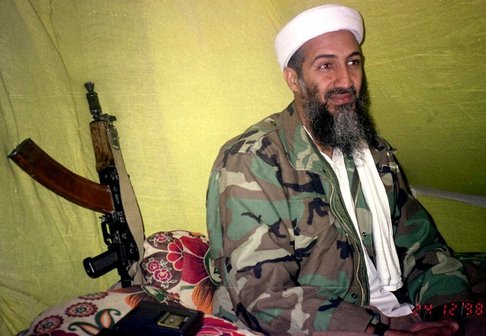 eliminated bin Laden at his palatial hideaway in Pakistan.
And then I thought about it. I heard of people in the streets just a few miles away at the White House having an impromptu party. Come Monday morning I had heard of the same kind of celebration at Ground Zero. And of course, Monday was a day of Facebook and Twitter soundbites back and forth between many varied and nuanced responses to his death.
I posted the first confirmed report of the death I could find late on Sunday night with only one word to accompany it: “Wow.” I’ve not said anything else online about it. And really that was my first and has been my most poignant feeling since I heard the news. I was stunned. It was long coming and overdue. It was world-changing. I can almost trust myself now, after a day and two nights of thought and listening and reflection, to say a few things.
I still have had no desire or impulse to celebrate the death of Osama bin Laden with song and laughter and light heartedness. But I can honestly say that I am glad we now have a world that can spin on without his distorted views and his ability and willingness to impose death sentences upon the innocent and the defenseless. Osama bin Laden was a part of the evil from which so many of us daily ask deliverance, “…but deliver us from evil.” His willingness to kill and to send others to kill necessitated his own death. But I do not want war and death to cross the line from necessity to celebration in my own heart.
It was past time for Osama bin Laden to be gone. I am glad that he has lost the power to kill. I am glad that our world is now without him. I am glad that he is dead. I do not wish he had been arrested. I do not want him to have had a voice any longer than he did. I do not want his stain on our planet to have grown any darker or to have sunk in any deeper. I am glad he is over.
Almost ten years later it is too easy to see Osama bin Laden in a war of ideologies and caught in a contest of competing worldviews. It’s very easy, after ten years of being hunted, to see him in the context of his philosophical arguments. But for those of us who are old enough to have watched the towers fall in 2001, the necessity of bin Laden’s death is not ideological, it is visceral and quite real. From watching the towers fall on live TV, to those earliest tapes of Al Qaeda beheadings of innocent people, we have seen the face of evil in this world. Of course, for the families of those who died his evil is even more real and present.
While I am glad Osama bin Laden is dead, I cannot find it in me to celebrate death, even his. I won’t sing in the streets. That just doesn’t feel right to me. But the women and men of the United States Intelligence Services and Armed Forces have my gratitude and respect. I thank them and I am proud that we have rid the world of that evil. I am glad we persevered in the face of such heavy necessity. Our people who have sacrificed and given so such much in the face of what needed to be done are our heroes and I celebrate them, their courage, their service to our nation and world, and their sacrifice to confront such evil.
I don’t condemn or mean any slight at all to those who are joyfully celebrating in the streets the death of such an evil. I’ve watched threads on Facebook in which people have “unfriended” those who will not celebrate Osama bin Laden’s death with patriotic chants, capital letters and lots of exclamation points. I’ve watched the vilification of many who simply asked something along the lines of, “Wait… am I really supposed to be a happy that death is still the best or necessary option to any problem?” We should not use this as yet another opportunity to divide and feed any hostilities. Whether you or I celebrate the man’s death, or don’t, our need for civility in discourse and conversation is as real as ever.
Here’s maybe the bottom line for many people of faith… we recognize the justice in Osama bin Laden’s death, the justness of it. We recognize the necessity of his death, we feel the relief that he is gone, and we are glad that his hatred and evil have been removed from our world. He earned that death over and over, more than 3,000 times in one day back in 1991, and many times since. But even as we recognize justice, we have been taught to hope for something greater, and that is grace. Our gladness that justice has been served is tempered by regret that grace was missed. Grace was missed so many times in the life of Osama bin Laden. He did not know grace, show grace nor bring any grace to our world.
Our faith has informed us that a better world is possible, and we still wait for it. That better world is forestalled by the evil of creatures like Osama bin Laden and the necessary sacrifice of good people to hunt and kill him.
I pray, from deep down inside, that with the passing of that evil another death dealing prophet will not stand to carry the banner forward. I pray that the great day of peace will come sooner than later for our globe. I pray that we might no longer be a species which produces such a monster and then has to wage ten years of war to find and stop him.
Love Wins
 I finished Rob Bell’s “Love Wins” over lunch today. I started it well before Easter, but then we hit the Lenten Season and Holy Week… you know how it goes. So to celebrate a great season finished, Eastertide beginning, and the kids going back to school after a fun Spring Break (WOOT!) I sat down with some Hunan Chicken, my iPad (Nook app) and Bell’s thoughts. I suck at the “simple life.”
Let me just give it to you as I think it is: With “Love Wins” Rob Bell wins.
It’s not a real scholarly read, though I think Bell has done his work in the books. It’s not a theological treatise, though I think it reflects some good theology and theological thinking. And it’s not a big enough book to answer all the great questions it poses or all the choice questions it makes you come up with on your own. And that’s a good thing, really. All in all, it’s a win.
And the critics? The ones who jumped to condemn Bell before the book was even published? Shame. Shame on them. Now that’s not to say that you have to agree with everything that Bell says or concludes. I don’t really think Bell expects all of us to agree. But it’s partly because of the divisive and judgmental voices like those earliest critics that I think Bell wrote this book. Those sometimes mean-spirited voices are often the ones framing our narrative. They are often the mixed message of love and grace until you are found wanting in some area of thought or theology, and then it’s the guillotine, baby! And yes, I spelled guillotine without any help from my spell-checker!
What is Bell trying to do? He’s trying to help us make a coherent narrative of our faith, our scriptures, our hopes and our fears. And he’s doing it in the middle of a highly connected, pluralistic world scene in which the predominant “belonging system” model of faith has not always prepared us to exist and contribute.
Do I agree with Bell? Pretty muchly yeah, I do. ‘Cause I’m very comfortable with the Cosmic Christ stuff from Fr. Rohr and I always side with C.S. Lewis on matters of substance. And because I am not terribly happy with the limitations of the belonging system faith we so often give lip service to while quietly hoping for something more, something bigger and something gorgeously unexpected.
Thank you Rob! Nicely done!
Looking forward to WILD GOOSE 2011!
 Almost two years ago I’m at a conference in Albuquerque, NM, and I hear a dream being described for a festival built on the idea of allowing streams of life like art, justice and faith to freely create a nexus point, an intersection of creativity and action. Really, they had me at the word festival.
Festival is a noun that the esteemed Merriam and Webster say means “a time of celebration marked by special observances, a feast, and an often periodic celebration or program of events or entertainment having a specified focus.” (Pulled right from http://www.merriam-webster.com!) My imagination immediately presented me some mental images of a feast of art, an observance of justice and a celebration of what happens when we give free reign to those streams to mingle and dance together creating new things. I wanted to be there to see that, to hear that, to taste and hold it.
I volunteered to keep in touch with the dream and friended the fledgling Facebook profile, and I began to dream myself of the coming feast. Today I’m a part of the planning to make art happen at the festival. We are dreaming of canvases and paints, clay and paper. We will use our creativity to vision changes in ourselves, our communities and our world. We’ll bless the land and the people which play host to us in the four-day feast.
Making art is an a tangible expression of the spiritual streams running through our hearts and souls. Making art is presence. Whatever your past experience of art has been, we will help make an exercise of creative expression very accessible for you. This won’t be a time for seeing who is an “artist” and who isn’t, but it will be a time for each of us to dig deeper into the creative veins which God has implanted in all.
I can’t know where your hungers are or what kind of feasting you need. But I know that tables are being prepared for us. We will sit down together and share a rich fare as our faith, our dreams and needs for justice, and our creative hearts all come together for a few days in North Carolina. And if Merriam and Webster are correct, this will be just a beginning of a many more feasts to come and we make a community chasing the Wild Goose and making time together for years to come! I hope to see you there!
Baby, It’s Cold Outside…
SPOILER ALERT! I might ruin this song for you forever, or at least be accused of trying. If that would be the end of your world, please don’t read any further.
 I know it’s an endearing moment in Elf and every duet that has ever existed has covered it, some much better than others. But is the song Baby It’s Cold Outside a bit of a guilty pleasure for anyone besides me? (the lyrics)
Christmas is a storied holiday, rich with various narratives. We of course have the birth narrative of Christ, but not satisfied with that, we invent Rudolph, Frosty, the Grinch and little sidelines for the Christ story like the Little Drummer Boy. Will Farrell’s Elf is one of my favorites and a newer addition to the fun Christmas story lineup.
But is the story of Baby It’s Cold Outside really one that I want my kids humming the tune to? It’s a story of a guy using weather, booze and shmooze to further his sexual conquests with a lady friend. Really.
I know the songwriter wrote it and debuted it with his wife… and maybe it’s cutesy, innocent fun when they sang it. But I can’t help but cringe when I hear the line, “What’s the sense in hurting my pride?” What? What!? Because a man’s pride is in how many women he can seduce?
And I’m not just being an anti-sex prude here. I like sex. Really. I’m talking about a song that blithely objectifies a woman into a sexual object to be manipulated. Why do we dig on this song so much? Other than the catchy tune, it should make us sorta mad that it celebrates the use of use of booze and bad weather to maneuver a woman into that position. It also reinforces the old myth that when a woman says “no” she really means “yes,” so the guy just needs to go for it. Or at least he needs to pour her another drink, and another, and another until the answer magically becomes “yes.”
Is the song irredeemable? No, it’s probably not. It shamelessly uses the word “swell,” so it at least has that going for it. The ending is almost totally open… she could still escape! I just think that of all the Christmas stories out there, this is not the one that I want stuck in my head. But with that masterfully written tune and lyrical banter, it’s going to be stuck in there forever.
The Politics of Punishment
I’ve had a thought steeping in my head for a while, and I need to serve it up. I’m not sure if you’ve followed the fate of the “DREAM Act” or not, but it’s an attempt to assimilate and welcome minors who were brought to our country illegally by their parents.
Now, I’m one of those political cats who can’t always decide which view to hate more, so I’m usually a little more conservative than my neighbors in DC, but am usually way more liberal than my neighbors in Alabama and Texas. I rarely have big political statements to make. A lot of people think that’s the problem with “moderates,” but at least you can’t blame us for clogging the blog-o-sphere with our rants.
Today is different for me. I have a statement to make. Opposition to the DREAM Act is not “conservative” politics, it’s the politics of punishment. I grew up in conservative geography in which I was taught a love of one’s neighbor, compassion and empathy. I grew up in conservative geography where I was taught that we are a country of many kinds of people, and that’s alright. I was raised in a conservative geography where I was taught that I am in fact “my brother’s keeper.”
So what happened to all those ideas? When did “conservative” come to mean conserving an ideological viewpoint at the price of people’s futures? When did the politics of punishment take over?
The answer is partly found in the polarizing nature of Conservative and Liberal points of view, and the necessary vilification of “the other” to win in an arena of competitive viewpoints. We simply cannot share an issue, and that’s just sad… it may be the great American weakness.
But something like the DREAM Act rolls along and suddenly we have a moment of sublime clarity… a lot of us are just pissed off, and we want to punish someone because we’re pissed. Kids? Sure, we can punish them too. And we’re blinded enough by a politics of punishment to think it’s OK to refuse a simple gesture of welcome to someone who is already our neighbor. The sadness deepens.
Go ahead and quote the reasons for wanting to punish minors who were brought to a country by decisions not their own… really, this is your time. Right here. Spill it. Say how the influx of undocumented illegal immigrants is destroying our health care system. Say that it’s overwhelming our social services. Say that it’s depleting our job pool. Say that it’s unfair to those who came here documented. I’m pausing now for you to do that.
Now, tell me that those reasons are good enough for you to reject a neighbor who was brought to our great country as a minor and knows this as their home. Tell me that even with the included requirements of education and proof of moral character in the DREAM Act, that we can’t open a door for them. Tell me that it is for all those reasons just stated that we faced our recent economic depression, collapse of banks, sky-rocketing unemployment and record setting home foreclosures. Hmmmm, you can’t. I can’t. We “legals” made that mess. Our banks made that mess. Our home lending policies and practices made that mess. We have a fine enough time designing our own demise without ferreting out the least among us to scapegoat.
Did you read up on the DREAM Act? If these kids manage to get citizenship, according to the terms of the DREAM Act, some of them will have done a whole lot more with intentionality for their citizenship than I’ve ever done for mine. (I’m whispering this part, “Or the vast majority of you.”) I was just along for the ride… oh, wait! So were they! Truth is, as minors go, they are in about the same position I was in as far as choosing where we’d call home. My neighbor is me.
We all honor those who come to our country in an open and legal process. But that’s just lip service. Have I ever found a way to help tutor someone in process for citizenship? Have I ever written a “thank you” note or a given a congratulatory gift to someone who was naturalized as a citizen in our country? Of course I haven’t. And though someone out there surely has, I’m betting the vast majority of us haven’t unless we by chance had a family member or close friend go through the process. No, we’re not galvanized into action by that to which we give lip service. We are moved by indignation.
The politics of punishment offends my ingrained Texan neighborliness. I was taught that being a neighbor meant better than that. The politics of punishment offends my sensibilities as a Christian. As one who has been shown the grace of God and heard the stories of Jesus, I am offended. I think of the servant who choses to punish another servant after witnessing the grace of One greater than he; Matthew 18:21-35. I think of the servants who have come late to the fields and are just as welcomed and paid by the owner of the fields as those who came earlier; Matthew 20:1-16. These are the stories of Jesus Christ. This is the legacy I was raised to carry forward.
 So, I support the DREAM Act. Because my unintentional arrival on this continent makes me no more important than these other children who arrived here by no choice of their own. I need to work hard to love my neighbor, every neighbor. There are in fact people in this life deserving of some of the punishments that come their way, but let’s not ever let our political needs lead us deny a neighbor. That would be a fundamental mistake.
My neighbor is me. That’s how I was taught.
My Second Life…
 So, It’s been two months since I blogged here! Sorry, eh. But I’ve been thinking about writing a little on my Second Life (SL) experience. You know, give a little history, perspective and lessons learned, as well as to share something new and cool happening online.
Real quick, you may or may not be familiar with Second Life. SecondLife.com is the website where it all gets started. You make an account, then download the viewer which let’s you interact in the online virtual worlds… it’s sort of like a web browser. You have an avatar and can dress it, edit it’s appearance and make as like your real life self or as different from your real life self as you desire. Your avatar then is your virtual presence as you explore all the various worlds which are individually referred to as “sims.”
 So, I first dipped my toe in the water that is Second Life a little over four years ago. Honestly, I didn’t know anyone using SL and in no time at all I stopped logging in. Without friends to help you get started, and to make a safe place for you to learn, the online world can be rather cold and dark. I didn’t meet anyone willing to help me much, so I cruised out. I tried again about a year later with marginally better results. I jumped back in again at the first of 2010, and I’ve had a great experience this time around. And Oh, yeah… sometimes I’m a pirate! Arrrgggh!
Let’s talk real quick about something… so many people, so many, immediately crack a joke like “I don’t have time for one life, how could I take on a second?” when I mention SL. Well, we all have hobbies that require some time and effort. I don’t watch TV. Not even Glee. About the only exception to that is Survivor, and I watch it on my phone. I don’t play Halo or World of Warcraft. I don’t knit and I don’t flip houses for profit with a book I bought from the TV infomercials I never see. So, Second Life is a hobby of sorts. It’s one of the ways I have fun. But it’s also a little more at times…
 SL is a hobby and a game, but it’s also social networking and friendships. My friends on SL span the globe from all parts of the US to Spain, Britain, El Salvador, Mexico, Croatia, and Finland to name a few. That’s pretty flippin’ cool if you stop and think about it. Being on SL has given me opportunities to pray with and for these friends, to learn about their little corners of the world, to let our avatars dance together, and celebrate birthdays and holidays like Thanksgiving together. Some of the friendships merge real life and Second Life and run over into Facebook, Twitter and YouTube accounts.
But, SL is a game! There’s so much fun stuff to do… I build all kinds of things in SL like clothes, houses, boats and more. With easy drop in scripts those things I build can have some functionality, too! I even occasionally sell posters of paintings and photos that I make for decorations in SL homes. Second Life has its own currency that can be bought and sold with US Dollars. I rent land and throw parties for my friends and we play card games in SL. I also do some “role play.” I am a Jedi Knight in some sims, and a medieval archer in another. Most of you know my wife is also in SL, and we have a lot of fun together terraforming our joined islands, building and goofing off.
 And one of the most interesting things I’ve done lately is to start leading Sunday services in Second Life. When I joined the medieval archery company I was told that on the sim they had a cathedral. They used to have a pastor who would lead Sunday services there, but he left SL and they had not found a replacement. I was asked to consider the work, and after a week or so of thought and prayer I agreed. As of now, I’ve hosted two services, these last two weeks. The first Sunday I had 3 people other than myself. The second Sunday there were 8 others. The picture here is me kneeling at the Cathedral before leading my first service there. That doesn’t sound like a lot of people, but it would be a great start in a real life church plant!
What’s in a SL Sunday service? Well, so far we’ve been text-based, though I might use some voice chatting later. But not everyone has the ability to chat with voice or even to hear others speaking, so I’m sticking with text for now. We share scripture, prayers, I present a message, and we have some sort of interactive element. And there’s always some conversation. This past Sunday it was amazing to hear the prayer requests that were shared… I’m praying this week for one guy’s nephew who is in the hospital, and for another person looking work, and another’s fear of homelessness… sound like real life stuff? Behind every avatar, there’s a real soul.
 What’s the coolest thing about Second Life? Well, we all get to look like we want to look, so everyone is beautiful. This pic is my lovely wife’s avatar! But good looking avatars aren’t the cool part! The cool part is that when you finally figure out that the avatars really are just pixels, but that the real people behind them aren’t, then you can really start listening. Because we aren’t encumbered with one another’s physical details, we have an opportunity to better hear one another’s souls speaking. For real, you can hear the person’s heart. Now, that doesn’t mean you’ll always like what you hear, but it can be very real, and very beautiful.
That all sounds nice, but what about the drawbacks of SL? There are some very real dangers and drawbacks to Second Life. Because we don’t have the physical details of someone with whom are friends, they have an opportunity to lie, and many do. I know of someone who faked a real life death to manipulate someone else’s feelings. Some will lie and try to cheat you out of your money and worse.
Here’s how I have often described it: It’s a situation of extreme anonymity which mixes disastrously with a high degree of vulnerability. In other words, if you put your real life feelings on the line with everyone, many will hurt you. And that’s a Real Life thing as well as a Second Life thing. But there’s more, and maybe worse…
Second Life is a truly creative and interactive platform for pornography. If you struggle with pornography, and I’m talking about more than just being a guy, you do not need SL bringing you down. Your avatar can be as anatomically correct as you want it to be, and just as active sexually. Many people get into SL and then find themselves struggling with the pornographic side of it. And that brings me to something I always tell new people when I meet them in Second Life…
Don’t ever think you can do things in SL you that would never do in real life without any consequences. If you jump into Second Life and start making deep emotional investments in someone other than your spouse, you’ll get into trouble. And yes, your avatar can be married to another avatar. I’ve talked to people who intentionally explored sexual themes and practices in SL because they thought, “I’ll never do this in real life, and this is simply a virtual thing, not real.” And the next thing they know, they are suffering emotionally for their actions. The avatars may be virtual, but shame is for real. You are for real. The things in which you invest your time, your thoughts, your money, your heart and soul, become very real indeed.
So, like everything else you’ll choose for a hobby, SL has some great stuff going for it, and some really scary pitfalls to be avoided. But you’re so lucky! If you decide to join up and explore a Second Life, you’ve got a friend on the inside! Look me up, I’m Swirlyfoot Lighthouse in Second Life. Want to see some fun videos I’ve made from random days in Second Life? Check out Swirlyfoot’s YouTube channel!
Selling each other short…
I am more than a little heart-sick at this story. And I’m keep the Clementi family in my prayers. Have you seen the story? The shameful treatment of a college student leads him to take his own life.

Ya know, I understand the drive to have the next big viral video. I see people everyday online trying to capture that magic, that big laugh. Some achieve a certain amount of online notoriety, and some simply tear their own dignity to shreds while hurting others in the attempt.
Think for a second about the news stories asking about the rightness of parents who post pics and vids of their toddlers with bong pipes and firearms… why? Because they want a laugh. Never caught those stories? Google it.
And amid all the grotesque stories of cyber-bullying, we have this one… a college roommate and his friend hide a camera to live stream a young man’s love life. That young man then commits suicide in shame. And it’s just all too easy. It’s too easy to plant that camera, to laugh at a friend, to Tweet and post and stream a friend for a few laughs, a few glorious moments of viral power. Tyler Clementi was sold short… his life, he himself. He was worth so very much more than the few laughs his antagonists sought.
I hope at least one person with a webcam and a stupid idea for catching an online laugh will stop and ask… “Am I trading my neighbor off for a selfish grab at a laugh or a few more views? What is my fellow human being worth?” And beyond hoping, I pray that when that person looks inside and gropes around for the answers to those questions, they’ll find love.
Oh, God! Help us love each other!
Break our hearts and teach us mercy!
Teach to pursue each other with grace!
And when we’re done praying? Well, then we have to speak and act for love! Speak and act the value and dignity of our neighbors! We have to be love, be the value and be the dignity of everyone around us! For such things our Christ has suffered the cross!
And here’s just a flashback for you 80’s fans… a song I have often sung along with and admired for it’s honest and good questioning of our need to hate…
"People Are People"
- Martin Gore, Depeche Mode People are people
So why should it be
You and I should get
Along so awfully
People are people
So why should it be
You and I should get
Along so awfully
So we're different colours
And we're different creeds
And different people have different needs
It's obvious you hate me
Though I've done nothing wrong
I've never ever met you so what could I have done
I can't understand
What makes a man
Hate another man
Help me understand
People are people...
Help me understand
Help me understand
Now you're punching
And you're kicking
And you're shouting at me
I'm relying on your common decency
So far it hasn't surfaced
But I'm sure it exists
It just takes a while to travel
From your head to your fists
I can't understand
What makes a man
Hate another man
Help me understand
People are people
So why should it be
You and I should get
Along so awfully
People are people
So why should it be
You and I should get
Along so awfully
So we're different colours
And we're different creeds
And different people have different needs
It's obvious you hate me
Though I've done nothing wrong
I've never ever met you so what could I have done
I can't understand
What makes a man
Hate another man
Help me understand
People are people...
Help me understand
Help me understand
Now you're punching
And you're kicking
And you're shouting at me
I'm relying on your common decency
So far it hasn't surfaced
But I'm sure it exists
It just takes a while to travel
From your head to your fists
I can't understand
What makes a man
Hate another man
Help me understand

On the little congregation in FL and burning Qur’ans…
I was thinking about making a huge post on the mess, but instead I’m going to share a Facebook adventure! A friend of mine posted a link to an online petition asking the people at that congregation not to burn the Qur’an on Saturday as planned. A response to the link occasioned my response, and a couple of subsequent responses… anywhoooo, I got to say most of what I wanted to blog about, lol!
Here was the posted link to the petition…

Here was the only response to the link when I saw it this morning. A person said…
I think that Paul is talking with Christians dealings with other Christians. Anyway, how does it love and serve a Mulsim to let him believe that Jesus is just one of many prophets and not The Prophet?
*Ahhh… time out! That’s not fair! That is bad exegesis and a nasty bit of bait & switch. First, it’s very weak to take a fundamental “one-another” teaching and start excluding the demographics you don’t want to love and serve. Yes, the context is a letter to Xians, but you have to want to make Paul’s “one another” only other Xians, especially as he quotes Jesus’ use of the words, “Love your neighbor.” So, boxing up a verse and dismissing it is not good handing of the Bible. Secondly, we had the subject switched to evangelism in mid conversation, and the act of not burning a Qur’an was equated with apathy about the person of Jesus. Again, not fair and not good. This is not about evangelism or making Jesus known… it’s tied up in this Florida Pastor’s method of intertwining the horrible events of Sept. 11, 2001, terrorism in general, extremist violence, national religion, a domineering view of his own faith over all others that are similarly protected in our nation, and his warped idea of what clearly communicates the love of God.
So, I replied…
Thanks for letting me blog on your wall, [name removed]!
Hahahahahaha! Much love!
 toddthomas.net