
Justice
Reacting to the Election in 2024
I’ve tried to capture my thoughts and emotions on a devastating morning after. The transcript will be posted below the video. I would also offer this 1995 album, Lament, from Resurrection Band… it’s the music of my day.
Beloved, take care of yourselves today, please… AMDG, Todd
2024 Election Reaction, transcript
Like many, I’m having a visceral reaction to the election, a reaction of shame, embarrassment and dismay. I don’t understand the heart and mind of my neighbors who voted for the convicted felon, the one who bragged of sexually assaulting women, a financial huckster with his trading cards, sneakers, Bibles and wristwatches. I don’t understand how my neighbors can reward a politician and a whole political party for January 6th, 2021, or all the election denials and for his speaking so casually of using the Department of Justice and US military against those who disagree with him.
The part of me that is a US citizen feels lost, without a home and without a people. I didn’t think I could see again such a travesty of justice in my lifetime, such a mockery of our nation’s promise. I feel undone, and I feel as though our nation is coming undone, lost in a fresh miscarriage of truth and hope.
I’m ashamed and I am grieved by those who voted for this dark new chapter of our shared life in the name of God and of Christ. I am afraid for the lasting harm done to our witness and for the tighter hold of ignorance, hatred and idolatry which already strangle our faith. In some ways, the deepest part of me, the largest part and the longest-striving part of me, which is a follower of Christ, feels the deepest disconnect of my life with the broader church in our nation.
All that is part of my truth, but it’s not all the truth I have to hold or to share.
Even if good loses the vote, I will stand for it. Even when goodness loses an election, I will still choose it. When the love of power overshadows the promise of justice, I will align myself with those who the powerful despise. I will name the shame I feel at this election, but I will not allow it to rule me. And when my nation knocks me down, I will get back up. Even when so many followers of Christ make me want to hide away and be silent, I will speak and move, with God’s help.
Even when so many of our neighbors choose the path of shame and make us walk it with them, I cannot hate them. Even when they elect the felon, the abuser, and look to have stacked Congress on his side, I cannot hate them. But I also cannot ignore it. I will name it. I will call out that darkness, loudly and relentlessly. I will not abide this shameful chapter of our life silently. I will shine what little light I have on that darkness and attack every shadow with the strength God gives me.
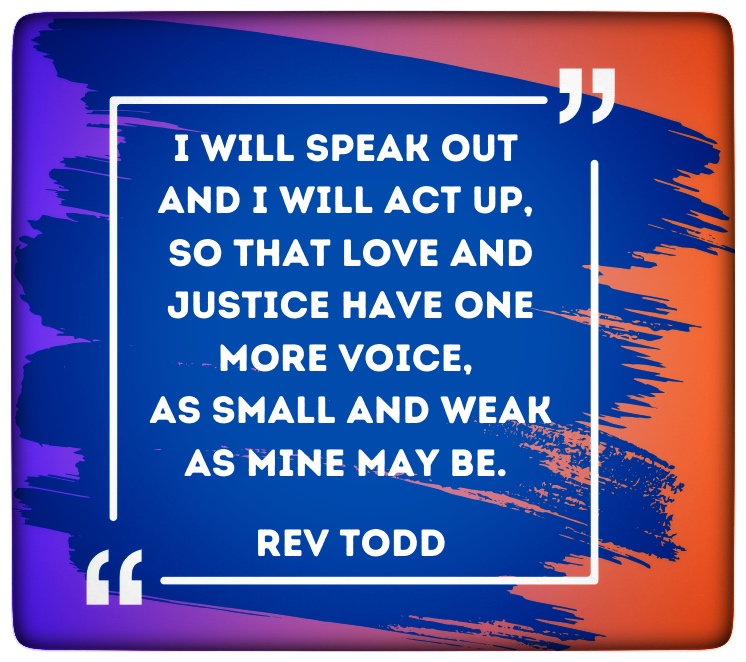
For every American who now will fear for their ability to express their own sexually and gender, who fear for their marriage and family, who fear for their privacy and reproductive rights, who fear for their place at the table of civil life and participation, I will not be silent. I will pray and I will keep faith, so that shame becomes motivation. I will speak out and I will act up, so that love and justice have one more voice, as small and weak as mine may be.
We lost an election, not our light. We hoped for some respite, but again are called to the struggle.
Fatphobia and Justice
“What shall I bring when I come before YHWH, and bow down before God on high?” you ask. “Am I to come before God with burnt offerings? With year-old calves? Will YHWH be placated by thousands of rams or ten thousand rivers of oil? Should I offer my firstborn for my wrongdoings — the fruit of my body for the sin of my soul?”
Listen here, mortal: God has already made abundantly clear what “good” is, and what YHWH needs from you: simply do justice, love kindness, and humbly walk with your God.
Micah 6:6-8 Priests for Equality. The Inclusive Bible (p. 1096). Sheed & Ward. Kindle Edition.
Those of us in the Diocese of Washington have been invited to engage this October with the summation of what God wants from us in Micah 6:6-8. Here’s my sermon from Sunday, October 16th, 2022, on Justice and what it means to be a just person in God’s kingdom and the society God would have us help build.
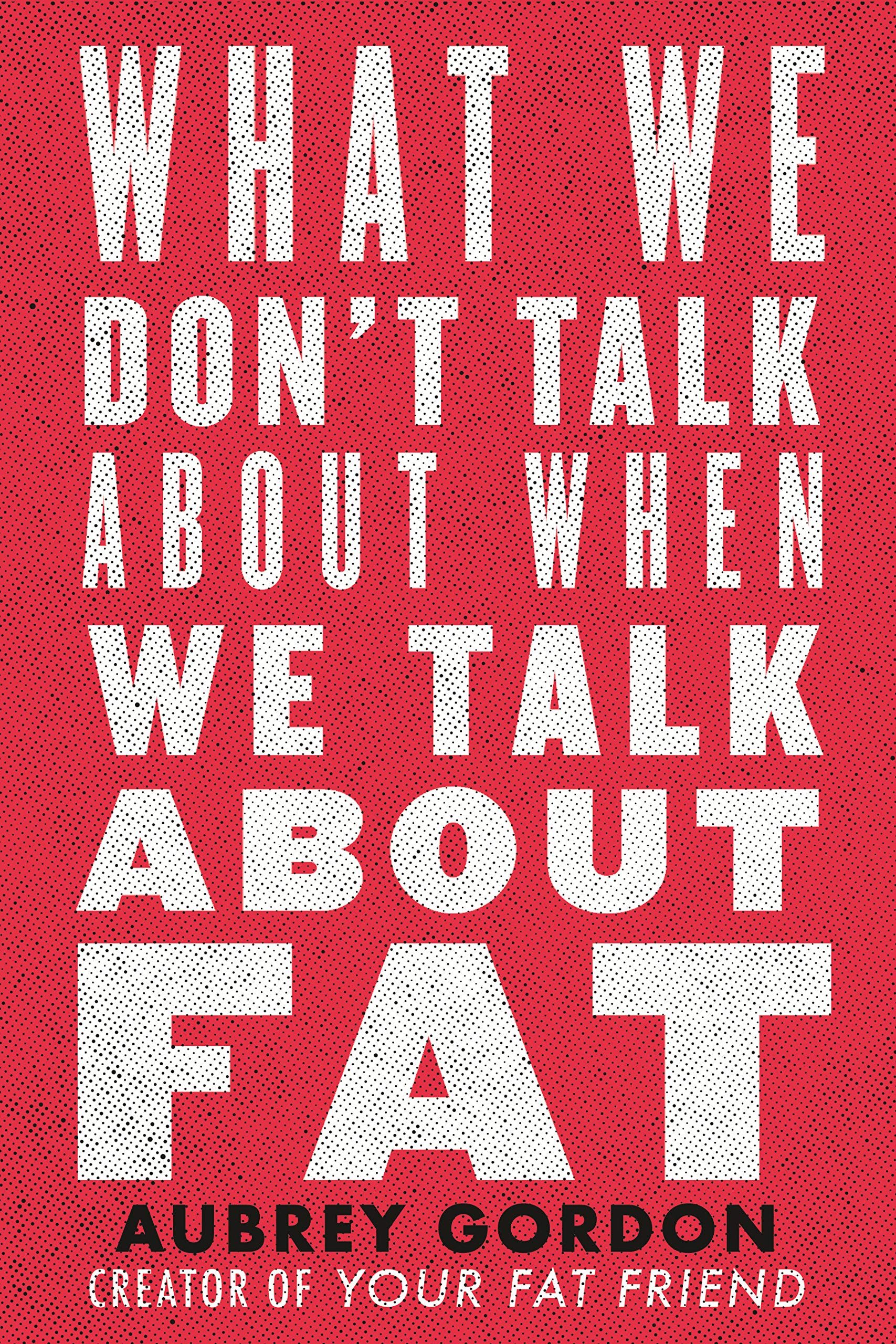
As part of my own engagement with justice this month I have re-listened to the book What We Don’t Talk About When We Talk About Fat by Aubrey Gordon. Yes, the bullying, the fatphobia, the judgement and the treatment of people based on their weight is a justice issue, an issue of human dignity. There are many issues over which people face unjust harassment and disenfranchisement: race, religion, sexuality, nationality, gender, etc. Weight, specifically fatness, belongs to that list as well.
Aubrey Gordon’s book highlights the fatphobia and fat hatred which we in the West have consumed on-screen and in literature, and perpetuated across the generations with stereotypes, jokes and all too often inaccurate assumptions about people’s health, bodies and virtues. The author candidly shares the unprovoked comments received from strangers, often violent, sexual and mean-spirited in nature. She details the humiliation she and others have experienced navigating public transit and public spaces. She shares research on the horrible treatment of fat people in our healthcare system from biased and judgmental medical professionals. When considering all factors of environment, genetics, employment, individual uniqueness, privilege and more, it’s rather astounding that we have allowed such a injustice to pervade our culture around weight and various body types.
I vividly remember boarding a full flight some years ago on which I was seated on the very last row of the plane. As I finally got to the back and and identified my seat I also identified that the young woman who was sitting next to me was of a body type for whom the airline cared not a bit. Those seats are too narrow for me, but this young woman was a shorter and broader body type than I, and not thin. Our author describes in her book the process of trying to draw in and collapse in upon herself in a similar situation, to become as small as possible. I saw that process in the affect and posture of my seatmate, but I didn’t have our author’s words to describe it. The young woman wasn’t smiling. She was trying to mentally disappear, to vanish along with the part of her body which could not help but enter into my seat’s space, space which my own body would try to use to the fullest. I recall feeling so sorry for her as I approached and sat trying to angle my body to share the space as much as possible. At the time I was a bit overwhelmed at how sad she presented, and so I smiled, greeted her, and tried not to add to her misery with my body language or communications. But even as I tried not to add to what she was suffering, I didn’t have a full awareness of how unfair the whole situation was, how truly unjust it was that she should have to suffer it. She was a paying customer, just like me, and as such she deserved better. She was a human being, just like me, and as such deserved better. I didn’t have the words to express my solidarity. I didn’t even know for sure that solidarity was an option. Oh, it is. It’s a necessity.
Fatphobia is part of our reality. Maybe in my own life I’ve used fewer jokes, made fewer judgments and never spoke or acted with the intention of hurting anyone because of their weight, but I do feel called out by the book for not having better recognized the anti-fat humor and hatred which I have consumed over the years in entertainment, internalized and allowed to shape my implicit and sometimes explicit biases. I’m doing the internal work to strip away the years of hearing and holding the myths that fat means things like lazy, stupid, or gluttonous… myths that fat means less worthy, less deserving or less human. It sounds implausible when said out loud, I mean surely we can’t think that way, but the lived experience of people around us show those attitudes and myths at work in our hearts, minds and society.
I don’t know exactly where my own dad bod falls the spectrum of fatness. But for real, click on that link and read the urban Dictionary entry for dad bod… it’s humorous, but also highlights the way privilege, specifically male privilege, can be and is leveraged to mitigate some stigma of weight. Often people of color and other minority groups don’t have any mitigating privilege with which to shield themselves. With my height and build, even though I’ve definitely got a belly on me, I’ve rarely been chided, joked at or harassed about my weight. I certainly have never faced trolling or public disdain from strangers. My doctors over the years have on occasion advised losing some weight, but never refused to explore my full medical situation or dismissed my concerns as simply due to my weight. It’s heart-breaking to hear the author’s experience and to imagine what others have been through.
Privilege comes with responsivity. My dad bod fits. I fit however tightly in airline seats, roller coasters and those flimsy plastic chairs they often put out at weddings and public events. Because I fit in airline seats I am not smarter, more virtuous, more disciplined or more deserving then someone who does not fit. The privilege of fitting comes with the responsibility to make sure others receive access to the same spaces.
I want to be part of a better world, I have to be part of a better world, where people of any and every weight live with full dignity and worth in our society, and don’t have to suffer the violence and hatred of the trolls online and offline. To work for that kind of society is justice work, and it pleases God. I want to be a safe person for my fat friend, not allowing implicit bias and microaggressions in my language or actions to humiliate or devalue them. I owe them that. They deserve that.
Last time I checked justice was not in limited supply. We can pivot our thinking and take our stand against the injustice of fatphobia without robbing energy from any other justice fight. To be just is to uphold human dignity. Let’s be just people. I recommend the book and the work of fat justice.
Be blessed, Rev. Todd
Be Just
This is the text of my October 16th, 2022, sermon on justice based in Micah 6:6-8.
October has been a bit different for us, as you’ve probably noticed. We’ve not used the usual lectionary readings for each Sunday as the first two weeks were Homecoming and then Samaritan Ministries, and now we have another special emphasis for the remaining three Sundays of the month. We’re going to be joining a Diocesan initiative to focus on that amazing passage we read back on Oct. 3rd, Micah 6:6-8
“What shall I bring when I come before YHWH, and bow down before God on high?” you ask. “Am I to come before God with burnt offerings? With year-old calves? Will YHWH be placated by thousands of rams or ten thousand rivers of oil? Should I offer my firstborn for my wrongdoings — the fruit of my body for the sin of my soul?” Listen here, mortal: God has already made abundantly clear what “good” is, and what YHWH needs from you: simply do justice, love kindness, and humbly walk with your God.
Micah 6:6-8 Priests for Equality. The Inclusive Bible (p. 1096). Sheed & Ward. Kindle Edition.
This diocesan initiative would remind us of the centrality of God’s call to us, God’s intention for us, to Be Just, to Be Kind and to Be Humble.
This short passage is one of those amazing passages that comes along in our scriptures and captures our energy and imagination by so eloquently summarizing and encapsulating big ideas in a simpler expression. Let’s run through a quick reminder of who Micah was… Micah was one of twelve of what we call the minor prophets, a Judean prophet who in the style of Isaiah is proclaiming both the coming punishment for the people’s disregard of God’s law, and the restoration which comes after the punishment. These two things alternate back and forth in the text, consequences and restoration. But, what were the sins or the transgressions of the people?
- Chapter 1 mentions their idolatry.
- In chapter 2 it’s their theft of land and oppression of neighbors.
- In chapter 3 they are ignorant of justice and the way justice should work for people, and instead their judges take bribes and their priests and prophets extort money.
Chapters 4 and 5 speak mostly of the coming restoration and hope found in turning back to God in obedience. And you’re probably familiar with a verse from chapter 5, 5:2… “But you, O Bethlehem of Ephrathah, who are one of the little clans of Judah, from you shall come forth for me one who is to rule in Israel, whose origin is from of old, from ancient days.” We hear in it a clear reference to Christ.
When we arrive at chapter 6 God is speaking to the people, asking for their response. And here we have sort of a rhetorical question from the prophet, “What should we do?” We might even hear the question, “What is it God really wants from us?” Do we need to bring sacrifices and burnt offerings? What does God really want? And the answer is given… “Listen here, mortal: God has already made abundantly clear what ‘good’ is, and what YHWH needs from you: simply do justice, love kindness, and humbly walk with your God.”
The rest of Micah’s writing, the rest of chapter 6 and chapter 7 gives one more final round of the people’s offenses like cheating in business, violence, dishonesty, plotting against neighbors and perverting justice with bribes, with the appropriate punishment and then eventual restoration.
Spending time in Micah’s writing highlights the importance of justice that comes up in so many scriptural passages, especially from the prophets. Justice was the will of God and the expectation of God for the lives of people and their society. Justice was the bedrock, the foundation of loving neighbors, caring for the poor and safeguarding the most vulnerable. We often miss it because of the tradition of translators to interpret and translate words differently in version to version in English and from passage to passage, but the Christians ethicists Stassen and Gushee remind us in their book on Kingdom Ethics that the four words for justice in Hebrew and Greek appear across scripture some 1060 times. They contrast this against the main words for sexual sin which appear about 90 times. Because we’ve so often translated those words for justice to righteousness or judgment we’ve made it very possible to miss God’s insistence on justice, on just practices in personal and social life.
We tend to think of justice, it seems to me, in terms of action and consequences, mostly just crime and punishment. That’s been true for my life. We also think of justice specifically in context of the major civil rights movements in our nation’s history and the ongoing work to repair and correct the chronic injustices of our social, political, economic and legal systems. In God’s kingdom, in God’s economy and way of ordering the world, justice does include those movements, and also things like honesty, truthfulness, mercy, hospitality, welcome and mutuality.
Just a quick reminder and overview of what this kind of just living looks like:
1) fields are not harvested for every scrap of produce so that the poor can come and glean the edges (Leviticus 19),
2) the dishonesty of false witness against a neighbor is condemned (Exodus 20),
3) strangers and those immigrating among the people are to be treated as fellow citizens of the nation (Exodus 22)…
When we see God’s intention for our lives and hear the lists of accusations brought against the people by the prophets, we see that this is all about mutuality, seeing ourselves in others until there are no more others, but simply us. Justice is a way of living that welcomes, blesses and upholds our neighbors.
“Injustice anywhere is a threat to justice everywhere. We are caught in an inescapable network of mutuality, tied in a single garment of destiny. Whatever affects one directly, affects all indirectly.”
Rev. Dr. Martin Luther King Letter from Birmingham, Alabama jail, April 16, 1963
Time and again the prophets illustrate God’s anger for people leaving the path of justice, abusing their neighbors and for their dishonest practices, for tearing and destroying that weave of mutuality of which Rev. King wrote. The people have been inhospitable to strangers, neglected the poor and the disenfranchised, and they often have done those things while maintaining a religious front, performing sacrifices and keeping feasts. It’s the situation in Isaiah 58 when God has had enough and is furious about those abuses of justice.
I believe that we’d be fully accurate to define justice as the upholding of human dignity. Justice is the truth of people’s worth and the honest action and speech to honor and uphold it.
And this understanding of justice is not confined to the Jewish scriptures but also all over our New Testament! John the Baptizer’s teachings center on sharing equitably and not cheating or extorting one another. (Luke 3) Jesus taught us the same kind of justice in keeping promises and covenants (Matthew 5), forgiving as we are forgiven (Matthew 6), being the neighbor to those in need (Luke 10), and the intrinsic honesty of our yes meaning yes. (Matthew 5) Jesus condemned the Pharisees and religious elite for choosing to major in the minors, paying so much attention to traditions and rules while ignoring the most important matters of justice, mercy and faith. (Matthew 23)
Justice is central to the will and desire of God for us, and we must own the admonition to do justice, to be just… that is to be honest, true, merciful, aware of the most vulnerable and committed to the common good, and to uphold one another’s dignity and value. We do this with our words and our actions, in our business dealings and our relationships. We make it our goal to promote justice in our society, voting for those who will be just and uphold our neighbors. We demand it of our leaders even as we cultivate it in ourselves. We do this in our communities, like our parish family, sharing life with honesty, mutual concern and care, welcoming one another and the stranger.
Justice as we are taught it in God’s kingdom is what we demand and what we deliver. May God give each of us the courage and strength to uphold our neighbors, to safeguard their dignity and in all honesty and joy take our place in that beautiful woven garment of mutuality. Amen, amen and amen.
Be blessed, Rev. Todd
 toddthomas.net