
Devotional Thoughts
Carrying One’s Cross
Carrying One’s Cross
Luke 9:23-26
Then he said to them all: “Whoever wants to be my disciple must deny themselves and take up their cross daily and follow me. For whoever wants to save their life will lose it, but whoever loses their life for me will save it. What good is it for you to gain the whole world, and yet lose or forfeit your very self? If any of you are ashamed of me and my words, the Son of Man will be ashamed of you when he comes in his glory and in the glory of the Father and of the holy angels.
In Christian-speak there are some very common and beloved phrases. For those not raised in Christian circles the words can be confusing, and even for those raised in the world of church, we can get them a bit confused as well. It seems to me that “carrying my cross” is one of those that is in danger loosing it’s meaning.
I think it happens when we start mixing metaphors in our heads. Jesus said that those who follow him should be willing to “take up their cross” and then follow. Later Paul will write about his “thorn in the flesh” (2 Corinthians 12:6-10) that he has come to view as God’s chastening in his life. It’s a short step to move Paul’s thinking over to the words of Jesus and suddenly have the “cross I bear” viewed as the minor to major irritations of life. I can only imagine that the seemingly flippant references to carrying their cross that some Christians make reflect this mistake. I hear Christians say, “Oh, that’s my cross to bear” and I wonder if they don’t actually mean it’s what they feel as a “thorn in the flesh.” They might be reflecting on a naughty child, an illness or some other frustration of life. To begin gaining some clarity, let’s start by looking at the cross that Jesus carried.
The Cross of Christ
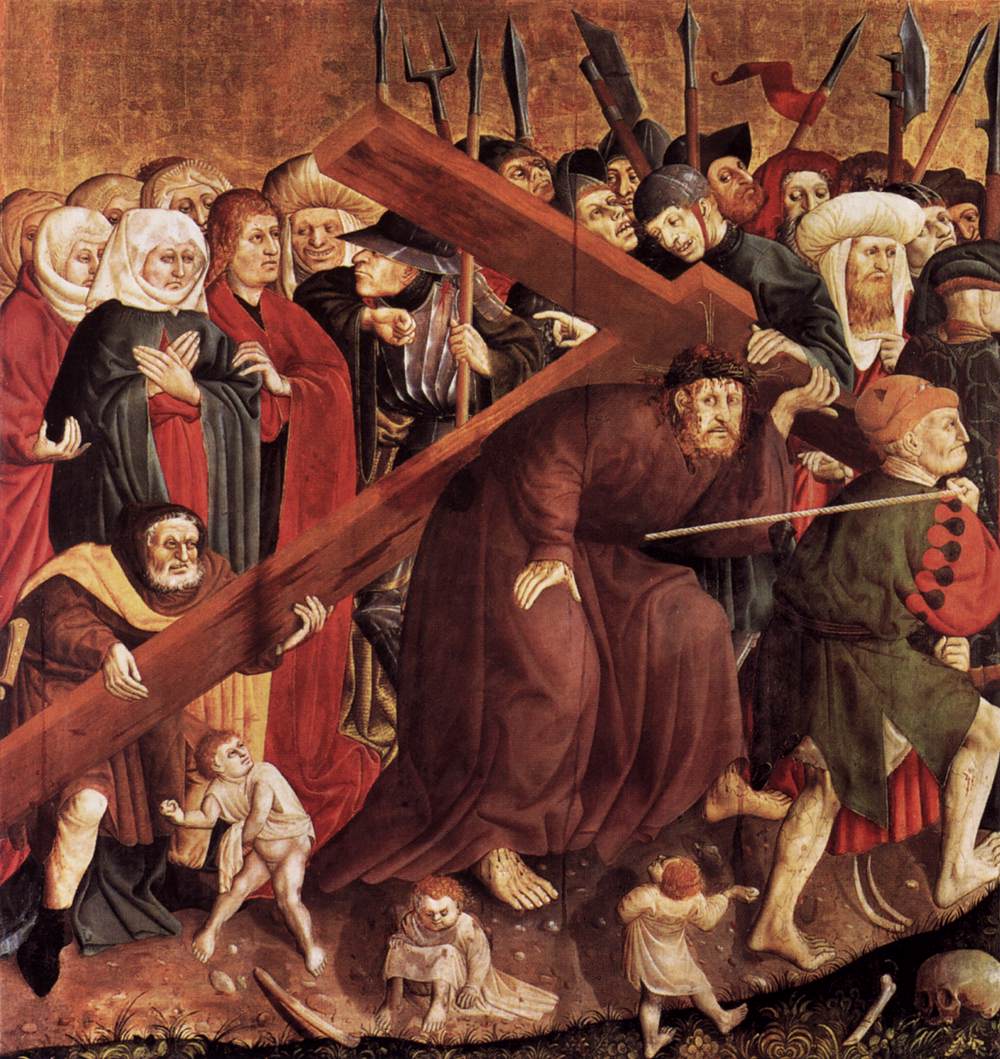
What is the cross of Christ not? The cross of Christ is not a cross of annoyance. It is not a cross of condescending tolerance. It is not a cross of the righteous one’s sensibilities being bruised by the sins of one’s egregious neighbors. The cross of Christ is not the things about our society that I don’t like. It is not the quirks of my neighbor’s behavior that offend me. The cross of Christ is not a President of the other party being elected. It is not my loss of political power. It is not what I don’t like about the world, my neighbor, my workplace, current legislation, my family, myself or my school.
What is the cross of Christ? It is a cross of forgiveness. It is a cross of love. It is a cross of sacrifice for the undeserving (us). The cross of Christ is when Jesus intentionally lost so others could win. The cross was painful, so painful that Christ prayed he not have to carry it. The cross is an intimate view of murders, accomplices, thieves, mobs that called for blood, and of the beloved. The cross of Christ was Jesus daily touching the untouchable, eating with the unsociable, rejecting religious elitism and pride, denying political aspirations, and of renouncing his personal rights.
So then what is the cross that we are compelled to carry? Looking back at the text I believe it is a very personal thing, a very real dying to self. It is a daily thing. It is a decision made day to day to live a certain way, and from the text it seems clear that the “way” is to choose losing as Jesus did himself. The cross we carry is not the secret moral victory that we grasp close our breasts and nurse through the dark nights of the worst the world might throw at us. The cross is the daily decision to deny oneself and move in sacrificial love and forgiveness, sincere love and forgiveness for those who may or may not be at all deserving. The cross makes us look like losers. The cross identifies us with losers. It is not easy. It is certainly not flippant.
Discerning Our Thorns and Crosses
I would hazard a guess that when we make the cross into our “thorn in the flesh” we make the dire warning of Luke 9 become a reality, “For whoever wants to save their life will lose it, but whoever loses their life for me will save it. What good is it for you to gain the whole world, and yet lose or forfeit your very self?” I think that if I make the cross into my thorn in the flesh then I would be placing myself at the center, and I would be deciding that the world’s evils are meant against me. I would run the risk of placing myself above all others in my inmost heart and secretly saving my own self while the cross loses it’s sincerity or even stands forgotten in the corner. In an odd way, I would be making the world mine, and holding it accountable to me, so as to save myself.
Jesus did marvelous things for us when he taught using symbols and metaphors. In Luke 9 he is speaking of his coming death, a physical death on the cross. The cross toward which he walked was horribly real and deadly tangible. Our cross in contrast is a decision of the heart, but may lead to the same very real loss of self in driven service and sacrifice for others. Choosing to carry the cross is less a matter of choosing to follow Jesus as it is an expectation of those who have chosen to follow. By using the image of the cross and our daily choice to carry it Jesus invites us to join him in this divine sacrificial way. And honestly, I can think of few other ideas less suited for flippant usage. Here’s the bottom line for me: It is a necessary step for anyone coming to Christ to move from the personal experience of spiritual salvation and victory in their own life into the spiritual way of service and offering. If I don’t make that move, then I remain a perpetually self-centered seeker of new victories and greater personal satisfaction. Carrying my cross then becomes my banner and slogan of victory instead of sacrificial love and offering of myself.
Though we celebrate the cross of Christ for all it means to our lives and souls, our own choice to bear the cross is no less deserving of some sleepless nights praying in a garden alone. Metaphor it may be, but slogan is it is not.
Three Ideas to Wrestle With
At the end of the day here is “where I hang my hat” as my Texas genetics would say:
1) The cross that I carry is not a test or sign of discipleship. Jesus said that my love for others was the sign of my discipleship in John 13.
2) The cross that I carry is not a matter of conversation. There’s no need to say I’m carrying my cross, it should be self-evident.
3) The cross is not my decision to follow Jesus, it is the reality of my life in the following. The moment I begin to look upon the world from any height of pride, scorn or condescension, I am not looking down from the cross. The divine sacrificial way is one of driven love, of forgiveness, and of losing so that another gains the victory.
Do I have thorns? Sure I do. I lost my hair for one thing. And believe me, I’d probably be one vain son of gun if I had a wavy, handsome quaff. I also stutter. I struggle with th’s, especially when th’s come anywhere near s’s and z’s! So saying “Nazareth” correctly is very hard for me. Not being able to say to Nazareth easily is kinda rough on a preacher, huh? If I’m not really concentrating it becomes “Jesus of Natharess.” We all have thorns, whether in exactly the manner St. Paul spoke of or not, and I’m way more comfortable making jokes about thorns than crosses.
It’s valid to ask if I am just taking time out of the day to condemn or judge someone’s use of “carrying my cross.” Am I just looking for someone or something to peeve about? I’m not really looking to judge as much I’d really like to clarify. I’m less interested in condemnation than I am in reflection. I think that more than ever, as our country truly becomes a pluralist society, we who know the Christian-speak need to stop and slow down, and think about what we are saying and if we should even be speaking at all. Some of our cultural idioms might need some time off, or permanent retirement. Carrying one’s cross is not a conversation, but a way. It’s a needed way to live, love, serve and make an offering of our lives. We owe it to our Lord, to ourselves, and to our neighbors. The world needs us daily taking up our cross, as do our families, friends and neighbors.
Love Wins
 I finished Rob Bell’s “Love Wins” over lunch today. I started it well before Easter, but then we hit the Lenten Season and Holy Week… you know how it goes. So to celebrate a great season finished, Eastertide beginning, and the kids going back to school after a fun Spring Break (WOOT!) I sat down with some Hunan Chicken, my iPad (Nook app) and Bell’s thoughts. I suck at the “simple life.”
Let me just give it to you as I think it is: With “Love Wins” Rob Bell wins.
It’s not a real scholarly read, though I think Bell has done his work in the books. It’s not a theological treatise, though I think it reflects some good theology and theological thinking. And it’s not a big enough book to answer all the great questions it poses or all the choice questions it makes you come up with on your own. And that’s a good thing, really. All in all, it’s a win.
And the critics? The ones who jumped to condemn Bell before the book was even published? Shame. Shame on them. Now that’s not to say that you have to agree with everything that Bell says or concludes. I don’t really think Bell expects all of us to agree. But it’s partly because of the divisive and judgmental voices like those earliest critics that I think Bell wrote this book. Those sometimes mean-spirited voices are often the ones framing our narrative. They are often the mixed message of love and grace until you are found wanting in some area of thought or theology, and then it’s the guillotine, baby! And yes, I spelled guillotine without any help from my spell-checker!
What is Bell trying to do? He’s trying to help us make a coherent narrative of our faith, our scriptures, our hopes and our fears. And he’s doing it in the middle of a highly connected, pluralistic world scene in which the predominant “belonging system” model of faith has not always prepared us to exist and contribute.
Do I agree with Bell? Pretty muchly yeah, I do. ‘Cause I’m very comfortable with the Cosmic Christ stuff from Fr. Rohr and I always side with C.S. Lewis on matters of substance. And because I am not terribly happy with the limitations of the belonging system faith we so often give lip service to while quietly hoping for something more, something bigger and something gorgeously unexpected.
Thank you Rob! Nicely done!
Looking forward to WILD GOOSE 2011!
 Almost two years ago I’m at a conference in Albuquerque, NM, and I hear a dream being described for a festival built on the idea of allowing streams of life like art, justice and faith to freely create a nexus point, an intersection of creativity and action. Really, they had me at the word festival.
Festival is a noun that the esteemed Merriam and Webster say means “a time of celebration marked by special observances, a feast, and an often periodic celebration or program of events or entertainment having a specified focus.” (Pulled right from http://www.merriam-webster.com!) My imagination immediately presented me some mental images of a feast of art, an observance of justice and a celebration of what happens when we give free reign to those streams to mingle and dance together creating new things. I wanted to be there to see that, to hear that, to taste and hold it.
I volunteered to keep in touch with the dream and friended the fledgling Facebook profile, and I began to dream myself of the coming feast. Today I’m a part of the planning to make art happen at the festival. We are dreaming of canvases and paints, clay and paper. We will use our creativity to vision changes in ourselves, our communities and our world. We’ll bless the land and the people which play host to us in the four-day feast.
Making art is an a tangible expression of the spiritual streams running through our hearts and souls. Making art is presence. Whatever your past experience of art has been, we will help make an exercise of creative expression very accessible for you. This won’t be a time for seeing who is an “artist” and who isn’t, but it will be a time for each of us to dig deeper into the creative veins which God has implanted in all.
I can’t know where your hungers are or what kind of feasting you need. But I know that tables are being prepared for us. We will sit down together and share a rich fare as our faith, our dreams and needs for justice, and our creative hearts all come together for a few days in North Carolina. And if Merriam and Webster are correct, this will be just a beginning of a many more feasts to come and we make a community chasing the Wild Goose and making time together for years to come! I hope to see you there!
Dreaming dreams… I’ve often not dared to share…
Within the next few days I am going to share one my dreams with you. It might border on being a vision, I’m honestly not sure. But what I do know is that it has been with me now for about five years, a constant companion and sometime topic of conversation. I’m going to throw it out here in the next few days, and ask you to help me make some decisions which I have avoided making about it.
Before I do that, I thought it might be a good idea to tell you a little bit about the way I think. As I have moved through different ministry potions and jobs I have often struggled with the nature of my work. A pastor’s work is varied to a ridiculous degree… I am an amateur website builder, public speaker, office manager, vision caster, attendance taker, janitor, spiritual guide and the guy who fixes toilets. Since coming to Bethesda I’ve also sometimes been a landlord, cut the grass and played the ukulele in worship.
I’ve struggled to build a framework for myself as a person and a professional that allowed me to do much needed and healthy self-reflection. Really, if I am slipping in one area or catch criticism in one aspect of my work, I can always point to numerous other areas in which I’m doing great work! “I really busted a move on that downstairs toilet!” A helpful model of self-evaluation is critical for self-qualifying and quantifying my work.
What I have landed on is nothing new, and certainly not a magic recipe for anything. It’s just my little framing, and you’ll probably find it both obvious and simple. I think of three things when I self-reflect, three questions: Am I… 1) doing what I ought to be doing in this time, 2) being what ought to be in this time, and 3) leaving anything good in my passing through these days and this life? You might think of it as Do, Be and Gift (“gift” being a way of saying “produce” that has some beauty to it).
The subject and substance of my next blog entry, when I open up a dream of mine to you, is more about the gifting part of all that fluff I just unloaded on you. More than my legacy, but my gifting to my species and planet, to my God’s Kingdom and Will. Some of you’ve heard me speak of it, but most haven’t. I have been afraid to share it often or well. I feel it’s bigger than I am, and that scares me. And honestly, I usually answer the doing and being questions more quickly and easily than the gifting question. So I’m going public with it… and I wonder if there will be people willing to hold me accountable for having had this dream.
Oh, and I’m not being dramatic with you. I just know myself. Sloth is a deadly sin for a reason. And I have battled slothfulness my whole life, and still do today. Bringing my dream out in the open might force my hand to deal with it, and either put it to the test or to bed.
So, long story short… I’m throwing you a piece of my dreaming real soon… watch out!
Some thoughts on Emergent Church…

I’m planning to come back to some more thoughts on preaching, but since my brain tends to bump and jive between multiple threads (not necessarily a good thing), I’m going to share some thoughts on the whole “emergent” church stuff first, or “emerging,” or “emergence,” whatever.
Honestly, too, I’ve lately not only had some questions put to me about it, but I’ve also read a few things that I only marginally thought had merit. Also, I’m surrounded by a church family, many of whom are new to the vocabulary of emergent and find themselves where most of us find ourselves, when painfully honest… that’s an exercise of defining emergent for myself, because we each have had a varied introduction to, experience of, and history with emergent church friendship/conversation/aspiration.
Here’s a couple of things you should know about me, in case you’ve never heard me say them out loud: 1) I self-identify as a pastor of an emergent church, 2) most of the folks in my church family are versed or becoming versed with things “emergent,” and 3) I in no way consider “emergent” to be a denomination, affiliation or even much of a genuine modifier past my own set of thoughts and definitions.
I was at a little conference hosted by our Disciples of Christ sisters and brothers in DC back in 2007 and heard Tony Jones try to share a metaphor with folks about why emergent is not a denomination, or even a reformation movement, but simply a survival move that has resonated with a lot of people. He said that he and his friends who kick started what we now call “emergent church” simply jumped ship from their Christian traditions into spiritual life-rafts in an effort to save their own faith. But amazingly, as they paddled away in their life-rafts they heard the splashing and calls of all the folks jumping ship after them and hoping to also salvage their own faiths.
That resonates with me. I was at a place where my own faith had become sullen, caged and dry. Because my church tradition was wrong? No. Because my church tradition was stupid or bad? Nope. My faith was in jeopardy because my church tradition simply didn’t have the built in receptors for a person like me. (I mean “receptors” like when certain proteins or viruses are made to connect and join together.) There were no places of safety for me to ask my questions. There was no value placed on diversity of thought or expression. So, as an individual human and as a follower of Christ, as I began trying to unpack certain parts of my life and faith, I found mostly only confusion and hostility.
Was it because I’m a “post-modern?” I suppose partly. Was it because I’m a “rebel?” At one point, yes. Today? Not so much. Could I have stayed in my tradition and made a place for folks on a spiritual journey like mine? I could not have stayed. Some of my friends who are kindred spirits have stayed, and I respect that. For me, survival meant moving on.
So, back in about 2003 I read a little book by Eddie Gibbs called ChurchNext about why we needed missionaries in America again, folks who are tooled to re-deliver the gospel in new terms and models. As a trained cross-cultural missionary, this woke me up and put words to many of the thoughts and questions with which I had previously wrestled. It also laid the ground work for me to pick up my first Brian McLaren book, More Ready Than You Realize. Brian started filling in some the terms and frameworks that I needed to find my new way of faithing. That help ultimately culminated in his Generous Orthodoxy.
More authors followed: Darrell Guder, Doug Pagitt, GK Chesterton, Richard Pascale and more. Ultimately, I found ways to express my yearnings and fill in some of the blanks… and that is the foundation for our church family in Bethesda right now… and so we are arriving at a few of my thoughts on what emergent church means to me…
Emergent gives faith a fighting chance against certainty.
That’s right, I don’t think faith is simply holding a certain set of theological definitions or affirming certain doctrinal statements. Faith is something other than certainty. I can’t believe that with all the scriptural witness to what faith is, we have so often made it an answer instead of a question. Faith is hope. Faith is yearning. Faith is trust. Faith is appetite. Faith needs to move and live and breathe. We try to make faith into the acceptance of a method and form like the four spiritual laws (easily distilled to a tract, pamphlet or sermon). We try to make the scriptures answer all our questions so that we can construct a base of certainty. We try to make a hermeneutic that can help us navigate and subdue the Holy Scriptures of our “faith” and leave no questions in doubt. Can we have faith without doubt? Really? With certainty in place, we’ve no need of faith.
Well, I found my certainty system to be severely lacking. I’ve probably investigated and found yours to be lacking, too. What I love to read about these days is your faith. I want to know how you hear God and touch the divine. Without the certainty crutch you can become frighteningly mystical, and that is necessarily a good thing. I want to hear your doubts, and how you grapple with a God who is wrapped in the deepest mystery and yet also is claimed to have walked in human flesh. That’s a God worth my time. That’s a God who defies my pamphlets and snorts when I talk about my awesome theologies. That’s a God who calls all people, for that’s a God able to wrap around all kinds of people, I hope, I trust, I faith.
Emergent gives diversity a fighting chance against conformity.
So, did I run into trouble in church because I’m a “postmodern?” Yes, I have to admit that I did. My value system just can’t support a communal structure that enforces conformity. I also can’t abide in myself an inauthentic acquiescence that screams hypocrisy from the depths of my soul. Sweet grief, I can’t even abide the idea that you’d agree with everything I’m writing and be thinking just like me! What kind of screwed up world would we have if we all thought alike? Diversity is the core of imagination. Diversity is the foundation of innovation. Diversity is flavor and color. Diversity is needed for mental, intellectual, emotional and spiritual health. When a faith system or church tradition loses diversity or moves to quell diversity, it becomes inert, that is without internal and vital motion. The same is true, I believe, for a single human soul.
Members of our church family in Bethesda claim many church traditions and often still self-identify with those traditions. And that’s awesome! We’re not post-denominational, we’re pan-denominational, or I usually say “multi-denominational.” So, my messages on Sunday mornings often have more to do with what someone might go make of my sermon ideas than what they’re supposed to agree with me about. Ergo… sermonizing as “Here’s an idea/image in scripture that I think we need to fashion a response to; Now what might that response be in your life, or our life as a worshipping community?” Diversity is fertile soil for growth.
Emergent gives a relational, gracious community a fighting chance against earned acceptance.
Let’s face the facts. If I am to be me, I’m not really welcome in very many congregations. One of the hardest things for me in my earlier years of ministry was the recurring fights and arguments with church leadership. Often, I would have taken so much time to tailor my words and finesse my communication to be non-threatening, but still end up with horrible things being said to me. I would think I had come up with the most innocuous way to say something, and then BOOM, I’d blow someone’s world apart and off we’d go down the rabbit’s hole. It took a few years, but I finally figured out that it was me, ME, who I was and how I thought was the problem. And I couldn’t just stop being me. I have tried that, by the way, and seen others choose that path, and it leads to spiritual death.
We have to relearn how to practice a very authentic and whole-hearted welcome. We have to relearn how to love each other whether we agree on some things or not. People, including ourselves, must be able to walk into the life of a faith community with a full, intact and immediate worth and dignity. If we withhold that on any basis of merit, we have sinned, and sinned mightily.
We’ve spent to much time deciding and communicating who wasn’t welcome. We’ve spent too much time “protecting” the church to let it be porous enough to admit some of the most needful folks in our society and some of the folks we’ve most needed among us. In our rush to certainty we’ve forgotten to trust God. In our unreasonable fear of God and of messing up that solid base of certainty, we’ve not allowed ourselves to love as God loves or risk ourselves as God so amazingly risked personhood in the life and death of Jesus who was the Christ. Walled-in communities and souls risk a death of stale inertness.
I never thought I would say this and really mean it, but I would so attend worship with my church family, even if I weren’t their pastor! I love those folks! Man, some of them are screwed up, almost as bad as I am! Some hold political opinions or theological ideas that scare me, really. Some can’t sing on key and some truly share nothing in common with me. I love them all! They love each other. It sounds stupid and fake, but we have to love each other. You don’t come to us to have your belief/certainty system validated! Truth is, it’s our love for one another and for God that allows transformation among us. It’s the tension of our diversity that fires the kinetic joy, peace and imagination among us. We practice an authentic welcome because we each depend on it and need it so much.
Wow. This is a long post. And it only has three thoughts in it so far. But I have to lay just one more out here, before I chicken out totally…
Emergent gives dynamic, “becoming” faith a chance against a completed, static system.
I was once asked if I didn’t think the scriptures provided a complete “Christian Worldview.” My answer then, as it is now, was no. What I felt I was really being asked was if I couldn’t see that the Bible gives us a single answer to every moral and ethical, methodological and theological question which confronts humanity in each epoch, place, generation and situation. My answer reflected my belief that we are not ultimately called to parrot doctrinal and moralized statements generation after generation, but called to be thinking, processing, growing agents of eternal life. If calling faith “appetite” didn’t make you grimace then the implications for church of that last little ditty should have. My humble opinion is that our loss of becoming, our loss of identity as contemporary agents of eternal life, is why so many church buildings stand empty today and why so many congregations devour books on how to keep a dying congregation alive. We’ve traded off an amazing invitation to become something for the consolation prize of belonging to something.
If we aren’t allowed to “become” church just like the lucky folks living in 70A.D. or 325A.D. or 1500A.D., then we become the simplest minded, however clever, copy-cats the cosmos has ever created, and most of the unbelieving world’s criticisms of us become well-earned. For some of you, I just stopped being a “Bible Believing Christian” because I thoroughly undermined the authority of scripture. All I can say is this: I love, cherish and cling to our scriptures. They guide me, admonish me and uphold me. I love our scriptures and the community of souls whose story they share and invite us to be a part of… but I don’t worship the scriptures or follow them in place of a living God. Fact is, it’s in the scriptures that I see the call to become.
Now, if we are allowed to become, then it’s an imperative that we hold to faith and love, without which we fracture in our diversity and lose touch with one another in a hurry. BEWARE: What I become may not be what you need to become! The scariest things for me to hear is someone saying, “We’re the only true emergent blah, blah…” or something like that. Go catch the wind and put it in your pocket, my friend. “Emergent” is not what we are becoming. “Emergent” is not just a new way of conforming and belonging. What I am becoming, what you are becoming, that’s all God’s business. And the day that “emergent” stops facilitating that becoming, I’m moving on, I promise.
Emergent stuff is a dangerous game we play, as dangerous and threatening as any relationship we’ve ever pursued with another person, but the rewards! The joy of the kind of community and running with God that this emergent conversation, friendship, and aspiration has afforded me! It’s been well worth every momoment.
Prayer Stations in Our Worship Experience

It dawned on me after writing yesterday’s post that most folks don’t have “prayer stations” in their worship experience and might not really have a ready mental image or knowledge of what I’m talking about.
Firstly, cool. You don’t have to have prayers stations. No one has to have them. We do, because we find it helps us 1) to move around in the worship time, 2) to have some tangibles surrounding us when we deal with big life issues, and 3) to add a dynamic of experience to something that is too often just observed and/or heard. All three ideas are interrelated.
We believe it’s good to move in worship.
That’s not to say I didn’t grow up moving in worship services, but it was usually just things like, sitting, standing for songs, passing trays during communion, etc. Some of you added clapping and even a little dancing to that list. Others of you grew up with the word “Spirit” being a verb and you don’t need any convincing of movement’s worth. On a weekly basis at CiB we try to move. We have the old-school church building with pews, but we don’t let them corral or contain us. I enjoy the practice of walking forward to receive communion. We usually practice intinction as our communion method. (Intinction: tearing away a piece of bread, dipping it in the up and eating.) I also love the sharing nature of one person serving another the communion elements. Each Sunday we are practicing active service. I love to say or to hear words like, “This is the Cup of Salvation.” Most Sundays we simply call for volunteers to come up and serve… and they come, younger, older, male, female.
So communion is truly a journey for us. We move forward to receive the bread and cup, and then we begin to move through experiencing and exploring the “stations” that inhabit the Sanctuary. There are almost always candles to be lit in prayer. We have kneelers in a quiet corner where we practice different postures of prayer. Then we have a variety of stations that invite action, writing, contemplation, service, or some other mode of addressing God’s presence in our lives. For a couple of months in 2009 we had a “vineyard” with soil, flower bulbs, painting, grapes to eat, and much more. Get moving, get the blood flowing… it helps the heart and the mind!
We believe that people need tangibles.
Let’s face it, one of the hardest things we do is often bringing our hopes, faith, desires and passions into real life. We struggle to translate our ideas and ethereal faith concepts into action. So, when it is difficult to pray, light a candle and let your soul dance for God with that flame. Scripture assures us that God’s Spirit dances and prays with/for us. If we talk about the “soil” of our hearts, why not feel the dirt in your hands and see the stones that must be removed before planting a garden? Why not eat some grapes or taste some more bread when talking about “fruits” and the “Bread of Life.” Take the time, while you’re in worship and gathered with your church family, to do some small action of service or ministry for someone else. “Taste and see…”
If we are wrestling with concepts that we want to have an impact on our daily lives, then it can only help to add a dynamic of the material life into which God has made/placed us. I’ve watched many churches move in some new directions in the last couple of decades, adding new elements like dramatic skits, videos or more lively songs, and many pastors have discovered the power of visual aids. (Visual aids have tended to be items in hand, on stage, or most of what is projected at some churches during the sermon time.) And truly, visuals are powerful. I’m excited that so many churches are doing this, because I feel it is part of a recognition that people need more connective buy-in and sensory engagement in worship. The only caveat I have with all those innovations is that they tend toward just being more observation. Those things are often tangible, but still at some distance. What a great segue paragraph (I said these are all interrelated)…
We believe that participation is more than consenting observation, but should include a more complete sensory experience.
God gave us many senses, but honestly, we’ve tended to prioritize them in worship services and ignore some. God worked to provide us with a great collection of experiences… circumcision, baptism, communion, voicing song and scripture, “holy kisses,” etc. We’re given hands and feet and eyes and ears and nerve endings, olfactory senses and taste buds. We’re asked to do things like follow, “walk humbly,” offer cups of water and “build houses on rock.” Let’s revel in that! The scriptural idea of fearing God is not a fear of accidentally over-worshipping or being too present and experiential of a God just waiting to slap us down. I believe it’s a deep, abiding, humble, reverencing, driving, seeking-while-fleeing, burn in a soul that knows what it is to be loved. The love of our significant others is often frightening, and God’s love is big enough to be downright fearful. Reverence doesn’t necessarily exclude dirty finger-nails, wet paint on canvases, or rubbing shoulders at a prayer station of service. We’ve long been asked to consent to belief, and now we’re discovering that there’s also value to an active experience.
One of my greatest joys is when people come to me to share a good experience (feeling, insight, thought, conclusion, vision) that they had from visiting a prayer station that was not part of the experience I, as it’s designer, intended them to have. Be ready for God to use these stations and teach you a thing or two!
Any there some tips or practical advice for the whole prayer station exercise? Sure there are! Here’s a few:
- Don’t do this to be cool. Do this to better engage the things of God.
- Do this prayerfully. Bathe this stuff in prayer before, while experiencing, and after the experience.
- Don’t mandate this on your people. A lot of folks get scared and angry when surprised or confronted with the unexpected. Use a lot of grace with this stuff. Lead into it yourself. Talk about it before throwing people into it. Tell people some of what they might expect to find or experience in it. Share why you’re doing it. Even still, some folks won’t ever go to your prayer stations, and that’s ok. If they aren’t ready or willing, that’s fine. Don’t forget that they don’t have to do this.
- We always play music while in the communion time and time of experiencing the stations. That music is usually canned, sometimes performed live, and always helps fill the space and time.
- We do this during our communion celebration because we’re already up. If you try this as a stand-alone part of worship, then expect some time to be needed (or even resistance) for people to get up and get moving.
- Be meaningful. Let this inform your people.
- Don’t overdue one idea. Ask for input and invite others to help you develop creative ideas and implementation.
- Do this because you love your church family.
- Expect that this, as with any new practice or experience, will have to grow and gain momentum. It takes time for a community to fully embrace and grow into new methods.
- Don’t be overly discouraged by a “failed” station. Not all your ideas are good. Not all my ideas are good.
What would you add to all this?
Oh, here’s a document of notes I made a while back about “Experiential Worship.” I can’t remember what all I wrote (it was for a presentation to some colleagues), but there might be something in it of value. Surely there are some good thoughts and ideas I haven’t had or shared? One of the things I’m working on for 2010 is a good, internet-based way to broadly share things like prayer station ideas and inspirations… shared creativity is awesome!
Practicing Ministry During Worship Services…

I have meant to write something about practicing acts of ministry during worship for a while now. At CiB we like to often use our time together in worship services to bless others… usually we choose the children and families at The Children’s Inn located at the National Institutes for Health. We incorporate two things: 1) our use of prayer stations, and 2) their practice of “thoughtful treasures.”
We always have prayer stations set up during our communion (eucharist) celebration and our folks move around through them after receiving the bread and the cup. These stations are meant to facilitate prayer and action, often helping make the things we are talking about a little more tangible and present.
The Inn has a program called “Thoughtful Treasures” wherein each child gets to open a personal mailbox each morning and starts that day with a special treat before all the routine and often painful medical appointments and regimens of the day get going. Many folks and organizations in our area help supply those treasures.
So this last week we prayerfully put notes of encouragement on candy canes, about 90 in all, at a prayer station. Next week we’ll be assembling jingle bell necklaces while we pray for the kids and their families. The candy canes were simply decorated with a mailing label wrapping around the stem which read, “We’re praying for your holiday!” and included our church family’s logo. Often our efforts are “small,” but intentional and uplifting for the recipient.
Other ministry activities we’ve practiced have included letters to encourage orphans in Sudan and letters and cards to our sick members or friends. We’ve also written notes of appreciation to one another, or maybe a coworker or a family member. Ideas for what we do flow from the pastoral staff as well as others in the congregation. The practice fits with our desire to begin enacting the grace of God in tangible ways at all times. And I’ll tell you from experience… this is not a put-off for visitors! Typically, they join in and love it!
I’m sharing all this because I’d love to know what you folks are doing out there… let’s share ideas and inspirations. I’m only positive of three things: 1) we’re not the first folks to do this, 2) we’re not the only folks doing this, and 3) we won’t be the last folks to do this. Share some ideas and practices you are loving to be a part of!
Christians Being Rude…
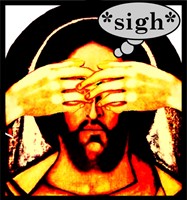 I recently threw out a tweet that also went to my facebook expressing my shame at the actions of some Christians a few weeks back who felt it was somehow in the Spirit of Christ to go disturb their Muslim neighbors who had gathered at the National Mall for a day of prayer. While the people tried to pray, some stood to the side with bullhorns and tried to “evangelize” them, and then got in arguments with the DC police. Sheesh.
Really, that’s who we are supposed to be? The persecutors? We somehow have been granted the licence to rudeness? Really?
So, I went to my Sunni next-door neighbor and apologized, even though he wasn’t there that day. He was so great. He said something like, “We know all Christians aren’t like that.” He then looked over my shoulder to the view of my church building down the street, and he looked at the Presbyterian church across the street, and turned back and said something to the tune of, “My wife and I are so happy to have the churches here so close, we feel it is a sign of peace for us.” Sorry, it wasn’t a news interview so I have to do some paraphrasing.
I also spent some time trying to find an email for the fella who planned the whole prayer event at the Mall. I finally found one and sent him an apology, as a local Christian Pastor who was embarrassed by the angry, rude Christians. I wanted to share the reply I received yesterday, because I thought it was very gracious…
“Dear Reverend Thomas,
Thank you very much for your kind words and prayers. We did receive opposition from Christians but it didn’t prevent us from having a most wonderful prayer service on Capitol Hill. We prayed for the good of America, for all people of all races, religions, etc. Many of us who participated were born in America. We deeply care for and love America.
Take good care and may the peace of God (the one creator) be with you always.
Peace and blessings,
Sayydah”
There’s no doubt that there are Muslims in the world who don’t love America. Heck, there are Christians in the world who don’t love America. And I’m not going to jump onto a bandwagon of condemnation for the Christians with bullhorns… as I recently heard the late, great Rich Mullins say in video, “I’m not saying they’re bad, they’re just wrong.” Scripture directs us to be the righteous ones, so that observers have no true basis to make derisive remakes about our behavior. Scripture also says that our anger does not accomplish the will of God. And common sense says that interrupting someone else’s prayer does nothing to help my prayer.
So, I’ll just close with sincere apologies to the artist of the icon with which I took certain liberties when trying to do something visually clever for this post. Sorry, my friend.
it’s the incarnation, baby…
 For several years I’ve made statements like, “My theological gravity well is in Eastern Orthodoxy…” and I did mean it, but I’m really only now discovering what that really means to me.
I have loved the Orthodox emphasis on the incarnation and the deep incarnational theology for a while now, though I would hazard to say that I’m just beginning to identify an internal shift within me to feel the significance of the incarnation and what it means to see it as what I will call the “hinge” or pivotal moment of the scriptural narrative.
As the vast majority of Western Christians have, I have always operated my faith and life in relation to the crucifixion being that pivotal moment of the biblical narrative. The Orthodox however choose the incarnation as that point, and it’s finally gotten down into me.
You see, it changes things when you make these kinds of shifts. I am not saying that the crucifixion is not a hugely meaningful and important event in the narrative. I believe it happened, happened as scripture tells us, and it had deep significance for our faith and life. I’m not even trying to convince you to think as I do… the last thing I want is some kind of fight over who’s got the best hinge passage or story.
But different things take on different hues and natures as we shift from one focus to another. For instance… God’s love, care and concern for all of creation become so much clearer and real when the event of God’s arrival is loosed to be the clarion call of our salvation, a salvation we share with all things created, not just human souls. Stop and recall that we read “For God so loved the world (kosmos)…” There’s more than a small problem with our crucifixion-heavy view of narrative which allows us to unthinkingly interpret that to an exclusively human experience of “For God so loved us…”
And it feels right to fully rejoice with the scriptural writers that “Word became flesh…” and “Now God has spoken to us through his Son…” and that “He humbled himself, taking the form of a slave…” The good news of Immanuel is self-evident and really doesn’t need too much explaining, “God is with us.”
A few weeks ago at CiB we made an attempt to capture gospel or “good news” in a way that we could live it and share it with our neighbors… we tired to gain a hold on the essence of the good news. What we landed with were three big ideas that we’d like folks to experience: 1) God is real, 2) God is near, and 3) God is love. That is the story of incarnation, the story of our salvation, in three terribly simple sentences. It’s a reflection of a titanic shift (hinge) in the biggest story of all, the time when God drew near.
Humanity and the Environment…
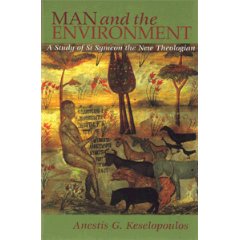 Well, I’ve been working thru “Man and the Environment: A Study of St. Symeon the New Theologian” by Anestis G. Keselopoulos for a few years now. I will look in and read a little, then forget it, then find it again and try wading through some more… but today I decided to take a far less linear approach and start moving back and forth thru the book trying to grab some of the big ideas and only dig into successive paragraphs when needing more detail or illumination… and I feel like Anestis and I are getting something done… finally.
Here’s a quick rundown of what I’m taking away from St Symeon’s work, seen through Keselopoulos:
1) We have a real problem in the western dualistic mind as it leads us to be wrongly antagonistic toward matter. We’ve tended to view humanity as spiritual beings trapped in matter instead of whole beings intended, in fact created by God, to be beings of unified spirit and matter. This dualism and it’s subsequent antagonism leads us to subordinate the inferior matter to the superior spirit, thereby devaluing matter and all created things, even functionally separating matter (ultimate nothing) from God (ultimate everything).
2) Now, out of this functional separation of creation from it’s Creator (except as an object lesson every now and again for beauty), we have a free hand to develop any and all technologies or uses of matter regardless of their negative impact on creation. I think this is where some of us will actively be abusive of creation (both our own bodies and the created world around us), or we’ll be fairly apathetic of the abuse happening around us. We then are free to exercise a “domination” over creation that has no understanding of our shared essence or responsibility toward creation.
3) Christ came at a time when many had abandoned a true understanding of nature as a reflection of the Creator, and they had turned to worship the created out of that disconnect. We have not gone that way today, but instead I think many of us have such a morbid fear of somehow worshiping creation that in our separation of the created from the Creator we “ultimately denigrate” it instead of “ultimately deifying” it. So, anyone today who speaks of the connection between God and matter/creation, or of our responsibility to creation and matter as the people of God, intended to live a unity of spirit and matter, runs the risk of being called an idolater of the world who has forsaken the highest spiritual matters before us.
These things are running through my mind right now, or maybe I should say, running roughshod over my mind. I am very appreciative though of our Christian tribe having a deep and long non-dualistic tradition that becomes present and timeless as we continue to struggle through a epoch in which so many Christians have lived a life built on shaky premises such as “This life is just a dress rehearsal for eternity” or “It’s all gonna burn one day anyway.” We exist in a “now” that engages us in an exciting, dynamic and God-intended present existence, not only a hopeful future one.
 toddthomas.net