
Civility
Nov. 5, 2013 Civility in Xian Scripture
 November 5: My anger is not a “spiritual gift” or any kind of gift from God.
James 1:19 & 20, “My dear brothers and sisters, take note of this: Everyone should be quick to listen, slow to speak and slow to become angry, because our anger does not produce the righteousness that God desires.”
I won’t beat this one too long today. Let’s just accept the premise that James gives us that our anger is not productive, not in God’s kingdom. So much incivility flows from our anger. It comes from our hot, burning anger in the intensity of the moment, and from the slow burning rage that simmers and consumes. Neither bring about the right-ness that God desires.
I’ve known Christians who seemed to think that their anger was a spiritual gift and a necessary tool of the kingdom, and they gave their anger full rein to run and romp. Crap, I’ve been that Christian. Who doesn’t like to burn with a little righteous indignation? Sometimes it is a legit response to evil. Sometimes it’s more of an addiction to the the adrenaline coursing through our veins. Sometimes it’s a sweet balm for our bruised ego.
We too often embrace our anger. It feeds our ego. It fires our imagination. And though embracing the anger might do well for our favorite superheroes battling evil in their comic book and cartoon worlds, in our world, it kills and stunts us. Anger itself is not the problem, as we all feel it sometimes, but it’s letting the anger guide us that causes the trouble. Scriptural voices are really clear on this… Jesus says that our anger leaves us subject to judgment (Matthew 5:21-24), and Paul warns against letting anger lead us into sin and letting it grow over time (Ephesians 4:26).
We have to put our anger aside. It’s not a tool, a gift or a strength. James connects it with too much talking and too little listening. So let’s shut our mouths, open our ears, and let go of the anger. If we seek God’s righteousness, anger is not the ride that will get us there. Civility and so much more suffers in the face of our anger.
AMDG, Todd
Nov. 4, 2013 Civility in Xian Scripture
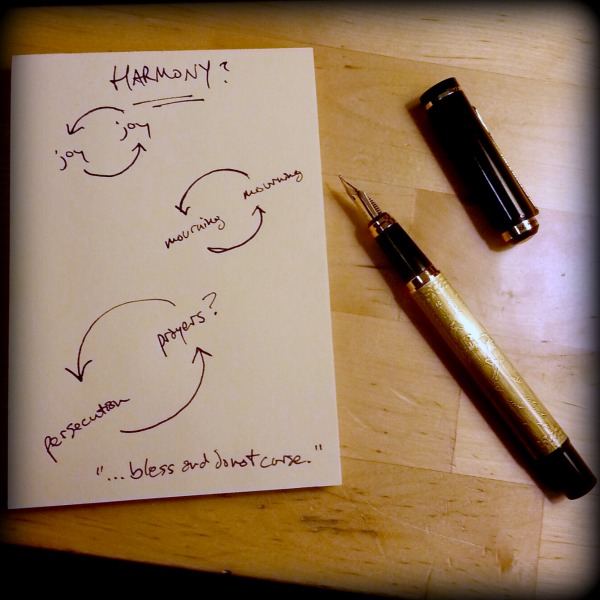 November 4: What is my way? Do I follow a way of cursing or a way of blessing?
Romans 12:14-16, “Bless those who persecute you; bless and do not curse. Rejoice with those who rejoice; mourn with those who mourn. Live in harmony with one another.”
St. Paul seems to believe that there is a harmony that exists outside of conformity or agreement, revenge or vengeance. In the face of those who disagree with us, even violently, Paul’s calling us to harmony. If Jesus hadn’t already presented us with the blessing of the peacemaker and the idea of not having enemies, I might just not worry about Paul on this one. But as it is, he’s following the lead of Jesus.
Harmony. What is a harmonizing life and behavior? In Paul’s view it seems to include an intense awareness of the other person and a response to them that meets their best interest and needs. So if the other is happy, be happy with them. If the other is hurting, hurt with them. If the other is attacking you, look into their situation and see their hurt, their pain and their need, and lift that in prayer. I’ve heard several wiser people than I mention the principle that “Those who cause pain do so out of their own pain.” Seeing the offender’s hurt is a needful step in responding in a way that might lead to their healing, and my truest healing as well.
Empathy seems to be a fundamental need of civility. We must learn to see the other and truly recognize where they are coming from and where they are going, otherwise we are just going to keep speaking out of step and missing each other. If we can’t emphasize with the other we’ll surely demonize them. Not only do we run the risk of falling into a cycle of vengeance, but we also miss the chance to share the other’s joy and share the other’s pain. This doesn’t mean we let ourselves be used and abused again and again. It means that we side-step the ego’s demand to retaliate and punish, which opens the door for a better response. Perhaps when we take a step to break that cycle of causing pain and pray for the one least deserving of our prayers, we might open a door to the needed healing.
It seems that harmony is another step away from the idea of dominating, defeating or winning. It sounds more like participating, sharing and supporting. It also sounds costly, because it demands an investment from me: energy, empathy and forgiveness. Honestly, the one persecuting and mistreating may never change. Their behavior might continue to be destructive. Our prayers have a layered effect of helping us maintain our responsibility to be as civil as we can, of helping us lay down the burden and move on with our healing, and of making sure that our voices are not found among the sources of discord and disharmony in the world.
Since we can only do what we can do, harmony is always our effort. Choosing a “way of blessing” for our lives is a daily walk, not necessarily a destination. I might often get a little off course, but hopefully not too often. That simple phrase in St. Paul’s verse “bless and not curse” is maybe the place we most engage harmony. It reminds me of the medical mantra, “first do no harm.” What’s my reflex? Do I move to curse or to bless? Am I a person of cursing or of blessing. What is my way? I guess I’m still working it out, but hoping to tip the scale toward blessing.
AMDG, Todd
Nov. 3, 2013 Civility in Xian Scripture
 November 3: Civility means I have no enemies, or at least don’t treat people as if they’re my enemies.
Matthew 5:43-45, “You have heard that it was said, ‘Love your neighbor and hate your enemy.’ But I tell you, love your enemies and pray for those who persecute you, that you may be children of your Father in heaven.”
A lot of incivility comes from our habit of dividing ourselves one from another. Our ego demands it of us. Often our ego demands we read scripture in such a way that we see ourselves separate from others, and therefore better, more correct, more deserving, more “right.” We just seem to enjoy our “us” having a “them.” We want a bad guy to revile, and then we learn to enjoy the reviling.
Who doesn’t enjoy cursing an enemy? Who doesn’t hesitate to defame an enemy? Who doesn’t leap at an opportunity to discredit or even distort the words of those who distort, defame and accuse them? Answer: People trying to follow the teaching of Christ, it seems.
Jesus calls us to love the haters. Jesus calls us to pray for those who would hurt us. It seems like Jesus might not understand what an enemy is… or maybe Jesus simply doesn’t expect us to have enemies. Because that’s the ultimate extension of this teaching, that I do not view anyone as an enemy. Instead I treat all people with peace, dignity and respect… even love. Wow.
This is cycle-breaking stuff here, if we live it. This teaching breaks the cycle of incivility as those who defame and attack us are not faced with a reciprocating hatred and attack. In our systems of winning and dominating, this sounds like acquiescence and defeat. When we focus on conflict and retaliation this feels like losing. When we focus on peace, on love and integrating others into our prayers, it becomes liberty and victory.
There’s very little chance I will wake tomorrow in a world filled with people who all think like me and who all like me. But I can wake without enemies. I can face a world tomorrow that is filled with opportunities and relationships instead of arguments and verbal skirmishes at our points of dissimilarity.
Let’s meditate on walking today and waking tomorrow with fewer enemies, because we have brought them to our hearts in prayer and made a place for even the most vile acting and speaking of those who are not like us, and who do not like us. Can we at least begin to have fewer enemies if not none? Are we ready to pray some truly difficult prayers, for the blessing of our enemies?
AMDG, Todd
Nov. 2, 2013 Civility in Xian Scripture
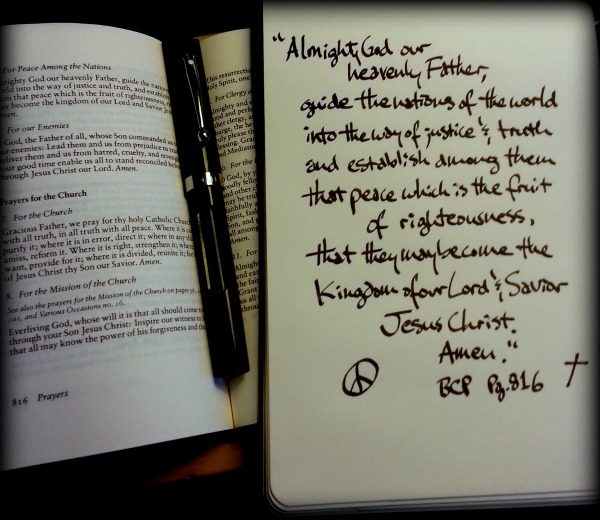 November 2: Civility flows from valuing peace. What do I bless?
 Nov. 1, 2013 Civility in Xian Scripture
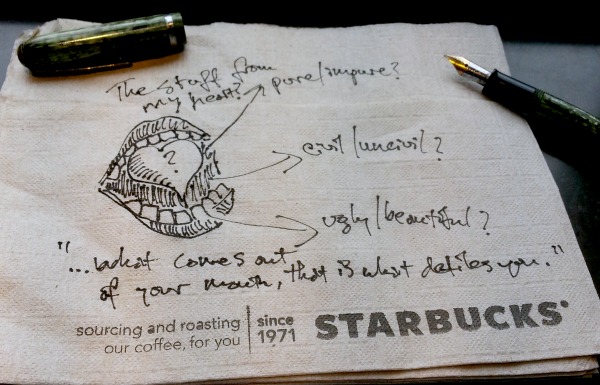 November 1: Civility begins in my heart, within me, and is my responsibility.
Matthew 15:10 & 11, “Jesus called the crowd to him and said, ‘Listen and understand. What goes into your mouth does not defile you, but what comes out of your mouth, that is what defiles you.'”
Quick definition: Civility “polite, reasonable, and respectful behavior”
Let’s begin by stating the obvious: Civility is a term that we don’t find in our scriptures, though it is a good old term. This month-long exercise is not about forcefully inserting civility into the scriptural narrative, and thereby “hijacking” scripture to teach something it doesn’t want or intend to teach. Instead we are going to dig into the teachings of scripture to illuminate the role and action of civility in our daily lives.
My belief is that civility (“polite, reasonable, and respectful behavior”) should flow very naturally from the mouth and life of someone acquainted with our scriptures. Christians, in their imitation of Christ and following the teachings of both the Old and New Testaments, should always be incredibly civil in daily discussions, when interacting with diverse neighbors and even when disagreeing. But we know that’s not always the case. Christians are often some of the most shrill and uncivil voices in our religious, political and social discussions and debates. (In October of 2009 I blogged about my embarrassment that Christians with bullhorns rudely disrupted many of our Muslim neighbors praying for our nation at the National Mall in DC.)
I’ve also heard and seen Christians act and speak with abrasive incivility and then rationalize and justify their words and actions upon religious arguments. They will judge, condemn and ridicule others, or one another, and then say something like, “I’m just following the Bible” or “It’s just what my faith demands of me.”
I believe that Christ and our scriptures show a better, immensely better, way. And so we begin with Jesus confronting those who devalued others (specifically their own parents) and rationalized it away with religious reasoning. In Matthew 15 some religious leaders questioned Jesus about his followers not being very correct in their observation of ritual purity, and he turns the question back on them in a deeper way, asking why they observe religion in a way that neglects the needs of their elderly parents. In the context of our verses in Matthew 15 Jesus is pointing out that people are more important than rules and regulations, even the best rules handed down by tradition and seeming so religious and right. The needs of the neglected parents matter more to God than legalistic excellence in the children. Jesus quotes Isaiah to say that their mouths and lips seem to be praising God and doing the right things, but it’s all wrong because their hearts are misplaced, moved far from God. I believe the teachings of our Christ and of our scriptures consistently show that religious practice and God’s heart are inextricably intertwined with the way we are called to treat others.
The passage is also a strong lesson that I am much more responsible and identified, not by what I might hear or see, but by what I might say and show. And this is where I must start with civility in my own life: within myself. My being civil is not dependent on someone else, but it’s a responsibility and an attribute of my own life, my own heart, my own words and actions. I hope that as we explore scripture in November we’ll be mutually encouraged and taught in deeper ways how the teachings of our Lord and our sacred texts lead us life-affirming, God-honoring and neighbor-serving civility.
November 2013: Civility in Christian Scriptures
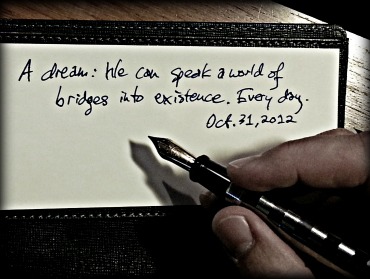 If you’ve been around me much, then you know that civility is an issue that interests me. I surely haven’t perfected the skill of civility, but I do try to use it and I appreciate so much when others do the same. Incivility makes me crazy. I’ve preached about civility and I’ve written about civility.
One of the funner things I’ve done was last year when I blogged and twittered statements about civility each day of October. All that is sitting in another blog of mine that’s been mostly inactive since, The Civil Pen. Those statements tended to be original ideas I wanted to convey, along with famous quotes and statements.
I really enjoyed that month of writing. I enjoyed it so much that I’m back for November of 2013. But this time I want to contribute something to the “theology of civility.” Each day of November, for each and every one of the 30 days, I’m going to blog, Twitter and Facebook a passage of Christian scripture, something from the Old or New Testament, that opens up the wonder and grace of civility. We’ll hear from Jesus, we’ll share ancient Proverbial wisdom, and we’ll dig in with other writers from the New Testament who are actively forming and being formed by the earliest Christian traditions.
I look forward to any and all participation from my circles of friends and family. I will try my best to be first and foremost faithful to God, then respectful of the scriptures and loving of my neighbor. I think it will be fun. I will also be preaching a series on Sunday mornings in November tied to some great scriptural themes on civility that we’ll see emerging from the scriptures, things like “control your anger” and “shut your mouth.” One of my favorite themes is that Jesus doesn’t send us out into the world to “win,” but instead to “make peace.”
Ultimately, I do this because I need it. I need to wrestle with these passages. I need civility planted deep in my heart and mind, and having taken root there, to grow into fruit in my life by which my God is both pleased and honored. If I end up boring you, then I apologize in advance. If this resonates and moves with you, if we make some connections that vibrate in your soul and cause us to dialogue and pray, then I will be satisfied. Either way, I commit the journey to God.
The stuff I’m writing and throwing out there will be available through my Twitter account (@Swirlyfoot) and my Facebook (also Swirlyfoot), and my own blog here (A Faithful Path) as well as our Church in Bethesda Blog. You’re invited to follow along as best suits your tastes.
AMDG, Todd
Un-Branded Truths
 I wrote the bulk of this blog a couple of weeks ago and promptly forgot to finish and post it. I wrote it just after the Mother’s Day parade gunfire in New Orleans, as we reeled as a nation from the Boston Marathon attack and the women rescued in Cleveland after a decade of imprisonment. But honestly, I started forming this post in my heart a little earlier than that after reading of the young woman in Canada, Rhetaeh Parsons, who ended her life after being raped and bullied by her classmates. You’ll have to excuse me if it offends anyone that I don’t refer to it as an “alleged” rape. It offends me that when a young woman is oppressed to the point of ending her life that someone might still doubt the veracity of the crime done to her.
I am inured at heart by the violence we do against one another as human beings, the violence that our children have been taught to do against one another. I’m also at a place where I’m exploring what the truths of my faith are at their root, separated from the “branding” of Christianity, so that I can find even more ways to engage the problem of violence in our society without having to first deal with the “faith divide” presented by a pluralistic society such as ours.
I was reminded of this blog and encouraged to finish and post it today when I read about the homily given by Pope Francis in his morning mass. He vocalizes such a beautiful expression of meeting our neighbors, in our diversity, at the intersection of our common need of and duty to do “good.” I encourage you explore his statements, and I’ll only give this one amazing quote from the link embedded here: “We must meet one another doing good. ‘But I don’t believe, Father, I am an atheist!’ But do good: we will meet one another there.”
“We will meet one another there.” Wow. It’s time for Christians to un-brand some of our truths from being “Christian Truths” so we can share them fully with all our neighbors, many of whom already own and exemplify them better than we often manage to do ourselves.
Here Are Some Questions I’m Laying Out There
What is the “gospel” or the “good news” that people of faith have for a country that seems to be in a cultural tailspin of violence and the love of violence? What is my message? If I’m honest, then I believe I need to be real about having a message that is more than, “Hey, be like me!” In other words, converting my neighbors to Christianity is not the only answer I have to participating right now with my neighbors to make a more peaceful nation and world. Maybe sounds obvious, but it’s not the way many of us were raised to operate.
I need to make sense. I need to speak in ways that all people can understand and that communicate the core realities that exist within my faith, in actionable ways for all people. I’m switching now from single to plural pronouns because this is a shared need we have to make sense in our time and place. One of the biggest realities of our daily experience should be that we aren’t all going to suddenly adhere to the same religion: We won’t wake up tomorrow to find that we have all miraculously become Christians.
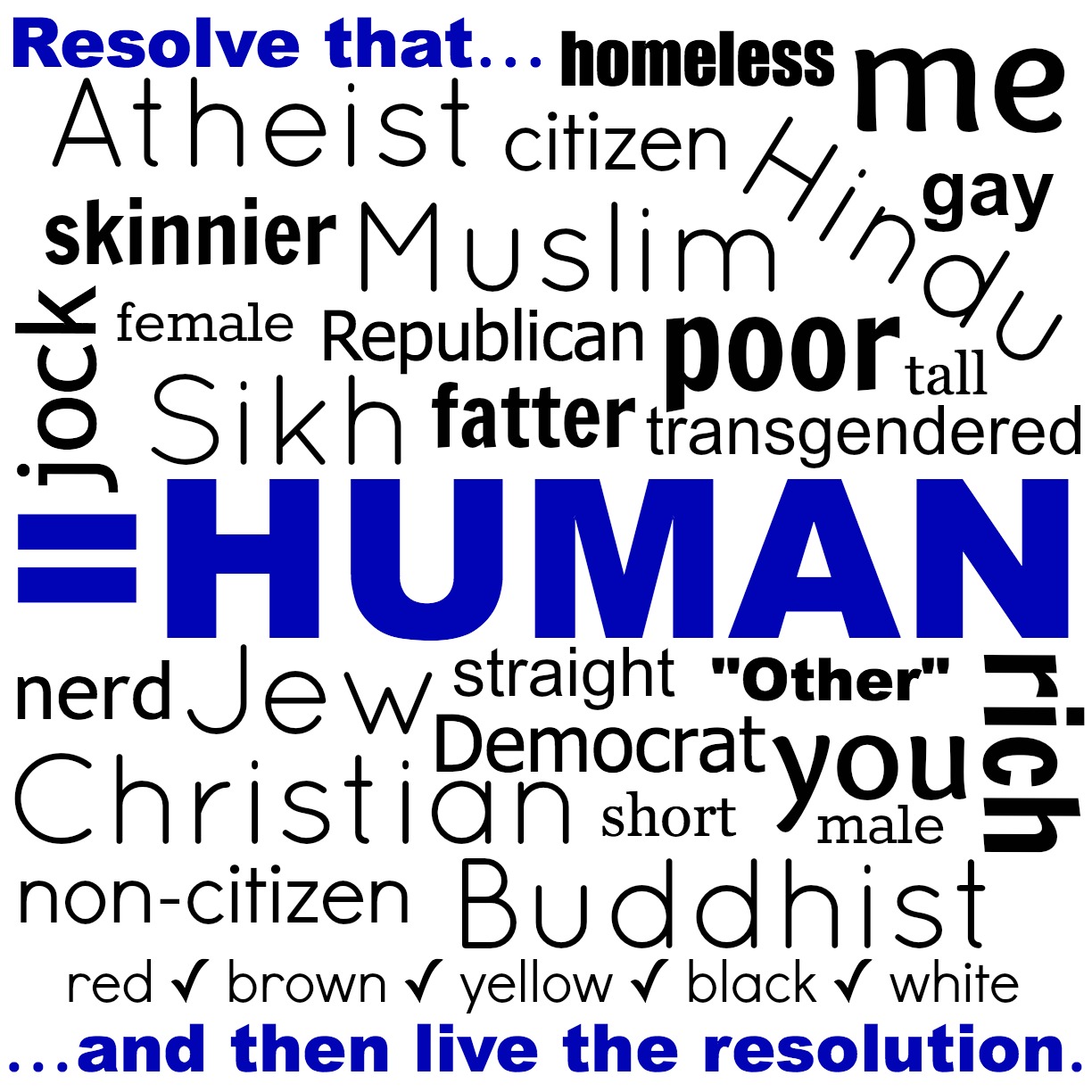
Our nation will wake up tomorrow with the amazing diversity in which we live today: Christian, Atheist, Muslim, Sikh, Hindu, Wiccan, Buddhist, Bahai, and all the faiths and philosophies I don’t have room to name or even know. Of course, that is all happening right alongside our incredible diversity of political ideologies, regional concerns, linguistic roots, ethnic richness, gender identities, sexual orientations, educational backgrounds and economic struggles. To name a few. We are a beautifully mixed bag of amazing variety.
This isn’t a repudiation of Christian on my part. I’m a disciple of Christ and have no intention to ever walk another path, but I am doing so in a diverse world, a diverse nation with a pluralistic society. This diversity isn’t bad, but it does make it much more difficult for people of our faith, or any faith, or lack of faith, to speak into the broader nation, culture and community in which we live. We won’t all have the same vocabulary. The shame is that often we won’t have the “tools” in language or common experience that are necessary to recognize shared values and hopes.
If everyone to whom we speak is not willing to become like us, to become a Christian (or a Jew, or a Muslim, or an Atheist), or more to point, our chosen brand of Christian (or brand of whichever tradition we have chosen), how then do we speak, share and participate in discourse? What do we do in a pluralistic time and space when we need to communicate with our neighbors in the absence of simply making them like us? The episodes of violence breaking into our daily national conscious demand that something be said! Something must be done!
But we people of faith, and not just Christians, have a huge disconnect when it comes to speaking to one another in a pluralist, diverse culture. This issue is most evident in my life when I hear my fellow Christians naming the problems we face as a nation and a culture being that we have “turned our back on God/Christ,” or “Satan’s power is the root of our troubles.” The same goes for when the answer to the most disturbing trends in our nation’s violence are simply stated as a need “to return to being a Christian nation” or that all would be well “if we would all simply embrace Christ.”
Having grown up in a place and time of the country where and when almost everyone was a Christian, I find it too laughable that a Christian would say the answer for our nation’s violent crimes is as simple as converting everyone to our faith. I’ve watched too many times as Christians turned on one another in the absence of any other common enemy. Maybe it would be more plausible if the statement were more along the lines of, “If only we could all follow the teaching of Christ” as in the parts about treating others as we wish to be treated ourselves and loving everyone even to the ridiculous extent of loving our enemy.
And I’m not repudiating a worldview that includes Satan. I believe that there is evil in the world. My own framework as a Christian names a particular force of evil in this world as Satan, though I prefer a more ancient tag “The Accuser.” The Accuser is an agent of evil and a personification of evil’s work in humanity and creation. But here’s my question about evil: Does my neighbor have to conform their frameworks and beliefs about evil to match my own before I can begin to speak and move together with my neighbor to stand against evil? I can only hope not.
One of our deepest yearnings as Christians may very well be that everyone on this good earth would proclaim and own our Christ as Lord, knowing and experiencing the goodness of knowing God in Christ. But there never seems to be any expectation in the teachings of Christ, or even the later apostolic witness, that we will find ourselves suddenly on such a planet.
Paul relates for us the vision that seems to be from an early Christian hymn of the moment when every knee bows and tongue confesses, and it is a vision of worship and unity that warms my soul. Really. But it’s hardly a reasonable expectation that such unity of faith is the foundation for how I will participate with my many diverse neighbors on these important societal issues in our shared life as a nation, right now. I can’t simply remain quiet or continue speaking in ways that don’t make sense to my neighbors “in the meanwhile” as I wait for all the bowing and confessing to start.
Here’s the Short Version of My Question
In the wake of our country’s past episodes of home grown violence and the more recent national tragedies at Sandy Hook, the Boston Marathon bombing, this past Mother’s Day parade shooting in New Orleans, the women and children held hostage in a Cleveland home for a decade, and the bullying and suicides happening across our continent every day: Do Christians have anything to say other than quoting John 3:16?
John 3:16 is good stuff, but in fact we do a lot to say to our home culture, and our neighbors! We have a lot of things to say that flow directly from our faith, but aren’t predicated on all our friends and neighbors accepting our faith before being blessed by our message or welcomed to participate with us in living and realizing this “Good News!”
In other words, I believe we have amazing truths through which we can participate in with our neighbors to bring about more of what our Lord taught us to pray for: Your kingdom come, your will be done, on earth as it is in heaven.
Here are three messages that I believe are core to our faith as followers of Christ that can be transformative in our nation when we live, proclaim and defend them, even when un-branded and allowed to simply be truths, instead of “Christian Truths”:
1. Love is preeminent.
2. We are intrinsically interdependent.
3. Tomorrow is ours to lose.
Three Heavy Truths
These three messages are truth. I believe they flow from the heart of God, have been illustrated in the life of Jesus Christ, and are commissioned to the followers of Christ by Jesus himself and the apostolic witness of the church. That last sentence sounded pretty heavy, yeah? I think these are heavy truths.
1. Love is preeminent. That word preeminent might look a little tricky at first, but it’s not as theological a word as you might think. It’s a good word. Mirriam Webster’s online dictionary defines preeminent as “having paramount rank, dignity, or importance.” That is how we need to be speaking about and living our love for all people. Preeminent love is pure gospel! Jesus famously summed up all the law and commands of his own Jewish religion in the two-fold flow of love 1) love God, and 2) love neighbor. He also taught stories to illustrate a love of neighbor that crosses lines of ethnic, geographic, national and religious diversity. When Jesus was asked “Who is my neighbor?” his answer broke down barriers that prevent us from loving people, even the people least like us or likable to us.
What is preeminent love in the context of our society? It is the answer to the hatred that is kindled and fanned to life by the things we have wrongly raised above love. We are talking about being real, so let’s be real. Our culture has lots of things happening emotionally and spiritually, economically and politically, besides love. Namely we have hate and anger, and they flow from a myriad of very real streams of lives: jealously, competing ideologies, inflation rates, diseases, immigration arguments, fear, pain, nationalism, racism, prejudices, bad drivers, dishonesty, workplace tensions, loneliness, food scarcity, environmental concerns and arguments, and much more. And if I’m really real, I can name and easily find preachers who have used all those streams to incite and divide us in recent years, all in the name of “truth.”
But as a people, Christians have a spiritual mandate to speak love above those things. How else is mercy possible? How else does forgiveness happen? We have a spiritual mandate to live out of love above and beyond the hatred, anger and fear. Fears are often well founded, and sometimes anger is justifiable, but neither should be placed above love in our words and actions. Love is neither restrained to only romantic arenas or to theological discussions. Love should be a daily reality. You don’t have to be a Christian to embrace this truth, and many in the world who strive to live this truth aren’t Christians. But every Christian should have learned along the way that if we are going to accept a scriptural definition of God being “God is love” and the basic drive of the heart of God being a robust and active love for this world (yes, John 3:16!), then we have the same basis, foundation and core for our heart and drive.
2. We are intrinsically interdependent. We need preeminent love for the simple reason that you and I are indelibly connected and interdependent. We exist together. Our freedoms and our rights are shared freedoms and rights. Our lives are connected and intertwined. As Christians we have this truth illustrated in matters of love, life and spirituality in many ways: 1) we cannot love God but refuse to love each other, 2) we cannot see the suffering of fellow humans around us and not act, and 3) we have been taught not to ever say to those not like us, “I don’t need you!” on the basis of our differences. Just to name a few.
We need one another. Our value and dignity are shared. Too often we end up bunkering into our various cells of culture, by religion or race or gender or any of the many ways we self segregate, and in doing so we disconnect from others, lessening their presence and contribution to us and ours to them. Once we have broken that connection we have broken our ability to love and hold love as preeminent. Once we break that vital connection we become more easily swayed by the rhetoric of division that places us in “us vs. them” systems and ultimately de-humanizes the other.
If this were not true, then why aren’t more Christians speaking out against hate crimes and prejudices against Muslims? Why aren’t more Muslims fighting to end discrimination against their gay neighbors on the basis of their sexual orientation? Why aren’t more Republicans fighting for the voting rights of Democrats? Because when we bunker down into our own self interests we have broken the vital connection which allows us to love and raise love above the fears, jealousies and frustrations that inhabit a pluralistic society. By the way, one of my favorite newest friends is a Jewish man who has devoted his life to stopping anti-Muslim prejudice. Ira is an amazing human and he encourages me with his grasp of these truths!
Our vital connection to one another is gospel and it’s not predicated on everyone being of the same faith. We can live and speak and engage with our neighbors within this vital connection to increase understanding, cooperation and peace in our nation and upon our beautiful little globe. In fact, we must. I must not allow anything to devalue my fellow human being in my heart or mind. Such a devaluing of another person is a disease and a cancer in my own soul and self. For me to break our human connection and lessen you is to suffer the same for myself.
3. Tomorrow is ours to lose. All my life I have loved the 131st Psalm, a song of humility and peaceful contentment against the restful greatness of God. Humility is core to the Christian faith and is central to living in the connectedness that we have been speaking about, but it is not an excuse to be idle or stupid about our power to make change in the world. It is not a denial of our humility to recognize that we are powerful and responsible in this world. We are gifted with everything we need to live and breathe and create greater peace, love and joy in this world. We have been crafted as agents of good, and we cannot live in denial of this amazing purpose in our daily lives.
One scriptural writer famously says that we are not given a spirit “of timidity, but of power, love and self-discipline.” (2 Timothy 1:6-10) And as I love the song of humility in the presence of God’s great sovereignty from Psalm 131, I also recognize the reality of the psalmist’s statement that God “has made [us] just a little lower than God.” (Some will translate this “yourself” or “angels.”) Whoa, we need humility because we are so powerful. We only have tomorrow to lose. God has already given it to us. God has equipped us, as little less than the gods, to be movers and makers of change on this earth! There is no adequate rationale for a person to faith to sit still and wait for God to do for us what we have been made to live and be ourselves.
It’s easy to forget, but neither of those psalms were originally written by, about or to Christians, regardless of how or by what reasoning I might lay claim to them today for my life. The ideas and truthes they carry cannot be branded as “Christian.” And even as we believe that Christ gives great and precious gifts to those in his church, we cannot deny the amazing gifts and abilities that God has wired into all our of species. We see those gifts every day. We cannot wait for all our neighbors to share our faith before we move humbly among and with them to not lose tomorrow’s promise and goodness.
Un-Branded Truths
I think these truths are for all people in all times and all places. The hard part for us swallow is that the three simple statements are unbranded truth. We have been taught to brand everything or own nothing. So we speak of Christian Love, Godly Justice, Christian Truth and God’s Mercy. And we have been taught to devalue all truths not so labeled. Have you ever noticed how rarely scripture addresses things that way? Paul simply says that God’s Spirit makes in us love, joy, peace, patience, gentleness, kindness and self-control. It’s the work of the Spirit in us, but the fruits are simply fruits. And so we lose the ability to see and value the many truths of God’s work and Spirit in the various people all around us every single day.
I grew up hearing preachers often say, “It’s not enough to be a good person, you have to be a Christian.” I suppose I know what they were saying about identifying with Christ and the church in a theological sense, but I always came away thinking more about what sounded like an inherent contrast they were making between good and Christian. Those two didn’t seem to be the same, but different. And even if I am able to step past inferring a contrast like that, the statement still devalued the good in a person if they weren’t enough like me. I’ve not had a very long life, but I have definitely learned that finding a good person can seem a rare enough event not to ever devalue or dismiss.
I am asking us, asking myself, to do better at engaging the world with these unbranded truths so that we move the truths forward without having to have the argument about what is dissimilar between us. I could easily stick to branding and say something like: 1) God wants Christians to live in preeminent love, 2) Christian altruism and Godly benevolence is a duty, and 3) with humble prayer we can defeat Satan and can claim tomorrow as the Lord’s Day returning our nation to global moral dominance and greatness! But I won’t.
But I believe it is no less true and vastly more engaging for many of my neighbors if I proclaim and live: 1) love is preeminent, 2) we are intrinsically interdependent, and 3) tomorrow is ours to lose. Though I do understand a little bit about the power and importance of branding in the commercial sense of moving products and services, I think that God’s truths should be handled a bit more on the open source model, freely shared and abundantly distributed.
Facebook Etiquette: An Exercise for Us All
 Everyone should write a blog on Facebook etiquette. It just makes sense that if we are going to use a social media tool as much as we do we should be thinking about how we use it. So right away, I want to say: I’m not writing this piece as only a corrective to some naughtiness I’ve noticed in others, but also as an exercise for myself.
I’m not writing out of any pet peeves about vague posts, TMI posting or vague posting, but just a simple frustration that so many people ignore basic concepts of civility and courtesy on Facebook. The nature of social media gives us a creative and powerful platform for misbehaving.
I’ll try to distill my thoughts into a few simple ideas, “best practices” as it were. These are ideas to which I personally aspire, even if I don’t always manage to hit the target. And though they would save me loads of frustration if more people followed them (and i did a better job myself), they would also help make some generally smart people look a lot wiser than they seem when posting. So here we go…
1. You’re Never Too Old to Do Some Homework
Since the dawn of the internet it has been a home to sometimes entertaining and often frustrating urban myths, fictional anecdotes and intentional misinformation. We are human, and so we are frail and prone to screwups. We all have our blind spots and we all have our prejudices, even if we are working hard to overcome those prejudices. Too often the false stories and alarmist anecdotes that circulate Facebook and other forms of social media strike at the heart of our seen and unseen prejudices, and finding fertile soil they take root and grow into annoying shares and posts.
So when something comes along that looks like a perfect stone on which to grind your political, religious or social axe, do some homework first. Check a story out before you post it or share it. Check the sources. Check the source on Facebook, and see if you can check other sources online or offline… did someone really say what is being said they said? When someone shares a quote from our President (Republican or Democrat) in which they admit to practicing Satanism to win elections and brainwash school children into becoming Duran Duran fans, ask yourself how silly you’ll look for posting it if they didn’t actually say it. If the photo or story was originally shared on Facebook by “I’m a Communist Donut on Steroids” or “Screw All People Who Don’t Think Like Me” you might want to rethink sharing the gem. I made those names up just now, but they probably exist and will troll me next week. Oh well.
Even if it’s a heart-warming story or feel-good anecdote about human goodness, check it out before posting. I have a theory that all the fake feel-good stories that circulate and make the rounds, just to be later debunked, are just adding more cynicism to the world. Then there’s the “God did this…” stories about atheist professors and beakers or chalk and the triumphant young Christian student… all not true. Falsehood and misinformation, even if intended to inspire, will only inoculate us to sincere and meaningful engagement with the true stories of human goodness and inspiration that come our way. A great resource for this homework is Snopes.com! We also have be to careful of parody news sites. Most of know by now that The Onion is all in jest, but I’ve recently seen people expressing genuine angst over stuff from Larknews.
2. Be Happy in 3rd Place
This really goes along with the first thought… we need to slow down and stop trying to be the first to post everything. This speed and haste is just making us sloppy and discouraging us from taking the time to do the meaningful homework. Besides, some jerky friend with more followers than you will just share your story or post it without giving you credit anyway, and they’ll look like the trendsetter. =) But the peer pressure to be first and fast is real as more and more internet sites prod us to be the “first of your friends” to like, share or recommend something. And who doesn’t like to be the first among their friends to get some laughs with the latest angry cat pic?
But really, let’s slow down. One of my favorite sayings from East Africa is “Haraka haraka, haina baraka.” It translates as “Hurry hurry, no blessing” and means, “Slow down, dude… hurrying only makes trouble for you.” We need to stop and think about what we’re posting and why. Is it a post I want to live with a year from now? Is it a true post, accurate and authentic as it’s represented? This is an important question when it comes to “re-sharing” many things that roll across our Facebook feeds. It might take time to find the answers.
If you take some time, reflect on something and refine the ideas you really want to communicate, you just might find that “third place” is actually a big win. When big news hits or controversial ideas start rolling around, and people immediately begin glutting our social avenues with partial, misinformed or inflammatory responses, you might find that a day later you have an eager audience for well-thought and well-worded reflections of your own.
3. It’s Called a “Meme”, Not a “Mean”
Yeah, I was trying to make a pun with that one, but I hope you’ll keep reading anyway. And I’m pretty serious… the mean memes that just want hurt people, ridicule others and divide us into us/them pockets of angst-ridden combativeness really suck eggs IMHO. Many of the mean memes I see are pics that started funny, but someone altered or redirected them to grind a political, social or religious axe. Yuck.
Does anyone honestly believe that a mean-spirited political meme is going to score some actual influence or alter another person’s view? It’s a meme, dude. My advice is that we keep the memes light and humorous. Let’s not try to get real deep, hoping to explain global economic perspectives with a one-frame visual and less letters than a 140 character Tweet. I’m raising my hand as one guilty of tying. A good rule of thumb might be that if my meme is going to attack or mock someone, it should attack and mock me. I mean, there’s just not enough self-deprecating humor in the world, but it’s usually the funnest if not funniest because of it’s obvious rooting in the truth.
This is a matter of civility. A mean meme attacks, but doesn’t offer any chance for a rebuttal, defense or dialogue. Because of this one-sided nature a meme is typically going to be grossly unfair in it’s attack. I’ve been told that I’m maybe just a bit too “thin skinned” when I talk about this stuff and I need to “man up” and “thicken my skin.” Thanks, but I really don’t want to. Why would I thicken my skin and pitch in with one-sided attitudes of attack and point-scoring when dialogue and civil exchanges accomplish so much more? Let’s just chose our memes wisely and with a bit more whimsy. I promise that this will be my goal.
And this is no just about moving away from meanness in memes, but I would say all meanness in our postings. A noticed a friend of mine recently on Facebook had to say something like, “If you keep using comments to my posts to attack [a particular religion] with nasty statements and meanness, I’m going to delete your statements and unfriend you.” It is so heart warming that we have to police our religious conversations with such justified threats, isn’t it? No, it’s pretty sad. Meanness sucks. Meanness doesn’t score points or win big in any arena of competing ideas and ideologies… maybe one day we’ll have a “Facebook Penalty Box” where we can send our naughty friends for a few days of timeout, so we don’t have to unfriend them.
4. Use Your Powers for Good
Social media has given us all a voice. Like never before each person can broadcast their best or worst, even if our respective audiences differ. We can blog, vlog, update our status in a hundred forums, tweet, post, like and share! Indeed, my friends… we have super powers. We have new strengths of reaching out with our thoughts, opinions, beliefs and reflections. So let us remember the great medical axiom, primum non nocere, “First do no harm.”
We should use our powers for good. We must seek the good, own the good and advance the good. This is the higher calling of social media, beyond the drive to be first, be humorous and even be heard. Trolls know the lessons well. I can be crass, mean and vulgar, and draw a great crowd for my antics. I can be funny, at the expense of others, and be heralded and be made a superstar. Or I can add to the world what is needed most, a voice of peace, hope and good, even when trying to be funny, honesty and true.
Beyond what might be considered “basic etiquette” lies the green fields and golden hall of Social Media Valhalla, the expanse of glory that is being a voice which builds up, carries forward and makes goodness in a world in which no end of ill words and images can be found. Even super powers require effort. It’s no wonder that meanness and crassness come easier to social media than goodness and constructive effort. Choosing the brighter road requires strength and determination.
Trolls don’t change the world. Heroes daily raise the world from the morass of darkness. Embrace the calling in your social posting and feel the difference. Be honest, be questioning, be true to yourself and be open to others. Be a woman or a man of convictions and hopes. Let your posts show this difference. Those posts may not garner as many shares or as many likes, as when posts play to the base prejudices and fears of others, but they are more powerful for it, and the brighter posts mean more to the few than do the darker to the many.
Live For Healing, Not the Blame Game
When tragedies strike, or even multiply as they have this week in Boston and down in Texas, we have a myriad of reactions as humans and as people of faith. We hurt… we feel empathy and a real human connection to the victims. We pray… because we feel like our hurt needs to take action and bring about a response in us. We have been praying all week for our friends and neighbors in Boston and Texas. And we begin to question… we want answers. We hope that the answers, and more often the blame for these tragedies, can help assuage the hurt, confusion and fear.
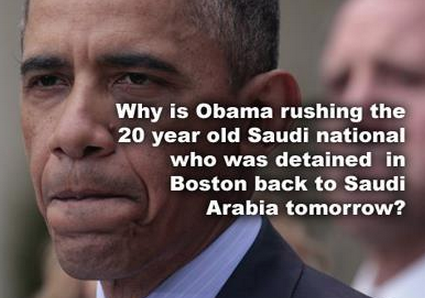 Too many times we turn to angry accusations and blaming games that endanger people and multiply harm. We “want someone to pay” and our prejudices always supply a handy suspect. And when those desires also serve a political grudge? Well, all the better it seems. Yet this is not thoughtfulness or healing. This is not service to the hurting or help to the injured. But blaming feels good to us sometimes. Blaming feels “right” and justified to us. By the way, the Saudi national that many jumped to blame, along with the President, was not to blame. And of course today we know that it seems to have been the work of two brothers who are not from Saudi Arabia. I thank God that whatever steps were actually taken to keep more tragedy from happening with this Saudi man were taken! If he was whisked away to prevent unnecessary violence, then “Well done!”
The Problem of Blame
Here is a bit of what I see as the problem with our need to blame and rush to blame:
- Blame can avoid actually dealing with the hurt and delay healing.
- Blame can attack and injure innocent people, compounding the harm.
- Blaming exposes and strengthens our deepest prejudices.
Let’s look at a text in John 9 about a man born blind. It may be familiar to you or it may not. Really, we’ll just be working with the first 12 verses, but the whole chapter is a very interesting story of Jesus healing a man and the dramatic aftermath of the healing within his family and community.
What is happening in the this passage? Jesus is walking along and comes upon a man born blind and about whom his disciples make an inquiry, “Whose sin caused this suffering?” There must be a little more action happening that we aren’t in on, like how does John know he’s born blind at that point, what kind of attention did Jesus show to the man to inspire the disciples to ask for details? Things like that… but the case seems to be a bit of a random event happening as Jesus moves through his day.
The Question: “Who sinned? Who is to blame?”
I first encountered this kind of thinking on blame when I lived in East Africa. It may seem strange to us in the West to automatically ask for spiritual causes for physiological problems, but it’s common place in other cultures and parts of the world. In East Africa a person rarely asked “why” someone was sick, they asked “who made them sick.” The change in question stemmed from the acceptance of the idea that bad things happening in life were caused by the bad thinking of a person that translated into spiritual energy such as an intentional or accidental curse upon another person. So why did my crop fail? Because my neighbor was envious of it. Why did no rain come this season? Because the spirits of our dead family are unhappy that we don’t pound dry corn the way they did.
For the materialist magicians that we are in the West this can sound very alien to us, and yet when we have bad things happen to us or in our nation we always hear the cry of “Why did this happen, God?” And there’s never a lack of unthoughtful preachers making news by blaming the people around them they love the least. And if they don’t love someone God must not either, right?
This happened after the attacks on 9-11 and after Sandy Hook. It happened when a tsunami hit Japan and it happens when an earthquake strikes the Middle East. It happens when bombs go off in Boston and it has probably happened when the building unexpectedly exploded in Texas, though thankfully I haven’t seen or heard the blame given to anyone yet.
In tough times, tragic times, we turn to blame someone. We crave to lay blame on someone. We rush to judge, to blame and to find someone upon whom to lay our pain and suffering. It brings out the worst in us socially, politically and often religiously.
Walking down the road the disciples had a chance to clarify their need for blame. Here’s a man born blind. He was blind before he had a chance to sin or do something to deserve the affliction, so who might have sinned to have caused this? Did his parents not attend synagogue enough? Were they bad Jews? Did they neglect to tithe?
It’s not as weird a question as we might immediately think. Did God not take King David’s child from him, the child born from the sexual sin and murder in which David took Bathsheba from her husband? Have we not at times seen in the scriptural narrative that God levies punishment on people in specific ways for specific sins? Have we not heard New Testament writers assure the people of faith to whom they wrote that trials and afflictions are God’s way of proving our patience and chastising us?
I don’t intend to remove any power or meaning from any of those passages, but I do intend to question the idea that such passages and pieces of our scriptural narrative give us license to lay blame at people’s feet when we feel the need to have a scape-goat for our hurts. I question our ability to know more than that group of speculating disciples walking down the road with Jesus. We often have the same question, and it’s not a bad questions. The real kicker here is where we get our answer. I hope it’s from Jesus.
The Answer to the Question: “Look for healing.”
The answer Jesus gives is both clear and a little ambiguous. Don’t you love that? He says clearly that neither the man nor his parents sinned to cause the blindness. Instead he says that the blindness of the man is intended to be an expression of God’s power, presumably in healing. So he clearly releases the man and his parents of the blame, but seems to sorta say it’s God’s fault. I immediately thought of poor Job. Remember him? He was the guy just living and loving life until God asks Satan, “Hey, what do you think of my man, Job?”
But is Jesus just playing the blame game that was set up by the question, only adding a third option for the blame, or is he doing something else? Is he simply saying, “No, it’s not him or his parents, but you’re on the right trail… it was God to blame!” Or is he trying to get the disciples thinking on a higher level, or deeper level we might say.
Jesus ramps the conversation up by rejecting the sin causality, “Neither this man nor his parents sinned” and introduces a shared activity of revelation, “…but this happened so that the works of God might be displayed in him. As long as it is day, we must do the works of him who sent me. Night is coming, when no one can work. While I am in the world, I am the light of the world.” Interesting use of the light and dark themes so beautifully illustrated in the man’s blindness and restored sight! I love it when Jesus does stuff like that.
Jesus says the man’s blindness is an arena for seeing God work. He’s not really blaming God as much as tying the man’s blindness into a greater level of meaning. The man’s suffering in life is not simply a blame game, but a chance for good to move into action. Jesus says he is stepping past the blaming to grab hold of the healing, and I think we are invited to do the same.
In rejecting the sin argument of blame Jesus opens the door for healing and change. What would the story have been like if Jesus had simply said, “His parents cheated a household laborer out of her wages, and God hates injustice, so their child is blind,” and then just kept walking? That story would have sucked eggs. And in fact, that kind of story would have been too painfully similar to the times when we and/or our neighbors experience tragedy or suffering and some nearby person of faith starts in with, “Well, we have legalized abortion… It’s the homosexual agenda… It’s the atheists… We don’t pray over the loud speakers at our football games any more… It’s the Republicans… It’s the Democrats… It’s blah blah blah.”
I’m glad that we are being called into account for our words more and more. Soon after the bombs on Monday, when some voices started the blame game against their favorite prejudice (the atheists), a response from a thoughtful atheist hit CNN’s front page. Good. The blame game causes us to de-humanize our neighbor and build walls of “us-them” thinking that need to be torn down!
I have been personally saddened by the speculative blaming that has meme’d across Facebook and other social outlets this week like “Obama Protects Saudi Suspect!” We are so bent to name and demonize the usual suspects that we turn immediately to the worst kind of unsupported reporting and blame game tactics to attack the people we least love. And do we beat people in parking lots now for looking Arabic? It seems that maybe we do. Truly, truly sick. Blame game crap never brings healing… it exponentially expands the suffering. Blame brings out our worst.
What to do?
People of faith should be some of the first to recognize that we have many questions, some that get pretty satisfactory answers and some that never do. We travel a road of faith, a balancing act of certainty and speculation. There is plenty in the scriptural narrative to point out that, though our dumb actions are often the cause of our suffering, there are also times when “rain falls on the wicked” and the world caves in on the righteous. Our task is not to assign blame, and then I guess go on with administering some punishment. Our task is to move into healing action. Our task to look at the ways that the goodness and glory of God can move to lift humanity from affliction and into wholeness, and how we participate in that. Our task is to gracefully love, pray, and hope and thereby act out of gracious love, prayer and hope.
Is it unjust when the sinful hatred of two young men sets off bombs on a crowed street and kill innocent people including an eight year old boy? Yes, it is. Is it unjust then the actions of those two young men maim and injure hundreds more? Yes, it is. Is it truly saddening when an unexpected explosion devastates a small town killing workers and first responders? Yes, truly saddening. Is it gut wrenching to watch the town scramble to rescue and serve their neighbors in the choking, blighted aftermath of that explosion? Yes, it twists our guts inside out.
The question that matters most on the Friday of such a hard week are not “Who do we blame? Who will pay for this? Who will be punished for this?” The questions that matter most on Friday of this week are “How do we serve? How do we help heal? How do we better love? How do we better raise our friends and neighbors from their suffering?”
Already one Boston bombing suspect has died in a confrontation with the police. His brother and suspect #2 is still running. I keep looking over at the news outlets to see if there’s any resolution to the chase yet, not because I’m jazzed to see news of his death, but because the sooner we can divert all this energy from hunting to healing the better served many of our hurting neighbors in Boston will be. I hope he is caught soon, and I am sure he will face justice for his actions.
But for us though, watching from afar, let’s multiply the healing and not harm with our words and actions! This is our task. I am so encouraged by the people running to the bomb sites Monday instead of away from them… they accepted the task of moving for goodness. As tragic as it is, I am so honored to be a human being when I read of first responders giving their lives in Texas as they rush to defend and serve life in the midst of a volatile situation. They are the heroes who make a lump in my throat. It’s a very human responsibility to serve and love, to raise a neighbor from the depth of pain in any way they can, and humans of faith should not be the first to forget it.
Our words in these days matter. Love. Hope. Healing. Let’s speak the greatest things and live them and never trade them for the burning drive to blame, isolate and divide. It may not be the answer our questions might seem to ask for, but it’s the answer that will speed healing for us and all who need it most.
Same-Sex Marriage
 Ok, here we go. Over twenty years ago I was so very blessed to marry my life’s love, my soul mate and best friend, Teresa. I cannot imagine having taken this journey with someone else. I am so thankful.
Because Teresa and I are Christians, our marriage took place in a church building, with a Christian minister officiating. But interestingly, the “paper trail” of our wedding began earlier, not in a church building, but in a county office in Abilene, Texas. The civil authorities issued our marriage license and demanded a copy back, signed, for their records.
I believe our faith has framed and guided our marriage, and it is integral to who we are. But it was the civil government which allowed us to marry and have all those rights and privileges afforded a married couple. Those privileges, by the way, have nothing intrinsically to do with gender, faith or sexual orientation… visitation rights, filing joint taxes, hospital visitation, insurance coverage, etc.
Why does the civil government do this? Well, because we have this amazing document we call The Constitution that was created to, among other things, “..secure the Blessings of Liberty…” Those nation builders were poetic rascals, and that phrase rings very similar to the idea put forth in our nation’s Declaration of Independence that all people have certain rights as human beings including the rights of “Life, Liberty and the pursuit of Happiness.”
Being married has made me so happy! Living with the liberty to seek marriage to the one I love, and then to obtain marriage to the one I love, has been one of the most worthwhile pursuits of my life. It has been a pursuit and realization of happiness.
Today, in the same country many simply do not have the same rights and protections as I do, because they love and wish to marry someone of the same gender. In some way, we have decided their endowed right to life, liberty and the pursuit of happiness shall have restrictions imposed that are not imposed on my own. All those rights and privileges I mentioned, that have nothing to do with gender or faith, can and are most often denied to them.
My friends, I do not believe that my own faith instructs me to oppose same-sex marriage. I do however understand that many of you believe that your faith does not allow you the option of same-sex marriage or orientation. And for the sake of your conscience, and because it is your right to live life based on your faith convictions, I respect and support your living by that faith. No one should ever force you to live in an orientation or marriage that you do not desire. But we are talking civil rights, folks. We are talking about the very base of civil rights which afford you and I and everyone the opportunity to worship and live according to personal faith, as one’s conscience dictates. These are shared rights to pursue happiness in freedom.
While proofing this blog for me, my previously mentioned wife, the beautiful Teresa, asked me to mention something about interracial marriage in our nation. She said, “This isn’t a new issue” meaning that the denial of people’s right to marry whom they choose is not a new problem. Many Americans fought the civil right of others to marry someone of different ethnicity, often again on religious grounds. Though it was legal in many States, marrying a person of another ethnicity was not a protected right for all people in our country until a 1967 ruling by the Supreme Court. 1967!
You may answer the question of same-sex marriage by any criteria you wish to use, for your own life. This is your right. Answering it for your neighbor, by any criteria of your own choosing, is not however your moral, ethical or constitutional right.
 Everyone can empathize with a person’s desire to pursue life-long love with their chosen partner. And we can also empathize with the desire simply to be free to do something, even if we ultimately choose not to do it. We know that the burden of not being free is an emotional, psychological and spiritual injury. We must not be a people who do such injury to others.
For straight people, the freedom to marry remains their right whether they marry or not. A freedom is strength. A freedom is joy. Not being free is painful. Right now, a majority of people in our country enjoy the strength and happiness of a basic civil right to pursue personal happiness in the agreement of marriage and all it’s attendant rights and privileges. And at the same time in the same country a minority is held bound in the pain and loss of being denied the same right.
For me, the burden of my own rights will necessitate that I support the rights of my neighbor. My freedom to marry cannot be a selfishly hoarded treasure. If I am given this gift by my civil authorities, pursuant to the execution of our nation’s founding documents, then this gift is also for my neighbor, regardless of ethnicity, gender, orientation or personal faith.
In short, I stand with my homosexual neighbors, now and always, in support of their intrinsic human dignity and their full, complete set of civil rights. My faith tells me that they are beloved of God, and so it is my joy to serve them and love them. Whether my gay neighbor is a citizen of my country or not, I will always support their freedom and human rights, but especially in the country of my birth, I will expect that they are treated as full citizens, endowed with every right I myself enjoy.
And maybe one day, one glorious day off sometime in the future… I won’t have to even clarify that I am standing with my gay neighbor, or my straight neighbor, or my Christian neighbor, or my Muslim neighbor, or Hindu neighbor, my atheist neighbor, my male neighbor, my female neighbor… maybe, just maybe, we’ll grow up into a mature respect of people that no longer needs such labels to engage their amazing worth, value and dignity as human beings. Amen.
- ← Previous
- 1
- …
- 6
- 7
- 8
- Next →
 toddthomas.net