
Civility
Recommitting to All People’s Dignity
Just a quick note!
 As I’m doing my whirlwind of usual Sunday morning stuff to get ready for our worship gathering and fellowship time, I’m struck by the intersection of two news stories coming across my desk… the first is of Pope Francis throwing in on peace in the Middle East, and the second is of a conference of atheists in “Bible Belt.”
Of course, the Middle East won’t have peace just because the Pope encourages them to have peace. And the article about atheists in the South probably has a lot of hyperbole and exaggeration.
But it’s undeniably powerful when a Pope speaks of everyone’s dignity, especially the value and dignity of Jewish and Muslim neighbors. And a little hyperbole doesn’t change the fact that many people in communities across America fear the reactions of their Christian neighbors and coworkers to their chosen lack of faith.
Today, let’s recommit ourselves
to upholding the dignity
of all our neighbors.
Let’s be people who sow peace instead of fear. Let’s be people who live grace instead of just singing about it. Let’s be people who transform the world by simple kindness and sincere friendship. This is again our day to shine. This is again our day to commit to salting the earth with joy and with love.
AMDG, Todd
I Will Listen
 Hey. I’ll listen. Need to say something? Need to get something off your chest? Need to just be heard? I will listen. Really.
I had a great conversation this week with a friend and fellow life coach about the struggle we often face to listen well. Sometimes we’re just wired to be talking. Sometimes our own pride wants to speak and to share and to be getting the attention. Sometimes we just don’t care what the other person is talking about.
But the other person has an intrinsic right to be heard. My friend said that he felt that “he owed it to the person speaking to listen as well as he could.” I think he’s right. He owes a debt of listening to the people around him. I owe that debt to others. I owe that debt to you.
We pulled out our Bibles and sat with Paul for a bit in the letter in the Philippians…
“Therefore if you have any encouragement from being united with Christ, if any comfort from his love, if any common sharing in the Spirit, if any tenderness and compassion, then make my joy complete by being like-minded, having the same love, being one in spirit and of one mind. Do nothing out of selfish ambition or vain conceit. Rather, in humility value others above yourselves, not looking to your own interests but each of you to the interests of the others.” Philippians 2:1-4
That’s kinda cool, huh? I have a debt to care about the things that interest you. Honestly, I was raised to think more that scripture told me what to be interested in, and by default I was to do the same for others. Looking into the Greek just a little it seems to me that the emphasis is as much on the “looking to” as the “interests.” It’s a posture of focus, attention and concern for the other person that flows from an experience of Christ.
In our life coach training we go over the essentials to listening well and ways to be sure that we respect and hear someone who is speaking to us. It’s not too hard, and here are a few of the core elements to adopting a posture of attention…
1. Give the speaker your visual attention. Stop looking at other things and letting yourself get distracted.
2. Don’t interrupt. Let the person say what they need or want to say. Silence really is awesome at times! Give the person time to refine their words and hear themselves.
3. Stop creating a response before they even finish speaking. This is a hard one for many of us as we want to argue and begin arguing in our minds before they finish their thought.
I need to be giving respectful attention, making eye contact and communicating my concern with body language. I need to give enough uninterrupted space for the other person to finish sentences and complete their thoughts. I need to release the assumption of needing to change the person, argue with the person or correct the person.
Having listened, I can be creative with ways to better understand what is being said. St. Ignatius taught a principle for listening that basically said I should receive what is said with the “benefit of the doubt” assigning the speaker the best possible intentions and meanings. He said that if I have trouble with what was said, I should ask for clarifications. If what is being said is simply hurtful or negative and there’s no good to be found in it, my response is still charity and love, even if I must give correction or a dissenting view. Listening well and trying to hear the best possible intention in the other person doesn’t presuppose acquiescence, but instead sets the stage for understanding and responding with charity and love.
If you’ve taken a counseling class then you’ve probably learned to ask clarifying questions. We were taught ask questions that clarify meaning and clarify feeling. We don’t want leading questions that presuppose a particular answer, but we want to encourage the greatest level of understanding and sharing. We want to create an open safe space for answering.
To open another piece of scripture from Paul, this seems to be an imminently practical way to live a fulfillment of our shared “debt of love.”
“Give to everyone what you owe: If you owe taxes, pay taxes; if revenue, then revenue; if respect, then respect; if honor, then honor. Let no debt remain outstanding, except the continuing debt to love one another, for whoever loves others has fulfilled the law. The commandments, ‘You shall not commit adultery,’ ‘You shall not murder,’ ‘You shall not steal,’ ‘You shall not covet,’ and whatever other command there may be, are summed up in this one command: ‘Love your neighbor as yourself.’ Love does no harm to its neighbor. Therefore love is the fulfillment of the law.” Romans 13:7-10
I’ll do my best to pay my debts. I’ll look you in the eye and give you the respectful hearing you want and need. If I’m not, poke me on the shoulder and remind me that I owe you more.
AMDG, Todd
Thanks for Making Fun of My Vibrams: Not.
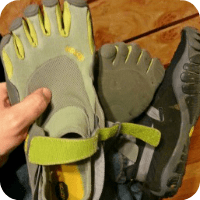
PSA: If you don’t care about the shoes I run in, you can stop reading now and that’s OK. This is a bit different kind of blog post, with no poems or theology. This is just a bit of my life.
Vibrams recently lost a lawsuit over their FiveFinger shoes because their advertising could not be backed up with scientific studies, and some people believe that validates their snarky, dismissive remarks about the people who wear them. I’ve seen some pretty mean-spirited things said and implied on Facebook in the last week about people who wear FiveFingers. I started three blog posts yesterday, and this is the first one I finished first. Go figure.
Please Understand:
1) The I don’t wear FiveFingers because I think you should. I think I should.
2) I don’t wear FiveFingers because I want to impress you. I want to improve myself.
3) I don’t wear FiveFingers because I like your stares. I wear them because I need to be active.
I started wearing FiveFingers to work out and to run in 2013. I came late to the FiveFinger party, like eight years after their introduction? I’d been growing more and more alarmed over the last few years about my weight gain and my overall health, and I decided to take steps, starting last year when I went back to the gym. I started slow and easy, using the elliptical machines and pushing some weights. I weighed in at 222 pounds and I felt bad. (I had weighed in at 238 a year before, but had cut sodas and a lot of eating.) I didn’t plan to get fitter because of anything anyone else thought or said. I just didn’t like the way I felt at 222 lbs. You may like yourself at any weight of your choosing. I’m only saying how my body made me feel: I still felt bad. I also still have a young son who just turned 13, and I need to be able to keep up with him for a few more years.
Like I said, I started on the elliptical machines, but I knew I wanted to run. I quit running back in 1990 when I was much younger. I’ve always had ridiculously flat feet. Running was never fun, and I could never get comfortable with inserts. I tried over the counter inserts and I tried inserts prescribed by a podiatrist. They just didn’t work for me. Maybe they work for your flat feet, in which case I’m very glad for you. Inserts always made my ankles roll. And regular shoes were never a great experience for me. Last year when I would work out I had to tie my shoes very tight to avoid rolling my ankles or my feet moving around in my shoes, but then my toes went to sleep and I had painful marks on the tops of my feet. Then I’d loosen my shoes and get blisters. It wasn’t a good time.
Shoes have also always cramped my toes, painfully smashing them all together in unnatural ways. Earlier in 2013 I had taken a train trip with my oldest son and had a few months of pain afterward with my toes because of that long ride in shoes. I have rarely found shoes with a wide enough toe box to allow me to comfortably wear them for long periods of time.
I’ve been a barefoot or mostly barefoot walker for years. Once it’s above 40 degrees you may have noticed I prefer sandals, flip flops or nothing. I had seen the barefoot running shoes and been intrigued, but I wasn’t sure they would work for my very flat feet. I began searching online and found that some flatfooted runners who wore Vibrams FiveFinger shoes loved them, but cautioned about starting slowly and getting used to them. I heeded their advice, tried a pair, broke them in slowly, and fell in love with some shoes for the first time in my life.
I never saw the ads that lost Vibrams their lawsuit, but I should admit that I agree with the FiveFinger claims whole-heartedly. Since I started running in my FiveFingers last year I have completed four local 5k runs. I’ve run in snow, rain, cold and now heat. I have never once turned an ankle. I have never once lost circulation and felt my toes go numb. I have not fallen once. My feet are healthier and stronger. I love these shoes. That doesn’t necessarily mean they are for everyone, but they are for me. The shoes are different looking for sure… in fact, I most often run in my black FiveFingers even though I prefer the feel of my more minimalist green pair, because the black pair seem less conspicuous. Flashy running shoes are hardly a FiveFinger problem, though.
I have had some friends say they cannot abide anything between their toes. The toe socks and FiveFingers shoes were a bit out of my ordinary, but I’ve grown to love them! I relish the feeling of added stability and “purchase” when my feet embrace the ground while I run. But if you can’t abide anything between your toes, I’m OK with that.
Here’s what my experience has been:
1) I think my over pronation has decreased and become less noticeable. I was always bothered by the way my ankles turned in on themselves when I stood in the shower and paid attention to them. My ankles seem stronger and straighter to me.
2) From November of last year through March of this year I was running but not really paying much more attention to my diet. My weight dropped from 222 to 215 by the end of March from just being more active, and I was pretty comfortable running three or four miles at a time.
3) My toes are the happiest they have ever been and I don’t have any of the “flat foot” pain I used to have after being active on my bare feet without shoe support to my arches. I can only assume that means my feet are stronger and healthier.
My family gave me a Fitbit for my birthday on March 31st, and beginning in April of this year it’s helped me to be far more mindful about my activity and food. Weight gain for me is a simple equation: I’ve always eaten a ton of calories each day and burned a lot less. Weight gain and weight loss might be way more complicated for you. I’m only saying how it works for me. Since the beginning of April and my greater mindfulness of food (about a month and a half), I’ve dropped my intake of calories and monitored my activity closely, and my weight has dropped to 208. I can actually imagine the day I will drop under 200 lbs, a dream I’ve had for several years. (I weighed 165 when I married Teresa.)
I guess you can make fun of me for my shoes if you want to… it’s a free country and all that. You can even now make fun of me for the Fitbit I wear on my wrist each day. You might decide that I’m a trendy faddist who gets suckered into every lame fitness myth. Some of you on Facebook have already made fun of my shoes being ugly and decided I’m stupid for buying them, but here’s the deal, I want you to know that I’m not immune to your sarcastic meanness. I wish I was, but I’m not.
I do what I do because of how I want to feel, not because of how I want you to feel about me. I wear what I wear so I can comfortably run and be active, not because I want to look stylish. But that doesn’t mean your ridicule hurts less or makes me feel less sad or less mad when I’m lumped in a group and generally lampooned and denigrated. It sucks when you intrude on my life to score some humor points at my expense. I won’t change anything about myself because of your ridicule, but it does steal some joy from the day.
Would other minilaist running shoes work for me? Maybe, but I’m concerned about the narrow toe boxes. I do own a pair of VivoBarefoot’s Tera Plana, and I wear them for daily walking. Still, the Tera Plana toe box is way too narrow for me to comfortably run in them. By the way, I got those Tera Plana shoes on a crazy store closing sale, like 80% off or something. I also learned that brand new FiveFingers come along much cheaper on eBay than in a local stores. Once you get fitted and know your size, eBay is your friend!
Here’s my humble request: Next time you want to judge someone or generally lampoon something based on what you think you know and understand, take some time to consider that you may not know everything there is to know. You may not ever wear a pair of FiveFingers because you can’t stand the way they look, and that’s OK. Your opinion that they are ugly doesn’t mean that everyone who does wear them are doing so because they think they are good looking! It just might be that FiveFingers are the shoes that helped them get active and feel better. And I do get it… I would have to admit that I’m pretty good at making fun of others. I spent a lot of years of my life picking up humor points at other people’s expense. But guess what? I grew up. Learning to be civil and to consider the other person is not always an easy transition, and old habits die hard. I know. I’ve been there, and I’m still struggling to do that.
The moral of the really long-winded blog post? Next time you just absolutely hate someone’s shoes, you can still try to spread some joy and make the world a better place. Free the love. Cage the hate.
AMDG, Todd
Arizona SB1062 and Religious Liberty
 Let me give you the punchline right out the gate, and then I’ll explain myself: I find the idea of legislating public discrimination as the antithesis of religious liberty as we are taught by our Christian scriptures. It is an egregious error to use one’s faith as a reason to deny service to anyone in the public arena based on one’s personal held beliefs and/or the other’s sexuality or perceived sexuality and decisions of conscience. We must hold true to the values Jesus related to us to be of the greatest importance, loving God and loving our neighbors. We also must hold to the example of Jesus, the suffering servant, the powerful-yet-disenfranchised Lord, the One who gives his all for others. (Matthew 22:34-40)
In Arizona they have done what was attempted just a few days before in Kansas, they passed State legislation removing legal penalties for denying business services and public access of services to someone based on their sexuality, if the reason for that denial of service was justified by the provider’s religious convictions. This has been called and defended as an expression of “religious liberty.”
The problem with this scenario for Christians is that our scriptures teach us the exact opposite about liberty. Jesus teaches us about the problematic exercise of judgment and the imperative expressions of love for all people, and he models a life and ministry which seems to have no filters for picking and choosing with whom he will minister and associate. He is seen in the homes of the wealthiest and most influential, and he’s on the street defending a guilty “sinner” against an angry mob. He heals all those who come to him and denies his followers request to punish those who do not accept him. (Matthew 7:1-6, Matthew 5:43-48, Luke 14:1-14, John 8:1-11, Luke 9:51-56)
Jesus is the one who removes his clothes and wraps himself in a towel to do the most menial of service for his friends, washing their feet. When he finishes washing their feet he says to them, “My very position and authority, my power, as Lord and teacher, make me a servant. Now you should be servants as well.” (That is, of course, my paraphrase.) Jesus takes our understanding of power and authority and inverts it so that any power and authority we have becomes the basis of service to others and not service to ourselves. This is a crucial understanding of our Christ that should not be overlooked right now because we have a special opportunity in our democratic system of government to live this and experience this very truth in a real way. We have power and position based on our ability to vote and shape public discourse. Will we use that power and position to serve ourselves or others? (John 13:1-17)
The idea of using religious liberty or freedom as a rationale for discriminating against another person and refusing to serve them stands in complete contradiction to the New Testament witness of the freedom and liberty we have received from Christ. This is something that other New Testament writers understood and also addressed in their own ways and in their specific contexts. Paul tells us explicitly that our liberty and freedom are the foundation for service to one another. James will highlight the problem with showing partiality and living judgmentally without mercy.
Paul’s entire letter to the Galatians is dealing with a specific problem in Galatia; they (as Gentile Christians) have been taught by others that after becoming Christians that they must also submit to the Law of Moses, in effect becoming observantly Jewish in order to be truly Christian. Paul discusses the difference he sees in Law and grace, defending their freedom from legalistic requirements. This is an entire letter written about our religious freedom and liberty. (Galatians 1:6-10, 2:11-21, 3:1-14)
Paul strenuously makes his case to the Galatians that in Christ we experience a righteousness (essentially a state of restored relationship with God) while receiving freedom from legalistic performance instead of being righteous through that performance. He sums up his specific arguments about this contrast of religiuos legalism and freedom in the beginning of chapter five by asking the Galatians if they would willing choose a state of slavery over a state of freedom. He then goes on to relate a broader expression of religious liberty in the same chapter, making our freedom in Christ the foundation of service to other people. Freedom then is not just our freedom from legalism, but our freedom is being free from self-service. Paul will frame this broadening of the discussion of liberty by referencing familiar words from Jesus about “loving one’s neighbor.” (Galatians 5:1-12, 13-26)
Paul moves our liberty and freedom into a more global arena. We are free to be servants to our neighbors. And who is our neighbor? According to the way Jesus taught, a neighbor is what we become when we meet the needs of and serve another human being, and a neighbor is a person in need. A neighbor is both a needful person of whom we have an awareness, and who we are when we serve them. It’s troubling that years later followers of Christ would use religious liberty as a rationale to deny service to a neighbor. It’s just too ironic. To be honest I find it more than troubling. It hurts my soul that people might evaluate our God, our Christ, our scriptures or our religion based on such a selfish and hurtful idea. (Luke 10:25-37)
Again, the proponents in the bill in Arizona keep referencing the “attacks” on faith and Christians. In his first chapter James gives us a reminder of a familiar New Testament theme of “joy during adversity.” I don’t feel like anyone is truly facing persecution as a Christian by having to do business with or to relate in a public context with a person of differing sexual orientation, but even I did feel that way, my response should not be to raise my fists or my votes in conflict. I should appreciate the tension and conflict, even if it escalates to a true persecution, as a chance to grow and practice perseverance. God’s love for me transcends any discomfort or stress of life.
We tend to think there’s only joy in dominance, but James reminds us that there’s joy in hardship. He also repudiates responding in anger, but instead advocates shutting our mouths and listening better. It’s an amazing chapter! It probably finds it’s fullest meaning when applied to a time when we might be a minority voice or simply in a conflict of ideas. (James 1:2-12, 19-25)
In the second chapter James will talk about the problem of Christians who show partiality, using as an example a time when they might treat people of different economic levels with an inequity of grace and respect. It’s a problem because God doesn’t show partiality, especially not based on economics. James will also quote the “Second Greatest Command” as named by Jesus, the responsibility to love one’s neighbor. Isn’t that an interesting recurrent theme? When speaking of liberty and freedom, and upholding people’s inherent value and dignity, we keep hearing about our call to love our neighbor.
Again the context is broadened with the evocation of loving one’s neighbor and we can easily see that disparities and diversities exist among us on many levels like economics, race, nationality, education, etc. Our principle of not showing partiality becomes a secondary foundation after liberty for humbly serving all people. This broader application of impartiality is affirmed by the next discussion from James about judgment without mercy. We do not sit in judgment over people, showing a favoritism that values some and devalues others, because we know all about our own dependence on mercy. (James 2:1-13, *8-13)
I think the thing about judging that really messes us up is that we’re often justified in our judgment. By this I mean that others have sometimes actually misbehaved or given evidence of misbehaving. Though this is not always the case, it can be the case, and we can feel very correct and justified in passing judgement. We might sometimes be correct in judging, but being correct is not the point. James brings this home to us with his mercy discussion. Mercy trumps judgment. He says it quite clearly. Mercy wins. Mercy is more powerful than judgement. Mercy defeats judgement. Mercy is greater than judgement and so we are called to be merciful and not to be judgmental.
What does Arizona SB1062 represent? It represents judgment and not mercy. Arizona SB1062 is exactly how we give people a mistaken image and impression about Jesus, about scripture and about our religion.
Taken to their fullest extension, all these passages represent the kind of teaching that should be producing Christians who humbly serve others, even in the environments most hostile to their sensibilities, without the “culture wars” we‘ve been seeing in our contemporary public discourse. Also, this would produce Christians who are vehemently fighting for the rights of other people, especially those not like them.
This has been a long post already and I won’t drag it out it much more. At the end of the day, there are many diverse beliefs and convictions held by Christians (both Christians identifying as straight and gay) about human sexuality, and we are each free and responsible to make our own journey of discovering exactly what we believe and practice in our own lives with regard to the complexity of human sexuality. We are called to study, to pray and to trust God to lead us. What we do not have as Christians is a religious or spiritual license or rationale to deny our neighbor their personal dignity, respect or our humble service to them. Will we embrace the servant’s humility and suffering as we are called to do, or will we try to make the world in our own image, a world where we push suffering off to our neighbors to accommodate ourselves?
If I cannot live out the mandate of Christ to selflessly serve others in my public arena then I have to question if I have an understanding of Christ’s own humble, redemptive service to me. Perhaps I will have fallen into the very thing Paul warned the Galatians about, namely exchanging my restful and gracious dependence on God through Christ with a feeling of entitlement and a sense of deservedness achieved by my exceptional religious performance. That thought scares me because I’ll not stop needing grace any time soon.
Christ has used his power, position and authority to menially (and amazingly) serve me in my messiness and neediness as well as in my goodness and my best effort to live by my conscience. Christ has loved and served the whole of me, redemptively serving me in such a way that I learned of my own value and worth through him. My neighbor, my every neighbor, deserves no less from me, and Christ has asked no less from me. Now, I have to try to live up to that calling as best I can.
AMDG, Todd
*A Note on Scriptural References: After each paragraph I have listed the passages I am using in that moment. When I mention several, they are listed in the order to which they are alluded or referenced in that paragraph. Please don’t take my word for it when wondering what a passage means, but dig in and enjoy!
The Bullies And The Be’s, and A Boy Name Michael
This is a blog post about a boy being bullied for liking a cartoon and it’s characters, bullied to point he attempted suicide. Even as we pray for him and his family and we watch for his story to unfold, I want to talk about talking about bullying.
Reading this story about a boy too young to be so terrorized and pushed to a suicide attempt I realize it’s worth the time to encourage our commitment to the discussion of bullies and how we are to “be.” I’m going to say bullies and “be’s” because it’s more than just telling our kids not to be a bully, but it’s also about teaching our kids to support one another, to show compassion and be aware of the other children around them. This is a parental issue. We need to own it. We need to own the story of Michael’s suicide attempt and be taught by his story. We need to pray for him and his family. We need to open our eyes to how we as adults, and especially as parents, model life for the children in our radius of influence.
You caught the allusion to the infamous talk about “The Birds and The Bees” as we have come to call the time when a parent tries to impart our knowledge and wisdom to our child about human sexuality. Talking about sexuality is difficult, but we do it because our kids need to learn from people in whom they can place trust and who are looking out for their best interests. The talk about bullies and becoming the right kind of person is just as important. We hopefully talk about sexuality with our kids before they hurt themselves, before they are victimized or grow into victimizers. The same idea goes for the talk about bullies… it’s not just a talk for the kid who’s being a bully, but for all kids. Every needless death and suicide attempt is a reminder that too many of us as parents aren’t addressing the problem before the victimization begins and remains unchecked. You can search around for yourself, but suicide is third leading cause of death for young people and bullying often has a strong link to suicide attempts.
You Are Not To Be A Bully, Ever.
Start here with your child. It’s not a complicated lesson to impart. We tell our children that they are not to make fun of other kids. We teach them to empathize, to imagine how it hurts to be ridiculed and “left out” at school. Bullying happens on the playground, on Facebook, on MySpace, Twitter and every social media platform that has been invented. We tell our children that they do not speak rudely of or to other kids or even adults, for any reason.
We have to tell our kids that they may not ever hit, kick, push, shove or physically embarrass another child. They may not threaten or intimidate another child. It’s a clear message that can be easily shared with a child, “You may not.” We deliver this message again and again and again. It’s one of parental mantras that we repeat until they’re sick of hearing it and will never forget it. “You are not a bully.”
If a child has been a bully, then they stop and they bully no more. I’m not looking to vilify and hurt kids who hurt other kids. We impart these kinds of lessons because kids often don’t realize the impact of their words and actions. I have heard it many times, and said it myself, “Kids can be cruel.” But that’s a bit of an evasion to be honest. The truth is most often more like, “Kids can be immature and unaware.” The vast majority of kids wouldn’t set out to so emotionally and psychologically hurt another being that the victim is driven to a suicide attempt. We as parents know it can happen, and that’s why the burden of teaching falls to us.
The harder part of the lesson is modeling these things for our children. They have to see us treating people and speaking of people with respect and dignity. They need to hear us speak in ways that show dignity and respect for others, especially those not like us and with whom we disagree. If we continually rail against people and angrily denounce others for their viewpoints, life-styles or for their physical attributes, our children will mirror our behavior at school and in their social circles.
 Parents, we influence our child when we speak of “the gays” with fear, anger or negativity. We influence our children’s behavior and speech when we verbalize fear or anger at “the Jews,” or when we give an angry tirade against “those Christians.” We do no one a favor, especially our children, when we speak with disgust or anger of “the Muslims, the Right Wingers, the Liberals, the Illegals, the Mexicans, the blah blah, <insert people not like me here>.”
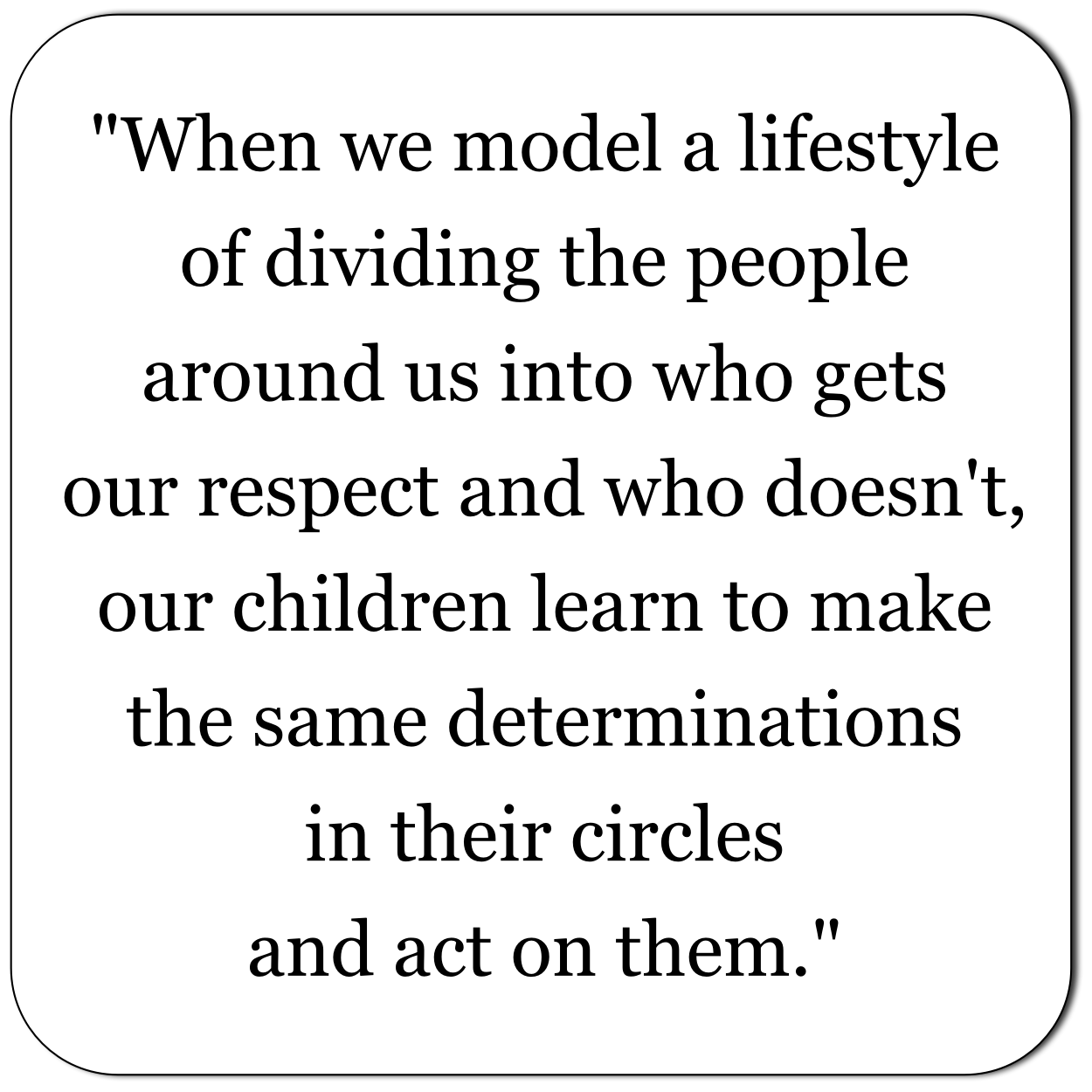
When we model a lifestyle of dividing the people around us into who gets our respect and who doesn’t, our children learn to make the same determinations in their circles and act on them. And let’s be honest, we’re talking about the words we use and the actions we take, but also about the media which we allow into our homes. Media and shows which engender fear, division, hatred or anger should have no place among our families. We can get our news, regardless of our political and social leanings, without subjecting our children to thinly veiled bigotry and divisiveness.
Does this mean we lose our ability to teach our values and beliefs to our children? Of course not. It does mean that we include the values of respect and personal dignity, of civility and responsibility. You may not like the politics and social stances of Republicans, but you can teach your children your political values while teaching them to be respectful of others. The same goes for every issue from immigration to sexual orientation to economics.
You Are to Be Kind.
 Again, the simplicity and clarity of this message is difficult for a child to miss. This is the positive side of the negative message to “be not.” Our message to our kids is not complete if it rests in the “be not” realm, but it has to move into the world of being something. Our message is this:
1) Kindness is strength, it is power and it is truth. Let’s have a round of applause for Thumper’s dad, shall we? And now one for his mom… they tag team this idea perfectly (for imaginary characters in a cartoon movie). Kindness means that even if what we are going to say is true, it may not be right or kind to say it. The substance of a statement can be correct while the speaking of the statement is not correct. It’s not as complicated as it sounds. Thumper’s been teaching it since 1942. “But it’s true” isn’t a good enough reason to say it.
2) Kindness is more than manners, but it includes manners. Kindness is sometimes costly and requires an expenditure of energy. Kindness is practiced and cultivated, it’s learned behavior. Kindness is a choice about the way a person will speak and act, and it’s a choice best made before a situation in which we hope to be kind or to show kindness. We teach our kids to choose to and then practice treating people the way they want to themselves be treated.
3) Kindness is also muscle memory. Grabbing a door to hold it open or moving to help someone when they drop something… these things are best as reflexes. Some kids will learn to point and laugh, and some kids will learn to look away and move on. Who will practice and develop the instinct to kindness? What kids will jump to help?As parents we are at the forefront of teaching our kids how they behave in common, every day situations. Do we model kindness for them? Do we stop and help someone who has dropped something or fallen? Do we hold the door at a restaurant or rush to get in front of one or two people and get our food maybe 60 seconds faster? What do our kids learn of kindness from us? It should be a positive message that they hear and see from us all the time, and not just when they’re being naughty.
You Are To Be Supportive.
Teaching kids to be empathetic and aware of what others are experiencing is easier than you think. Kids know who is being bullied, and they know how it feels to be bullied. In fact, we may be teaching children not to be empathetic or actually removing their empathy by not teaching, modeling and reinforcing a good awareness of others and their suffering or joy. There is evidence showing kids to be naturally empathetic. As our children grow up, they are in general ready to learn this from us and have it affirmed. The seed of empathy is there, but will it be nurtured and grown in our care or neglected and extinguished?
Looking back to the sad story of young Michael attempting to take his life, I’m left wondering how many of his classmates could empathize with his pain, but did not have the formation from parents to act on their empathy? How many times do we say to our children, “Reach out and support the hurting.” A parent may want to argue that putting such moral responsibility on a young person could be too much for them at age 11 or 12, but they have it within them to see another’s pain and offer support.
This is not in any way to suggest that his classmates who did not bully him are responsible for his attempted suicide. It is to ask if we are affirming what our kids already feel, that the pain of another person is something to which they can and should respond in helpful, healthful, constructive ways. Not only can classmates lend support and strength to a bullied student, but they could also engage adults to help and be more aware of the problem.
As I’m writing I’m also reading to my wife and we’re batting things back and forth. She just asked, “So how do we teach kids to be supportive?” She means, “How is this actually done so that my child knows what to do?” Kids are naturally empathetic, but they may not have the knowledge or maturity to act on it in the best ways. Let’s think of several things our kids can do, and we’ll frame these as “we can” statements, because we all can do this:
1) We can speak up. When someone is being hurt, humiliated or bullied, it sometimes just takes one voice in opposition saying, “Enough!” Our kids don’t have to get in a fight to stand up for someone. That don’t have to scream to say, “No more. Not right. Not true.” Thinking back on my statement that kids aren’t always cruel, but often unaware, they can be easily caught up in a moment of escalation. They may not be prepared to not follow when their group is gaining momentum in bullying a classmate, unless we have taught them to watch for it. And if it’s too crazy, the bullying is just too scary and we’re afraid… then we can speak up to someone else who can help. Our kids need to know that we as parents and other adults want to help the hurting. They can come to us.
2) We can give encouragement. Speaking up is not always in opposition, but can be in support of the person being hurt. Our kids can learn to respond to people’s pain with kindness shown in words like, “What they said about you isn’t true.” Maybe it’s written in a note and passed along later. Maybe it’s a smile. When someone else is being robbed of their dignity and worth by hurtful actions and words, we can supply the positive words and actions which help make up the difference. Know what this takes? It takes parents who really do believe that kindness is strength. It takes parents who are willing to model kindness for their children.
3) We can show friendship. It’s done in simple ways like saying hello, goodbye, good job and otherwise acknowledging another’s worth. A bullied child lives in fear and isolation. We can end that isolation. We can say hello to the person that no one greets. We can congratulate another person’s good work. We can let someone know that we are watching to see them again tomorrow. We can make sure someone has a point of contact and are not completely lost and alone.
An ongoing conversation, and Michael’s future…
This is not a lesson that we get to sit down and share once, but it’s a way we model life for our kids and a lesson that we have to reaffirm again and again. I hope you hear in my post that I’m not interested in vilifying or witch-hunting anyone, especially children, even bullying children. I’m interested in being involved and engaged enough to talk with our kids and help them to learn to take their natural empathy and act on it in helpful, healthful ways.
Michael’s full physical injuries are not known at this time. Let’s pray for a full recovery! If you want to help with his medical costs, you can do that here at a GoFundMe campaign. There’s a touching interview with Michael’s step-father here.
And what about My Little Pony? I have to say that I didn’t watch the original series from way back in the 80’s and I barely remember the toys when I was young. I have however watched a lot of episodes of the newer animated series and anyone who says it’s just for girls is simply wrong. The show is funny, clever and wonderfully supportive of moral behavior. Here’s the Hasbro site, Wikipedia, and the MLP Wiki. It’s fun, just simply fun. And nothing as fun as MLP should be used as a weapon to hurt a human being.
AMDG, Todd
Nov. 30, 2013 Civility in Xian Scripture
 November 30: We are reconcilers.
Matthew 5:21-24, “You have heard that it was said to the people long ago, ‘You shall not murder, and anyone who murders will be subject to judgment.’ But I tell you that anyone who is angry with a brother or sister will be subject to judgment. Again, anyone who says to a brother or sister, ‘Raca, ‘ is answerable to the Sanhedrin. And anyone who says, ‘You fool!’ will be in danger of the fire of hell. “Therefore, if you are offering your gift at the altar and there remember that your brother or sister has something against you, leave your gift there in front of the altar. First go and be reconciled to that person; then come and offer your gift.”
Jesus knew all about religious professionals. It was the professionals who were usually questioning him and his disciples about one regulation or the other on ritual purity or his own authority. He knew the game, following certain rules and using the right language could make you very religious, but though he valued those same traditions and valued religiosity, he never let it become elevated over the value of people. So he touched the untouchable. He associated with the social pariah. He told parables like “The Good Samaritan” which seemed to break down ethnic and religious barriers. He repeatedly healed on the sabbath.
Our final passage is a message to the religious professional in each of us. When we begin to value our religion above people, we begin to go through the motions even while our relationships are crumbling all around us. We can go to the altar to leave a gift and bless God, all the while ignoring the lack of blessing happening between us and our sisters and brothers. Jesus says, “Stop! Don’t go to play church when you know you have some rebuilding to do with your brother or your sister. Church just doesn’t work when valued above and outside your relationships.” (That was my paraphrase.)
What is civility to a Christian? Is it the recognition that we speak and act as reconcilers, seeking to break down the barriers and reconnect to one another. Civility is never just an “elective class” we can catch one semester or simply ignore and still graduate without it. It’s not an extracurricular activity. We speak and act to reconcile and remain reconciled. We are not called to be barrier builders. We are not called to giving insults, to humiliating or to tearing others down. We are called to restoration, restoring our broken selves one to another.
This is the way a person of faith goes about civility, recognizing that we’re maintaining some of the most important stuff that Jesus has called us to be and do. Civility is not our religion, but our religion leads us to be civil. God has never called us separate from one another, but together. Let us then see to it that our religion is pure and true to the value of one another. Let us show how people of faith live and breathe a civility that reconciles us to one another, mutually encourages one another, and gives everlasting glory to our great God. We’ll close the month of exploring our Christian scriptures with three final selections from Micah, Jesus and Peter.
AMDG, Todd
From Micah, Micah 6:6-8
“With what shall I come before the LORD and bow down before the exalted God? Shall I come before him with burnt offerings, with calves a year old? Will the LORD be pleased with thousands of rams, with ten thousand rivers of olive oil? Shall I offer my firstborn for my transgression, the fruit of my body for the sin of my soul? He has shown all you people what is good. And what does the LORD require of you? To act justly and to love mercy and to walk humbly with your God.”From Jesus, John 13:34&35
“A new command I give you: Love one another. As I have loved you, so you must love one another. By this everyone will know that you are my disciples, if you love one another.”From Peter, 1 Peter 3:8-11
“Finally, all of you, be like-minded, be sympathetic, love one another, be compassionate and humble. Do not repay evil with evil or insult with insult. On the contrary, repay evil with blessing, because to this you were called so that you may inherit a blessing. For, ‘Whoever among you would love life and see good days must keep your tongue from evil and your lips from deceitful speech. Turn from evil and do good; seek peace and pursue it.'”
Nov. 29, 2013 Civility in Xian Scripture
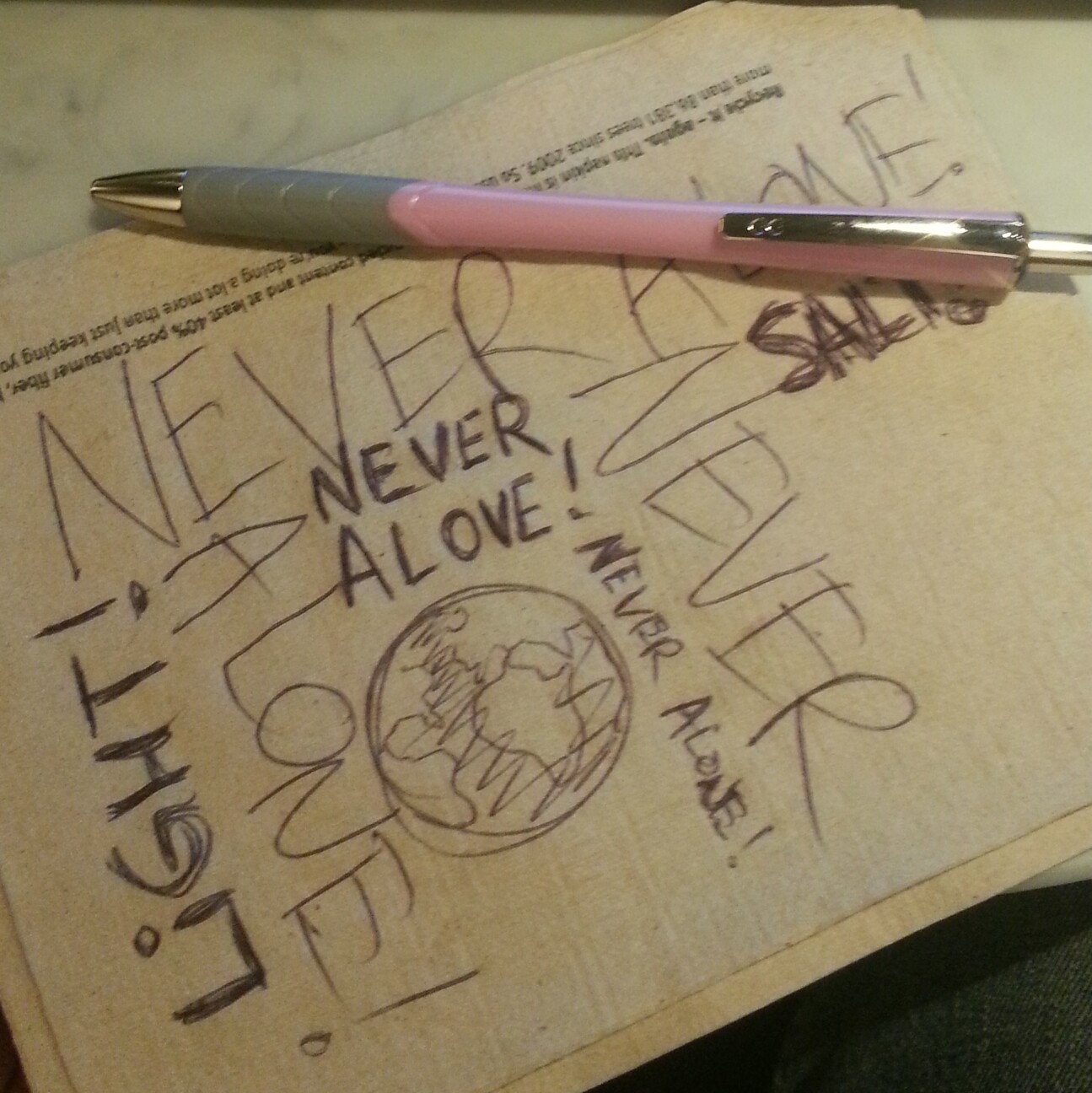 November 29: Never alone.
Matthew 5:13-16, “You are the salt of the earth. But if the salt loses its saltiness, how can it be made salty again? It is no longer good for anything, except to be thrown out and trampled underfoot. You are the light of the world. A city on a hill cannot be hidden. Neither do people light a lamp and put it under a bowl. Instead they put it on its stand, and it gives light to everyone in the house. In the same way, let your light shine before others, that they may see your good deeds and glorify your Father in heaven.”
We began this month of exploring Christian scripture to understand civility with Jesus, and we’ll end with Jesus. This is a very familiar passage to most anyone who grew up in church. Jesus loved to teach in symbols, and this is some of his best… it’s simple, we can relate to the content, and it inspires. We are called to be salt, seasoning the world for the better. We are to be light, a source of illumination and joy for those struggling to see. Amen and amen.
Jesus lays it all on the line for us in these simple words: we are salt, and we are light. No matter what you’re cooking, the salt becomes part of the dish, lost for any other purpose other than favoring and then never being seen again. Oh, it’s flavor is there, we know where the salt has gone… but that’s just it, the salt is gone. The dish remains. The dish is so much better for having been salted.
No matter the light source you choose, it burns up, it gives all it has and it’s gone. A lamp burns away it’s oil. A candle melts. A bulb eventually burns away it’s filament or it’s gases, batteries go dead… all lights on this earth end in their using. This is our calling. We are used up in service to this world. We are sent to make the world better for everyone else, and Jesus evens asks what we’re good for if we reject that calling! If we will not salt and we will not light, then what use do we have?
The word civil at the base of the word civility is a very fun study if you ever feel like digging in and chewing on it a while. It denotes both the meaning of responsible/polite behavior, but it also denotes this aspect of being a common member of society, a citizen. The two concepts are united in the word, both being a citizen and acting a citizen. Jesus does this with salt and light, both being and doing. Salt is our identity and our action. Light is both what we are and what we do. Our place in the world hinges on this calling… we exist in this capacity of purpose.
So what does all that mean? It means that I don’t salt the earth one day a week, or two days a week, or only when I choose to be salty. I must reflect on the needs around me and strive to be salt all the time. I must own the call to saltiness and pursue it with all my heart, mind and soul. It’s not just a thing I do on weekends or when there’s a Bible study. It’s in my walk, my talk, my laughter, my weeping, my falling, my failing, my dancing and my singing.
My light doesn’t have a on/off switch for my convenience. I am not choosing to be light for only those I have deemed worthy of the time or the effort. I am shining, shining on my worst day, my best day, in the rain, in the snow, in the pain and in the green of springtime joys. I am being what I am called to be, to the best of my ability and with all the joy of the call I can muster on any given day. And if we have come together to make a community like the one Jesus has described in the verses preceding this passage, in those amazing words we call “The Beatitudes,” then when my savor lessens and my light dims, it will be renewed in my kingdom fellowship with you. Together, we are called to be salt and light, never alone. Never alone.
I am salt with you. I am not salting the earth alone! I am light with you. I am not lighting anything by myself! Civil is not something I am or do alone. Civil exists within the community of the citizens! If we are to find a singular truth of civility in the teaching of scriptures then let it be the truth of our need for one another! I need you! I need you to myself be salt. I need you to myself be light. I need you, and that is why I am striving to be civil, to keep us in the bonds of love, mutual encouragement, sharing and growth.
Never alone. Thank you, God, I am not alone.
AMDG, Todd
Nov. 28, 2013 Civility in Xian Scripture
 November 28: Civility can grow from deep gratitude.
Colossians 3:15, “And be thankful.”
And be thankful. I’ve always liked the way that St. Paul would throw that in here and there, and he does it often. He does in his letter the Colossians in chapter 2 as well, speaking of being rooted and grown up in Christ he adds an “and be thankful” for good measure in verse 7.
When our passage ended with those words yesterday I knew I’d have to come back and use them again. I don’t think St. Paul scatters them around without intention and meaning… I think he sows his letters with the seeds of gratefulness hoping for a nice harvest in the lives of his readers!
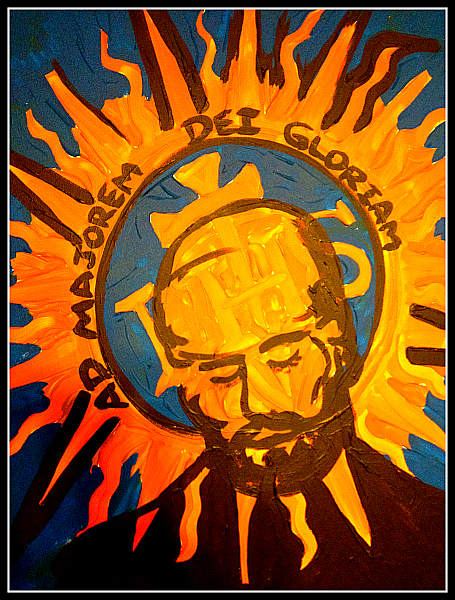
I believe that thankfulness, or gratefulness, or gratitude, whichever word we choose, is a seriously underrated theme in scripture and a solid foundation for civility. Ingratitude and being unthankful leads to a lot of harshness in our words and missed opportunities to build one another up. St. Ignatius said, “I think that that ingratitude is at the root of all sinfulness.” Amen. I’m declaring him the patron saint of our Thanksgiving this year and including a painting of him I made a couple of years ago. =)
Be grateful! Be joyous! Love with gusto!
AMDG, Todd
Nov. 27, 2013 Civility in Xian Scripture
 November 27: Civility is a bear, and so is incivility.
Colossians 3:13-15, “Bear with each other and forgive one another if any of you has a grievance against someone. Forgive as the Lord forgave you. And over all these virtues put on love, which binds them all together in perfect unity. Let the peace of Christ rule in your hearts, since as members of one body you were called to peace. And be thankful.”
Bear with each other. What a great twist of language that the word bear gets to be an expression of gracefully putting up with each other and a 400 pound mammal that might pull your head off. Maybe civility can feel that way sometimes, like trying to smile in the face of a raging beast? Maybe.
One of the hardest things about the teaching on forgiveness in scripture is that we are so often told to forgive without any mention of waiting for an apology. It seems that when incivility is done to us, our forgiveness is supposed to kick in without even waiting on that other person’s recognition that they need it. Honestly, that’s tough for me. I’ve managed to rationalize this away at times with arguments about not wanting to “enable” their continued naughtiness, but that wears thin after a while.
Someone might be a real bear towards me, and make it hard for me to bear with them through it, but I have to dig deep and find that needed strength to carry my own responsibility to restoring peace. Let’s be clear, I don’t always want to do that! Sometimes I would much rather respond in kind, making it just as unpleasant for them as it is for me. For a Christian it comes down to relating to Jesus and the way he modeled forgiveness in the biblical narrative. His words “forgive them” from the cross didn’t wait on an apology.
I suppose what I want to say today is that it’s ok to struggle with civility, but not to give up. I wouldn’t want this whole month of blogging to just be a “pie in the sky” dream of what things could be if we were all perfect. Sometimes I’m the bear, and sometimes I’m doing the bearing. Sometimes I fail in the civility realm and move from being a victim of incivility to a co-combatant in a contest of incivility. But I’m trying, and if anything I’ll try harder next time.
 I’m going to meditate today what I might call cruciform timing, living a forgiveness that doesn’t wait. If I can do that better, civility has a chance to grow in me. If a peace and thankfulness can be rooted in me, and be bounded by love, as the passage today images for us, then maybe a little more bearishness can be tolerated and forgiven. I’m going to splurge and have two graphics today because I think the passage makes a cool illustration. It’s that mentioned peace and love that can make all this possible. That peace and love are layers that help protect the true me when bears attack.
Easier said than done? Yes it is, but so is everything worth working hard to obtain. It’s the same love and peace that protects me that will be extended to one who attacks me. It’s a hope of mutual assured survival.
AMDG, Todd
Nov. 26, 2013 Civility in Xian Scripture
 November 26: Civility helps us transcend conceit.
Galatians 5:26, “Let us not become conceited, provoking and envying each other.”
Are you one of those folks who must make everything a competition? Is everything a contest for you with a first place, second place and third place, winners and losers? You might want to say no, but think about it. When someone shares something amazing in their life, is your first thought one of comparison to your own life?
I like to think I’m not all that wrapped up competitive ways, but I know that there are certainly areas of my life where I do harbor envy. There are parts of my life where I like to think I’m better than others. Better than most? Maybe. I have to admit it’s there within me, and it threatens my civility. I’ve never been an athlete, so I’m not all that into competitive sports, but I’ve found ways too make most everything else in life into a sport with winners and losers. In those other areas of life it’s the “I’m an expert” syndrome.
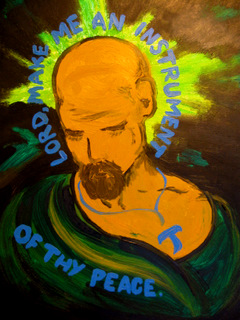
My image with this blog is a painting I did a few years ago of St. Francis of Assisi. I painted it intentionally as a picture of St. Francis and a little bit of a self portrait. His eyes are downcast and closed, not because he failed at anything, but because I know I fail so often to live up to the prayer he prayed, “Make me an instrument of your peace.” I’m too often a bit too self-serving to be used on anyone else’s behalf. His prayer makes me feel ashamed. The painting expresses a great paradox of my life: I want to live that prayer, but my conceit keeps me fettered to vanity and pride.
You might think a guy who likes to talk so much about humility wouldn’t be thinking how much better he is at something than you are, but then again that’s why I’m happy you’re not in my head. I hope you don’t mind a little more honesty, today. It’s simple human conceit, and I have it.
Conceit, too much pride in your own worth or goodness
I like to think I keep it well hidden, but I know it shows sometimes. When it does show, well that’s when I’m saying things that make you frustrated. It often shows itself in provocation, sometimes when I’m challenging your ideas and your accomplishments. I do it because I don’t want you as happy with yourself as you are. I do it because I want your success moderated a bit, lowered a bit closer to the level of my own (or just a bit under mine own). It’s not pretty, but it does happen.
A commitment to civility will help impose certain filters on me that not only help me not do this to you unnecessarily in our conversations, but also I hope it will shine a light on the inner conceits that trip me up. St. Paul is expressing this whole idea in the context of a discussion on personal freedom, a choice to serve others or myself. Your accomplishments can become part of my joy. Your wins can become my celebrations. Your joy is not then at my expense, but instead it is my gain. Honestly, I’m trying to love you that much.
AMDG, Todd
 toddthomas.net