
Month: November 2013
Nov. 2, 2013 Civility in Xian Scripture
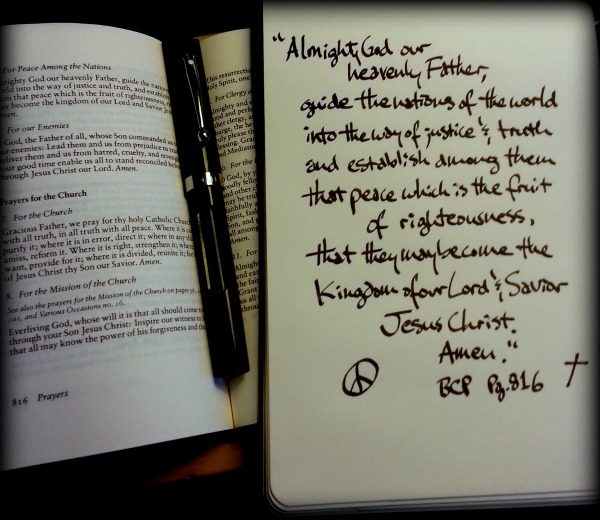 November 2: Civility flows from valuing peace. What do I bless?
 Nov. 1, 2013 Civility in Xian Scripture
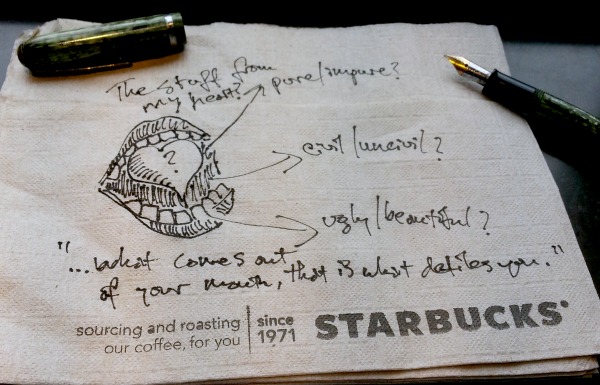 November 1: Civility begins in my heart, within me, and is my responsibility.
Matthew 15:10 & 11, “Jesus called the crowd to him and said, ‘Listen and understand. What goes into your mouth does not defile you, but what comes out of your mouth, that is what defiles you.'”
Quick definition: Civility “polite, reasonable, and respectful behavior”
Let’s begin by stating the obvious: Civility is a term that we don’t find in our scriptures, though it is a good old term. This month-long exercise is not about forcefully inserting civility into the scriptural narrative, and thereby “hijacking” scripture to teach something it doesn’t want or intend to teach. Instead we are going to dig into the teachings of scripture to illuminate the role and action of civility in our daily lives.
My belief is that civility (“polite, reasonable, and respectful behavior”) should flow very naturally from the mouth and life of someone acquainted with our scriptures. Christians, in their imitation of Christ and following the teachings of both the Old and New Testaments, should always be incredibly civil in daily discussions, when interacting with diverse neighbors and even when disagreeing. But we know that’s not always the case. Christians are often some of the most shrill and uncivil voices in our religious, political and social discussions and debates. (In October of 2009 I blogged about my embarrassment that Christians with bullhorns rudely disrupted many of our Muslim neighbors praying for our nation at the National Mall in DC.)
I’ve also heard and seen Christians act and speak with abrasive incivility and then rationalize and justify their words and actions upon religious arguments. They will judge, condemn and ridicule others, or one another, and then say something like, “I’m just following the Bible” or “It’s just what my faith demands of me.”
I believe that Christ and our scriptures show a better, immensely better, way. And so we begin with Jesus confronting those who devalued others (specifically their own parents) and rationalized it away with religious reasoning. In Matthew 15 some religious leaders questioned Jesus about his followers not being very correct in their observation of ritual purity, and he turns the question back on them in a deeper way, asking why they observe religion in a way that neglects the needs of their elderly parents. In the context of our verses in Matthew 15 Jesus is pointing out that people are more important than rules and regulations, even the best rules handed down by tradition and seeming so religious and right. The needs of the neglected parents matter more to God than legalistic excellence in the children. Jesus quotes Isaiah to say that their mouths and lips seem to be praising God and doing the right things, but it’s all wrong because their hearts are misplaced, moved far from God. I believe the teachings of our Christ and of our scriptures consistently show that religious practice and God’s heart are inextricably intertwined with the way we are called to treat others.
The passage is also a strong lesson that I am much more responsible and identified, not by what I might hear or see, but by what I might say and show. And this is where I must start with civility in my own life: within myself. My being civil is not dependent on someone else, but it’s a responsibility and an attribute of my own life, my own heart, my own words and actions. I hope that as we explore scripture in November we’ll be mutually encouraged and taught in deeper ways how the teachings of our Lord and our sacred texts lead us life-affirming, God-honoring and neighbor-serving civility.
- ← Previous
- 1
- …
- 3
- 4
 toddthomas.net